- Limited Artificial Intelligence specializes in performing specific tasks with mathematical precision superior to that of humans.
- It differs from General AI and Superintelligence in that it lacks consciousness, common sense, and the capacity for autonomous reasoning.
- Its applications range from virtual assistants and facial recognition to medical diagnostics and predictive models.

Do you feel like you're not getting anything done in the day and that you spend your life doing repetitive tasks that leave your brain fried? We've all been there, battling endless spreadsheets or managing AI-powered emails in a never-ending queue to be more productive . Luckily, Limited Artificial Intelligence is here to lend a hand and make our lives much easier, allowing us to regain control of our time and reduce our daily stress.
Imagine having a tireless assistant by your side, one that automates the most tedious tasks and gives you back the freedom to focus on what truly matters. In this article, we'll delve into how these systems, already embedded in the apps you use every minute, work, from their technical foundations to the limitations that ultimately make human ingenuity irreplaceable.

What exactly do we mean when we say Limited AI or ANI?
To avoid getting bogged down in complicated terms, let's be clear: Artificial Narrow Intelligence (ANI), or weak AI, basically refers to computer programs designed to perform a single task flawlessly . They don't have a mind of their own; instead, they are experts in pure statistics and massive computation. Their goal is to make our interaction with technology smooth, fast, and free of headaches.
These systems operate within a very strict framework defined by their creators. If you try to make them do something they weren't programmed to do, they simply won't act. This, while it may seem like a limitation, is actually a guarantee of security, as it ensures that the tool will do exactly what we expect without any unpleasant surprises.
ANI's Fuel: Data and Processing


All this technological deployment depends entirely on the quality of the information it receives. If the system is fed by well-structured databases , the results will be surprisingly accurate. To better understand this, think of the ANI as a super-powerful calculator capable of solving linguistic or visual equations in the blink of an eye.
Instead of magic, what we have is a brutal processing capacity. These models use machine learning , where they are presented with millions of examples to learn to recognize patterns. Once the model is fine-tuned, inference occurs , which is the rapid process where the AI applies what it has learned to new data, like when you translate a sentence in real time.
The machinery behind the scenes
For all of this to work on your mobile device without it crashing, a very powerful infrastructure is needed. In the cloud, there are servers with AI-optimized graphics processing units (GPUs) that perform millions of mathematical operations per second. The technical pillars are:
- Vector databases that organize the information so that the algorithm can find it instantly.
- Programming Interfaces (APIs) which serve as a secure bridge between your device and the servers.
- Natural Language Processing (NLP) that turns our words into actionable numbers.
- High availability servers so that the service doesn't go down just when you need it most.

Limited AI in your pocket: Real-world examples

If you look closely, you're surrounded by ANI even if you don't realize it. When you unlock your phone with your face, a highly specialized biometric algorithm maps your features with astonishing speed, saving you the hassle of typing long passwords. It's a tool that prioritizes both security and speed.
Another classic example is Amazon or Netflix recommendations. This is where predictive analytics comes into play , calculating what you'll like based on what people with similar profiles to yours have bought. It's like having a personal shopper who knows your tastes inside and out and saves you from browsing through endless catalogs.
The phenomenon of generative models
Lately, tools that create text or images have been in the spotlight. Although they may seem very intelligent, they are still ANI (Automated Name-Based Information). These platforms work by predicting the next most logical word based on advanced statistical patterns. They are ideal for combating writer's block, but it is the human who must provide coherence and commercial sense to the final result.

What technology still can't do
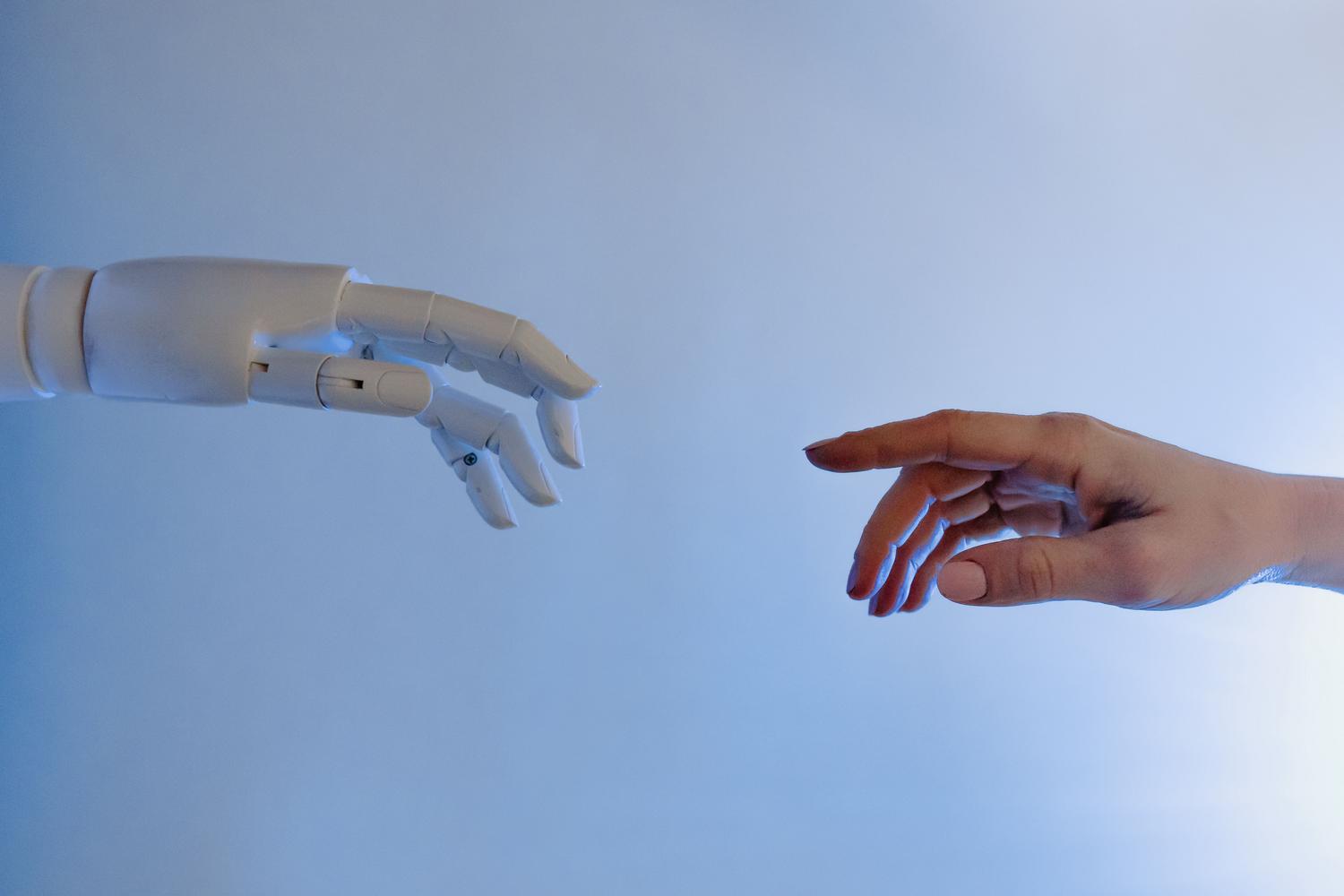
Despite its capabilities, limited AI has enormous blind spots. The main problem is a complete lack of common sense and understanding of the social context. A program can produce a flawless financial report, but it doesn't understand a company's economic woes; that's where your strategic vision makes all the difference.
Furthermore, the ANI lacks empathy and a moral compass. While the machine mixes and restructures existing data, pure creativity and intuition based on lived experience are the exclusive domain of the human intellect. Complex ethical dilemmas or understanding subtle irony in a conversation between colleagues are things that cold code cannot process.
Advanced classifications: From reactive machines to self-awareness
Expert Arend Hintze proposes a more detailed division to understand the evolution of these machines. First, there are reactive machines , which have no memory and only respond to current stimuli, like IBM's famous Deep Blue that beat Kasparov in chess.
One step up is memory-limited AI . These systems can recall past events for a short time to make better decisions. Self-driving cars are the perfect example, as they analyze traffic in real time and use recent data to decide when to brake or turn. Current generative AI also falls into this category.

Beyond that lie the theoretical concepts: Theory of Mind , which would allow AI to understand human emotions in order to personalize its interactions, and Self-Aware AI , which would be a machine with self-awareness and its own feelings. The latter remains the realm of science fiction and philosophical speculation.
Comparison of capabilities: ANI, AGI and ASI
To avoid confusion, it's vital to distinguish between the three levels of capability. Narrow AI (NAI) is what we use today; it's efficient but limited by its design. General AI (GAI) would be a machine capable of reasoning and learning any intellectual task a human can perform, something that doesn't yet exist in practice.
At the top of the spectrum is Artificial Superintelligence (ASI) , a hypothetical scenario where software surpasses the intelligence of history's brightest minds. While this is a fascinating topic to discuss, the smart thing to do today is master the current applications that actually boost your work performance.
Advantages, risks, and safety tips
Using these assistants is a real lifesaver: you save time, eliminate errors caused by fatigue, and speed up your workflow. However, it's not all sunshine and roses. There's a risk that AI will perpetuate biases if the training data is flawed, or that we'll become so dependent on it that we stop thinking critically.
To navigate this ecosystem without surprises, I recommend a few best practices. First, always anonymize sensitive data before entering it into a free chat. Second, review the terms of service to know where your data ends up. And third, always verify information with primary sources; don't blindly trust what the bot tells you, as it can easily fabricate information .

The technological horizon
The future points to even more organic integration. We will see more natural interfaces, preventative health systems that monitor our vital signs in real time, and learning environments that adapt to each student's pace. The key to success will not be the technology itself, but our ability to adapt and know how to use these tools as allies to enhance our humanity.
Limited Artificial Intelligence is, in essence, a massive optimization tool that already permeates our society, much like electricity did in its day. Although it lacks consciousness and depends entirely on data quality and human oversight, its ability to solve specific problems is unmatched. By delegating the mechanical and repetitive tasks to these algorithms, we gain the necessary space to cultivate creativity, ethics, and empathy, which are the true engines of human progress.
