- Industrial technology is evolving, driving efficiency and quality in manufacturing.
- Seven key innovations, such as AI and additive manufacturing, are transforming factories toward more sustainable environments.
- Blockchain improves traceability and security in the supply chain, increasing consumer confidence.
- Education remains crucial to preparing the workforce to use these emerging technologies.
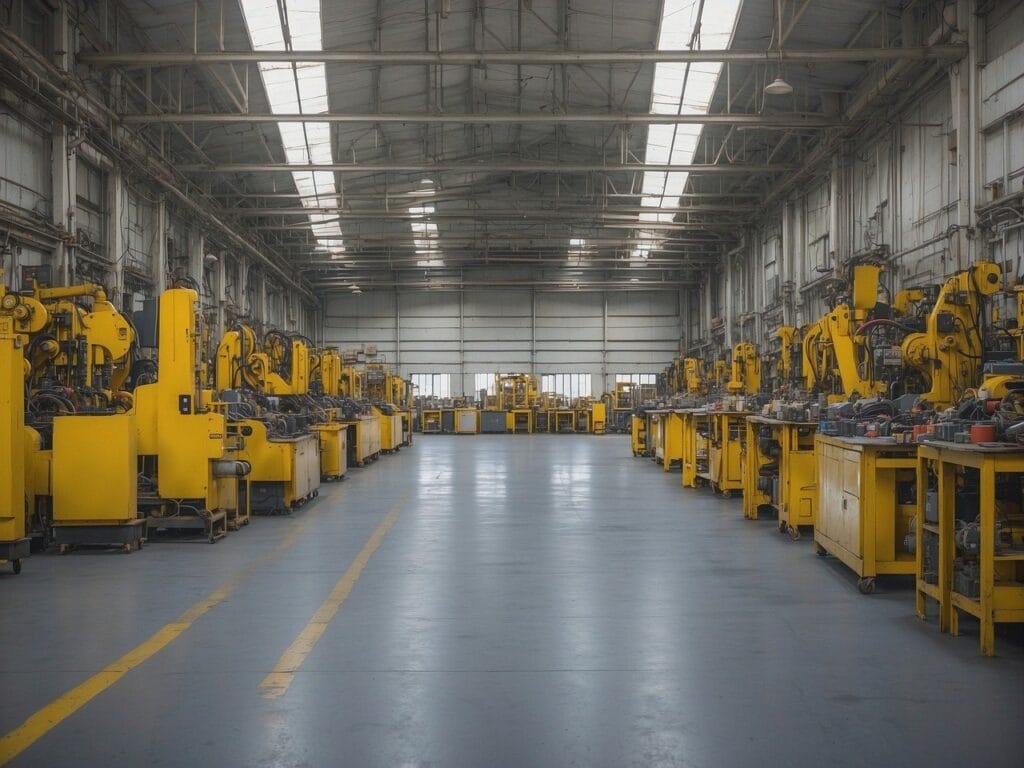
Industrial technology is constantly evolving, and today we find ourselves at a tipping point where innovations are completely redefining the manufacturing landscape. From 3D printing to artificial intelligence, these emerging technologies are not only improving production efficiency and quality, but are also opening up new possibilities that previously seemed unattainable.
Industrial Technology: 7 Innovations That Are Revolutionizing the Future of Manufacturing
Industrial technology: The basis of the manufacturing revolution
Industrial technology has always been the driving force behind progress in the manufacturing sector, but in recent decades, we have witnessed a quantum leap in its development. The convergence of diverse disciplines such as computer science, robotics , and materials science has given rise to what many call the Fourth Industrial Revolution or Industry 4.0.
This new era of industrial technology is characterized by the integration of physical and digital systems, creating smart factories capable of making autonomous decisions based on real-time data. Hard technology , which includes tangible machinery and equipment, is merging with soft technology, such as software and management systems, to create highly efficient and adaptable production ecosystems.
What makes this revolution so significant? The answer lies in its ability to address the most pressing challenges of modern industry:
- Increased
- Product quality improvement
- Reduction of operating costs
- mass customization
- Sustainability and energy efficiency
Let’s now look at seven key innovations that are driving this transformation and how they are shaping the future of manufacturing.
3D Printing: Transforming Custom Manufacturing
3D printing, also known as additive manufacturing, has evolved from a niche technology to a fundamental tool in the manufacturing industry. This innovation allows the creation of three-dimensional objects by superimposing layers of material, offering unprecedented flexibility and customization in production.
Applications in various sectors
The versatility of 3D printing has enabled its adoption in a wide range of industries:
- Aerospace: Manufacturing of light and complex components.
- Automotive: Rapid prototyping and production of custom parts.
- Medicine: Creation of custom-made prostheses and artificial organs.
- Construction: Printing of architectural structures and components.
Educational technology has also benefited greatly from 3D printing, allowing students to visualize and create tangible models of complex concepts, from molecular structures to engineering prototypes.
Future challenges and opportunities
Despite its revolutionary potential, 3D printing still faces some challenges:
- Production speed: Although ideal for short series, it is not yet competitive for mass production.
- Material limitations: Further research is needed to expand the range of printable materials.
- Quality control: Ensure consistency in the mechanical properties of printed parts.
However, the opportunities are enormous. Advances in materials technology and printing speed are expected to open new horizons, enabling the production of larger, more complex, and more functional components. Furthermore, combining 3D printing with other emerging technologies, such as artificial intelligence for design optimization , promises to take customization and efficiency to unprecedented levels.
Artificial Intelligence and Machine Learning in Manufacturing
The integration of Artificial Intelligence (AI) and Machine Learning (ML) into industrial technology is redefining manufacturing paradigms. These emerging technologies are equipping machines with cognitive capabilities that were previously exclusive to humans, enabling faster, more accurate and data-driven decision-making.
Process optimization and quality control
AI and ML are revolutionizing the way production processes are optimized:
- Predictive Analytics: Advanced algorithms can predict production bottlenecks and suggest adjustments in real time.
- Automated quality control: Machine vision systems can detect defects that are imperceptible to the human eye, drastically reducing error rates.
- Production planning: AI can optimize production scheduling, taking into account multiple variables such as material availability, market demand, and plant capacity.
A notable example is the use of “digital twins,” virtual replicas of products or processes that allow operations to be simulated and optimized before being implemented in the real world.

Predictive maintenance and energy efficiency
Hard technology , such as machinery and equipment, benefits greatly from AI in terms of maintenance and efficiency:
- Predictive Maintenance: Sensors and ML algorithms can predict equipment failures before they occur, reducing downtime and maintenance costs.
- Energy optimization: AI can analyze energy consumption patterns and automatically adjust systems to maximize efficiency.
Can AI completely replace human workers in manufacturing? The answer is no. Instead, it is creating new roles and opportunities, requiring skills in areas such as data analysis, programming and maintaining AI systems.
Internet of Things (IoT) in Industry 4.0
The Internet of Things (IoT) is at the heart of the Industry 4.0 revolution, transforming traditional factories into smart, interconnected ecosystems. This industrial technology enables devices, machines and systems to communicate with each other and with human operators in real time, creating a constant flow of data that drives efficiency and innovation.
Connectivity and real-time data analysis
The implementation of IoT in manufacturing has given rise to what is known as IIoT (Industrial Internet of Things):
- Real time monitoring: Sensors distributed throughout the plant collect data on machine performance, product quality and environmental conditions.
- Advanced analysis: Big data platforms process these massive volumes of information to extract valuable insights.
- Automated decision making: Intelligent systems can adjust production parameters automatically in response to received data.
This ubiquitous connectivity is enabling unprecedented levels of visibility and control in production. For example, a manager can view the status of all the machines in the plant from his smartphone, or an automated system can stop a production line by detecting an anomaly before mass defects occur.
Supply chain improvement
IoT is also revolutionizing supply chain management:
- Improved traceability: Products can be traced from raw material to end consumer, improving transparency and security.
- Real-time inventory management: Intelligent systems can predict stock needs and place orders automatically.
- Optimized logistics: Transport and storage routes can be dynamically adjusted based on current conditions.
How does this affect overall efficiency? Studies have shown that effective IoT implementation can reduce operational costs by up to 30% and increase productivity by more than 25%.
However, widespread adoption of IoT also poses challenges, especially in terms of cybersecurity and data privacy. Companies must invest in robust security measures to protect their interconnected systems against potential cyberattacks.
Advanced robotics and cobots
Robotics has been an integral part of manufacturing for decades, but recent advances are taking this industrial technology to new levels of sophistication and applicability. In particular, the emergence of collaborative robots or “cobots” is redefining human-machine interaction in the production environment.
Human-robot collaboration
Cobots represent a paradigm shift in industrial robotics:
- Safe design: Unlike traditional industrial robots, cobots are designed to work alongside humans without the need for safety barriers.
- Ease of programming: Many cobots can be “trained” through demonstration, without the need for advanced programming knowledge.
- Flexibility: They can be easily reconfigured for different tasks, adapting to changing production needs.
This close collaboration between humans and robots is creating a new working model in which each contributes its unique strengths: the precision and resilience of machines are combined with the creativity and adaptability of humans.
Increased productivity and safety
The integration of cobots and advanced robotics is having a significant impact on productivity and workplace safety:
- Automation of repetitive tasks: Robots can take over monotonous or physically demanding tasks, allowing human workers to focus on higher value-added activities.
- Improved ergonomics: Cobots can assist workers with tasks that involve lifting or repetitive movements, reducing the risk of injury.
- Consistency and quality: The precision of robots ensures consistent quality in production, reducing errors and waste.
Are robots replacing human workers? While it is true that some tasks are being automated, the reality is that robotics is creating new types of jobs, such as robot maintenance technicians and cobot programming specialists.
Educational technology plays a crucial role in this scenario, preparing the workforce of the future to work effectively with these emerging technologies . Training programs in robotics, programming, and maintenance of automated systems are becoming increasingly common in educational institutions and vocational training centers.
Augmented and virtual reality in design and maintenance
Augmented reality (AR) and virtual reality (VR) are emerging as powerful tools in the realm of industrial technology, revolutionizing the way products are designed, manufactured, and maintained. These immersive technologies are blurring the lines between the physical and digital, offering new ways to visualize, interact, and solve problems in the manufacturing environment.
Remote training and support
AR and VR are transforming training and technical support in the industry:
- Immersive training: Workers can practice complex or dangerous tasks in safe virtual environments before facing real-life situations.
- Real-time assistance: Technicians in the field can receive visual guidance overlaid on their field of view, facilitating diagnosis and repairs.
- remote collaboration: Experts can “see” through the eyes of a local technician and guide them through complex procedures, reducing the need for travel.
This application of educational technology in the industrial context is accelerating learning curves and significantly improving problem-solving efficiency.
Data visualization and virtual prototypes
In the field of design and engineering, AR and VR offer new possibilities:
- Virtual prototypes: Designers can create and manipulate full-scale 3D models, reducing the need for expensive physical prototypes.
- Advanced Simulations: Stress testing and performance analysis can be performed in virtual environments, speeding up the development process.
- Complex data visualization: AR makes it possible to overlay crucial information onto physical equipment or products, facilitating informed decision-making.
How does this impact the design and manufacturing process? A recent study showed that using AR in product design can reduce development time by up to 30% and decrease design errors by over 50%.
The integration of these emerging technologies with traditional hardware is creating a new paradigm in manufacturing, where the virtual and the physical coexist and complement each other. For example, an engineer can use AR glasses to "see" inside a running machine, detecting potential problems before they occur. This fusion of the digital and the physical is taking efficiency and innovation in manufacturing to unprecedented levels.
Additive manufacturing and new materials
Additive manufacturing, which includes but is not limited to 3D printing, is redefining the boundaries of what is possible in industrial production. This technology, combined with the development of new advanced materials, is opening up a world of possibilities in terms of design, functionality and sustainability.
Innovation in composite materials
Industrial technology in the field of materials is undergoing a real revolution:
- Smart materials: Materials are being developed that can change their properties in response to external stimuli, such as temperature or pressure.
- Nanocomposites: The incorporation of nanoparticles is creating materials with exceptional mechanical, electrical and thermal properties.
- Biomaterials: Inspired by nature, these materials offer unique characteristics such as self-repair or biodegradability.
These advances are enabling the creation of lighter, stronger and more functional products. For example, in the aerospace industry, new composite materials are significantly reducing the weight of aircraft, resulting in lower fuel consumption and reduced emissions.

Sustainability and circular economy
Additive manufacturing and new materials are playing a crucial role in the transition towards a more sustainable economy:
- Waste reduction: Additive manufacturing allows parts with complex geometries to be produced in a single piece, reducing material waste.
- Advanced recycling: Technologies are being developed to recycle and reuse composite materials, which have traditionally been difficult to recycle.
- Design for sustainability: New materials make it possible to design products that are more durable and easier to repair or recycle.
How does this impact the industry's environmental footprint? Studies suggest that widespread adoption of these technologies could reduce CO2 emissions in the manufacturing industry by up to 5% annually.
Educational technology is also evolving to keep pace with these advances. Educational institutions are incorporating courses on design for additive manufacturing and advanced materials science into their engineering and industrial design programs.
Blockchain in traceability and industrial safety
Blockchain, best known for its application in cryptocurrencies, is finding fertile ground in the manufacturing industry. This distributed ledger technology is revolutionizing the way traceability, security and transparency are managed in the industrial supply chain.
Transparency in the supply chain
Blockchain offers a robust solution to traceability challenges in manufacturing:
- Immutable record: Each transaction or product movement is recorded permanently and unalterably.
- Real-time traceability: You can follow the journey of a product from raw material to the final consumer.
- Authenticity verification: Helps combat counterfeiting and fraud in the supply chain.
This transparency not only improves operational efficiency, but also increases consumer confidence. For example, in the food industry, blockchain allows consumers to verify the origin and journey of products, ensuring their quality and provenance.
Data protection and intellectual property
In the field of industrial security and intellectual property protection, blockchain offers innovative solutions:
- Smart contracts: Automation of agreements and transactions without the need for intermediaries.
- Design protection: Industrial designs can be securely registered and verified on the blockchain.
- License management: Facilitates the tracking and management of technology and patent licenses.
How does this impact industrial innovation? By providing a secure and transparent means of protecting intellectual property, blockchain is fostering a more conducive environment for innovation and collaboration between companies.
The integration of blockchain with other emerging technologies, such as IoT and AI, is creating highly efficient and secure industrial ecosystems. For example, data collected by IoT sensors can be securely stored on the blockchain, and then analyzed by AI algorithms to optimize production processes.

Frequently asked questions about industrial technology
How is industrial technology impacting employment? Industrial technology is transforming the job market, but not necessarily eliminating jobs. While some tasks are being automated, new roles are being created related to the maintenance, programming, and monitoring of advanced systems. The key lies in the adaptation and continuous training of the workforce.
What role does sustainability play in new industrial technologies? Sustainability is a crucial factor in the development of new industrial technologies. From additive manufacturing, which reduces material waste, to AI, which optimizes energy consumption, current innovations aim to make production more efficient and environmentally friendly.
How can small and medium-sized enterprises (SMEs) adopt these technologies? SMEs can adopt these technologies gradually, starting with areas that offer a quick return on investment. Cloud-based solutions and "technology-as-a-service" models are making these innovations more accessible to businesses of all sizes.
What are the main challenges in implementing these technologies? Challenges include initial investment, the need for trained personnel, integration with existing systems, and cybersecurity concerns. Careful planning and ongoing training are crucial to overcoming these obstacles.
How is industrial technology changing the relationship between manufacturers and consumers? Industrial technology is enabling greater customization and more agile production, bringing manufacturers and consumers closer together. Improved traceability and transparency are also increasing consumer confidence in manufactured products.
What role does educational technology play in the adoption of these industrial innovations? Educational technology is fundamental to preparing the current and future workforce. From virtual reality simulators for training to online learning platforms, educational technology is facilitating the acquisition of the skills needed to work with these new industrial technologies.
Conclusion: Industrial Technology: 7 Innovations That Are Revolutionizing the Future of Manufacturing
Industrial technology is on the cusp of a new era, driven by seven key innovations that are redefining the manufacturing landscape. From 3D printing and artificial intelligence to blockchain and new materials, these emerging technologies are creating smarter, more efficient, and more sustainable factories.
The convergence of these technologies is leading to a highly integrated and adaptable industrial ecosystem. Manufacturing of the future will be more personalized, with more transparent and resilient supply chains. Sustainability and energy efficiency will be key pillars, driven by the need to reduce environmental impact and optimize resources.
However, the path to this transformation is not without its challenges. The need for investment in infrastructure and training, as well as concerns about security and privacy, will require careful consideration and planning.
Traditional hardware technology will remain the backbone of industry, but its integration with advanced digital technologies will create new forms of value and efficiency. Educational technology will play a crucial role in this process, preparing the workforce to adapt and thrive in this new industrial environment.
Ultimately, success in this new era of manufacturing will depend not only on the adoption of technologies, but on the ability of organizations to reinvent their business models and organizational cultures. Those that embrace innovation and adaptability will be well positioned to lead in this exciting new frontier of industrial technology.
