- Technology in education transforms access to knowledge and personalizes learning.
- Artificial intelligence provides immediate feedback, adapting to each student's needs.
- Virtual and augmented reality provide immersive experiences, improving information retention.
- Big data enables informed decisions, personalizing educational interventions, and optimizing resources.

Technology in Education: The True Power Beyond Apps
Introduction
The digital revolution has reached the classroom, transforming the way we teach and learn. Technology in education goes far beyond simple applications or devices; it represents a paradigm shift in the way we access knowledge and develop skills. In this article, we will take an in-depth look at how the integration of technology in education is redefining the educational landscape, its advantages and challenges, and the true potential it has to improve the quality and accessibility of education globally.
Technology in Education: Foundations and Evolution
Technology in education is not a new concept, but its scope and potential have grown exponentially in recent decades. From the introduction of the first computers in schools to today's virtual learning environments, the evolution has been constant and transformative.
The definition of technology in the educational context encompasses a wide range of tools, from hardware such as tablets and interactive whiteboards to educational software, online learning platforms, and digital resources. This technological integration seeks to enhance the educational experience, making it more interactive, personalized, and effective.
A key advantage of technology in education is its ability to democratize access to knowledge. Platforms such as Coursera or edX have opened the doors to courses from elite universities for students around the world, breaking down geographical and economic barriers.
However, it is crucial to understand that technology alone is not a panacea. Its effectiveness depends on how it is implemented and integrated into teaching-learning processes. This is where the true power of educational technology comes into play: its ability to transform methodologies and create new learning paradigms.

The Impact of Artificial Intelligence on Personalized Education
Artificial intelligence (AI) is revolutionizing the way education is tailored to each student’s individual needs. Smart tutoring systems can analyze student performance in real time, identify areas for improvement, and automatically adjust learning content and pace.
A significant advantage of AI-based technology is its ability to offer immediate and personalized feedback. This allows students to correct errors and reinforce concepts more efficiently than in a traditional environment.
However, it is important to consider the potential downsides as well. Over-reliance on automated systems could limit human interaction, which is crucial for the development of social and emotional skills. In addition, the privacy of student data is a growing concern that needs to be rigorously addressed.
Despite these challenges, the potential of AI to create truly personalized learning experiences is undeniable. Imagine a future where every student has access to a virtual tutor that perfectly matches their learning style, interests, and educational goals.

Virtual and Augmented Reality: Immersive Learning Experiences
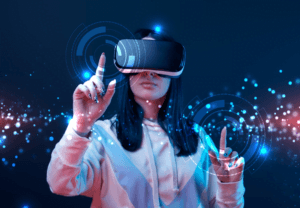
Virtual reality (VR) and augmented reality (AR) are taking the educational experience to new levels of immersion and interactivity. These technologies allow students to explore abstract concepts in tangible ways and experience scenarios that would be impossible or dangerous in the real world.
Can you imagine studying anatomy by exploring a human body in 3D or learning history by reliving historical events as if you were there? That's exactly what VR and AR are making possible.
A key benefit of these technologies is their ability to increase engagement and information retention. Studies show that students who use VR and AR in their learning tend to remember information better and grasp complex concepts more quickly.
However, widespread implementation of these technologies faces challenges. The cost of equipment and development of quality content can be prohibitive for many educational institutions. In addition, prolonged use of VR devices can cause eye strain and dizziness in some users.
Despite these obstacles, the educational potential of VR and AR is immense. As the technology becomes more accessible and the content more sophisticated, we can expect to see a significant increase in its adoption in educational settings.
The Rise of Mobile Learning: Education in the Palm of Your Hand
Mobile learning, or m-learning, has transformed the way we access knowledge. With smartphones and tablets, students can learn anytime, anywhere, breaking down traditional classroom barriers.
The definition of technology in this context expands to include not only devices, but also educational applications, e-books, and mobile-optimized learning platforms. This constant accessibility to knowledge represents a significant advantage of technology in modern education.
However, mobile learning also presents challenges. The potential distractions offered by mobile devices can be a drawback of the technology if not managed properly. Furthermore, the digital divide between those who have access to advanced devices and those who do not can exacerbate existing educational inequalities.
To maximize the benefits of mobile learning, it is crucial to develop pedagogical strategies that take advantage of the ubiquity of mobile devices while minimizing their potential drawbacks. This could include designing mobile-specific learning activities and implementing responsible device use policies in the classroom.


Gamification and Game-Based Learning: Fun with Purpose
Gamification, the application of game elements in non-game contexts, is revolutionizing the way we motivate and engage students. By incorporating elements such as points, badges, and leaderboards into the learning process, educators can significantly increase participation and knowledge retention.
A key advantage of technology in this area is its ability to make learning more engaging and less intimidating, especially for complex or traditionally “boring” subjects. Well-designed educational games can provide a safe environment for failure and learning through experimentation.
However, it's important to balance the fun aspect with the educational objectives. A potential drawback of poorly implemented gamification technology is that it can trivialize educational content or foster an external reward mindset rather than intrinsic motivation.
To fully realize the potential of gamification, educators must carefully design experiences that align game elements with learning objectives. This could include creating immersive narratives that contextualize educational content or designing progression systems that reflect actual skill mastery.
The Big Data Revolution in Education: Data-Driven Decision Making
Big data is transforming the way we understand and improve educational processes. The collection and analysis of large volumes of data on student performance, learning patterns and the effectiveness of educational interventions are enabling institutions to make more informed and personalized decisions.
A significant advantage of big data technology in education is its ability to identify students at risk of academic failure early and provide timely interventions. Furthermore, data analytics can help optimize curricula and teaching strategies based on concrete evidence.
However, the use of big data in education also raises ethical and privacy challenges. The collection and storage of sensitive data about students can be a downside of the technology if not handled with due care and transparency.
To harness the potential of big data in education, it is crucial to develop robust ethical frameworks and data protection policies. In addition, it is essential to train educators and administrators in the interpretation and effective use of data to improve educational outcomes.

Global Collaboration and Cultural Exchange through Technology
Technology has broken down geographical barriers, enabling collaboration and cultural exchange between students and educators around the world. Video conferencing platforms, online collaborative projects, and educational social networks are creating global classrooms where learning transcends borders.
A key benefit of this global interconnection is exposure to diverse perspectives and cultures, enriching the educational experience and preparing students for an increasingly globalized world. In addition, international collaboration can foster crucial skills such as intercultural communication and team problem-solving.
However, effective implementation of global collaboration projects faces challenges. Time zone differences, language barriers, and disparities in access to technology can be significant obstacles. In addition, it is important to consider the cultural and ethical implications of international collaboration in education.
To maximize the benefits of global collaboration, it is essential to develop well-structured programs that address these challenges. This could include implementing asynchronous projects that accommodate different time zones, using translation technologies to overcome language barriers, and creating clear guidelines for respectful intercultural interaction.
Frequently Asked Questions about Technology in Education
How can technology improve inclusion in education? Technology can improve inclusion in education in many ways. Assistive tools, such as screen readers and speech recognition software, allow students with disabilities to fully participate in educational activities. In addition, online learning platforms can provide access to quality education for students in remote areas or with limited mobility.
What are the main challenges in implementing educational technology? The main challenges include the digital divide, resistance to change from some educators, the need for ongoing training in new technologies, and the costs associated with acquiring and maintaining equipment and software. In addition, it is crucial to address concerns about data privacy and cybersecurity.
How is technology affecting the teacher's role in the classroom? Technology is transforming the teacher's role from knowledge transmitter to learning facilitator. Teachers are now tasked with guiding students in the effective use of technological resources, fostering critical thinking and problem-solving skills, and providing personalized, data-driven support.
What impact does technology have on student motivation? When implemented properly, technology can significantly increase student motivation. Interactive tools, educational games, and personalized learning platforms can make the learning process more engaging and relevant for students.
How can equity in access to educational technology be ensured? Ensuring equity in access to educational technology requires coordinated efforts at the institutional and governmental levels. This can include device loan programs, the establishment of community technology centers, and collaborations with internet service providers to offer free or low-cost access to low-income students.
What is the future of technology in education? The future of technology in education points toward greater AI-driven personalized learning, more widespread use of virtual and augmented reality for immersive experiences, and a growing emphasis on developing digital skills and computational thinking. We are also likely to see deeper integration of technology into all aspects of the educational process, from assessment to school administration.

Conclusion: Technology in Education: The True Power Beyond Apps
Technology in education has proven to be much more than a collection of apps and devices; it is a catalyst for fundamentally transforming how we teach and learn. From AI-powered personalization to immersive virtual reality experiences, the possibilities are vast and exciting.
However, it is crucial to remember that technology is a tool, not an end in itself. Its true power lies in how we use it to enhance the educational experience, foster inclusion, and prepare students for an ever-changing world.
As we move forward, we must address the equity, privacy, and ethical challenges that arise with technological integration. Only then can we fully harness the transformative potential of technology to create a brighter, more accessible educational future for all. Technology in education is present and evolving every day.