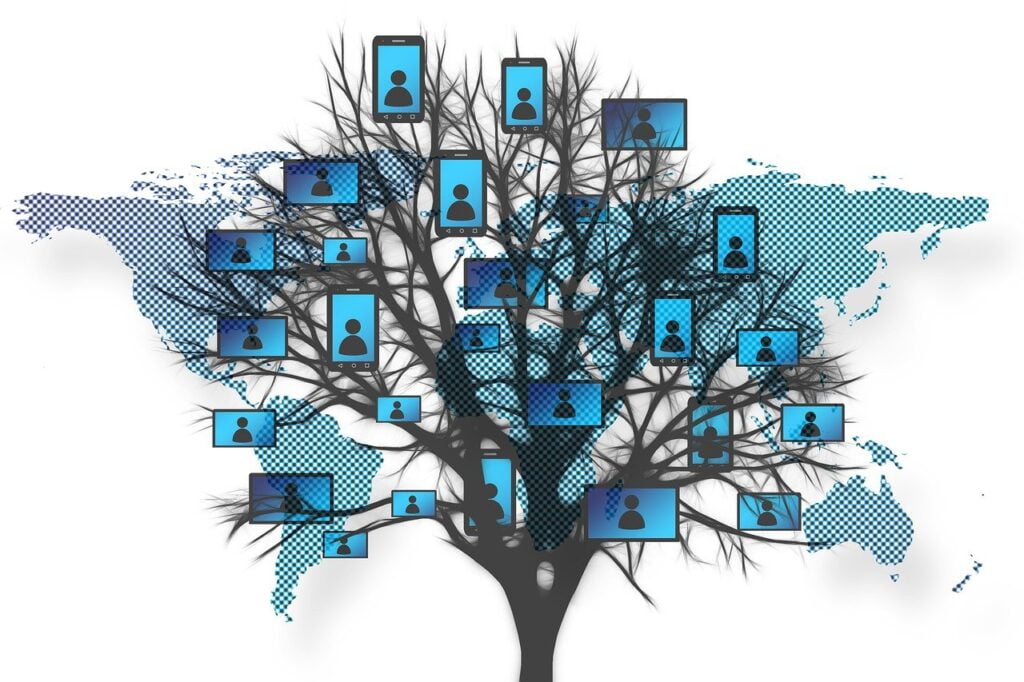
In today's digital age, choosing the right type of computer network can make the difference between a company's success and stagnation. This article unravels the various types of computer networks available, analyzing their features, advantages, and specific applications. Our goal is to provide you with the information necessary to make an informed decision that will boost your business's efficiency and productivity.
Types of computer networks: Which is the best option for your company?
Types of Computer Networks: Essential Fundamentals
Before we delve into the different types of networks, it is crucial to understand what computer networks are. At their core, a computer network is a set of interconnected devices that share resources and information. These systems form the backbone of modern technological infrastructure, facilitating communication and data exchange on a global scale.
Computer network types are primarily classified by their geographic scope, purpose, and technology used. Each type has its own characteristics and is suited to different business needs. Below, we will examine the most relevant options in detail so that you can determine which one best fits your organization's requirements.
LAN Computer Networks: Local Connectivity for Small and Medium Businesses
Local area networks (LANs) are probably the most common type of network in small and medium-sized business environments. These networks connect devices in a limited geographic area, such as an office, building, or small campus.
Key features:
- Limited geographic range (usually up to 1 km)
- High transmission speeds (from 10 Mbps to 10 Gbps)
- Low cost of implementation and maintenance
- Full control over the network infrastructure
LANs are ideal for businesses that need to share resources such as printers, files, and applications among a group of nearby users. Their speed and reliability make them perfect for tasks that require fast response and high bandwidth.
Common applications:
- Small and medium-sized offices
- Schools and Universities
- Retail stores
- Medical clinics
Implementing a LAN can significantly improve your company's operational efficiency by facilitating collaboration between employees and quick access to shared resources. However, it's important to consider scalability if your company has long-term growth plans.
WAN Computer Networks: Expanding Horizons for Global Corporations
Wide area networks (WANs) are the backbone of global connectivity. These networks connect devices and other networks across vast geographic distances, enabling communication between offices in different cities, countries, or even continents.
Key features:
- Extensive geographic coverage (potentially global)
- Variable transmission speeds (from a few Mbps to several Gbps)
- Increased complexity and cost of implementation
- Using Internet Service Provider (ISP) Infrastructure
WANs are essential for businesses with a presence in multiple locations that need to maintain constant communication and share resources on a large scale. Although they are more expensive and complex than LANs, they offer significant benefits for distributed business operations.
Common applications:
- Multinational corporations
- Retail chain stores
- Financial institutions
- Governmental agencies
Implementing a WAN can provide your business with a competitive advantage by enabling seamless collaboration between geographically dispersed teams and centralized access to critical resources. However, it is crucial to consider the ongoing costs and security challenges associated with this type of network.

MAN Networks: Solutions for urban and campus environments
Metropolitan area networks (MANs) occupy an intermediate position between LANs and WANs . These networks cover larger geographic areas than a typical LAN, but smaller than a WAN, generally encompassing a city or a large campus.
Key features:
- Medium-sized geographic coverage (generally up to 50 km)
- Intermediate transmission speeds (from 1 Mbps to 10 Gbps)
- Greater scalability than LANs
- Use of own or rented infrastructure
MANs are particularly useful for organizations that operate in multiple locations within a single metropolitan area or for educational institutions with large campuses.
Common applications:
- Large universities and colleges
- Municipal governments
- Hospitals with multiple facilities
- Companies with several branches in the same city
Deploying a MAN can offer your organization a balance between the performance of a LAN and the coverage of a WAN. This type of network is especially beneficial if you need to connect multiple nearby sites without incurring the costs associated with a full WAN.
PAN Networks: Personal Connectivity in Small Spaces
Personal area networks (PANs) are the smallest type of network in terms of geographic scope. These networks are designed to connect devices in a user's immediate personal space, typically within a radius of a few meters.
Key features:
- Very limited range (usually up to 10 meters)
- Moderate transmission speeds (up to 1 Gbps)
- Easy setup and low cost
- They often use wireless technologies such as Bluetooth or NFC
Although PANs may seem less relevant to enterprise environments, they can be extremely useful in certain contexts, especially with the rise of wearable devices and the Internet of Things (IoT).
Common applications:
- Connecting personal peripherals (headphones, keyboards, etc.)
- Portable medical devices
- Home automation systems
- Manufacturing and logistics environments
Implementing PANs in your company can improve employee productivity and facilitate the adoption of emerging technologies such as wearables and IoT sensors. However, it's important to consider the security implications and the management of these devices within the corporate environment.
SANs: Centralized storage for large volumes of data
Storage area networks (SANs) are a specialized type of network designed specifically to provide high-performance access to centralized storage systems. These networks are crucial for businesses that handle large volumes of data and require fast, reliable access to information.
Key features:
- Designed for data storage and retrieval
- High transmission speeds (typically 1Gbps to 32Gbps)
- High availability and redundancy
- Separating storage traffic from general network traffic
SANs are particularly valuable for organizations that need to manage large amounts of critical data and require exceptional performance and availability.
Common applications:
- Enterprise Data Centers
- Cloud Service Providers
- Financial institutions
- Media and entertainment companies
Implementing a SAN can provide your business with a robust and scalable solution for data storage, improving application performance and facilitating backup and disaster recovery management. However, it is important to consider the significant costs associated with implementing and maintaining this type of network.
CAN computer networks: Efficient communication in industrial environments
Controller Area Networks (CAN) are a specialized type of network designed for communication between control devices in industrial environments. Originally developed for the automotive industry, CANs have expanded to a variety of industrial applications.
Key features:
- Designed for real-time communication
- High resistance to electromagnetic interference
- Robust and efficient communication protocol
- Ability to operate in hostile environments
CANs are essential in industries where accurate and reliable communication between devices is crucial for safety and operational efficiency.
Common applications:
- Industrial control systems
- Factory automation
- Vehicles (cars, trucks, heavy machinery)
- Building control systems
Implementing CAN networks in your company can significantly improve the efficiency and reliability of industrial processes. However, it is important to consider compatibility with other systems and the need for specialized expertise for their implementation and maintenance.
VPNs: Security and remote access for modern businesses
Virtual private networks (VPNs) are not a type of physical network, but rather a technology that allows you to create a secure, encrypted connection over a public network, such as the Internet. VPNs are essential in the modern business world, especially with the rise of remote work.
Key features:
- end-to-end encryption
- Secure remote access to corporate resources
- Ability to securely connect remote offices
- Flexibility to work from anywhere
VPNs are crucial for businesses that need to provide secure access to corporate resources for remote employees or securely connect multiple locations.
Common applications:
- Teleworking and remote access
- Secure branch connection
- Data protection on public networks
- Access to geographically restricted resources
Implementing a VPN can significantly improve the security and flexibility of your network infrastructure. However, it is important to consider the impact on performance and the need for proper management of access credentials.
The OSI model and its relationship with network types
The OSI (Open Systems Interconnection) model is a conceptual framework that describes how data is communicated over a network. Although the types of computer networks we have discussed operate at different scales and for different purposes, they all adhere to some extent to the principles of the OSI model.
The OSI model consists of 7 layers, each with specific functions:
- physical layer
- Data link layer
- network layer
- transport cover
- session layer
- presentation layer
- application layer
Understanding the 7 layers of the OSI model can help you diagnose network problems and optimize the performance of your infrastructure, regardless of the type of network you use.
For example, in a LAN, the physical layer deals with the transmission of bits over Ethernet cables, while in a WAN, this layer may involve technologies such as fiber optics or satellite links. However, the upper layers of the OSI model, such as the application layer, work similarly across all types of networks.
Computer networks: key factors for choosing one
Selecting the ideal type of computer network for your business requires careful consideration of several factors:
- Size and geographic distribution: Do you have a single office or multiple locations?
- Data volume: How much information do you need to transmit and store?
- speed requirements: How fast do you need data to move?
- Budget: How much can you invest in network infrastructure?
- Scalability: How do you plan to grow in the future?
- Security: What level of protection does your data need?
- Regulatory requirements: Are there specific regulations that you must comply with?
By evaluating these factors in the context of your business, you can determine which type of network or combination of networks best suits your needs. Remember that it is not unusual for businesses to use multiple types of networks to meet different requirements.

Frequently Asked Questions About Types of Computer Networks
What is the main difference between a LAN and a WAN? The main difference lies in the geographic scope. A LAN covers a limited area such as an office or a building, while a WAN can span cities, countries, or even continents.
What type of network is best for a small business? For most small businesses, a LAN is sufficient. It offers high speed and low cost, ideal for sharing resources in a limited space.
How does the OSI model affect network type choice? The OSI model provides a framework for understanding how networks work, but it doesn't directly dictate which network type you should choose. However, understanding the seven layers of the OSI model can help you better evaluate the capabilities of different network types.
Is it possible to combine different types of networks? Yes, it's common for companies to use multiple types of networks. For example, they might have LANs in each office connected via a WAN, and use VPNs for remote access.
What are hybrid computer networks? Hybrid networks combine different types of networks to leverage the advantages of each. For example, a company might use a combination of LAN for local operations, WAN to connect remote offices, and cloud services for certain applications.
How does the choice of network type affect information security? The choice of network type can have a significant impact on security. For example, VPNs offer a high level of security for remote connections, while LANs allow for greater control over physical access to the network.
Conclusion: Types of computer networks: Which is the best option for your company?
Choosing the right type of computer network is critical to the success and efficiency of any modern business. Each type of network, from local LANs to global WANs to specialized SANs and CANs, has its own strengths and ideal applications.
When considering computer network types for your organization, it's crucial to assess your specific needs in terms of geographic reach, data volume, speed requirements, budget, and future scalability. Also, don't forget to consider how the OSI model and its 7 layers can help you understand and optimize the operation of your network, regardless of the type you choose.
Remember that you are not limited to just one type of network. Many successful companies implement hybrid solutions that combine different types of networks to meet their diverse needs. For example, you might use a LAN for local operations, a WAN to connect remote offices, and a VPN to provide secure access to employees working from home.
Ultimately, the best option for your business will be one that fits your current needs, but also has the flexibility to grow and evolve with your business. Don't hesitate to consult with networking experts if you need additional guidance in making this important decision.
Network technology is constantly evolving, with new innovations like 5G and edge computing redefining what’s possible in terms of connectivity and performance. Stay informed about these emerging trends to ensure your network infrastructure remains competitive and efficient in the years to come.
Remember, the right network doesn't just connect devices, it also boosts productivity, drives innovation, and opens up new opportunities for your business. Invest the time to make the right choice, and you'll reap the benefits for years to come. Computer networks go way beyond that!