- A SIM server centralizes SIM and eSIM devices to securely manage and provision them remotely.
- RSP with SM-DP+, eUICC, and MDM enable eSIM deployment at scale on Windows 11 and IoT.
- Real-life cases: cameras, PBX, VPN, Azure Private 5G with policies, fixed IPs, and power control.
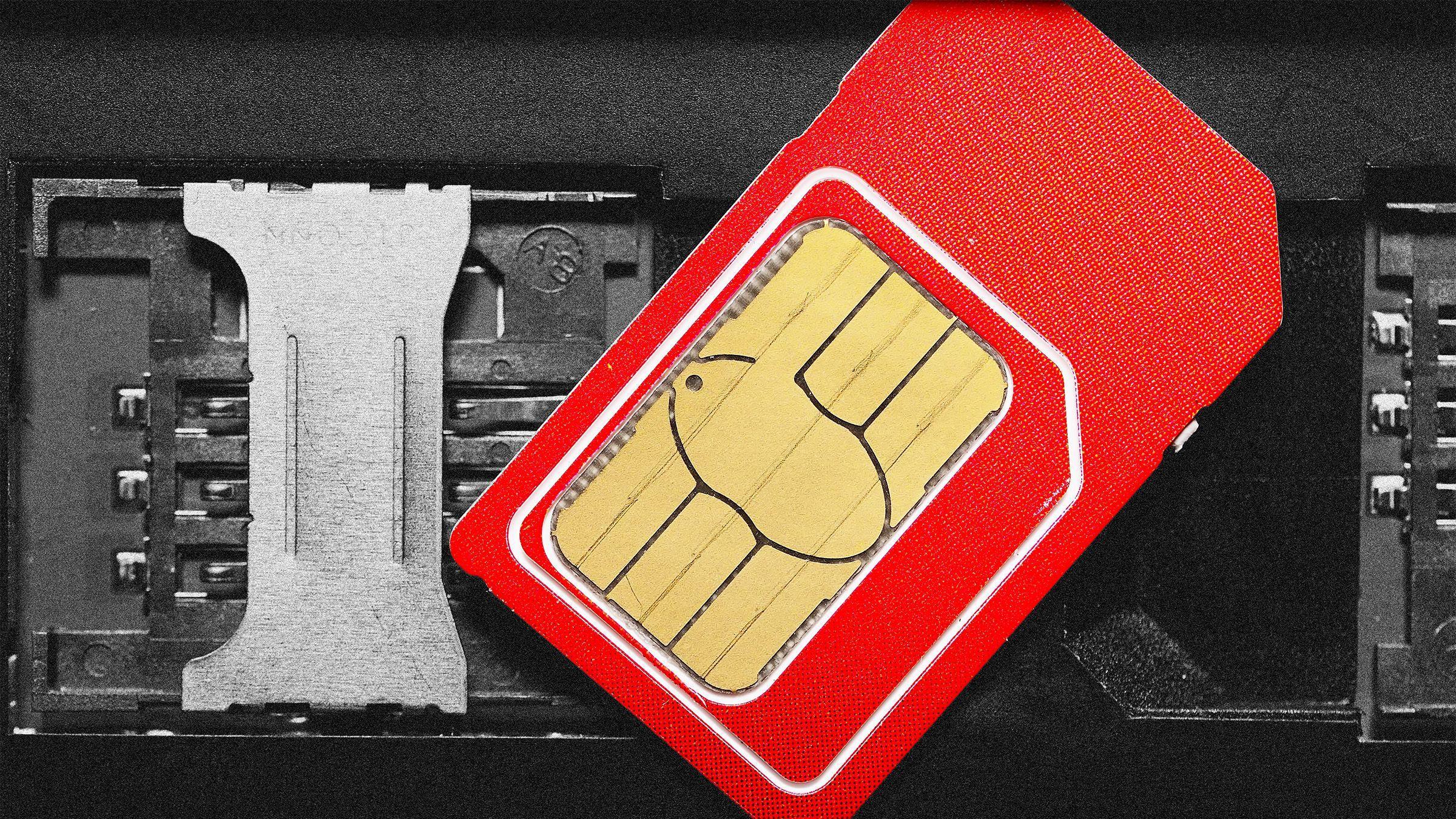
If you're wondering exactly what a SIM server or SIM hosting is, you've come to the right place: we'll break it down from top to bottom with real-world examples, eSIM provisioning, management on Windows 11 and Azure, and integration with PBXs and cameras. The key idea is to connect physical SIMs or eSIMs with platforms that allow you to host, manage, and provision them remotely , avoiding physical contact with the cards and accelerating deployments where mobile connectivity is critical.
In addition to explaining the concept, we'll see how it intertwines with eSIM RSP standards, MDM policies, SM-DP+ addressing, IMEI blocking, VPNs for accessing devices with private IPs, and cloud tools for orchestrating SIMs in private mobile networks. We'll integrate best practices, limitations, and operational steps that are currently applied in corporate, IoT, and security environments.
What is a SIM server and what does SIM hosting consist of?
A SIM server is an infrastructure layer that centralizes SIM cards or eSIM profiles to serve them to devices and applications without physically handling the card. In SIM hosting scenarios, SIMs are inserted into hardware such as a SIM bank or reader, and their credentials are securely exposed over the network , allowing you to assign that mobile identity to different devices under your control.
This model relies on cloud computing and databases where encrypted credentials are stored with access controls. Mobile connectivity becomes a managed and shared resource , reducing logistics, accelerating time-to-market, and simplifying large-scale operations, from testing and QA to IoT fleets and communications backups.
Services like SIM hosting from specialized providers explain the process simply: a physical SIM card is inserted into a device capable of reading it and securely replicating its data to the server; then, a virtual SIM card is exposed so the user or system can connect to the mobile network without touching the original card. The data is encrypted and stored in a secure database , allowing the organization to operate remotely and centralize control.
Practical advantages include centralized inventory, visibility into status and usage, usage rules, and the ability to reuse plans across devices. Sharing SIM cards or dynamically assigning them can reduce hardware and plan costs , especially during pilot programs, temporary shipments, or peak activity periods.
eSIM ecosystem components and remote provisioning
With eSIM, identity no longer resides on a removable card but is instead stored in a secure embedded container called an eUICC, identified by a unique EID. eSIM profiles representing mobile subscriptions are installed on top of this eUICC ; multiple profiles can be stored, although only one is active at a time on most devices.
- To distribute profiles, the ecosystem defines SM-DP+ and SM-DS, in addition to the local LPA assistant on the device. In consumption, the model is pull with PKI-based authentication and root certificates shared by eUICC and SM-DP+ compatible.
- In M2M, control is more managed and SM-SR with PSK authentication comes into play. Both architectures share foundations but are not interchangeable., so you have to align platform, profiles and devices.
It's worth remembering that these devices coexist with SIM hosting: you can have physical SIMs hosted in a SIM bank and, at the same time, manage eSIM profiles via RSP , choosing on a case-by-case basis what best suits security, cost, and logistics.
Windows 11 and Intune: Provision eSIM at scale
In Windows 11, the download server is recommended: add the operator's SM-DP+ FQDN to a catalog policy. You can also import activation codes as CSV files ; this is the supported method in Windows 10. It's crucial to coordinate with your operator to associate a profile with each of your devices' EIDs.
- Requirements: eSIM devices, devices enrolled in Intune, a carrier capable of provisioning profiles by EID, and a list of EIDs for your computers. Intune will need the FQDN of the SM-DP+ without the https prefix. in politics.
- Typical flow: you close a deal with the operator, you share an EID, they prepare a profile per EID on their SM-DP+, the user boots the device, authenticates, and the MDM pushes the policy; The device contacts the SM-DP+, downloads the profile and is operational with APN and telephony configured.
- Configuration options: automatic activation of the detected profile, server FQDN, and the ability to show or hide the local interface for managing eSIM. If you introduce multiple servers, the current implementation uses only the first one..
- Best practices and limits: Segment your targeting to devices with eSIMs, or you'll see assignment errors; a successful status in Intune only confirms that the configuration has been configured. does not guarantee that the profile is active; There is no remote profile wipe from Intune at this time; Intune doesn't natively differentiate between devices with and without eSIMs.
Use cases: surveillance cameras, IoT and operational control
Cameras with cellular connectivity clearly demonstrate the value of a SIM server. When an event occurs, the 3G/4G/5G network allows photos and videos to be uploaded to the cloud or a private server , and even sent to a security operator's mobile phone, triggering alerts and automated responses.
In these installations, it's advisable to use a multi-operator or multi-network SIM card to reduce dependence on a specific network. This minimizes outages in environments like construction sites or properties without a fixed network , and provides autonomy where Wi-Fi is unavailable or unreliable.
For security, prioritize profiles with encryption and fraud protection. Remote access for viewing recordings or configuring equipment should be segmented , and if you're working behind a mobile network NAT with a private IP address, an OpenVPN server simplifies access via a static private IP address assigned to the SIM card from the platform.
Management platforms typically allow you to restrict access to specific countries and networks, set data limits, and receive usage alerts. Limits prevent unexpected bills, but they can interrupt critical services if there isn't enough capacity; therefore, data pools offset usage between lines within the same group and smooth out peaks.
Another common measure is IMEI blocking, which links each SIM to a single device. If a SIM is stolen, it won't work in another device unless you unlock the IMEI through the portal. This control reduces misuse and simplifies audits.
Integration with VoIP and PBX: Cellular Gateways
If you manage a PBX and want to leverage a mobile phone plan as a trunk, there are GSM/3G/4G gateways that convert it to SIP. Extensions can make outgoing calls and receive incoming calls over the mobile network , with routing by prefixes, recording on the PBX, and mapping of DIDs to queues or IVR.
In this setup, a SIM server adds inventory control, usage limits, and IMEI blocking of the authorized gateway. If you work with multiple lines, data or minute pools optimize spending , and a VPN like OpenVPN allows you to securely access the gateway or recordings when you're out and about.
Physical SIM vs. eSIM: Differences and Compatibility
The traditional SIM and the eSIM serve the same purpose: to identify the line on the mobile network. The eSIM is soldered onto the circuit board as an eUICC and is activated by software , hosting multiple profiles from the same or different operators and allowing switching as needed without changing physical SIM cards.
Activation is usually straightforward with a QR code that points to the SM-DP+. You securely download the profile and the phone registers ; if you subscribe to a travel service, you add another profile and switch between them as needed. This speeds up number porting, eliminates fragile trays, and frees up space for batteries or sensors.
- Apple iPhone: XR, XS, XS Max; the 11 series including the Pro; SE 2 and SE 3; the 12 series in all its variants (Mini, Pro, Pro Max, and standard); the 13 series (Mini, Pro, and Pro Max); and the 14 and 15 series in their various versions.
- Samsung: from Galaxy S20/S20+/Ultra, S21+ and Ultra 5G, S22/S22+/Ultra, S23/S23+/Ultra and S24/S24+/Ultra; Note 20 and Note 20 Ultra 5G; Fold, Z Fold2/3/4 and Z Flip/3/4/5 5G foldables; and A54 5G.
- Google Pixel: 2 XL, 3, 3a/3a XL, 4/4 XL/4a, 5/5a, 6/6A/6 Pro, 7/7A/7 Pro, Pixel Fold and 8 series.
- Xiaomi: 12T Pro, 13 Lite, 13 Pro and 13T Pro.
- Motorola: Razr 2019, Razr 5G, Razr 40 and Razr 40 Ultra, Razr+, Edge+, Edge 40/40 Pro/40 Neo, G52J 5G and its second generation, G53J 5G and G53 5G.
- OthersHonor Magic 4 Pro, Magic 5 Pro, 90, and X8; OnePlus 11/12/12T Pro; Vivo X90 Pro and X29 Lite 5G; Nokia X21, X30, and C60 5G; and Sony, which adds support for models in its Xperia range.
In corporate environments, combining eSIM with MDM policies and a SIM server provides centralized governance of profiles and usage. You can enforce usage rules, automate activations, and maintain traceability for auditing and compliance.
SM-DP+ Address: What it is, how to get it, and how to configure it
The SM-DP+ address identifies the operator's server that prepares and delivers eSIM profiles. Its role is to securely download the profile to the eUICC after receiving confirmation from the operator that the subscription is ready for that EID.
To obtain it, you usually scan the activation QR code, which already contains the information needed for the device to connect to the server. If the QR code fails, you can request the address from your carrier's support via email or phone and use it for manual activation.
On iPhone, if the QR code doesn't work, you can activate the eSIM manually. Find the address and activation code in the instructions or ask your carrier . Go to Settings, open eSIM Manager, tap Add eSIM, choose Enter Activation Code, select Enter Manually, and enter the code and the SM-DP+ address they provided.
Note that the exact process varies depending on the device and system version. On many devices, the SM-DP+ address is already pre-configured , and simply scanning the QR code is enough for everything to happen smoothly.
SIM management in private mobile networks with Azure
If you operate a private mobile network, SIMs are managed as resources in Azure. You need to sign in to the portal with an account that has the Contributor role at the subscription level and know the name of the Mobile Network resource that represents your network.
To view existing SIMs, go to the Mobile Network resource and open the SIMs menu; you can list all SIMs or filter by SIM groups. There's also a statistics view showing connected, disconnected, or idle devices, and details by IMSI including mobile identities, location, connection, and sessions, which vary depending on whether the device is on 4G or 5G.
SIMs need an assigned policy before using the network. From the list, select the target SIMs and choose Assign SIM policy , select the policy, and confirm the deployment. Verify that the policy column and the field on the SIM card reflect the change.
If you want to assign static IPs, you must first configure static IP assignment and pools per data network in your Packet Core. For each SIM, you can assign different IPs per data network and per site , always within the pool defined for that network. You will need to know the SIM's policy, the data network name, and the site where the IP will be applied.
- Open the Mobile Network resource and enter SIMs.
- Select the SIMs you want to configure and press Assign Static IPs.
- For each SIM, set name, policy, slice (for example slice-1), data network, site and static IP; Save the configuration and repeat if you assign multiple IPs per site..
- Confirm Assign static IP configurations and wait for the deployment; then verify in the SIM card or list that the policy and IP address are applied.
Regarding 5G privacy, you can enable SUPI concealment to mitigate identity tracking over the radio. See the Enable SUPI concealment guide for steps specific to your environment.
If you need to remove a SIM, select it from the list, press Delete, and confirm. When you want to add more, you can provision them from the portal or using ARM templates to automate deployments and maintain consistency.
Not to be confused with traditional server hosting
The SIM server world is not the same as renting a physical server for your applications. Housing and rental services in data centers offer hardware and operations of a different nature : racks, redundant power supplies, climate control, and internet connectivity with multiple routing options.
A typical vendor offers Dell, HP, and Intel systems in 1U, 2U, and 4U form factors, SATA or SAS drives with RAID 0, 1, 5, and 10 configurations, single or redundant 750W power supplies, and options for one or two Intel processors. This is accompanied by a support SLA with a 4-hour response time in case of disaster , 24/7 monitoring, and 365-day service.
Operational advantages include access via Terminal Server or SSH, monitoring of services such as HTTP, FTP, and POP3, on-site technical support, bandwidth monitoring, a dedicated IP address with reverse lookup, and DNS for your domain. They also include telephone support and backup services . In other words, it's infrastructure for your software, not a SIM orchestration layer.
On websites that provide information about these technologies, it's common to use Google Analytics to measure usage and improve content. Anonymous information such as the number of visitors or popular pages is collected , and keeping this cookie active helps to iterate on the website and the user experience.
Common doubts and particular scenarios
A recurring question: Is it possible to set up a Minecraft game server using a router with a SIM card and a connected PC, 24/7, for 2 or 3 players who connect for up to 7 hours a day? Technically and legally, it may be possible, but there are nuances : many mobile networks use CGNAT, which makes opening ports difficult; stability can fluctuate; and resource consumption can increase more than expected if mods or a large map are used.
In terms of data consumption, a vanilla server typically moves tens of KB per second per player, although there are spikes. For 2-3 players, you can conservatively estimate between 15 and 50 GB per month just for game traffic, plus overhead, backups, and remote administration. Reserving 50-100 GB provides a buffer to avoid running out.
If you're using CGNAT, one solution is to create a reverse VPN tunnel to a VPS or use an OpenVPN-type service so players can connect through your private network. This allows you to expose the server port without relying on the mobile carrier's NAT , while maintaining security and proper logging.
Ecosystem Notes and Related Content
If you're working on network performance testing or 5G backhauls, tools like iperf3 in multithreaded environments help you get the most out of 10 GbE links. It's a useful reference when validating throughput between gateways, PBXs, and servers , ensuring that the transport layer isn't the bottleneck.
In the cloud, the availability of accelerators like Intel Gaudi 3 on IBM Cloud demonstrates how enterprise AI is driving new network architectures and topologies. These trends impact how video, voice, and data are distributed , and how mobile services are integrated with analytical workloads.
Among consumer content, you'll also find support articles like "Spotify Web Not Working: Causes and Alternatives." These are diagnostic guides that, while not directly addressing SIM cards, teach useful patterns for resolving issues with connected services.
On the eSIM front for travelers, some providers highlight ratings with tens of thousands of reviews on Trustpilot and blogs written by passionate authors specializing in travel, roaming, and destination guides. This accessible approach helps eSIM technology reach the end user without unnecessary jargon.
A SIM server allows you to remotely host, orchestrate, and provision mobile identities. Combined with eSIM and RSP, MDM on Windows 11, consumption control, IMEI blocking, VPN, and Azure management for private networks, it covers everything from field cameras to office PBXs with a common governance layer. Furthermore, by addressing operational aspects such as limits, pools, visibility, and privacy, you'll gain in security, cost-effectiveness, and deployment speed without sacrificing the flexibility each project demands.
