- Search Live enables conversational voice searches with contextual understanding and real-time spoken responses.
- It integrates with the Google app and runs in the background, displaying useful links and allowing you to resume previous conversations.
- It uses advanced artificial intelligence with Gemini models and aims for a multimodal experience, with a camera coming soon.
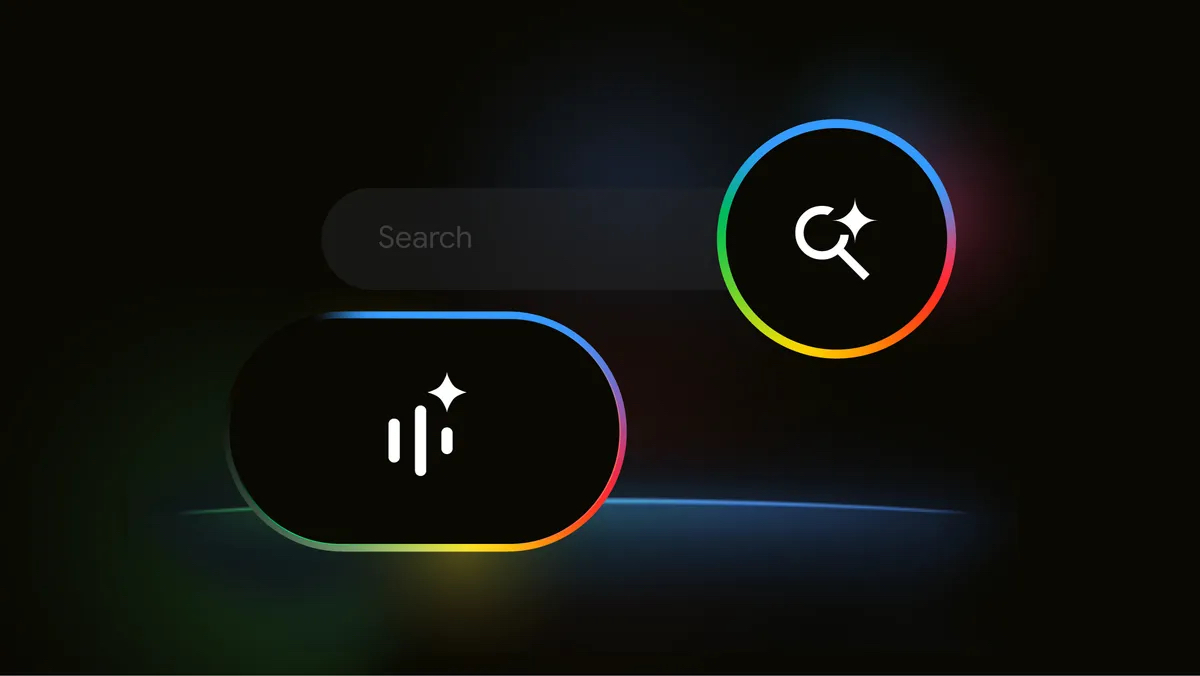
The way we search for information online is changing rapidly. Aware of new digital habits and the rise of artificial intelligence, Google has launched Search Live, a conversational and multimodal experience that transforms the traditional way of interacting with the search engine. This innovation, currently available only in the United States and with limited access through Search Labs registration, represents a leap forward in voice search and contextual understanding, taking the user experience to another level.
Since its announcement at Google I/O 2025, Search Live has generated significant interest among both users and technology experts. The feature goes beyond traditional searches, offering a natural, conversational interaction using voice and, in the very near future, the device's camera. This article will explore in detail how Search Live works, what this technological revolution entails, and the possibilities it opens up in the field of AI-powered search.
What is Search Live and what is its purpose?
Search Live is the new conversational feature Google has added to its mobile app, designed to enable natural, fluid, and personalized voice searches. This feature represents an evolution of traditional search systems, combining the accuracy and reliability of Google's standard search engine with the capabilities of the company's most advanced language models, such as Gemini 2.5 Pro, Flash, and Flash Lite.
The goal of Search Live is to provide a much more human, intuitive, and seamless search experience. It doesn't just offer results for specific queries; it allows you to have real-time conversations with artificial intelligence, follow previous threads, and even resume past searches thanks to its integration with the AI Mode history. All of this is delivered with spoken responses, making it easy to use in any situation, even when the device is locked or you're switching apps.
Main features and operation
The essence of Search Live lies in its multimodal and conversational approach. When the user activates the feature (via a new icon that replaces the classic Google Lens button, displaying a magnifying glass next to the Gemini star), a session begins where they can talk to the AI as if it were a personal assistant fully integrated into their mobile device.
- Renewed interface: Access to Search Live is through the Google app on Android or iOS, demonstrating Google's commitment to making AI accessible from anywhere, anytime.
- Continuing conversation: One of the distinguishing advantages is that the conversation isn't interrupted even if the user locks their phone or switches to another app. This allows for a natural, seamless flow.
- Voice responses and relevant links: Search Live provides spoken responses, but also accompanies the answers with useful and recommended links in real time, making it easy to expand the information quickly.
- Contextual understanding: The AI is able to retain the context of the conversation, allowing you to ask follow-up questions without having to repeat information. For example, after asking why a phone is heating up, you can ask, "What if it stays the same after restarting it?" and the AI perfectly understands the thread.
Google has placed special emphasis on recording all interactions in the AI Mode history. This allows users to return later, review conversations, or repeat previous queries, either using voice or text, thanks to the integrated transcription feature.
Technology and AI models behind Search Live
One of Search Live's technological cornerstones is its integration with the Gemini models, specifically developed to maximize conversational interaction. The models used—Gemini 2.5 Pro, Flash, and Flash-Lite—are optimized to provide fast and varied responses, as well as to handle multiple queries simultaneously, thanks to a technique known as "query fan-out."
This advanced architecture ensures both fast response times and high-quality, diverse results. Furthermore, it allows Search Live to display not only spoken answers but also suggestions and links to relevant sources, fostering an exploratory and discovery-based approach.
The evolution towards camera and voice search
Currently, continuous visual interaction has not yet been fully rolled out in Search Live, although Google has indicated that it will be a reality very soon. The next step, announced under the umbrella of the ambitious Project Astra, is to incorporate the camera as an integrated tool in AI-powered search.
This means that, soon, users will be able to show the AI what they are seeing in real time, conversing about what the camera captures. In this way, the app will be able to understand visual contexts, such as objects, text, or scenes, and respond automatically, blending vision with conversational interpretation.
Practical example: how Search Live is used in real life
Using Search Live is incredibly simple and feels like chatting with a smart assistant that never turns off. Once you've activated the feature in the Google app (if you're participating in the Labs testing program and live in the US), simply tap the new "Live" icon below the search bar to get started.
The user can then voice any query, to which the AI will respond with spoken input and, if relevant, links to useful websites. Additional questions or requests for clarification can be made, and the AI will remember the thread of the conversation, allowing for a fluid and natural exchange.

For example: If you ask, “What are the best ways to pack a weekend bag?”, Search Live will respond with a verbal explanation, including helpful links. If you want to delve deeper, you can then ask, “How should I pack my sneakers?”, and the AI will continue answering within the same context, without losing the flow of the previous conversation.
In addition, you can view a transcript of the conversation and even continue typing it if you wish. This is especially useful for those who switch between voice and text or want to easily refer to the information later.
Availability, requirements and planned expansion
For now, Search Live is limited to users in the United States enrolled in the Google Labs beta program. This phased rollout strategy is typical for major Google features, allowing them to refine the functionality before its global deployment.
To access Search Live, you need the Google app on Android or iOS and to agree to participate in the AI Mode beta. Users who have the feature enabled will see the new icon within the app. However, Google has stated its intention to expand availability to more countries and operating systems in the near future, as capabilities evolve and visual interaction is integrated.
Search Live vs. Other Proposals: Competition and Differentiation
The push for conversational search isn't unique to Google, but Search Live stands out for its native integration into the main search engine app and the power of its AI models. Its main competitors include ChatGPT Search, Perplexity AI, and even the upcoming Siri, which will also incorporate advanced language models.
However, Google differentiates itself by combining:
- Its huge database and web results indexing system.
- A multimodal experience that will gradually integrate voice and camera.
- The familiarity and trust that its historic search engine generates.
All of this makes Search Live the spearhead of Google's strategy to offer a ubiquitous, always-available AI assistant that goes beyond traditional search.
Audio Overviews: The New Frontier in Spoken Summaries
In parallel, Google is testing features like Audio Overviews, which are spoken summaries of search results, accompanied by links and sources for further exploration. This capability expands access to information, allowing users to listen to results instead of reading them, and moving ever closer to a completely natural search experience, adapted to the pace of contemporary life.
Advantages and possible applications of Search Live
The arrival of Search Live has a significant impact on both the user experience and the AI ecosystem applied to search. These are some of its main advantages:
- Fluency and naturalness: Uninterrupted conversation and context-sensitive information make searching for information much faster and more enjoyable.
- Intuitive interface: Direct access from the main app, without having to learn a new tool.
- Spoken responses: Ideal for people with vision difficulties, or for situations where reading is not comfortable.
- Complement to the classic search: AI does not replace the traditional search engine, but rather complements and enriches it.
- Multitask: You can browse or perform other activities on your phone while maintaining a conversation with the AI.
- Access to various information: Thanks to the "query fan-out" technique, varied and reliable results extracted from different sources on the web are offered.
The future of search according to Google
Google envisions a future where interaction with artificial intelligence will be present in all aspects of digital life: search, email, connected home, car, and more. Search Live is just the first step on a path toward an increasingly conversational, multimodal web adapted to new forms of human interaction.
The company plans to continue enhancing this feature with new capabilities, such as visually displaying what is being searched, learning from previous conversations, and offering recommendations increasingly tailored to the user's specific context. All of this occurs within an environment characterized by the security, privacy, and reliability that characterizes Google.