- Android 16 is now available in stable form and has begun rolling out to manufacturers such as Google, Samsung, and Xiaomi.
- Security improvements have been introduced: Advanced Protection and alerts against fake phone networks or Stingray attacks.
- Redesigned Phone app with new tabs, a new look, and gestures for managing calls.
- Rolling update across different makes and models, although some devices are affected by initial bugs.
The arrival of Android 16 marks a new step in the evolution of Google's mobile operating system, both in security features as in design and usability. Now available in stable version, the update begins its arrival to the pixel devices and will be rolled out to other major brands in the Android landscape in the coming weeks. This new version incorporates relevant changes in the user experience and is accompanied by advanced measures to address modern threats and enhance privacy.
Although the update Although the launch of the app launched with promises of stability and new features, not all users are experiencing a smooth transition. In the first few days after launch, issues have been reported with gesture navigation, alarm functionality, and SIM and GPS connectivity. Google is making progress in addressing these issues, highlighting the speed with which it has fixed the bug that blocked the "back" gesture in navigation, a problem that had also appeared in previous versions.
Android 16 rollout: Which phones are coming first?
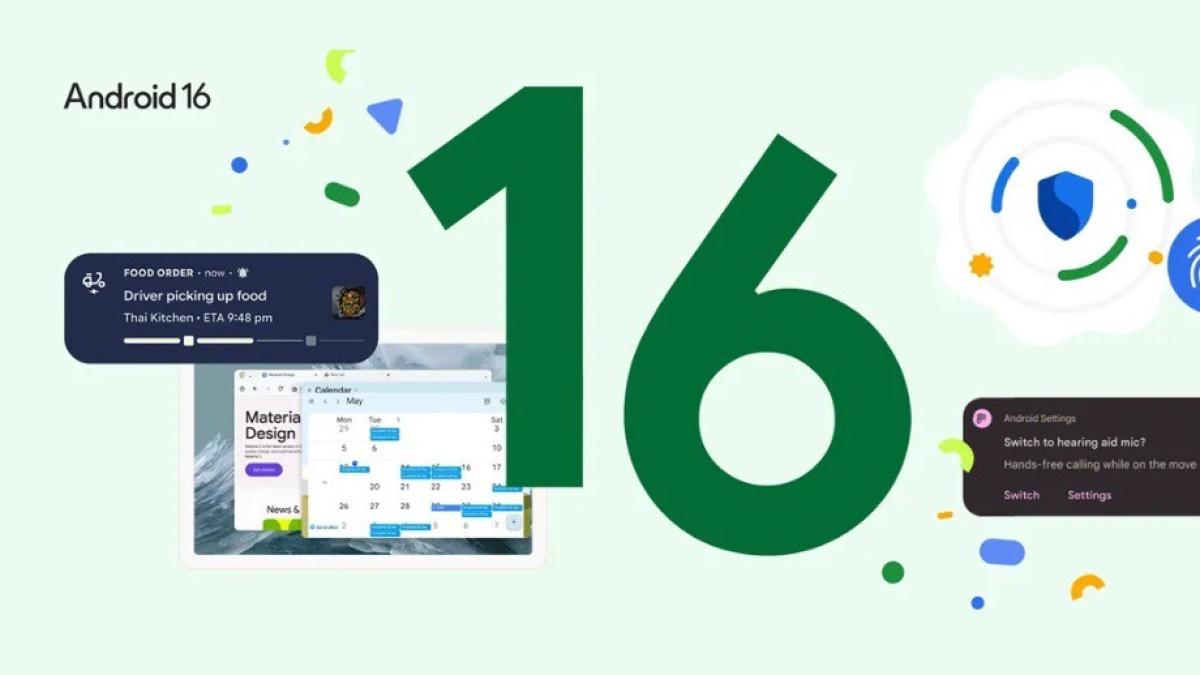
As usual, the google pixel phones are leading the rollout of Android 16, including the Pixel 6 and later, as well as Pixel tablets. Major manufacturers such as Samsung, Motorola, Xiaomi, OnePlus, OPPO, Realme, and Vivo have also announced their first compatible devices, although in many cases the full, definitive list is yet to be confirmed. Samsung maintains its strategy prioritizing the high and mid-range, while Xiaomi and its sub-brands (Redmi, POCO) are preparing a massive update that will include up to 65 models along with the jump to HyperOS 3.0. Other brands such as Motorola, Nothing, and OPPO are also outlining schedules for updating their recent devices.
In general, the devices launched in the last two years have a good chance of receiving Android 16 during this semester, although the exact date will vary depending on the manufacturer and country.
New security features: Advanced Protection and Stingray attack defense
One of the main focuses of Android 16 is the to maximise security and your enjoyment.. Google launches Advanced Protection, a comprehensive and easy-to-activate feature that brings together tools such as theft detection blocking, inactivity restart, insecure network scanning, automatic blocking of unknown apps, and suspicious call filtering into a single panel. This set is managed in the background and does not require continuous user intervention, protecting the device from common threats and unauthorized access.
Furthermore, Android 16 goes a step further by introducing warnings of suspicious telephone networks. Thanks to a system that detects changes between encrypted and unencrypted networks or access to unique identifiers (such as IMEI or IMSI), users will receive notifications if connected to fake towers —the so-called Stingray attacks—capable of intercepting data and communications. This protection will only be effective on terminals compatible with version 3.0 of the radio hardware (IRadio HAL), so in the initial stages only certain models will be able to fully benefit from it. Other security improvements include battery charge limits to prevent deterioration, reinforced biometric controls, and a more robust integration in biometric data and device management.

Visible changes: new design and features in the Phone app
Android 16 bets on the modernization of the visual appearance with the arrival of the Material 3 Expressive design, especially noticeable in the Google Phone appThe interface has been reorganized, adding new tabs for easier navigation: the classic sections now include "Home," "Dialer," and "Voicemail," while "Favorites," "Contacts," and "Recents" have been reorganized. The "Home" section centralizes favorite contacts at the top with larger icons and displays the call history just below, allowing quick access to relevant communications.
Among the novelties stands out the new call history design: Repeated calls from the same number are no longer grouped together, but rather each call is displayed individually and chronologically. Contact profile photos have evolved into angled frames for easier identification. Call management interaction has also changed, replacing the old vertical swipe gesture to accept or reject calls with a horizontal gesture, designed to reduce handling errors.
This redesign seeks to make better use of space on large-screen devices and improve everyday usability, accompanying the transition to a more visual and intuitive environment on Android.
More updates: multitasking, AI, haptic controls, and everyday improvements
La stable version of Android 16 It also comes with multiple adjustments aimed at the user experience. The haptic controls for greater precision in actions like adjusting volume or brightness, and the screen refresh rate now dynamically adapts to the content being viewed. The notifications section includes an app grouping system and a revamped volume panel for more efficient audio management.
For devices with large screens, Android 16 incorporates improvements in multitasking, allowing you to group and resize applications, create custom keyboard shortcuts, and organize your desktop with adjustable icon sizes. Additionally, LE Audio hearing aid support and camera compatibility have been fine-tuned, preparing the system for an ever-widening range of technological and accessibility needs.
According to the Artificial IntelligenceWhile the major new features will arrive in successive updates, new features are already anticipated in apps like Google Photos and Messages, where AI-based editing and advanced customization will be implemented for group chats.
The Android 16 update brings with it some initial issues, including reports of system crashes and issues with key apps, as well as issues with alarms or connectivity. Google and major manufacturers are already releasing fixes for the most pressing bugs, and the situation is expected to improve as future monthly updates are rolled out.
Android 16 represents a significant advance in security, design and customization for compatible smartphones and tablets, strengthening user protection and modernizing the user experience in every aspect.