- The NFC 15 standard extends the range of NFC to 2 cm, improving usability and speed.
- Facilitates mobile payments, wearable integration, and compatibility with the Digital Product Passport (NDPP).
- Its implementation will require new hardware and will begin in the fall of 2025.

NFC technology, present in most modern mobile devices, has revolutionized the way we interact with the world around us, enabling everything from contactless payments to electronic identification and access management. In 2025, the NFC Forum took a step forward with the official launch of NFC Release 15 , a standard that promises greater range, an improved user experience, and new applications for countless connected devices.
The arrival of this version represents a key update for both manufacturers and those of us who use NFC in our daily lives. What really changes with this standard? When will we see the benefits in our phones and gadgets? Below, we explain in detail everything you need to know to stay up-to-date on NFC 15 and understand its transformative potential.
What is NFC 15 and why is it relevant?
NFC Release 15 is the latest evolution of the NFC (Near Field Communication) standard, the technology that enables short-range wireless communication between devices. Thanks to NFC, you can pay in stores simply by tapping your phone against another device, use public transportation, open smart doors, or transfer data by simply bringing two devices close together. Now, with version 15, the standard has been updated to offer greater range, speed, and versatility.
The development of NFC 15 has focused on addressing some of the most common limitations of the previous generation, such as the short operating range and the need for very precise alignment between the transmitter and receiver. In this way, the new version will allow for a much more natural, convenient, and efficient experience in areas such as mobile payments, electronic identification, transportation, wearables, and other applications that make contactless connectivity commonplace.
Main technical innovations of NFC 15
The most notable new feature of NFC 15 is the extended connection range. Until now, most NFC devices needed to be practically touching each other, or at most, separated by only 0,5 millimeters , for the system to function correctly. This was one of the best-known peculiarities (and limitations) of the original NFC technology.
With the arrival of version 15, the maximum connection range has quadrupled, increasing from 5 millimeters to 2 centimeters . This means that it will no longer be necessary to bring your mobile phone, smartwatch, or any other compatible device so close to the payment terminal or reader; a simple gesture will suffice for the system to recognize and process the action.
This increased range also means that precision and exact alignment are no longer a requirement , eliminating one of the minor inconveniences that sometimes frustrated users: having to find the exact position for the payment to be validated or for the data transfer to be completed correctly.
Furthermore, the NFC 15 specification introduces improvements in detection and transmission speed , making connections smoother and transactions much faster. According to sources within the NFC Forum, users will notice more agile, reliable, and simple interactions, resulting in a much more satisfying and natural user experience.
Impact on mobile payments, transportation, and wearables
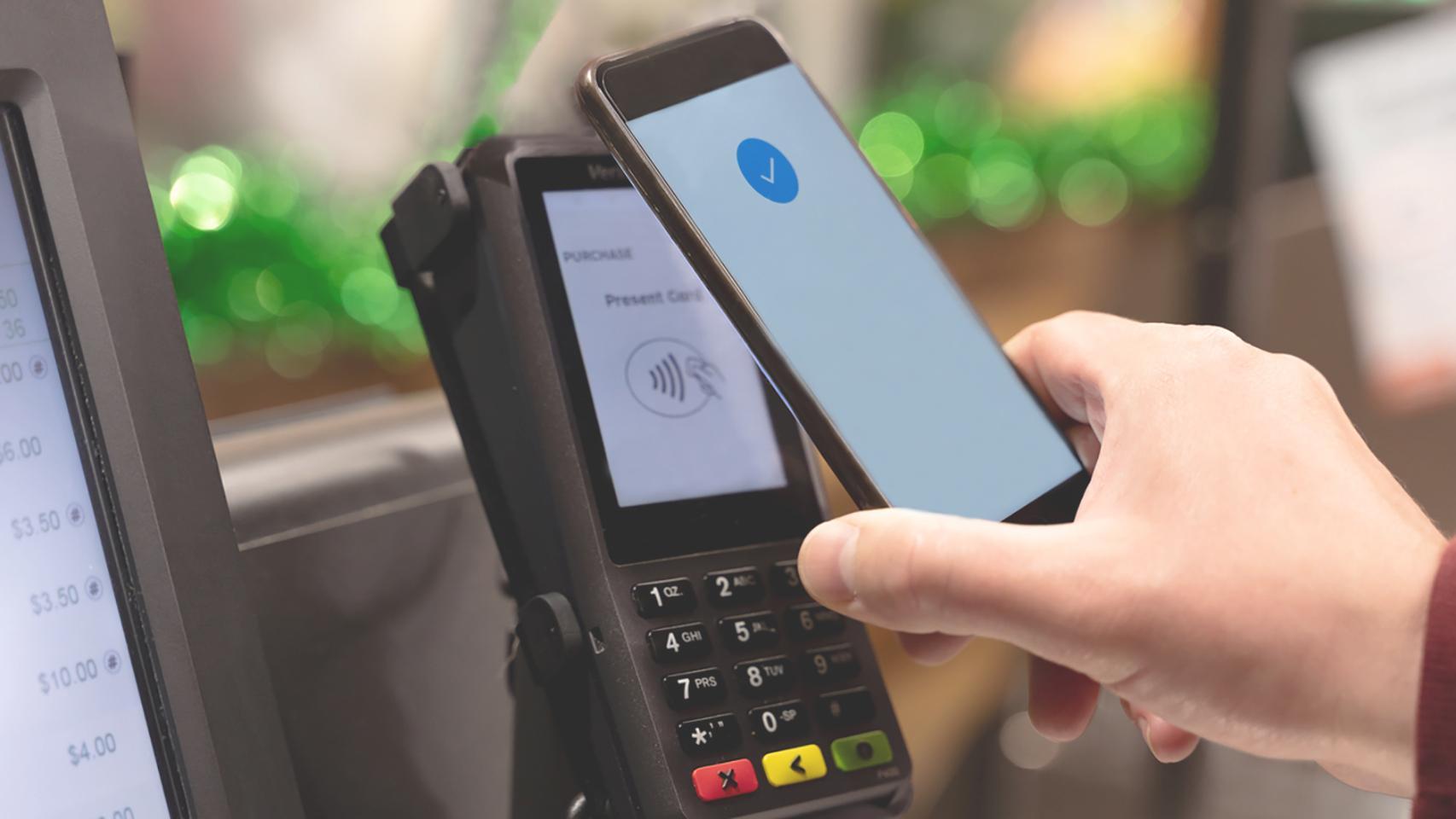
The biggest leap forward with NFC 15 will be in the area of mobile and contactless payments . The fact that you won't have to literally hold your smartphone or smartwatch up to the merchant's terminal will make transactions more convenient and faster. Simply bringing the device close will validate the transaction almost instantly, representing another step towards a truly contactless experience.
Furthermore, another strength of NFC 15 is its improved compatibility with small devices , such as smart bracelets, rings, and all types of wearables. Many users already use these gadgets for payments or identification, but until now they suffered even more from the range and alignment limitations of traditional NFC. With the new version, these devices will be able to interact with terminals and readers much more reliably and easily.
Public transport is another sector that will greatly benefit from this expanded reach. NFC-based digital ticketing systems will be much faster, allowing for a more efficient flow of passengers and preventing overcrowding caused by poor contact or failed readings. Users will simply need to bring their mobile phone (or preferred method) close to the reader, without worrying about the exact position.
New applications and NDPP support
NFC 15 also brings full compatibility with the Digital Product Passport (NDPP), a system that aims to revolutionize the traceability, sustainability, and lifecycle management of products and devices. The NDPP allows an NFC tag embedded in any object to store and transmit standardized data about the product, its composition, history, repairs, and much more.
Thanks to specification 15 and its improved range, any compatible mobile phone can act not only as an NFC data transmitter, but also as a reader for chips embedded in products, accessories, or clothing . This opens up new possibilities for merchandise identification, access control, product authentication, and many other applications in both the business and everyday consumer sectors.
The NDPP technical framework in NFC 15 is completely independent of the data it manages , allowing a single physical tag to store different types of records (both basic and extended) and transmit them according to the NFC standard data exchange format (NDEF). This promotes interoperability, security, and future evolution of the NFC ecosystem.
When will NFC 15 be available and on which devices?
The NFC 15 standard is now official , and the technical specifications have been published since mid-2025. However, the transition from theory to practice will not be immediate or universal. Manufacturers (Apple, Google, Huawei, and many others) already have access to all the necessary technical documentation to begin implementing the new version in their upcoming products.
According to information from the NFC Forum itself, official certification of the standard (Certification Release 15) will begin in the fall of 2025. It will be then that new products can begin to undergo homologation tests to ensure they meet all requirements, both in the analog and digital aspects.
Does this mean that current phones and gadgets will receive the software upgrade? In principle, the extended range features will require new hardware , so most of the new features will only be available on devices released after certification. Some minor features might arrive via updates to recent devices, but there are no official details on which brands or models will implement them.

Improvements in user experience and new usage scenarios
One of the main goals of NFC 15 has been to prioritize user convenience . Thanks to the increased range and greater connection robustness, it's no longer necessary to search for the "exact point" where the NFC chip communicates with the receiver. This reduces the frustration of failed connections and makes payments, access, transportation, and transfers much more intuitive, facilitating their integration into everyday life.
The new version also simplifies integration in use cases where alignment is challenging (such as with wearables, devices that cannot always be positioned precisely, or tags on bulky objects). Thus, NFC 15 will enable the development of new solutions for wireless charging, door opening, access control in smart buildings, and even digital key management for vehicles.
Interoperability between different brands and types of devices will also be enhanced, as all manufacturers will be able to incorporate the new standard, thus avoiding each device operating differently or incompatibilities between gadgets from different ecosystems.
Industrial adoption and future prospects
The launch of NFC 15 has been met with great enthusiasm in sectors such as technology, logistics, automotive, and retail. NFC Forum organizers have highlighted that the new version will advance sustainability (by facilitating traceability and efficient product management), security (with improved access control and verification systems), and greater inclusivity by simplifying everyday payment and access processes.
With the paperwork now in place and the certification process underway, forecasts indicate that we will begin to see the first phones, watches, and wearables with built-in NFC by the end of 2025 and the beginning of 2026. It is likely that major brands will take advantage of their annual product launches to introduce compatible chips and offer users enhanced features in their high-end models.
Competitive advantages over previous versions
The leap to NFC 15 is not only quantitative (greater range), but also qualitative in terms of usability, interoperability, and the opening of new possibilities . Some key advantages over previous versions are:
- Reduction of validation time In payments and access: processes are accelerated because device detection is faster and more tolerant to position.
- Better performance with small devices and wearables: rings, bracelets, watches and other gadgets can be used for payments and controls under much less demanding conditions.
- Extended professional applications: from product logistics to corporate security systems, including document management and quality control.
- Boosting sustainability and transparency Thanks to the integration with the Digital Product Passport, providing information on the origin, components, repairs, and recycling of all types of objects.