- Chiplets break a complex system into smaller functional blocks, improving manufacturing.
- They allow greater scalability and flexibility by combining different manufacturing nodes in the same system.
- Companies like AMD are leading the way with this approach in their CPUs and GPUs, overcoming monolithic design challenges.

Chiplet technology is revolutionizing the design and manufacturing of processors and electronic components. But what exactly are chiplets? Why are they setting such an important trend in the technology sector? In the following lines, we will dive into the fascinating world of chiplets, exploring their origin, benefits, limitations and how they are transforming industries such as processors, GPUs and beyond.
Since their initial adoption, chiplets have gone from being a little-known technical tool to becoming a fundamental pillar of advanced hardware design. Companies like AMD , Intel , and more recently other industry players have begun exploring the possibilities offered by these modular building blocks. Here you'll find everything you need to know, explained clearly and in detail.
What is a chiplet?
A chiplet is essentially a piece or block of integrated circuit that forms part of a larger system by working in conjunction with other chiplets. Instead of designing an entire processor or GPU as a single monolithic chip , manufacturers divide the design into several smaller chiplets that interconnect to form a complete system. This modular approach simplifies the design , reduces costs , and improves scalability.
This concept isn't strictly new , as multichip modules (MCMs) have existed for decades. However, the innovation of chiplets lies in their flexibility: each chip can be manufactured on different nodes, allowing for much more effective optimization of costs and performance .
Motivation behind the use of chiplets
The use of chiplets arises primarily as a solution to the increasingly complex design and manufacturing challenges of chips . Manufacturing a monolithic chip involves a higher probability of defects, higher costs, and scalability challenges . For example, by dividing a system into smaller chiplets, performance on silicon wafers can be improved , increasing the number of usable chips obtained.
Imagine a silicon wafer: when a large monolithic chip is manufactured, any defect in its area affects the functionality of the entire chip. By dividing the design into smaller chiplets, defects have less impact because they are limited to a small fraction of the total system, thus reducing waste.
Key advantages of chiplets
- Cost reduction: Manufacturing smaller chiplets increases the number of useful units per wafer, which Reduces the cost per functional chip.
- Scalability: Chiplets allow for the creation of modular systems, making it easy to add new ones. cores or functionalities according to the need.
- Flexibility in manufacturing nodes: Each chiplet can be manufactured using different processes (e.g. 7nm processing cores and 14nm controllers), optimizing costs and performance.
- Speed in development: Reusing already designed chiplets accelerates the creation of new generations of products.
Practical examples of chiplet-based design
A prime example is the AMD Ryzen processor series . Starting with the third generation (Ryzen 3000), AMD adopted a chiplet approach, where the processing cores (CCDs) were manufactured at 7nm, while the input/output (IOD) chip used a more economical 12nm manufacturing node. This design was maintained in the Ryzen 5000 and 7000 generations, allowing AMD to overcome many of the challenges of monolithic chips.
Another relevant example is AMD's Radeon RX 7000 GPUs , which implement a chiplet-based design for memory and cache , freeing up space in the main graphics core and reducing overall design complexity.
Differences between chiplets and MCM
It is important not to confuse chiplets with the aforementioned multichip modules (MCMs). Although both group multiple chips into a single package, chiplets refer to specific functional blocks that work together as an integrated system. In contrast, MCMs simply group several chips without the same functional cohesion that chiplets offer.
For example, a processor with an MCM design may include several cores and memory, but without the specific optimization that chiplets allow to work more efficiently and scalably.
Limitations and challenges of chiplets
Chiplet-based design isn't without its drawbacks. This approach also presents some significant technical challenges :
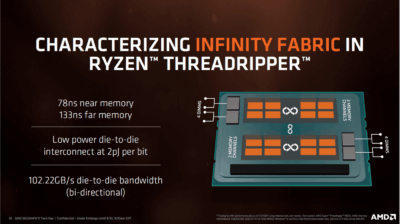
- Latency: Communication between chiplets adds additional latencies, which can impact performance in response time sensitive applications.
- Interposer complexity: Interposers, which act as intermediaries between chiplets, must be designed to handle multiple connections efficiently, which adds complexity and cost.
- Energy consumption: The interconnection between chiplets can increase energy consumption, especially if not optimized properly.
- Standards: Lack of standardization in communication interfaces can make it difficult to integrate chiplets from different manufacturers.
The future of chiplets
The future of chiplets looks promising, especially with the adoption of interconnection standards like UCIe (Universal Chiplet Interconnect Express) , which will allow chiplets from different manufacturers to be combined in a single system . This will open the door to more heterogeneous and collaborative solutions, where specialized companies can contribute their own components to the global ecosystem.
A possible future scenario could include systems with CPUs from one manufacturer, GPUs from another, and specific accelerators from a third party, all efficiently interconnected thanks to open standards.
Chiplet technology is here to stay. Its ability to overcome technical limitations, reduce costs, and offer scalable solutions is transforming the semiconductor landscape. With companies like AMD, Intel , and Nvidia leading the way, and with the emergence of interconnect standards , the use of chiplets will expand beyond processors and GPUs to address new applications in sectors such as automotive, artificial intelligence, and cloud computing. While not without challenges, chiplets represent a modular approach that redefines how we design and manufacture electronic components.