- AMD consolidates its leadership in gaming and overall performance with Ryzen X3D and the AM4 platform as a refuge against rising RAM prices.
- Zen 6 and Zen 6c will mark a leap in cores, cache and 2nm node, maintaining compatibility with AM5 and betting heavily on chiplets.
- The company is reinforcing its commitment to AI and mobility with the Ryzen AI range, Z2 Series and 9000HX laptops with 3D V-Cache.
- The AMD ecosystem is expanding: new BIOS, chipsets, strategic alliances, and even technology for future PS6 and Xbox Next consoles.
If you enjoy building and upgrading PCs, you've probably been eager to upgrade your equipment so far in 2025. The price of RAM has skyrocketed, doubling or even tripling in many kits, which has significantly increased the cost of any new configuration based on modern platforms like AM5 or LGA 1851.
In this unusual context, AMD is experiencing one of its best periods in recent years : it dominates in gaming, challenges (and even surpasses) Intel in servers and data centers, and simultaneously maximizes the potential of both its new and legacy platforms. Between Zen 6 rumors, the consolidation of Ryzen X3D, the rise of AI, and rising prices, the AMD processor landscape is more interesting than ever, and you can check out the best AMD processors for PCs.
Zen 6: AMD's next big architecture
AMD is already working intensively on Zen 6, the architecture that will succeed Zen 5 in desktops, servers, and workstations. It will be the foundation for future consumer Ryzen processors, EPYC processors for data centers, and Threadripper processors for professional environments that require a massive number of cores and threads.
In recent months, many leaks and rumors have surfaced regarding Zen 6. Not all sources are equally credible, but there is a body of information that aligns with AMD's official roadmap and the logical evolution of its products, and it paints a fairly clear picture of what's to come; for context on technological evolution, see the processor generations.
It's important to clarify that everything discussed regarding specific specifications remains unofficial : we're talking about rumors and alleged leaks. Even so, the information aligns with what AMD has been confirming more generally (2nm node, presence of Zen 6c, arrival in 2026), so it has a minimum degree of reliability.
One of the few things that can be taken almost for granted is that AMD will maintain the chiplet-based modular design that has served them so well since Zen 2. The "if it ain't broke, don't fix it" approach makes perfect sense here, both technically and economically.
Chiplet design, more complex CCDs and a jump to 12 cores
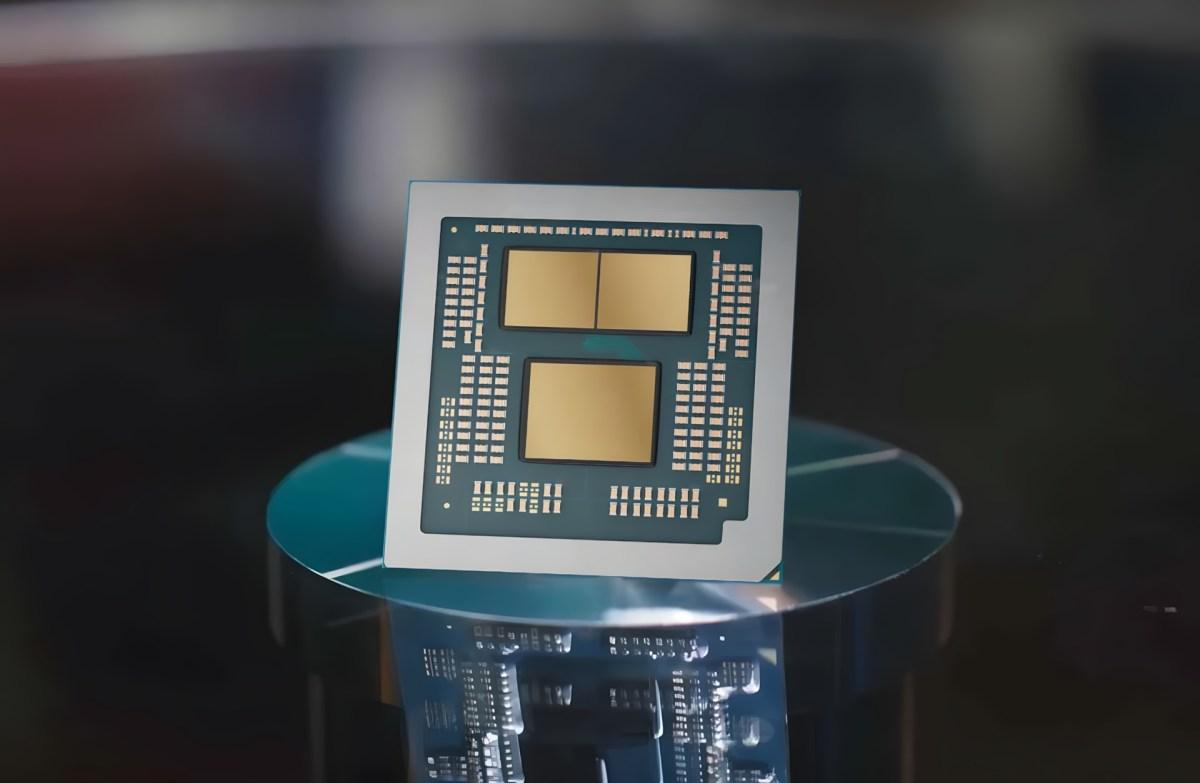
AMD's classic chiplet design is based on a CCD unit that integrates the CPU cores and the entire cache subsystem up to the L3 cache , accompanied by an I/O chiplet that houses memory controllers and external connections (PCIe, etc.). Completely changing this structure would entail a massive development and validation cost without a clear advantage over the current model.
Everything suggests that Zen 6 will continue to use a CPU chiplet (CCD) and an I/O chiplet in its base configuration , scaling to more cores and threads simply by adding more CCDs per processor in high-end models. This modularity is one of the keys to AMD's success in desktops and, especially, in servers.
Within each CCD, the new architecture will introduce improvements to the cache subsystem (increased capacity and reduced latency) , as well as adjustments to the branch predictor and pipeline. The goal is to achieve an IPC (instructions per cycle) increase of around 10% compared to Zen 5, while maintaining low power consumption.
This IPC increase would be combined with turbo frequencies that could approach 6 GHz in certain models , likely with only one or very few cores active and reserved for the most enthusiast-level CPUs. Adding the IPC improvement and the potential clock speed increase, an overall single-threaded performance jump of around 12-15% compared to Ryzen 9000 is expected.
The real highlight lies in the CCD design itself, as it's strongly rumored that AMD will move from the current 8 cores and 16 threads per chiplet to 12 cores and 24 threads in Zen 6. This represents a 50% increase in the number of cores and threads per CCD, a huge improvement in computing density.
2nm node, more L3 cache and power consumption benefits
The current Ryzen 9000 series processors are manufactured on TSMC's 4nm node for their CCD, while the I/O chiplet remains at 6nm. With Zen 6, all indications are that the Ryzen 10000 series will migrate to a 2nm CCD and an I/O chiplet around 3nm , taking advantage of TSMC's next major leap in advanced manufacturing.
By reducing the size of the transistors, the component density per square millimeter increases significantly , while simultaneously improving performance per watt. That's precisely what AMD needs to fit 12 cores per CCD while maintaining reasonable temperatures and power consumption, and without drastically increasing the cost per wafer.
The increase in cores will be accompanied by a proportional increase in L3 cache per CPU chiplet . Today, each Zen 5 CCD offers 8 cores and 32 MB of L3 cache; in Zen 6, the 12 cores would be supported by 48 MB of L3 cache, again 50% more than in the current generation.
The L3 cache acts as a kind of "fast storage" for data and instructions, reducing reliance on RAM, which is much slower and has higher latency . In fact, in games, it has been shown that, with the same architecture, a processor with more L3 cache can perform better than a theoretically more modern processor with less cache, even if it operates at a lower MHz.
Upgrading from 32MB to 48MB of L3 cache per CCD could boost Zen 6's gaming performance considerably more than IPC alone suggests , especially in titles that are highly sensitive to memory latency and scale better with many threads, as is expected to be the case with next-generation games.
Ryzen 10000 and X3D variants: how the ranges could look
If the most widespread scenario in the leaks comes to pass, the initial range of desktop Ryzen 10000 with Zen 6 would look something like this, always speaking of possibilities and not final technical specifications; to guide you, consult the comparison of Ryzen processors : a Ryzen 5 with 8 cores, a Ryzen 7 with 12, and two Ryzen 9 with 16 and 24 cores , respectively.
Specifically, configurations being considered include the Ryzen 5 10600X with 8 cores and 16 threads, and 48 MB of L3 cache in a single CCD, a Ryzen 7 10700X with 12 cores and 24 threads in the same complete chiplet, and for the high end, a Ryzen 9 10900X with 16 cores (two active 8-core CCDs) and a Ryzen 9 10950X with 24 cores (two CCDs with all 12 cores enabled).
Furthermore, it is possible that AMD will bring back something like a Ryzen 3 10300X with 6 cores and 12 threads , which could become a beast in terms of price/performance ratio if it retains the 48 MB of L3 cache of the full CCD despite having some of the cores disabled.
As has been the tradition since Ryzen 5000, the architecture is expected to have a version with 3D stacked cache (X3D) . This third generation of 3D V-Cache would expand the L3 cache capacity per chiplet from the current 64 MB to a theoretical 96 MB, effectively doubling the size of the base CCD cache.
In practice, this means that each Zen 6 X3D CCD could have 48 MB of native L3 cache plus an additional 96 MB stacked , resulting in 144 MB of L3 cache per chiplet. Leaked configurations suggest models like a Ryzen 5 10600X3D and a Ryzen 7 10700X3D with a single CCD , and 16- and 24-core Ryzen 9 processors with two CCDs and up to 288 MB of total L3 cache.
AMD would continue to utilize the technique of placing the stacked cache below the CPU chiplet, rather than above it , as it did in the Ryzen 7 9800X3D. This allows the CCD to remain in direct contact with the IHS (the metal heat spreader), improving heat dissipation and sustaining higher frequencies.
Zen 6c: Efficient cores for APUs, SoCs, and consoles
Alongside Zen 6 for desktops and servers, AMD is also preparing Zen 6c, a density- and power-optimized variant that will be the natural successor to Zen 5c. These cores are designed for integration into APUs, low-TDP SoCs, mini PCs, and, in general, devices where the priority is balancing efficiency and performance.
Unlike Intel, which uses two very different architectures for its large and small cores, Zen 6c shares almost its entire architectural foundation with the "full" Zen 6. This allows it to maintain a very similar IPC, primarily by sacrificing maximum frequency and some L3 cache to save space and power.
Forecasts indicate that each Zen 6c core will have the same L2 cache as a standard Zen 6 core , but will have less shared L3 cache, approximately 2 MB per core. Thus, a 12-core Zen 6c CCD would have 24 MB of L3 cache instead of the 48 MB of the high-performance version.
This reduction in cache and frequency will result in smaller, cooler, and cheaper-to-produce chips , ideal for thin laptops, portable consoles, mini PCs, and embedded systems where TDP and cooling must be carefully controlled.
In fact, leaks indicate that these Zen 6c cores could be the ones that power the future consoles from Sony and Microsoft , the hypothetical PS6 and the next Xbox, maintaining the historical collaboration between AMD and the major console manufacturers.
AM5 compatibility, new chipsets, and BIOS issues
AMD publicly committed to the AM5 platform supporting at least three generations of Ryzen processors . To date, the Ryzen 7000 (Zen 4) and 9000 (Zen 5) series have already been released on this socket, while the desktop Ryzen 8000 series are considered APUs within the same Zen 5 family.
This leaves Zen 6 as the clearly identifiable third generation for AM5 , and all leaks and roadmaps indicate that this will be the case. However, this long-term support brings with it a known problem: capacity limitations in the BIOS chips of some motherboards.
According to sources like MLID, motherboards with B850 and X870 chipsets could run into problems with their 64MB BIOS chips when it comes to adding full support for Zen 6 and, later, Zen 7. This wouldn't be the first time something like this has happened: we already saw a similar situation in AM4 with X370 and B350 when the Ryzen 3000 series arrived.
At that time, some motherboards could only be compatible with the new CPUs through heavily modified BIOS versions , eliminating more visually appealing interfaces or support for older processors. In the worst cases, certain models simply stopped receiving support for the latest generations.
There's still room for manufacturers to react, either by installing higher-capacity BIOS chips in future motherboard revisions or by adjusting CPU support in specific models. But it's clear that the promise of a long-lasting platform requires learning from the mistakes of AM4 and avoiding marketing that can't be fulfilled across all models.
Ryzen 7 9850X3D and 9950X3D2: the present of extreme gaming on AM5
While we wait for Zen 6, the current gaming scene revolves around the Ryzen 9000 series, especially the X3D models, where AMD has struck gold by combining modern architecture with stacked L3 cache , and of course the best Ryzen processors for gaming that dominate the performance charts.
Everything points to the Ryzen 7 9850X3D being unveiled at CES 2026, a new processor for gamers featuring an 8-core Zen 5 single-CCD chip enhanced with 3D V-Cache. Rumors suggest a turbo boost of up to 5,6 GHz and improved support for faster DDR5 memory with AMD EXPO 1.2 profiles.
Dell has already hinted that this chip will be available in the first quarter of 2026 , appearing as an option in configurations of its Alienware Area 51 gaming PC starting in February. This same machine already features the Ryzen 7 9800X3D and the Ryzen 9 9950X3D, so the 9850X3D would be positioned between the two as a very attractive alternative.
The first store listings have shown prices slightly higher than those of the 9800X3D , so we will have to wait for the official announcement (likely during Lisa Su's conference at CES) to find out its final MSRP and exact positioning.
Meanwhile, benchmarks have leaked for a potential Ryzen 9 9950X3D2 that would take the X3D concept to its extreme on the AM5 socket. Unlike the current 9950X3D, which only has one CCD with 3D V-Cache and another "normal" one, this new model would feature 3D V-Cache on both CCDs , each with 8 cores and 96 MB of extended L3 cache, totaling 192 MB.
This configuration would eliminate the hybrid nature of the current 9950X3D, simplifying task allocation between CCDs and offering much more consistent performance in games and cache-sensitive workloads. All indications suggest it would be the fastest possible Zen 5 processor on the AM5 socket, without expecting any significant leaps until the arrival of Zen 6.
AI and mobility: Ryzen AI, Z2 Series and 9000HX
Beyond desktop PCs, AMD is heavily investing in processors with dedicated AI accelerators and solutions designed for laptops and mobile gaming devices . This includes several new families: Ryzen AI Max Series, Ryzen AI 300 Series, the Z2 Series, and the Ryzen 9000HX series. If you're looking for mobile options, also check out our list of the best laptop processors.
The Ryzen AI Max Series and the new Ryzen AI 7 350 and Ryzen AI 5 350 expand the range of mobile CPUs with integrated NPUs, capable of achieving up to 50 TOPS or more of AI power. They combine up to 16 full Zen 5 cores with integrated AMD Radeon 8000S Series GPUs and support for up to 96GB of variable graphics memory.
These CPUs are designed with thin and light devices in mind that don't compromise on desktop performance , integrating a dedicated AI engine for Copilot+ PC experiences and local generative AI applications, all with an aggressive focus on energy efficiency.
On the mobile gaming front, the new Ryzen Z2 Series family is geared towards portable PC-style consoles . We're talking about chips with up to 12 cores and 24 threads, Radeon 800M graphics based on RDNA 3.5 architecture, and a clear objective of delivering console-like gaming experiences at 1080p on portable devices.
If we add to this technologies such as Radeon Super Resolution, FidelityFX Super Resolution and Fluid Motion Frames 2 , these PC-consoles can use upscaling and frame generation to offer a very smooth gaming experience even with very low power consumption.
For high-performance traditional gaming laptops, AMD introduces the Ryzen 9000HX series, a range that incorporates second-generation 3D V-Cache for the mobile segment . By literally inverting the way memory is placed on the chip, AMD has positioned the cache beneath the cores, improving direct cooling and allowing for sustained high frequencies.
These mobile processors offer up to 16 cores and 32 threads, support for fast DDR5 and Wi-Fi 6E , positioning themselves as one of the most powerful options for gaming, content creation or intensive workloads on a laptop.
Ryzen 200 Series and the entry-level range with AI
At the lower end of the spectrum, AMD hasn't forgotten those looking for more affordable laptops with solid performance and some AI capabilities . For them, they've introduced the Ryzen 200 Series processors, a mobile family that aims to balance price, battery life, and performance.
These chips offer up to 8 cores and 16 threads , integrated Radeon 700M graphics, and in most models up to 16 TOPS of neural processing power for introductory AI experiences, such as basic local assistants or smart effects in video and audio.
Thanks to Wi-Fi 7 compatibility and HDR video playback up to 4K , they become an interesting option for students, office users, and homes that need a versatile laptop capable of covering productivity, multimedia, and some light gaming without breaking the bank.
Market, RAM prices and the resurgence of AM4
The current market scenario is heavily influenced by the exorbitant prices of RAM, especially DDR5 , which is essential for modern platforms like AM5 and LGA 1851. Many users have found that, more than the CPU or GPU, the biggest drain on their budget comes from memory.
This has led to some curious solutions: from those who try to reuse laptop SO-DIMM modules with adapters (sacrificing latency and frequency) to those who have directly opted to avoid DDR5 and remain on DDR4 for as long as possible.
And that's where AMD's aging AM4 platform has made an unexpected comeback. The combination of highly competitive pricing on older but still powerful CPUs , coupled with the affordability of DDR4, has made AM4 a haven for those looking to upgrade without breaking the bank.
Data from retailers like Mindfactory reflects this reality: AMD captures over 90% of CPU sales in certain weeks , with an overall market share approaching 91,5%. Of that market share, AM5 remains the majority with over half of the units sold, but AM4 is regaining around 34% of total sales thanks to its aggressive pricing.
This has pushed the average price of an AMD processor to around €259 , with the Ryzen 7 9800X3D as the clear bestseller, followed by the 7800X3D and, surprisingly, the veteran AM4 Ryzen 7 5700X. Even very old models like the Ryzen 5 3400G are selling at the same rate as some of the best chips from the blue competition.
AMD vs Intel: Market Share and Strategy
Meanwhile, Intel is going through a difficult time in the enthusiast and high-performance segment . Although it still holds a considerable market share globally, recent sales figures in the European retail channel paint a less than encouraging picture.
During the same periods when AMD reaches nearly 91% market share, Intel hovers around 8,5% , with just 180 units sold compared to over 1.900 for AMD in certain weeks. Its LGA 1700 socket captures the majority of those sales, while the newer LGA 1851 socket is barely gaining traction.
Intel's best-selling processor, the Core i7-14700KF, barely moves twenty units , a negligible figure compared to the hundreds of units of each Ryzen X3D model. Added to this are the recent instability issues reported in some 13th and 14th generation Core processors, which have eroded public confidence.
AMD, for its part, has capitalized on this situation with a well-balanced offering of performance, efficiency, and price , and with an X3D architecture that dominates the gaming market. In servers, the EPYC and Threadripper lines have demonstrated a performance-to-price ratio that is very difficult for equivalent Xeon processors to match.
In parallel, the company is strengthening its ecosystem with new BIOS (AGESA v1.2.8.0), agreements with giants like HPE, IBM or Meta , and a clear roadmap towards Zen 6 and Zen 7, without ruling out even the possibility of occasionally relying on Intel factories (nodes 18A and 14A) if TSMC's capacity becomes saturated.
The AMD processor landscape has become a potent mix of architectural innovation, chiplet scalability, an aggressive push into AI, and a market strategy that leverages both new and legacy platforms. Between the push from Zen 6 and Zen 6c, the success of Ryzen X3D, the resurgence of AM4 as a budget-friendly option, and expansion into laptops, AI, and consoles , everything indicates that the red brand will continue to set the pace in the industry while the competition tries to catch up in an environment increasingly driven by memory costs, advanced manufacturing nodes, and the demand for intelligent experiences across all types of devices.
