- Implementation of IoT sensor networks for continuous, real-time monitoring of critical assets.
- Use of advanced technologies ranging from in-situ instrumentation to InSAR satellite remote sensing.
- Comprehensive methodology that covers everything from the identification of key parameters to the intelligent management of data for decision-making.
When it comes to maintaining a building, a bridge, or any heavy infrastructure, we can't leave anything to chance. Structural health monitoring , technically known as SHM, is essentially like giving a structure a regular medical checkup to ensure there are no unpleasant surprises that could jeopardize public safety or the owner's finances.
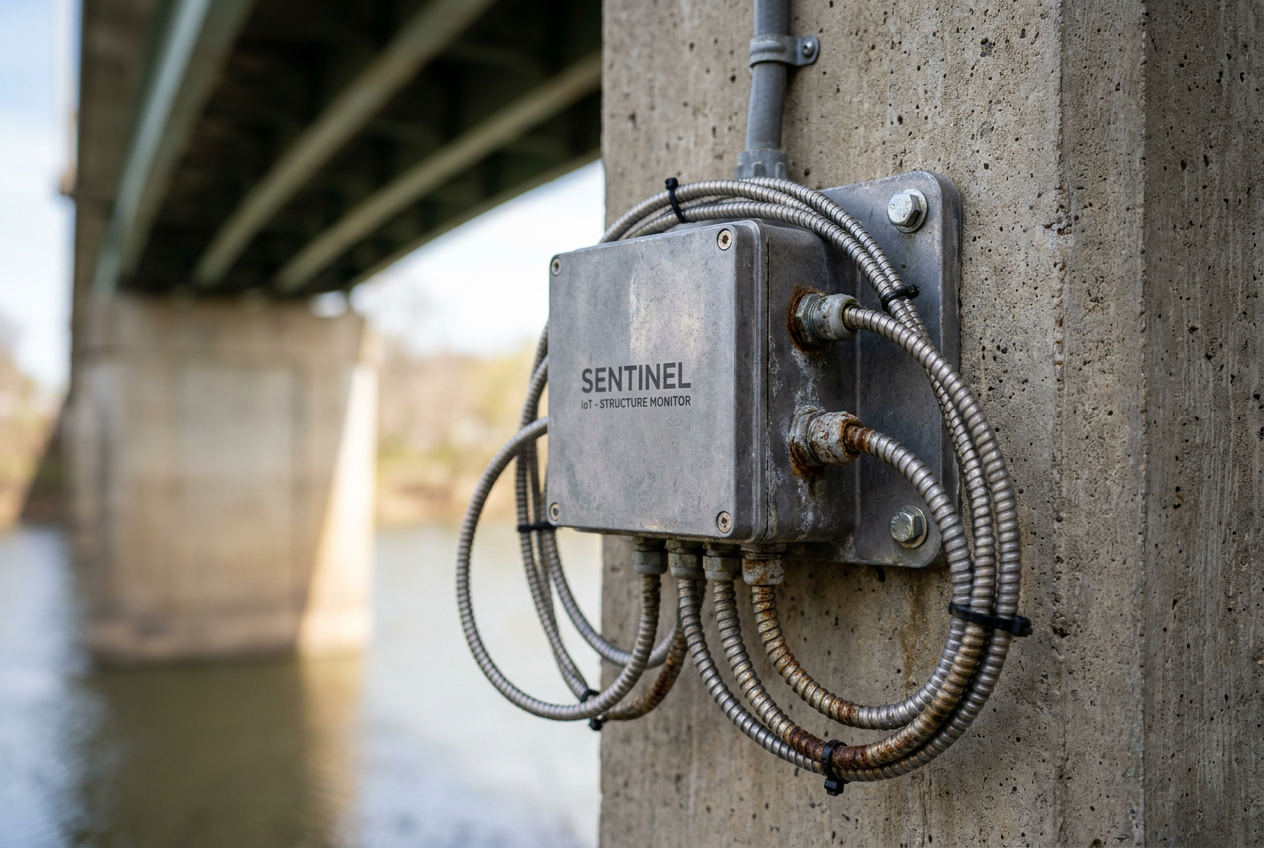
The idea is simple yet powerful: place electronic eyes and ears at the points where the structure is most vulnerable. This allows us to detect mechanical damage caused by daily wear and tear, the passage of time, or more sudden events like an earthquake, enabling us to act long before the problem escalates from a small crack to a full-blown disaster.
Instrumentation and sensors: the sentinels of the structure
For this system to work, devices are installed in strategic locations that tell us exactly what's happening. Depending on what we want to monitor, we use different tools. For example, if we're concerned about vibrations that could alter the building's behavior, an accelerometer is ideal . If we need to know if the structure is tilting or deviating from its vertical alignment, an inclinometer is the key tool.
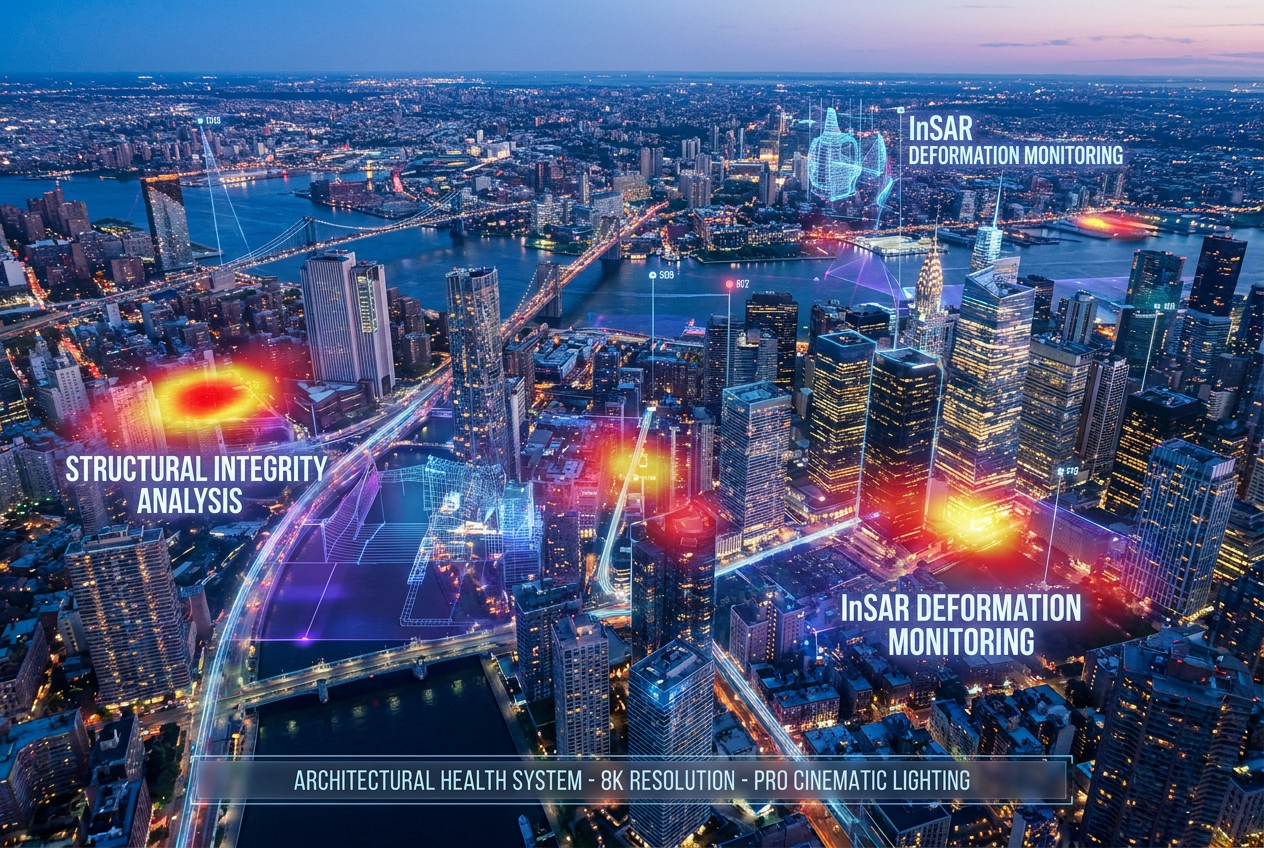
Furthermore, when cracks already exist and we want to know if they are widening, a linear crack gauge is used . This entire system is now supported by IoT (Internet of Things) technology, meaning that data travels almost instantaneously, allowing engineers to make quick decisions without having to wait for a manual inspection that could arrive too late.
Monitoring strategies: from the ground to space
Not all monitoring systems work the same way. On the one hand, we have traditional instrumentation that requires on-site installation , where the sensors are physically attached to the structure. This option is fantastic for having precise, 24/7 control of a specific point, functioning almost as if we had a non-destructive testing (NDT) inspector monitoring the asset around the clock, without the costs of having someone physically present all the time.
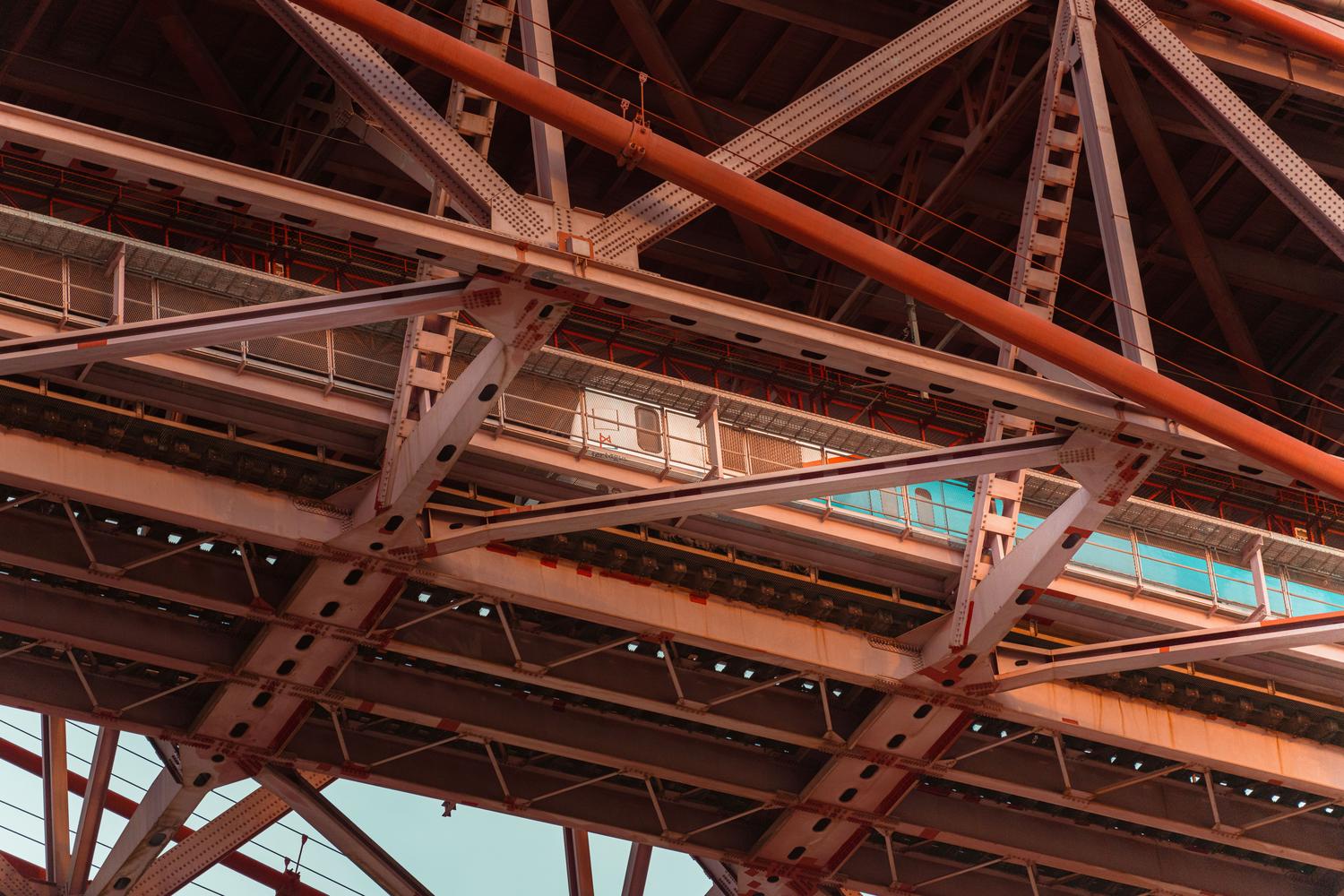
On the other hand, remote sensing, or remote monitoring , has gained considerable traction . This is where InSAR technology comes into play , using satellite imagery and artificial intelligence algorithms to analyze deformations from space. This alternative is particularly useful because it drastically reduces operating costs and allows for the monitoring of extensive infrastructure in near real-time without lifting a finger on the ground.
The methodological process for successful monitoring
Setting up a structural monitoring and control (SHC) system isn't just about installing sensors; it requires a well-thought-out strategy to ensure the data is meaningful. First, there's a parameter identification phase where you decide exactly what you want to measure and what data will tell you if the structure is healthy or diseased. Then, you select the most appropriate communication equipment and sensors to capture that information.

Once the data starts flowing, information management comes into play . This is where the data is processed and presented to quickly identify anomalies. The final step is integration, which involves putting all the pieces together so that asset owners can make informed decisions . Combining this continuous monitoring with conventional non-destructive testing provides a 360-degree view of the asset's condition.
Operational and economic advantages of the SHM
Implementing these solutions is not only a matter of safety, but also of financial efficiency. By monitoring the evolution of a defect and analyzing the root cause (cross-referencing data such as temperature and local acceleration), companies can schedule preventative maintenance . This prevents unexpected asset downtime, minimizing disruptions and reducing long-term repair costs.
Constant monitoring allows us to move from a reactive maintenance model—where we fix things when they break—to a proactive one. Thanks to the ability to analyze the evolution of defects , the risks of catastrophic failures are reduced and the lifespan of the infrastructure is optimized, ensuring that the asset remains profitable and safe for decades.
The combination of IoT sensors in the field and satellite remote sensing, along with rigorous data management, allows us to transform the way we care for our infrastructure, replacing sporadic visits with perpetual surveillance that detects faults invisible to the human eye and optimizes maintenance costs through intelligent prevention.