- Digital phone numbers allow you to receive SMS online without relying on a physical SIM, from any device and location.
- There are temporary free services and paid options with number rentals, one-time activations, and more reliable non-VoIP numbers.
- They are ideal for protecting privacy, managing verifications, centralizing customer service, and gaining an international presence.
- When choosing a provider, you need to consider cost, coverage, SMS compatibility, and the level of security and privacy required.
Having a digital phone number to receive SMS messages has become almost essential: account verifications, platform registrations, two-step authentication, marketing campaigns… Everything happens via text message. The good news is that you no longer need a physical SIM card to manage these codes and notifications; you can use virtual, temporary, or rented numbers that work entirely online.
In this article, we'll break down exactly what a virtual SMS phone number is, how it differs from a traditional number, the types of services available (free, temporary, paid, long-term rental, non-VoIP, etc.), which use cases they're best suited for, and how to get one step by step. You'll also see specific examples of providers and security and privacy tips to help you avoid problems.
What is a digital or virtual phone number for receiving SMS messages?
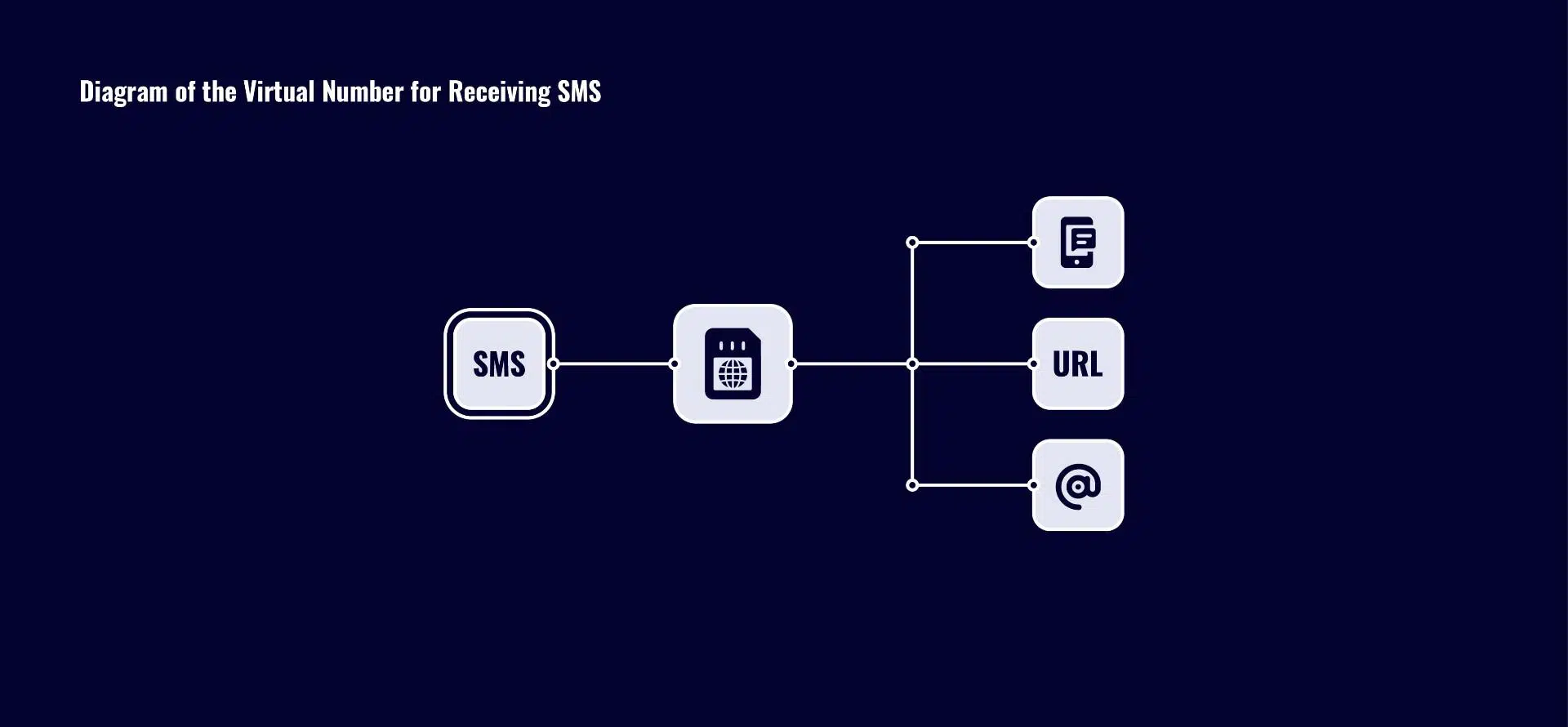
A virtual SMS phone number is a number that isn't associated with a SIM card or a traditional landline. Instead of being stored on a physical mobile phone, it "lives" in the cloud: the provider manages it on their servers and delivers incoming messages to you through an app, a web panel, or even email.
From the sender's perspective , it behaves almost exactly like a regular mobile or landline number. The person dials your number or sends an SMS, and for them, there's no difference. The magic happens behind the scenes: the provider's system receives the message and forwards it to your account, where you see it in their interface or in your inbox.
This allows you to manage SMS messages from any device , anywhere in the world, without having your physical phone with you. You can read and reply to messages from a laptop, tablet, or multiple mobile phones simultaneously. Many of these numbers are offered by VoIP and cloud-based telephony companies, catering to both individual users and businesses.
The key advantage is the separation of your personal line from the lines you use for registrations, clients, promotions, or trials. You get a dedicated line for receiving SMS messages that you control online, without relying on a single SIM or exposing your main number.
Types of number services for receiving SMS online
When we talk about a “digital phone number for receiving SMS messages ,” we’re actually lumping together several types of services. It’s important to distinguish between them because they don’t all serve the same purpose or offer the same level of reliability or privacy.
On one hand, there are free, temporary services that offer disposable numbers for quick SMS verification. These are ideal for one-off registrations but not recommended for regular or professional use. On the other hand, there are paid services with number rentals, one-time pay-per-use activations, and more advanced solutions with APIs for integration into your systems.
There are also so-called non-VoIP numbers , especially useful when you need to bypass the strict filters of some platforms that reject traditional virtual numbers. And, in addition, there are more "corporate" providers focused on offering stable virtual numbers with international coverage for businesses and freelancers.
The choice between these options will depend on whether you want something occasional and cheap (or free) for a couple of registrations, or if you really need a stable line for your business, with high availability, support and, if necessary, the possibility of also sending outgoing SMS messages.
Free temporary number services for receiving SMS messages
Free temporary number services allow you to receive SMS messages online without paying anything and without registering (or with minimal registration). Their main purpose is to facilitate the quick verification of disposable or low-risk accounts.
These services provide you with phone numbers from various countries —for example, the United States, Canada, the United Kingdom, France, Sweden, Finland, Denmark, and others—so you can receive messages from anywhere in the world. It doesn't matter if the sender is in another country; the SMS messages usually still reach your public message board.
They work very simply : you go to the website, choose one of the listed numbers, use it to register for the service you want, and when the platform sends you the OTP code or verification message, you will see it appear on the page in a matter of seconds.
Most of these free numbers are virtual, disposable . They are often categorized as fake numbers, virtual numbers, or disposable numbers. Messages are stored on the panel for only a very limited time: they are usually automatically deleted after 2-3 days to free up space and somewhat protect privacy.
Another common feature is the periodic rotation of numbers : every so often (for example, every 30 days) the provider updates the list with new numbers. This helps prevent them from becoming overloaded or blocked by too many services, but it means you shouldn't use those numbers as a reliable channel because they may disappear.
Some of these projects expand on the concept of "temporary" and offer not only SMS numbers but also disposable email addresses (temp emails) with domains that are renewed weekly. You can usually create unlimited emails, receive messages, download attachments, and delete everything after a certain period. It's a very convenient option for website registrations that you only need once.
Paid SMS services: one-time activations and number rental
When you need something more reliable than a shared free number , the world of paid services comes into play. There are two main options: pay-as-you-go activations and medium- or long-term number rentals.
One-time activations function as a kind of verification token. Platforms like 5sim, SMS-Man, OnlineSIM, or MrSMS allow you to pay only to receive one or more SMS messages from a specific platform. For example, you purchase an activation to verify your account on a particular service, and the system assigns you a number solely for that purpose.
This model is usually inexpensive if you only need a few records, although reliability can vary depending on the provider and the service being verified. Some online services block or penalize certain number ranges if they detect abuse, so it doesn't always work perfectly. That's why it's generally recommended to try different providers and, if one fails with a particular platform, try another.
Long-term number rentals are designed for continuous use. Instead of paying for activation, you rent a virtual number for weeks or months. Providers like MobileSMS, Quackr, Blacktel, and Fanytel offer this option, with prices that can be around $40 per month for some MobileSMS rental plans, depending on the number type and country.
By renting a number, in theory only you use it , which reduces the risk of others misusing the same number and getting it banned from certain services. It's the most sensible option if you need a stable SMS channel for your projects, bots, work accounts, or authentication flows.
As an alternative to general-purpose platforms like Twilio , for those looking to save costs, there are also specialized activation and rental services with a pay-per-use model. A well-known example is sms-activate, which offers APIs, per-service pricing, and is usually much cheaper than contracting a complete infrastructure like Twilio's for simple cases.
Non-VoIP numbers and advanced Quackr-type solutions
There are situations where standard virtual numbers (VoIP) are not accepted by certain websites or apps, especially banks, trading platforms, financial services, and some large providers that want to reduce fraud. This is where so-called non-VoIP numbers come in.
A non-VoIP number is designed to behave more like a traditional mobile number in the eyes of verification systems. Some providers, such as Quackr, place particular emphasis on this type of professional numbering, intended for demanding registrations and more serious uses.
A typical example of this type of offer would be something like this: a single non-VoIP number that operates 24/7 to receive instant SMS messages; it's valid for registering on virtually any online platform; it allows unlimited verifications while you have the service active; and if you contract volume, you can get discounts of up to 80%.
Furthermore, these advanced providers often include extras such as APIs for your systems to automate the process (for example, bots that read SMS messages and process codes), and even "MCP Server" solutions for managing AI agents that work with SMS. A free private email address (such as @quackr.id) is often also included to complete the communication process.
These types of services are clearly geared towards professional use : developers, growth hackers, support teams, companies that automate registrations or validations, etc. The cost is higher than a free temporary number, but the reliability and control are also much greater.
What is a virtual phone number for SMS used for?
A virtual SMS number can get you out of more than one tight spot and, if used properly, make a real difference in your digital life. The most common use cases range from personal privacy to business communication strategies and international expansion.
The most obvious use is to protect your privacy . Instead of giving your real number when registering on websites, apps, or services that don't quite inspire confidence, you can use a virtual number (temporary or permanent) to receive verification codes and messages. This prevents your personal number from ending up in spam databases or from receiving calls from unknown numbers.
Many people also use them in more sensitive settings , such as dating sites, online marketplaces, or classified ads. This way, if someone becomes pushy or gives you a bad feeling, you can simply abandon the virtual number without compromising your real phone.
On a professional level, virtual SMS numbers are invaluable for small businesses, freelancers, and digital projects. You can offer your customers a contact number via SMS without having to use anyone's personal mobile phone. SMS remains a powerful channel, with open rates close to 98% and read speeds in a matter of minutes.
By centralizing messaging on a virtual number , your team can manage inquiries from a shared inbox, accessible via web or app, without conversations being "locked up" on a single person's phone. This improves customer service, allows for follow-up, and maintains an organized history.
Another key feature is two-factor authentication (2FA) and OTP . You can receive access codes for your professional accounts on a separate number to avoid overloading your main mobile phone. This is very practical if you manage dozens of services, projects, or profiles. However, you should be aware that some banks and highly sensitive platforms do not accept virtual numbers for security reasons.
For businesses with customers in other countries , virtual numbers are useful for establishing a local presence. You can get a number from the United States, the United Kingdom, France, India, etc., and receive SMS messages from those markets without having to contract dozens of physical lines. Your customers will write to a number "from their country," and you can reply from anywhere.
Finally, many companies use virtual SMS for surveys, feedback collection, appointment reminders, logistical notifications, or marketing campaigns. Everything is delivered to a single dashboard or app, can be integrated with CRM and automation tools, and avoids relying on an employee's personal mobile phone.
How to get a virtual phone number for SMS step by step
Setting up a virtual number to receive SMS messages is usually a fairly simple process, especially with modern providers geared towards entrepreneurs and SMEs. The general flow, with slight variations, is as follows.
1. Choose a suitable supplier
The first step is deciding which company you're going to work with. Consider several factors: that it offers numbers with the actual capacity to receive SMS messages, that it has coverage in the countries you need, and that the prices fit your budget.
Well-known providers include Sonetel, Google Voice, OpenPhone, CallHippo, and other VoIP and cloud telephony services. Each has its strengths: international coverage, integration with other tools, cost per user, etc. Always check if the numbers accept incoming SMS messages and, if needed, outgoing SMS messages as well.
2. Create and verify your account
Because phone numbers are regulated, providers usually ask you to verify your identity and address. This is a standard Know Your Customer (KYC) procedure to prevent fraudulent use. You'll typically need to provide a valid billing address and, in some cases, upload an ID or business document.
This verification process doesn't usually take long . It's often completed within a business day, or even in a matter of hours if everything is correct. Until you complete this step, the number may remain in a pending status and won't be fully functional.
3. Select the number with SMS support
Once your account is active, it's time to choose a number. Providers usually display a list that can be filtered by country, city, number type (mobile, landline, toll-free), and features (voice, SMS, fax, etc.). Make sure the number you purchase is enabled to receive text messages.
In the case of Sonetel, for example , most mobile numbers support SMS, and some landlines in certain countries do as well. Decide whether a local number (for example, from your city) or a toll-free number is more cost-effective if you want to project a wider reach to your customers.
4. Purchase and activate the service
The next step is to pay. Virtual numbers usually have a fairly affordable monthly fee. At Sonetel, for example, you can find options starting from around €1,79 per month with their Basic Plan, a low cost for keeping an additional line active.
Complete the payment and any outstanding documentation . Once done, the number is usually activated almost instantly, or within a few minutes if you've already been verified. From then on, that number is yours as long as you maintain your subscription.
5. Configure how you want to receive SMS messages
This is a key point because it defines your daily workflow. Some providers send incoming SMS messages to your email by default (like "SMS to email"), so each message arrives as an email with the text content.
Others offer mobile apps or web dashboards where you can see the conversation thread, reply (if the service allows outgoing SMS messages), and manage multiple numbers from a single location. Activate push notifications or email alerts so you don't miss any important messages.
6. Take a quick test
Before using the number for anything serious, test it: send a text message from another phone or ask someone else to do so. Check that you receive the message in the app, dashboard, or email account you've set up. If something is wrong, it's better to catch it now than when you're facing a critical verification.
From that point on, the number is fully operational . Any person or service that sends an SMS to that number will receive it through the provider's platform, without needing a dedicated mobile phone for that line.
Comparison of virtual SMS number providers
In the world of digital phone numbers , some names stand out for their coverage, price, or specific features. For your reference, here's a simplified comparison of several providers geared towards professional and business use.
Sonetel
It's a very popular option among entrepreneurs and small businesses. It offers numbers in more than 70 countries, with very low monthly costs (starting from around €1,79). Its strength lies in the combination of reduced price and international reachIncoming SMS messages are often delivered directly via email, and the platform also includes voice call forwarding and even AI-powered call summaries and features. virtual switch.
Google Voice
Designed primarily for the United States and Canada, it allows two-way SMS messaging in those countries and integrates seamlessly with the Google ecosystem (Gmail, Google Workspace, etc.). For personal use in the US, it's typically free; in business environments, it starts at around $10 per user per month. It's ideal if you already use Gmail and are looking for something simple and well-integrated, but its international coverage is very limited.
OpenPhone
Aimed at teams and startups, it offers two-way SMS and MMS messaging primarily in North America. It costs around $15 per user per month. It stands out for its shared inboxes, team collaboration tools, and robust integrations with CRMs and other apps. It's practical if you want multiple team members to manage customer conversations from a single dashboard.
CallHippo
It's a complete business phone system with call center features and numbers in over 50 countries. It supports two-way SMS on many of its numbers and is clearly geared toward businesses that need both voice calls and messaging. Plans start at around $16 per user per month.
If cost and SMS reception in many countries are your main concerns , Sonetel is often one of the most attractive options. If you prioritize Google integration, a teamwork ecosystem, or a complete call center system, Google Voice, OpenPhone, or CallHippo might be a better fit, provided you accept their coverage limitations or per-user pricing.
Privacy, security, and limitations of virtual numbers
Using a digital phone number to receive SMS messages doesn't eliminate the need for security concerns. In fact, you should be especially careful if you're handling sensitive information or accessing important accounts. For example, when connecting to manage SMS messages from public networks, it's advisable to use a VPN to protect the connection and reduce risks.
In the case of toll-free and public numbers , you should assume that anyone can see the messages sent to that number, as they are usually displayed on a public screen. Never use these numbers to receive access codes for critical accounts (primary email, online banking, platforms with personal or financial data).
Paid and rented numbers are much more secure in the sense that, in principle, only you have access to the SMS messages from that number. Even so, everything depends on you properly protecting your account with the provider (strong password, 2FA, don't share credentials). If someone gains access to your account, they could see all the messages.
Another significant limitation is service acceptance . Many banks, financial services, and high-risk platforms reject virtual or VoIP numbers as a matter of internal policy. In these cases, neither a conventional virtual number nor a toll-free number will work; this is where non-VoIP numbers can make a difference, although there are no absolute guarantees.
Finally, remember that some countries have very strict regulations regarding the use of virtual numbers and sending/receiving SMS messages. If you plan to operate in multiple markets, review the provider's terms of service and legal restrictions to avoid problems.
Whichever option you choose , treat it with the same care as your personal number: don't share credentials, don't use these services for illegal activities, and properly cancel numbers you no longer use to prevent future messages from falling into the wrong hands.
Overall, a digital phone number for receiving SMS messages offers a powerful combination of convenience, flexibility, and control: you can completely separate your personal life from your online records, centralize customer service, establish an international presence without leaving your location, and manage authentications and notifications from any device. By choosing between temporary numbers, paid services, or advanced API solutions, you'll always have the right level of privacy, reliability, and scalability to suit your projects.
