- Machine learning allows machines to learn and improve their performance without explicit programming.
- There are different types of machine learning: supervised, unsupervised, and reinforcement.
- Algorithms such as linear regression and neural networks are fundamental in machine learning.
- Machine learning applications range from medicine to home automation, improving efficiency and accuracy.
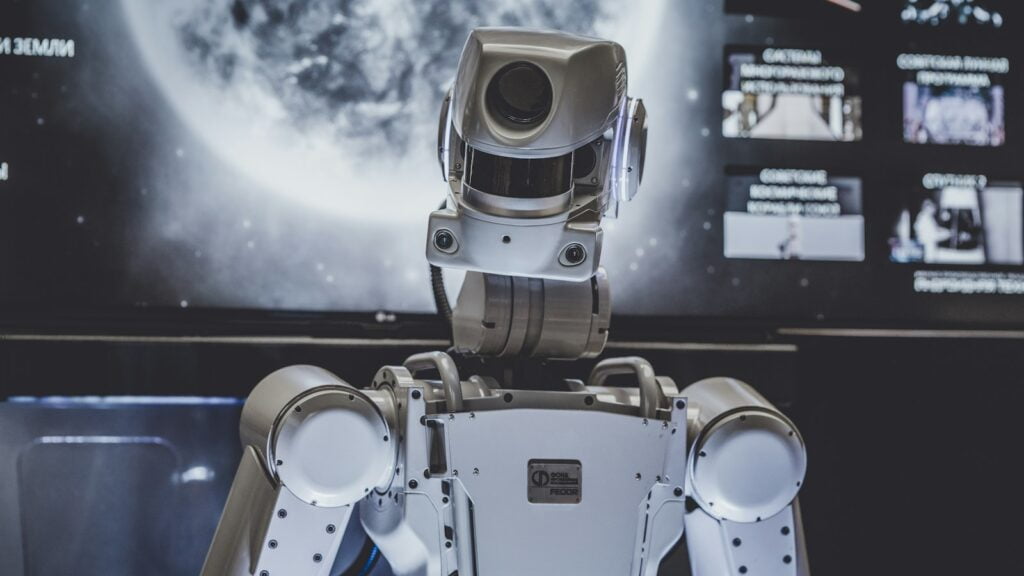
Introduction
Machine learning is a branch of artificial intelligence that allows machines to learn and improve their performance without being explicitly programmed. Through algorithms and mathematical models, computers can analyze vast amounts of data and extract patterns, enabling them to make accurate decisions and predictions. To better understand these concepts, you can consult basic and advanced concepts of machine learning.
Machine Learning: Basic and Advanced Concepts
In this section, we'll explore the essential concepts of machine learning, as well as some advanced techniques that are revolutionizing various industries. If you want to better understand how machine learning algorithms work, we recommend delving deeper into machine learning algorithms and their application in different contexts.
1. What is Machine Learning?
Machine learning is the process by which machines can learn from data and improve their performance over time. Rather than being explicitly programmed, machines use algorithms and mathematical models to learn from patterns in data and perform specific tasks. For a deeper look, you can check out .
2. Importance of Machine Learning
Machine learning plays a fundamental role today, having driven significant advancements in fields such as medicine, industry, technology, and many others. Thanks to its ability to analyze vast amounts of data and extract relevant information, machine learning enables better decision-making, improves efficiency, and automates complex tasks. Furthermore, understanding how machine learning works will help you apply data mining techniques and maximize its benefits.
3. Types of Machine Learning
Exploring the types of machine learning (ML) is like diving into a world where machines emulate and improve decision-making processes based on data. This technology, which seems straight out of a science fiction novel, is today a palpable reality with applications in almost every aspect of our daily lives. From personalized recommendations on our streaming platforms to autonomous systems in vehicles, machine learning is transforming the technological landscape. Here is a list of tips to better understand the types of machine learning and how they are applied in different contexts.
3.1. Supervised Learning
Supervised learning is one of the most common and accessible types of machine learning . Here, machines learn from labeled examples, understanding how to map inputs to outputs. It's like teaching a child with specific examples. My advice is to start here if you're new to ML, as it provides a solid foundation for how models can be trained to perform tasks like classification and regression.
3.2. Unsupervised Learning
Unsupervised learning, on the other hand, deals with unlabeled data. This type of machine learning is fascinating because it searches for hidden patterns and structures in data without explicit guidance. It's useful for customer segmentation, anomaly detection, and text grouping. If you want to delve deeper into its applications, you might find it helpful to learn about synthetic data and how it's used in certain learning models.
3.3. Dive into Deep Learning
Although deep learning is technically a subset of supervised learning, it deserves its own mention. Powered by multi-layered neural networks, this type of machine learning is powerful for tasks such as speech recognition, computer vision, and natural language processing. My advice here is not to be intimidated by its apparent complexity; there are many resources and frameworks that make it easier to understand and apply. To expand your knowledge, also check out the PartNR project and how it uses deep learning in real-world projects.
3.4. Reinforcement Learning
Reinforcement learning is unique among machine learning methods. Here, an agent learns to make decisions by optimizing rewards through experience. It's crucial for developing systems that require a sequence of decisions, such as games or autonomous navigation. My advice is to consider it if you're interested in applications where continuous adaptation and real-time decision-making are essential. Additionally, if you want to explore different approaches, you can check out GitHub Copilot and other AI examples that apply reinforcement learning in programming.
3.5. Semi-Supervised and Self-Supervised Learning
These intermediate approaches combine elements of both supervised and unsupervised machine learning. They are particularly useful when you have a large amount of unlabeled data and a small amount of labeled data. The advice here is to explore these methods as an efficient solution to make the most of your data resources. If you want to delve deeper into this topic, you might be interested in reviewing the first commercial biological computer and its connections to semi-supervised learning.
Finally
Machine learning types open up a range of possibilities for innovation in almost every industry. Understanding their differences and applications will allow you to not only keep pace with technological evolution but also actively participate in it. Remember, machine learning is a tool, and like any tool, its impact depends on how you use it.
4. Machine Learning Algorithms
Machine learning algorithms are the fundamental building blocks for building models that can learn and perform specific tasks. Some of the most popular algorithms are:
4.1 Linear Regression
Linear regression is a supervised learning algorithm used to predict continuous numerical values. It establishes a linear relationship between the input variables and the target variable, allowing predictions to be made based on this relationship.
4.2 Decision Trees
Decision trees are versatile algorithms that can be used for both classification and regression problems. They use a tree structure to represent possible decisions and outcomes, dividing the data set into smaller subsets. To better understand how they work, you can also review resources on how they integrate into classification models.
4.3 Support Vector Machines (SVM)
Support vector machines (SVMs) are supervised learning algorithms used for classification and regression problems. They aim to find a hyperplane that separates the data into different classes or that best fits the data. If you'd like to explore related applications, you can also review what optical character recognition (OCR ) is to understand how techniques are combined in pattern recognition.
4.4 Artificial Neural Networks
Artificial neural networks are inspired by the workings of the human brain and are used to solve complex machine learning problems. They are composed of interconnected neurons and hidden layers that allow them to learn and extract features from input data.
5. Current Trends in Machine Learning
The field of machine learning is constantly evolving, and new trends and approaches are constantly emerging. Some of the most notable trends are:
5.1 Deep Learning
Deep learning is an approach within machine learning that uses neural networks with multiple hidden layers to automatically learn and extract features from data. It is especially effective in image processing, speech recognition, and natural language processing. To understand how these trends are applied in different industries, see also what artificial intelligence is.
5.2 Explanatory Machine Learning
With the goal of increasing transparency and trust in machine learning models, explanatory machine learning focuses on developing algorithms that can provide clear and understandable explanations of how decisions are made. If you're interested in this trend, check out resources on customer relationship management and decision analysis in the context of machine learning.
5.3 Federated Learning
Federated learning is a technique that allows you to train machine learning models on data distributed across different locations without having to share the data centrally. This is especially useful in scenarios where data privacy and security are priorities. To understand its relationship to data protection, you can also consult .
5.4 Transfer Learning
Transfer learning leverages the knowledge acquired by a model in a specific task and applies it to a related task. This allows you to accelerate the training process and improve model performance on new tasks with smaller datasets. If you'd like to learn more about how to apply this to your projects, also check out its various branches.
6. Applications of Machine Learning
Machine learning has applications in a wide range of industries and fields. Let's look at some of the most prominent applications:
6.1 Medicine
In medicine, machine learning is used for disease diagnosis, pattern detection in medical images, predicting treatment outcomes, and genomic research. These applications help physicians make more informed and accurate decisions and are complemented by resources to better understand these processes.
6.2 Industry
In industry, machine learning is used to optimize manufacturing processes, predict machinery failures, improve product quality, and perform predictive maintenance. This allows for increased efficiency, reduced costs, and minimized unplanned downtime. To understand how industrial management can be improved, see also [link to relevant documentation].
6.3 Finance
In the financial sector, machine learning is used for risk analysis, fraud detection, portfolio management, and algorithmic trading. These applications enable faster and more accurate decision-making in a rapidly changing environment. Furthermore, exploring resources related to the advantages of data analysis can help you better understand these processes.
6.4 Home Automation
Machine learning also has applications in the home, where it's used for voice recognition in virtual assistants, anomaly detection in security systems, and energy consumption optimization. This helps make homes smarter and more efficient. To learn more, you can also explore resources on what the cloud is and how it impacts smart homes.
FAQ
1: What is the difference between machine learning and
Machine learning is a broader field that encompasses machine learning. While machine learning focuses on developing algorithms and models that allow machines to learn from data, it seeks to replicate human intelligence in machines, including reasoning and decision-making capabilities.
2: Is it necessary to have knowledge of mathematics to understand machine learning?
While a basic understanding of mathematics is helpful for understanding the fundamentals of machine learning, there are tools and libraries that simplify its implementation. Additionally, many algorithms and models are already implemented in software packages that allow their use without a deep understanding of mathematics. You can also learn more about .
3: What is the importance of datasets in machine learning?
Datasets are fundamental to machine learning, as they provide the foundation for training and optimization. The larger and more representative the datasets, the better the results obtained by the models. Furthermore, the quality and cleanliness of the data also influence the performance and accuracy of the models.
4: What are the challenges of machine learning?
Some of the challenges of machine learning include lack of quality data, bias in datasets, interpretation and explanation of models, and privacy and ethics in data use. Overcoming these challenges is critical to ensuring that machine learning is used responsibly and effectively.
5: What is the future of machine learning?
The future of machine learning is bright. Significant advancements are expected in areas such as deep learning, natural language processing, computer vision, and robotics. Furthermore, machine learning is expected to become even more integrated into our lives, driving automation and improving decision-making across various industries. For a deeper dive into these trends, you can also check out .
What are the recommended machine learning resources for beginners?
For those who wish to learn more about this topic, numerous resources are available. Some recommended books include "Machine Learning" by Tom Mitchell, "Deep Learning" by Ian Goodfellow, "Python Machine Learning" by Sebastian Raschka, and "The Hundred-Page Machine Learning Book" by Andriy Burkov. Additionally, online platforms such as Coursera and edX offer both free and paid courses on machine learning. You can also explore resources on the most popular programming languages in 2024 to further your learning.
Conclusion
Machine learning is a fascinating discipline that is transforming how we interact with technology and opening up new opportunities across various industries. From its basic concepts to the latest trends, we've explored the fundamentals and applications of this discipline. If you're interested in learning more about machine learning, we encourage you to explore the resources mentioned and immerse yourself in this captivating field.


Table of Contents