- The Blackwell architecture introduces unprecedented power with chips containing 208.000 billion transistors and support for FP4 data formats.
- The evolution continues with Blackwell Ultra and the upcoming Rubin platform, focused on AI reasoning and trillion-scale models.
- NVIDIA's strategy prioritizes data center infrastructure before bringing these innovations to the gaming and professional sectors.
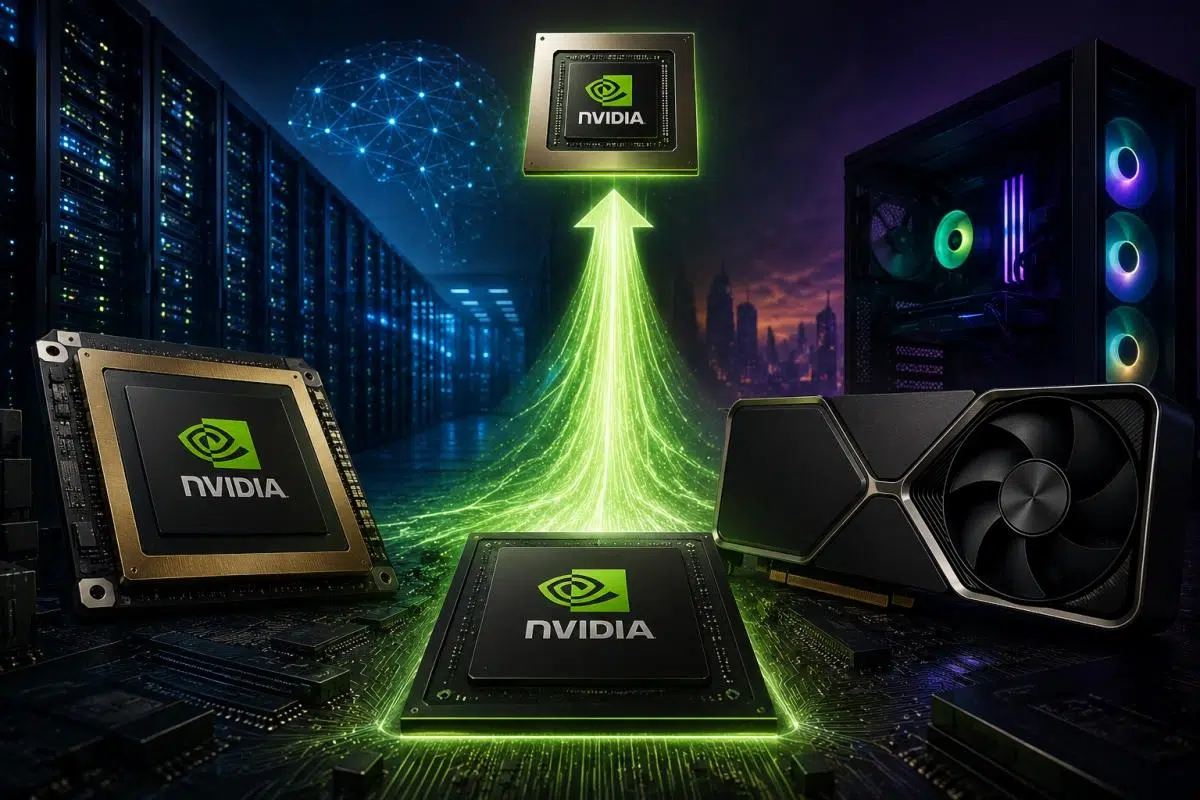
The accelerated computing industry is experiencing an unprecedented moment, and at the heart of this upheaval is NVIDIA. With the launch of its Blackwell architecture, the company has not only sought to improve upon what it already had, but has aimed to redefine processing power for the era of generative artificial intelligence, leaving the previous Hopper and Ada Lovelace generations behind.
It's no secret that the demand for chips to train neural networks is absolutely insane, and NVIDIA has played its cards right to maintain a near-total monopoly in the sector. This new platform isn't just a faster piece of silicon, but a complex ecosystem that allows language models with trillions of parameters to run while consuming significantly less power than before, facilitating the implementation of local LLM in enterprise environments.

The core of Blackwell: Engineering at the limit
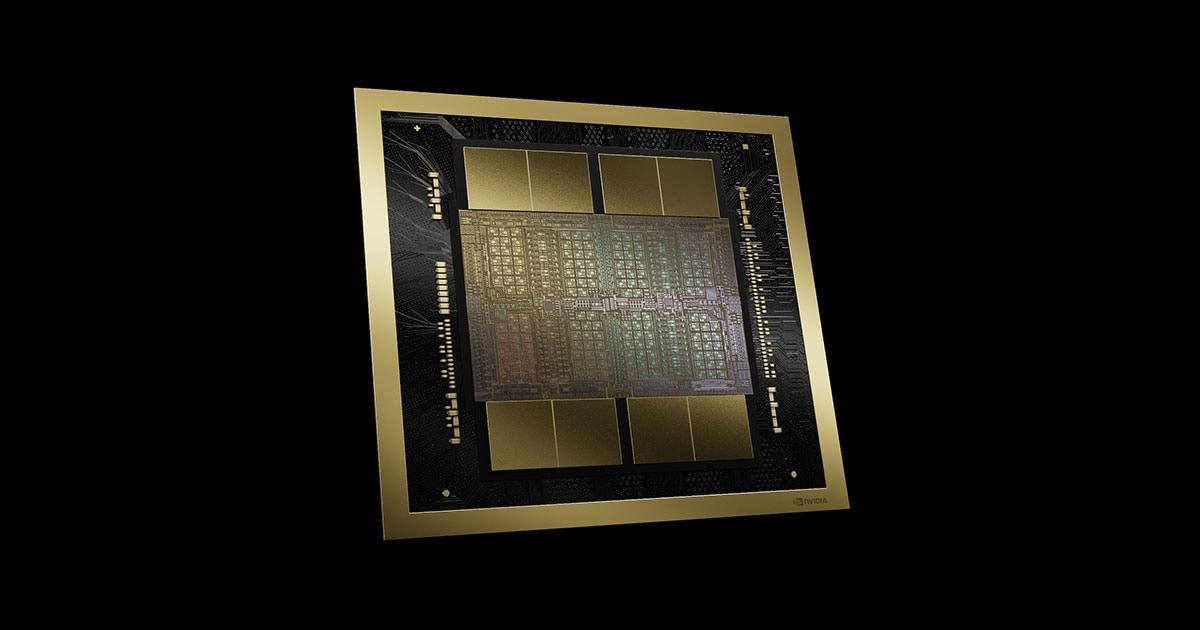
If we delve into the technical specifications, Blackwell is a beast. For data centers, it uses the TSMC 4NP process , which is an optimized version of 4N. The GB100 chip is so large that it has reached the physical limit of what lithography machines can etch, forcing NVIDIA to use two dies connected via a very high-speed interface called NV-HBI, based on NVLink 7.
This configuration allows the system to behave as if it were a single monolithic chip, reaching a total of 208.000 billion transistors . In terms of performance, the leap is enormous: fifth-generation Tensor Cores have been introduced that support reduced-precision formats such as MXFP4 and MXFP6 , enabling much faster and more efficient AI inference.
For those seeking visual quality, the architecture also brings the fourth generation of ray tracing cores. They've added a triangle cluster intersection engine to improve complex geometry and the tracing of fine details, such as hair, making rendering much more realistic thanks to DLSS frame generation in video games.

Blackwell Ultra and the arrival of Rubin
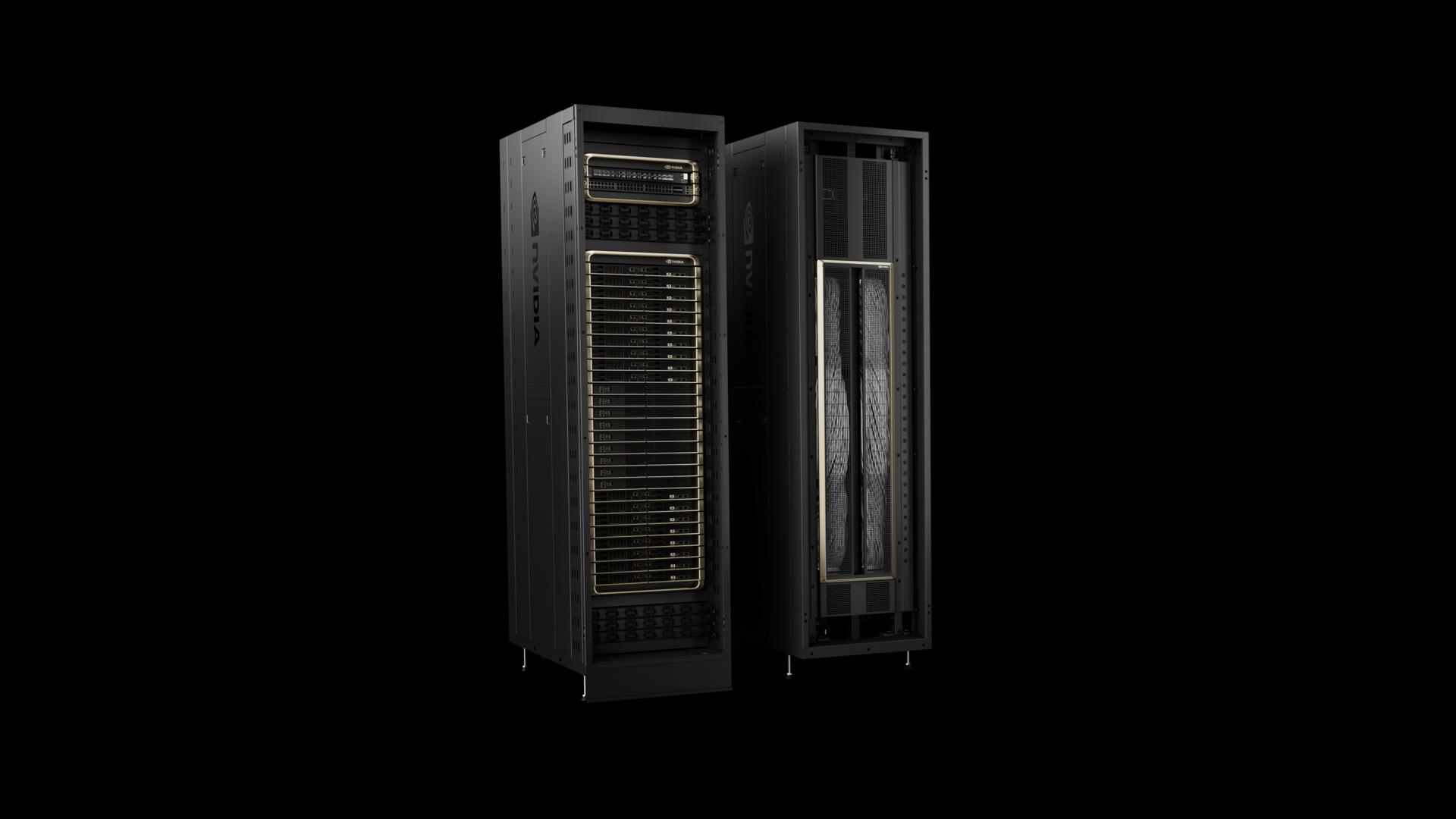
But NVIDIA isn't standing still and has already unveiled Blackwell Ultra , an evolution designed specifically for what they call "reasoning AI." This version boosts the models' ability to think in complex steps and solve problems autonomously. The GB300 NVL72 system, for example, offers 1,5 times the performance of the original GB200.
This is where the mysterious term Blackwell-Next comes into play , which has begun to appear in Linux 7.2 drivers. Everything points to it being a preparation for the Rubin architecture , the direct successor to Blackwell. Rubin will be paired with Vera CPUs, forming a duo destined to dominate high-density computing.
In the long term, the company's roadmap is ambitious. After Rubin, the arrival of Feynman is already on the horizon , promising a completely new architecture. It's clear that NVIDIA is making strategic moves to make the path from model training to real-time inference as seamless as possible, driving the use of local AI and agent automation.
Consumer segment and the future of RTX

Although servers are the top priority, gamers aren't left out. The TSMC 4N process is used for the consumer market . The most powerful chip, the GB202, is 20% larger than the previous generation's AD102 and boasts 24.576 CUDA cores , representing a massive increase in raw power.
Within the product family, we'll see the arrival of the RTX 5090 and 5080 , in addition to more modest versions like the 5060 and 5050. The RTX Spark has also been mentioned , a solution that integrates an Arm CPU and a Blackwell GPU into a single package, ideal for choosing a recommended gaming laptop with strong AI capabilities.
One of the most interesting new features is the AI Management Processor (AMP) , a RISC-V-based chip that manages GPU resources. This frees the main processor from scheduling tasks, improving overall performance thanks to Windows' hardware-accelerated scheduling technology.

Technical challenges and market dominance
It hasn't all been smooth sailing. Blackwell has had its share of setbacks, including overheating issues and design flaws that forced NVIDIA to work closely with TSMC to correct them. These errors resulted in reduced silicon wafer performance, slightly delaying initial deliveries, which is reminiscent of the risks associated with CPU and GPU overclocking techniques.
Even so, the market is so hungry that all of 2025's production is already sold out, according to some analysts. The supply chain is a colossal logistical operation involving everyone from Foxconn and SK Hynix to Vertiv, ensuring that NVL72 racks reach giants like Microsoft, Meta, and OpenAI.
Regarding software, the platform relies on NVIDIA AI Enterprise and the new NVIDIA Dynamo inference framework . This software is key to optimizing token generation and reducing service costs, enabling AI factories to be profitable despite the enormous investment required.
NVIDIA's technological transition continues to advance by leaps and bounds, consolidating a structure where computing power and energy efficiency dictate the pace of innovation. From Blackwell chips and their Ultra variants to the upcoming Rubin architecture, the company has secured its position at the top, ensuring that both generative AI and high-end gaming have an engine capable of powering the most ambitious models of the decade.