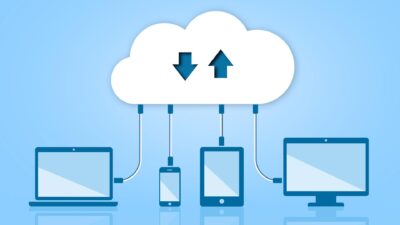
- The SaaS model allows access to cloud applications by subscription, reducing initial costs and technical complexity.
- It offers key advantages: rapid deployment, full accessibility, scalability, automatic updates, and high collaboration capacity.
- It presents risks that need to be managed: supplier dependence, data control, security, compliance, and cumulative costs.
- The evolution of SaaS integrates AI, micro-SaaS, no-code, and greater sustainability, consolidating it as the standard for enterprise software.
You probably use SaaS every day even if you don't know it by name: when you watch a series on Netflix, organize tasks in Trello, share files in Google Drive or work with Google Workspace, you are using software that lives in the cloud and that you access by paying a subscription, without installing anything complicated on your computer.
The Software as a Service (SaaS) model has become the standard for modern software for businesses and users: it reduces costs, accelerates implementation, allows working from anywhere, and frees IT teams from much of the maintenance. But, like everything in technology, it also has drawbacks, nuances, and important strategic decisions that should be well understood.
What is SaaS and how does it actually work?
Software as a Service (SaaS) is a software distribution model in which applications are hosted in the cloud and accessed via the internet, typically with a recurring payment (monthly or annually). Instead of purchasing licenses and installing the program on local servers and computers, companies "rent" access to the software for as long as they need it.
In this model, the provider handles almost everything : server infrastructure, databases, storage, backups, updates, security patches , high availability, and usually technical support. The client only needs a device with a browser or app and an internet connection to get started.
From a technical standpoint, most SaaS platforms use a multi-tenant architecture : a single instance of the application serves many clients simultaneously, each with its own data, configuration, and permissions. This allows for resource optimization, cost sharing, and the centralized deployment of new features to all clients.
Access is usually via a web browser or app, authenticating with a username and password, often with multi-factor authentication . All business logic runs on the provider's servers: the user's device acts as a lightweight "terminal" that sends and receives data.
This model is part of the cloud computing ecosystem, along with other approaches such as IaaS (Infrastructure as a Service) and PaaS (Platform as a Service). While IaaS offers basic infrastructure (servers, networks, storage) and PaaS provides a platform for developing applications, SaaS delivers the application directly, ready to use.

Types of SaaS and everyday examples
The SaaS model is so widespread that it has diversified into multiple types , both in terms of the audience it is aimed at and the problem it solves or the sector in which it is applied.
Depending on the type of client, we usually distinguish between B2C SaaS and B2B SaaS . B2C SaaS is aimed at end consumers (streaming, cloud storage, messaging, personal productivity, etc.), while B2B SaaS is focused on businesses and professionals (CRM, ERP, collaboration tools, document management, marketing, support, etc.).
SaaS is also often compared to horizontal SaaS and vertical SaaS . Horizontal SaaS covers cross-cutting needs across many sectors (email, project management, generic CRM, HR), while vertical SaaS is designed for a specific sector: healthcare, banking, insurance, retail, manufacturing, hospitality, pharmaceuticals, etc.
A common classification by functionality includes several families of solutions : collaborative SaaS (chat, video calls, online document editing), cost reduction and management solutions, CRM for customer relationship management, ERP for enterprise resource planning, marketing and sales tools, e-commerce platforms, industry-specific systems, and increasingly, suites that combine all of the above.
Among the best-known examples of SaaS in the market are Google Workspace, Microsoft 365, Salesforce, HubSpot, Slack, Zoom, Canva, Notion, Shopify, Zendesk, Trello, and countless specialized niche solutions (the so-called micro-SaaS) focused on solving a very specific problem in an extremely efficient way.
Main benefits of SaaS for businesses and users
The rise of SaaS is not accidental: it responds to a very powerful combination of economic, operational, strategic and organizational advantages that explain why the percentage of the IT budget dedicated to cloud solutions grows every year.
Quick and immediate implementation
With SaaS, the software is already installed and configured in the cloud . Simply subscribe to the service, create user accounts, and in a matter of minutes or hours the application is ready to use, without local installations or complex deployments on each computer.
This radically reduces "time to value" : the time it takes from when you decide to use software until it starts generating real value for the business. Compared to the traditional on-premises model, where you had to acquire hardware, install systems, configure networks, and deploy updates at each workstation, the leap in agility is enormous.
Accessibility and remote work
Because it runs in the cloud, SaaS is accessible from any location and device with an internet connection: computer, laptop, tablet, or mobile phone. This aligns perfectly with remote work, distributed teams, and the hybrid environments that have become established in recent years.
You no longer need to be physically in the office or connected to the internal network to access a CRM, ERP, corporate email, or support tool. Users can continue working from home, while traveling, or at a client's site, maintaining the same work environment.
Lower initial costs and a flexible payment model
One of the great advantages of SaaS is its positive impact on costs . It eliminates the large initial investments in servers, perpetual licenses, technical rooms, cooling systems, UPS systems, and the entire ecosystem required to host applications locally.
Instead of high capital expenditures (Capex), we've moved to a predictable operating expenditure (Opex) model : you pay a recurring fee per user, per volume managed, or per actual usage (pay-per-use or pay-per-value). This simplifies financial planning, reduces barriers to entry, and allows SMEs to access solutions previously reserved for large corporations.
Furthermore, maintenance costs are spread out because the provider assumes responsibility for updating, patching, monitoring, and maintaining the infrastructure. Economies of scale allow them to offer a robust service at a unit cost that is difficult to match internally.
Scalability and elasticity
SaaS solutions are typically hosted on scalable cloud platforms (hyperscale platforms like AWS, Azure, or Google Cloud; large telcos; hosting providers; or specialized MSPs). This allows for scaling up or down in capacity without the need to purchase additional servers.
The company can increase or decrease the number of users , the volume of documents, storage or contracted functionalities practically on the fly, adapting to peak demand, new lines of business or restructurings without redesigning the entire infrastructure.
Automatic updates and continuous improvement
With SaaS, new versions arrive automatically . The provider deploys security enhancements, new features, and bug fixes centrally, without users having to install patches or interrupt their work.
This ensures that all companies are always using the latest version , avoiding the classic version fragmentation that caused issues and compatibility problems in the traditional model. Furthermore, many providers follow frequent update cycles (even every few weeks) that accelerate innovation.
Usability, proof of concept, and personalization
Today's SaaS services are typically very well-developed in terms of user experience , with intuitive interfaces, configuration examples, templates, and embedded best practices that facilitate adoption without significant training effort.
It is common to be able to run proof-of-concept tests or start with trial versions before committing: many platforms offer free trials, limited free accounts, or basic starter plans that allow you to validate functional and business fit before scaling.
At the same time, most modern SaaS platforms allow for a high level of customization through configuration, templates, workflows, branding, business rules, and increasingly, through extensions with APIs, integrations, and specific components. While not reaching the level of custom development, the scope for adaptation is usually quite broad.
Collaboration and real-time information
Many SaaS applications are designed from the ground up for collaborative work : they allow simultaneous document editing, contextual comments, change tracking, internal messaging, and real-time notifications.
Furthermore, centralized access to data facilitates real-time analytics : dashboards, usage reports, performance metrics, process status, and key KPIs are updated instantly, helping to make informed and rapid decisions at all levels of the organization.
Enhanced security and compliance
Security is often one of the biggest concerns when talking about the cloud , but in practice many SaaS providers invest in cybersecurity more than the average company could afford on its own.
Common measures include strict access controls , multi-factor authentication, encryption in transit and at rest , network segmentation, continuous monitoring, regular audits, penetration testing, backup and disaster recovery plans, and compliance with regulations such as GDPR or international standards.
Financial, operational, strategic and organizational benefits
Looking at the big picture, SaaS offers benefits on several levels . Financially, it reduces the total cost of ownership, opens the door to new revenue streams (for example, by offering additional digital services to customers), and improves return on investment by making better use of existing infrastructure.
Operationally, it simplifies processes, streamlines workflows , reduces time to market for new products or services, and improves delivery consistency. IT resource allocation becomes more efficient, focusing efforts on higher-value initiatives.
Strategically, SaaS strengthens competitiveness and business agility : it allows businesses to react quickly to market changes, test new ideas with less risk, and expand into new countries or segments without having to replicate physical infrastructure.
On an organizational level, it has a direct impact on the internal culture : teams work with modern tools, collaborate better, have access to data and automation that reduces manual tasks and can focus on providing value, which usually increases satisfaction and performance.
Disadvantages and risks of the SaaS model that you shouldn't ignore
It's not all sunshine and roses: SaaS also has its downsides , which are important to understand in order to make informed decisions. Most challenges can be mitigated, but this requires prior analysis and good vendor management.
Vendor dependence and vendor lock-in
By adopting a SaaS, the company becomes heavily dependent on the provider : on its infrastructure, its financial situation, its pricing policies, its roadmap of functionalities, and even its geographical location and regulatory framework.
This translates into a risk of vendor lock-in , meaning difficulty switching providers if the service no longer fits the needs or better alternatives become available. Interoperability, data portability, and the availability of open APIs are key to reducing this dependency.
Data control and sovereignty
Another sensitive issue is the feeling of loss of control over information . Instead of having the data on their own servers, it is hosted in external data centers, sometimes in other countries, which raises questions about sovereignty, privacy, and regulatory compliance.
The contractual relationship and the guarantees offered by the provider are fundamental : data location, security measures, retention policies, export and import of information, secure deletion procedures and compliance certifications must be analyzed closely.
Security and privacy
Although SaaS providers typically deploy advanced security measures , the concentration of large volumes of data in the cloud makes them an attractive target for attackers. Incorrect configurations, weak credentials, or poorly designed integrations can open unwanted vulnerabilities.
It is essential to demand good cybersecurity practices : role-based access control, multi-factor authentication, activity logging and monitoring , incident response plans, regular backups and recovery testing, external audits, and transparency regarding any breaches.
Long-term cumulative costs
The subscription model is often attractive at first due to its low entry costs, but if a company accumulates many SaaS services without control, it may find itself with a considerable monthly bill.
Actively managing the application portfolio is key : periodically review which licenses are actually being used, consolidate tools when it makes sense, negotiate terms, and avoid paying for inactive users or features that are not being used.
Dependence on connectivity and performance
SaaS requires a stable internet connection with sufficient bandwidth . In locations with poor connectivity or during service provider outages, performance suffers and, in some cases, work may be temporarily halted.
For critical uses, it is advisable to assess fault tolerance , have contingency plans, offline access policies where possible, and clear service level agreements (SLAs) that define availability, response times, and compensation.
Compliance and regulatory challenges
Regulatory compliance (data protection, financial sector, healthcare, etc.) can become complicated when data is hosted outside the organization and, sometimes, in other countries. Regulations such as GDPR or the European AI Act establish strict obligations regarding how personal data is processed and protected.
Choosing providers that offer transparency and guarantees of compliance becomes essential: specific clauses in contracts, data processing agreements, international transfer mechanisms, and clear documentation of their security practices.
SaaS versus other models: custom software, IaaS, and PaaS
Choosing between SaaS, custom software, or other cloud models depends on the specific needs, budget, and technology strategy of each company.
SaaS provides standardized, ready-to-use solutions , ideal when the problem to be solved is common and doesn't justify developing an application from scratch. Custom software, on the other hand, is designed specifically for an organization, offers complete control over functionalities and data, but involves higher costs, time, and maintenance responsibilities.
Compared to IaaS, SaaS operates at a higher level of abstraction : in IaaS, the provider offers infrastructure (servers, storage, networks), and the company maintains control of the operating system, database, and application. In SaaS, the provider manages the entire stack, and the customer focuses solely on using the software.
PaaS (Platform as a Service) occupies an intermediate position : it provides a managed environment for developing and deploying applications (databases, middleware, development tools, business intelligence), but the company builds the final solution. SaaS, on the other hand, delivers the application ready to use, without requiring any programming.
Current trends and future of SaaS
The SaaS model is undergoing a major evolution . It's no longer just about offering accessible software in the cloud, but about adding intelligence, automation, extreme customization, and sustainability to the entire service layer.
AI-powered SaaS
AI has become the driving force behind the new generation of SaaS . Increasingly, applications are integrating machine learning algorithms and generative models to automate tasks, predict behavior, and generate personalized content or reports.
Among the most common capabilities of AI integrated into SaaS are massive data analysis in seconds, customer churn prediction, intelligent sales opportunity prioritization, automatic support ticket classification, anomaly detection, and the generation of context-sensitive texts and summaries. AI integrated into SaaS enables many of these improvements.
Platforms like HubSpot or Notion already include smart assistants that help write, organize information, create workflows, or answer questions about the company's own data, reducing time and increasing team productivity.
Micro-SaaS and extreme specialization
In contrast to large all-in-one suites, the micro-SaaS trend has emerged strongly : small, highly specialized products, often created by startups or very small teams, that brilliantly solve a specific problem.
Micro-SaaS is characterized by relatively low development costs , a focused customer base, and a high degree of customization, facilitating scalable business models and attractive margins with compact and agile teams.
No-code, low-code and simple integrations
Another major trend is the democratization of development and automation thanks to no-code and low-code platforms. Tools like Zapier, Make, and n8n allow you to connect different SaaS services and create automated workflows without writing code.
This reduces reliance on IT departments for many basic integrations and empowers business teams to define their own automated processes, provided that good governance and control are maintained over what connects to what.
Sustainability and energy efficiency
The environmental dimension is gaining importance in the cloud world . Major providers are moving towards more efficient data centers, the use of renewable energy, and serverless architectures that make better use of resources.
For user companies, relying on providers with green data centers and optimized architectures can indirectly contribute to their sustainability goals by reducing the carbon footprint associated with their information systems.
Advanced security and data sovereignty
With the global rollout of SaaS and the expansion of AI, regulation has become stricter . Regulations such as GDPR and new AI legislation aim to ensure transparency, security, protection of personal data, and user control.
The SaaS of the future will necessarily be more transparent and auditable , with better tools to manage consent, review what data is used and for what purpose, control data location, and ensure that AI models behave ethically and predictably.
Some key players and featured applications in the SaaS ecosystem
Within the SaaS universe there are large platforms that act almost as business "operating systems" and other more specific solutions that integrate with them to cover specific needs.
Salesforce is a long-standing leader in cloud-based CRM , with use cases in large companies across energy, hospitality, retail, and many other sectors. Its ecosystem of applications (Sales Cloud, Marketing Cloud, Service Cloud, etc.) enables centralized management of the entire customer relationship lifecycle.
HubSpot has grown rapidly as a marketing, sales, and customer service platform , especially attractive to small and medium-sized businesses and growing companies that need to centralize leads, communications, marketing automation, and multichannel support.
Microsoft Azure, Amazon Web Services, and Google Cloud act both as infrastructure providers for other SaaS to run on, and as platforms that offer their own SaaS services (email, office suites, analytics, managed databases, etc.), enabling millions of success stories in companies of all sizes.
In more specific areas, SaaS-based document management and customer communication solutions offer advanced capabilities to design, customize, and distribute contracts, invoices, notifications, account statements, or regulated communications on a large scale, with high levels of security and traceability.
Keys to deciding and starting a SaaS business
For a company considering adopting SaaS , the decision isn't so much "SaaS yes or no," but rather which components make sense to consume as a service and under what conditions. It's advisable to analyze processes, data criticality, regulatory requirements, comparative costs, and internal management capacity.
For those looking to launch their own SaaS product , the model opens up many opportunities: from highly specialized micro-SaaS to more ambitious platforms supported by cloud architectures and AI. However, the key remains the same as always: solving a real problem better than the existing alternative.
A well-designed SaaS product combines a solid technological foundation (scalable architecture, robust security, automated deployments, API integration) with a deep understanding of the sector it serves, a pricing model aligned with perceived value, quality support, and a clear growth and retention strategy.
Overall, SaaS has transformed the way businesses and users interact with software : it has made advanced solutions that previously required huge investments accessible, accelerated innovation thanks to the cloud and AI, and forever changed the balance between buying technology as a product or consuming it as a service, to the point that, in many environments, no other way of working is conceivable.