- The game was born in the late 80s and became popular globally thanks to its integration into Windows 3.1.
- Its original purpose was not only to entertain, but to serve as an educational tool for mastering the use of the mouse.
- Over the decades it has evolved from basic versions to become a competitive challenge with world records.
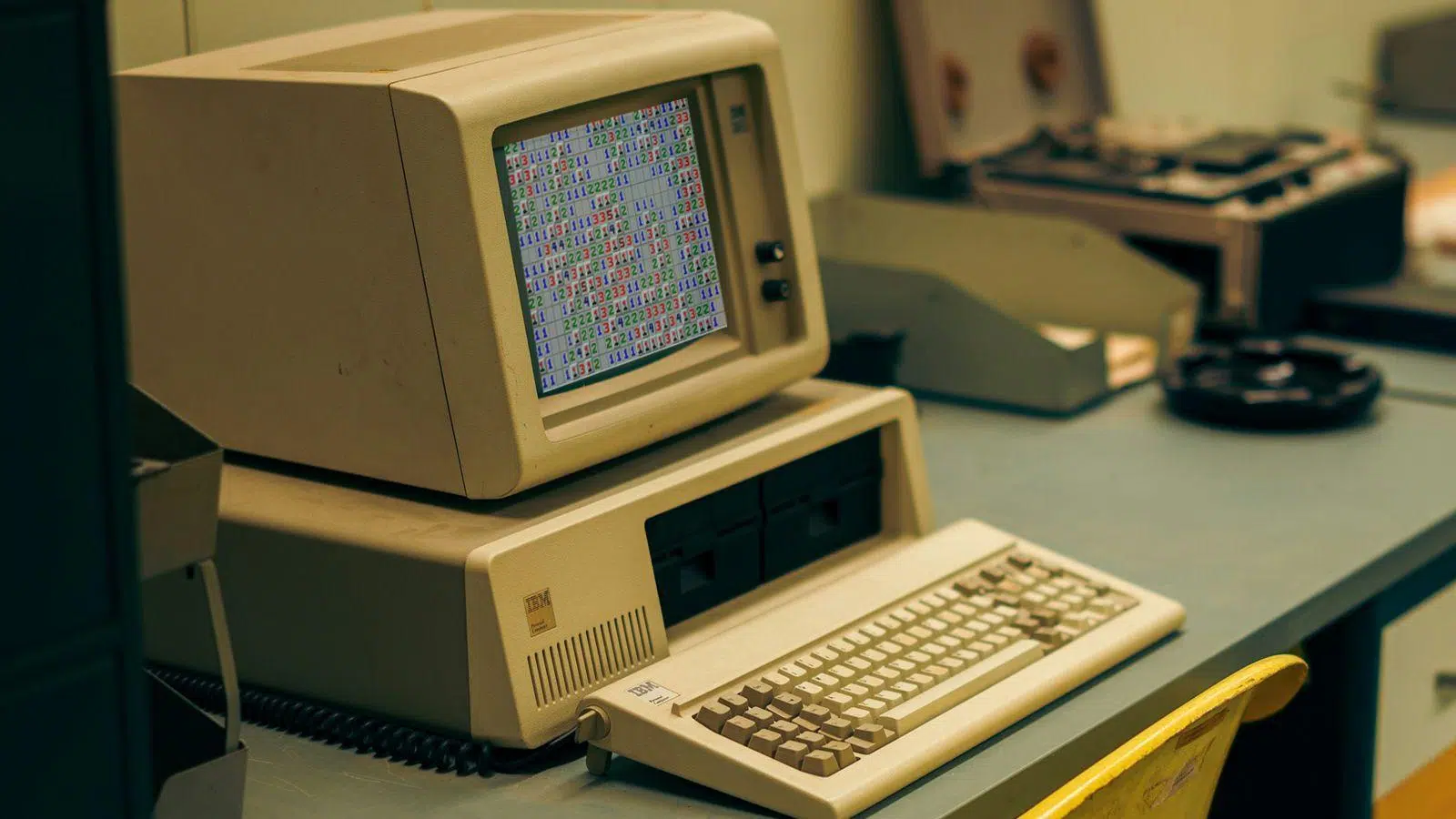
Talking about computer programmers of yesteryear is like traveling back to a time when digital entertainment was much more austere, but no less addictive. Among those treasures is Minesweeper , that logic game that kept millions of people glued to their screens, consuming hours of productivity in offices and homes around the world.
Although gamers today are accustomed to hyper-realistic graphics, this title based its success on minimalist mechanics and a constant mental challenge. It wasn't about quick reflexes, but about pure deduction and, sometimes, a bit of luck to avoid being blown to bits with the first click.

The origins and birth of the game
The history of this puzzle game is more complex than it seems. While Microsoft made it famous, its roots go back much further. It's said that in 1983, Mined-Out , developed by Ian Andrew for the ZX Spectrum, emerged and is considered by many to be its direct ancestor. Later, in 1985, Relentless Logic appeared for MS-DOS, which already featured gameplay very similar to the current version.
However, the version that marked a milestone was the one created in 1989 by Robert Donner and Curt Johnson . Originally, the project was conceived for the OS/2 operating system, a collaboration between IBM and Microsoft, before being ported to the Windows environment. Although Microsoft developers admitted that they based it on other designs, they don't recall exactly which one served as the primary model.

The secret behind its inclusion in Windows
Many believe Minesweeper was simply a way to kill time, but there was a hidden educational strategy . In the early 90s, the mouse wasn't a common object, and people didn't know how to use it fluently. Microsoft used the game to teach users how to click accurately , differentiating between the left and right buttons.
This plan was accompanied by Solitaire, which served to teach the drag-and-drop function . Even other games like Hearts introduced local area network concepts. The goal was to make interaction with the graphical interface more natural and the computer seem more user-friendly and less geared solely towards professional work, thus integrating itself into the history and legacy of Windows classics.
The addiction was so strong that even Bill Gates fell into the trap. It's said that he even uninstalled the game from his own computer to avoid losing track of his work, although he ended up using an employee's computer to continue playing in secret.
Rules, levels, and the science of the game
The gameplay is simple: clear a board full of squares without detonating any mines. When you open a square, a number may appear indicating how many bombs are in the eight adjacent squares. If the square is empty, the surrounding areas are automatically opened.
To organize the challenge, three classic levels were established:
- Beginner: An 8×8 or 9×9 board with 10 mines.
- Intermediate: A 16x16 grid with 40 mines.
- Expert: The ultimate challenge of 30x16 with 99 mines.
From a mathematical point of view, the game is fascinating. Determining whether a Minesweeper configuration has a solution has been shown to be an NP-complete problem , and infinite Minesweeper is Turing-complete, elevating it from a simple pastime to an object of study in theoretical computer science.
Evolution, controversies and legacy
Over time, the game became controversial. A group called the International Campaign to Ban Winmine criticized the landmine theme, deeming it offensive to the real victims of these devices. In response, Windows Vista included versions where the mines were replaced with beautiful flowers.
The game's run as a pre-installed Windows 8 app ended , and it was moved to the Microsoft Store as a free but ad-heavy version. This led many users to migrate to clones like Minesweeper X , Arbiter, or mobile versions like Minesweeper Q, which offer advanced statistics and faster response times.
Today, Minesweeper has transcended its original software. We find it as an Easter egg in Google searches, integrated into games like RuneScape (Vinesweeper), and even in joke updates for Minecraft. Entire communities are dedicated to speedrunning , with players like Kamil Murański managing to complete all three difficulty levels in under 40 seconds.
This small grid of squares has left an indelible mark on digital culture. It went from being a covert tutorial for using a mouse to becoming a standard of logic and patience, demonstrating that simplicity is the key to creating a legacy that lasts for decades in users' memories.