- Windows XP had multiple official editions, most notably the rare Tablet PC Edition, based on Professional and focused on use with styluses and touchscreens.
- There were some very rare ISOs, such as the one that combines Media Center Edition 2005 and Tablet PC Edition 2005 on a single disc, highly valued by collectors.
- Modified versions have been circulating, such as "Windows XP Gold", whose origin and internal changes are unknown and potentially unsafe.
- The famous FCKGW key was a volume license that was leaked by mistake, key in the history of XP activation and today completely unusable legitimately.
For many people who lived through the golden age of the PC, Windows XP remains the most legendary operating system, famous for its Bliss background. that Microsoft has launched. Its blend of stability, simplicity, and performance marked a turning point, to the point that even today there are users who remember it with genuine nostalgia.
Of all the versions of this system that appeared, There were well-known editions such as Home, Professional, or Media Center.But there were also variants so peculiar that they now border on absolute rarity. Some were very limited official products, others curious mixes designed for specific devices, and still others were simply third-party modified installations that raise many suspicions.
Windows XP, a legendary system with many editions
Throughout the years that XP was on the front lines, Microsoft released several editions adapted to different types of users and hardware.Most people were used to the more typical versions, but the XP ecosystem was much broader than it seems.
Among the best-known official variants were Windows XP Home Edition, Professional, Professional x64, Embedded and Media Center EditionEach one had its own target audience: from basic home users to businesses, including multimedia centers for the living room or embedded systems.
However, within that range of releases, one particularly curious edition appeared that many today consider a true collector's item within the world of Windows XPIt wasn't sold like the rest in stores, there were hardly any physical boxes and its approach was way ahead of what was fashionable in the early 2000s.
Meanwhile, the legacy of XP lives on: Windows 11 retains behaviors and concepts that debuted with XP, showing the extent to which this system shaped the course of Microsoft's desktop software.
What exactly was Windows XP Tablet PC Edition?
Among all the official versions, Windows XP Tablet PC Edition was probably the most unique and least seen by the general publicIt wasn't just a cosmetic variant, but an edition specifically adapted to a very special type of device for the time: convertible computers and the first Windows tablets.
This edition was based on the foundation of Windows XP Professionalso it inherited all its main network functions, to maximise security and your enjoyment. and advanced management, but it added an extra layer of technologies designed for touch and digital pen use. At a time when smartphones hadn't yet revolutionized everything, Microsoft was already testing how to bring Windows to more portable formats.
One of the details that makes it so rare is that It was not marketed as a standalone product in storesIt wasn't your typical XP box that you could buy at any computer store, but a license that came pre-installed on specific devices, especially Microsoft-certified tablet PCs and convertibles.
That implies that Boxed copies of Windows XP Tablet PC Edition were very scarce. And they were usually intended for manufacturers or very specific channels. For the average user, it was practically invisible, unless they purchased equipment that already had it installed from the factory.
This edition was first published in 2002, at the height of Windows XP's popularity, and received a major update in 2005 that refined its touch and handwriting functions, following the improvements that also came to Media Center and other branches of the system.
Key features of Windows XP Tablet PC Edition
The beauty of this version was that It was not limited to allowing touch use, but integrated a whole working environment designed for the pencil and handwritingAt the time, it was almost like science fiction applied to everyday life.
One of the essential characteristics was the native support for touchscreens and stylusThe system recognized the digital pen input and was optimized for a smooth experience, from navigating menus to interacting with applications.
It also included an advanced handwriting recognitionThe user could write on the screen as if it were a notebook, and the system would convert those strokes into selectable, editable digital text usable in any compatible program.
To make everyday life easier, XP Tablet PC Edition integrated a dedicated input panel for the penThis layer, which could be invoked at any time, allowed users to write or draw directly on an input area. It was layered over classic Windows applications, making them usable without a physical keyboard.
Another gem in the package was Windows JournalA pre-installed application designed for taking handwritten notes, sketches, quick drawings, or detailed notes. These documents could be saved as digital files, emailed, or archived like any other office document.
Integration with Office and advanced usage options
One of the strongest points of this edition is that It wasn't just a technology demo; it was integrated with the actual productivity software of the time.Specifically, it worked very well with contemporary versions of Microsoft Office.
Thanks to that integration, it was possible Add handwritten annotations directly onto Word documents or Excel spreadsheetsImagine reviewing a report and scribbling corrections, underlining ideas, or drawing diagrams on top of the content, as if you had a piece of paper in front of you, but with all the advantages of the digital format.
The interface was also adapted to this work style: XP Tablet PC Edition offered menus and buttons optimized for use with a stylus., with slightly larger elements and specific options designed for those who were not going to use the traditional mouse or keyboard as much.
Another very practical function was the possibility of Change the screen orientation between horizontal and verticalIn portrait mode, tablets were ideal for reading long documents, e-books, articles, or notes, while in landscape mode they were better suited to multitasking or presentations.
All of this was supported by a very solid technical foundation, since The Tablet edition was built on Windows XP ProfessionalThat meant it remained perfectly valid for corporate networks, domains, group policies and all the advanced needs of businesses, but with added mobility.
Typical uses and user profile of XP Tablet PC Edition
In the context of the early 2000s, This edition was designed for a fairly specific and professional audiencenot so much for the average home user. Compatible devices used to be expensive and geared more towards businesses or specific sectors.
A very common field was that of the note-taking on the goExecutives, salespeople, high-level students, or professionals who needed to jot down information on the go could take advantage of the stylus's functions to write down ideas, sketches, diagrams, or notes in meetings and conferences.
It also had quite a following among Designers, engineers, and creatives who were looking for a more natural way to draw on the screen, with the precision of the stylus and the convenience of having a complete operating system underneath, instead of a simple graphics tablet connected to another computer.
Although the minimum hardware requirements did not differ too much from those of a standard Windows XP Professional, Tablet PC devices used to include specific digitizing screens and articulated hingeswhich allowed the screen to be rotated and folded for use as an electronic notebook.
If we compare it to the current situation, we can say that XP Tablet PC Edition was a kind of precursor to modern touch computingToday, mobility and touchscreens are commonplace, but back then this approach was almost visionary, with a still very limited ecosystem.
A very rare ISO: a mix of Media Center 2005 and Tablet PC 2005
Beyond the official editions, others have appeared over time Very rare ISOs and builds that combine several variants of Windows XP on a single discOne of the most curious is an image that integrates XP Media Center Edition 2005 and Tablet PC Edition 2005, all in one package.
This specific ISO is described as an extremely rare edition, difficult to find and highly sought after by collectorsWhat's striking is that it offers, all on the same disc, the functionality of a Media Center (designed for living room multimedia systems) and the capabilities of a Tablet PC (oriented towards touch screens and styluses), and all of it completely in Spanish.
According to the information associated with that image, The system is not modified at the component level nor is it deeply customized.In other words, the rarity doesn't come from a visual mod or an extremely "tuned-up Windows," but from combining two official editions into a single ISO while maintaining Microsoft's original base.
Furthermore, it is said that This build accepts any valid Windows XP Professional product keyThis facilitates its installation on compatible equipment. A specific serial number is even mentioned, although it's worth remembering that today all of this is of purely historical and preservation interest, not for production use.
“Windows XP Gold” and other versions modified by third parties
On the less official side of the spectrum, a portion of the community has shared over the years Heavily modified versions of XP, with catchy names and all sorts of internal changesOne of the most talked about is an ISO known as “Windows XP Gold”.
This build is notable for displaying messages in the installer such as “Made by Computer Worm” And for including Arabic text mixed in with the usual Windows XP configuration screens. Undoubtedly, these details raise suspicion and warrant treating it for what it is: a system heavily modified by someone outside of Microsoft.
Some people who have come across this ISO have reached Try it inside a virtual machine and run an antivirus scan like AVG.without any immediate threats being detected. Even so, that doesn't guarantee its security at all: internal changes can go far beyond what a superficial analysis can reveal.
The main problem is that It is unknown who is really behind these types of compilations, or exactly what has been modified. Nor with what intention. Backdoors, silent malware, remote connection scripts, or any other unwanted component may have been added.
Therefore, the general recommendation is clear: These types of modified versions should only be run, if at all, in completely isolated and test environments., as virtual machines disconnected from the network, and never on a main computer or in an environment where there is sensitive data.
The famous FCKGW key and the Windows XP activation system
If we're talking about oddities and anecdotes surrounding XP, it's impossible not to mention the legendary activation key “FCKGW-RHQQ2-YXRKT-8TG6W-2B7Q8”which millions of users at the time practically recited by heart. For years it circulated throughout the internet in connection with pirated copies of the system.
The full story was recently told Dave W. Plummer, a renowned engineer who worked for decades at Microsoft and participated, among other things, in the development of Task Manager, the integrated ZIP support and, very importantly, the first version of the Windows Product Activation System (WPA).
As he explains, That key was never stolen through a hack of Microsoft serversNor was it extracted directly from their internal systems. In reality, an error occurred within the development team itself, resulting in a massive leak.
Although at that time Social networks like the ones we have today did not exist.The key began to spread at an incredible speed. A well-known warez group called “devilsOwn” distributed it about five weeks before the official release of Windows XP, and from there it appeared on IRC, forums, Usenet groups, pirate software sites, and, above all, on P2P networks like eDonkey or KaZaA.
How WPA worked and why that key was so special
The Windows Product Activation (WPA) system was designed to Reduce piracy by linking system activation to each computer's hardware.To do this, an identifier was generated based on components such as the CPU, RAM, and other key elements of the computer.
During the activation process, That identifier was sent along with the entered key to Microsoft's serverswho decided whether the license was legitimate or not. If suspicious patterns were detected, such as keys shared on a massive scale or hardware inconsistencies, the installation could be flagged as invalid.
The FCKGW key, however, belonged to a very special type of license: a business volume key included in the system's "whitelist".These keys were designed for large organizations that deployed thousands of devices and could not activate each one individually and online.
When this specific key was used, The servers assumed it was a legitimate volume licenseIn practice, the system did not attempt to "call home" to validate each installation, relying instead on the key being used only within the corporate environment for which it was intended.
The result was that Millions of home users were able to install XP as if they had a business license.Simply enter the key, answer yes to the activation questions and that's it: the system was fully functional, without watermarks, without trial period notices and with access even to updates in an initial phase.
The decline of the key and the current situation
Over time, Microsoft detected the massive and improper use of that volume key and ended up including it on a "blacklist" of blocked serial numbers. From then on, many installations that depended on it began to have problems with validation and official updates.
The community responded with New patches and cracks that attempted to bypass the activation systemThis further extended the life of XP in scenarios where proper licenses were unavailable. For years, the tug-of-war between anti-piracy measures and evasion methods was a constant.
Currently, however, The servers that managed Windows XP activation have been offline for some time.Although in theory it might still be possible to install an older copy with that key on an older computer, it is no longer possible to legitimately activate the system through official channels.
In addition, we must bear in mind that The key FCKGW itself has long been part of the banned key listIn other words, even if the activation service remained operational, the system would immediately reject it as illegitimate.
All of this leaves Windows XP in a rather... nostalgic and historical rather than practicalToday, it only makes sense to use it in preservation contexts, very specific tests, or offline machines, always being aware of its enormous security limitations.
Looking at this whole journey, from the almost secret Tablet PC edition to the extremely rare hybrid ISOs, modified builds like “XP Gold” and the story of the FCKGW key, it's easy to understand why Windows XP still holds a special place in the collective memoryIt was a system with a very long life, full of peculiar variations and anecdotes that are now part of technological culture, and that still arouses curiosity among collectors, enthusiasts of classic software and those who lived through that era in front of the screen of an old PC.
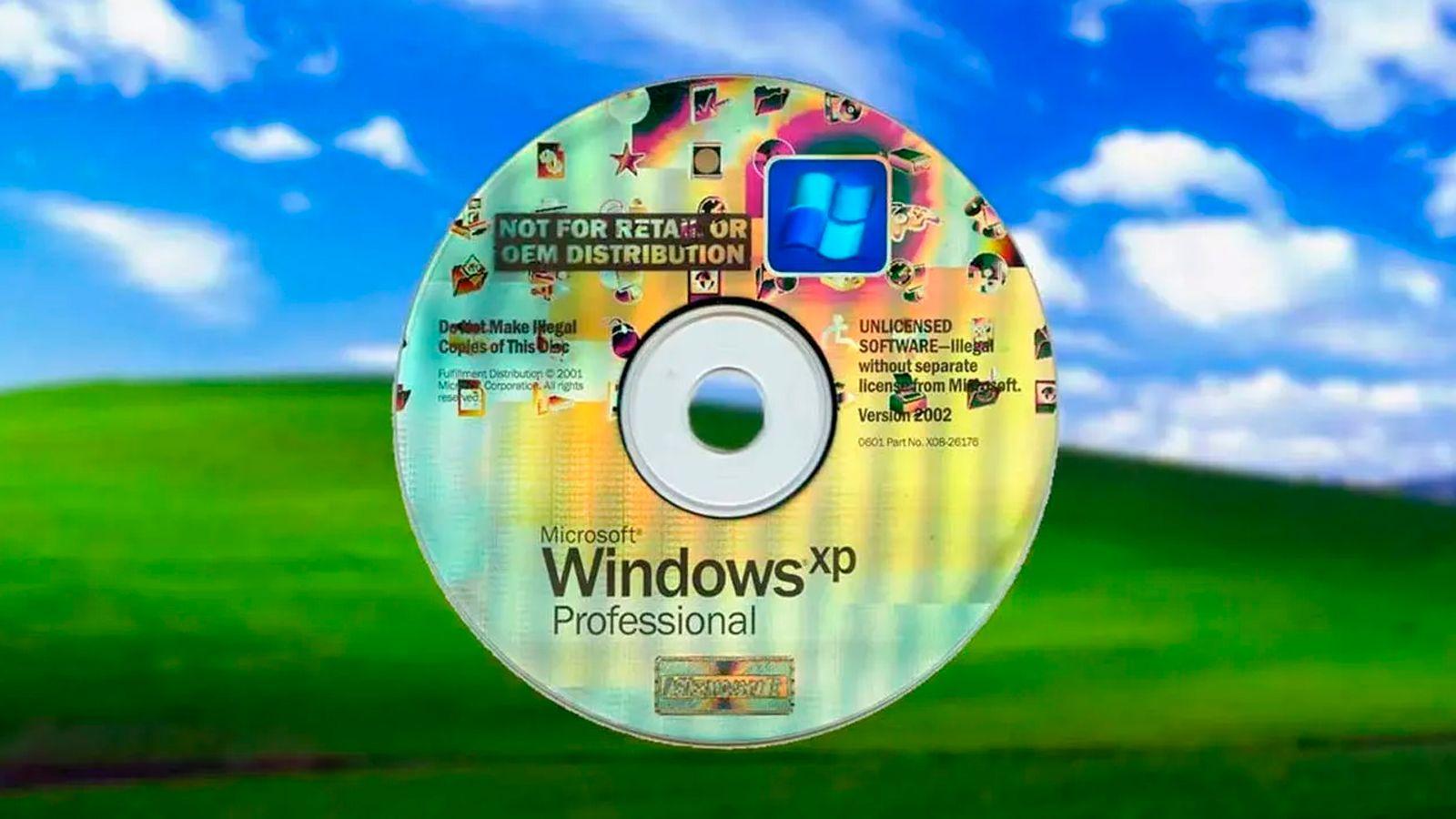
Table of Contents
- Windows XP, a legendary system with many editions
- What exactly was Windows XP Tablet PC Edition?
- Key features of Windows XP Tablet PC Edition
- Integration with Office and advanced usage options
- Typical uses and user profile of XP Tablet PC Edition
- A very rare ISO: a mix of Media Center 2005 and Tablet PC 2005
- “Windows XP Gold” and other versions modified by third parties
- The famous FCKGW key and the Windows XP activation system
- How WPA worked and why that key was so special
- The decline of the key and the current situation