- Asterisk is GPL free software that turns a server into a complete IP PBX.
- Supports SIP, H.323, IAX, and MGCP; integrates PSTN, ISDN, GSM, and VoIP.
- Offers IVR, queues, mailbox, conferencing, and CRM/ERP integration.
- Mature ecosystem: LTS versions, DAHDI modules and multiple distributions.
Asterisk is the engine behind many modern IP PBXs : open-source software that transforms a standard server into a professional communications system with VoIP, SIP trunks, and high-level PBX features. It's not a black box, but a flexible and extensible platform that allows you to create anything from a PBX for a micro-business to a call center distributed across multiple locations.
Its origins date back to 1999, when it was created by Mark Spencer , founder of Digium, and it is distributed under the GPL license. Although its natural home is GNU/Linux, there are also builds for BSD, macOS, Solaris, and even Windows, with Linux being the platform with the best support. Over the years, Asterisk has incorporated features previously only seen in high-cost proprietary solutions and has won over all types of organizations, from SMEs to large corporations.
What is Asterisk and how does an IP PBX work?
Essentially, Asterisk is a suite of services and modules, mostly written in C , that equips a standard computer (such as an IBM x86 server) with advanced telephony capabilities. It connects internal extensions, manages incoming and outgoing calls, and routes communications to external networks like the PSTN or primary and basic ISDN links , as well as VoIP providers.
In the IP world, Asterisk speaks several signaling "languages": SIP , H.323, IAX, and even MGCP, allowing it to act as a registrar server for IP terminals and as a gateway between different protocols. This enables it to integrate SIP phones, carrier trunks, and gateways to traditional lines without compromising interoperability.
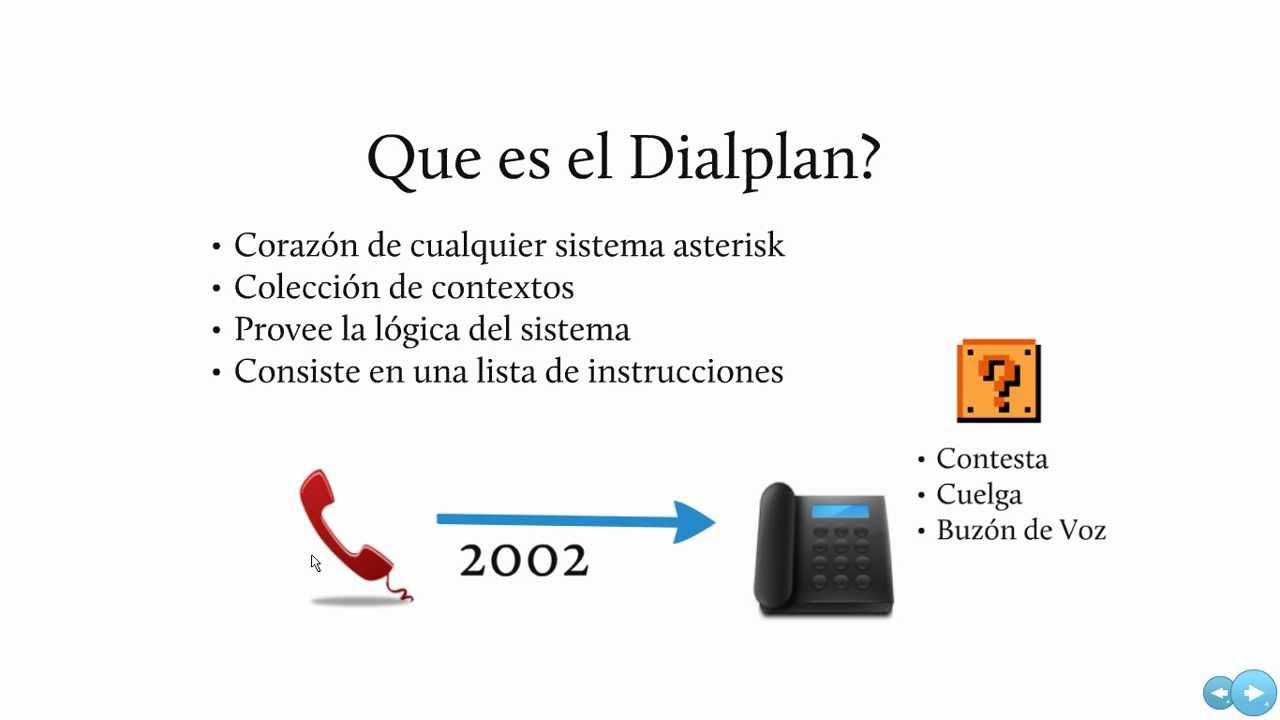
The system is built around the dialplan , a logical script where it is decided what happens with each call: announcements, IVR menus, queues, time limits, routing by source/destination… This dialplan can be extended with native modules or additional developments in C or other common Linux languages, providing virtually unlimited customization.
For environments with analog voice cabling and UTP local area networks , Asterisk allows you to add cards or devices with FXO/FXS ports . FXO ports connect to a carrier's lines (simulating a traditional telephone), while FXS ports generate the internal line with power and signaling (tone, ring, etc.) for analog telephones. In short: FXO to the provider's network, FXS to the office phones.
One of the platform's strengths is its unification capability: it can combine VoIP, GSM, and PSTN in a single system . Historically, it has been deployed alongside SIP routing projects such as SER (SIP Express Router), and today it integrates with multiple ecosystems and tools, including web interfaces like FreePBX for visual management.
Although originally designed for on-premises installations, Asterisk has seen explosive growth in cloud deployments: installing it on a virtual server and exposing encrypted extensions allows for the creation of a borderless IP PBX with remote management. With FreePBX or other GUIs, control becomes even simpler for non-technical teams.
Features, advantages and real-life uses of Asterisk
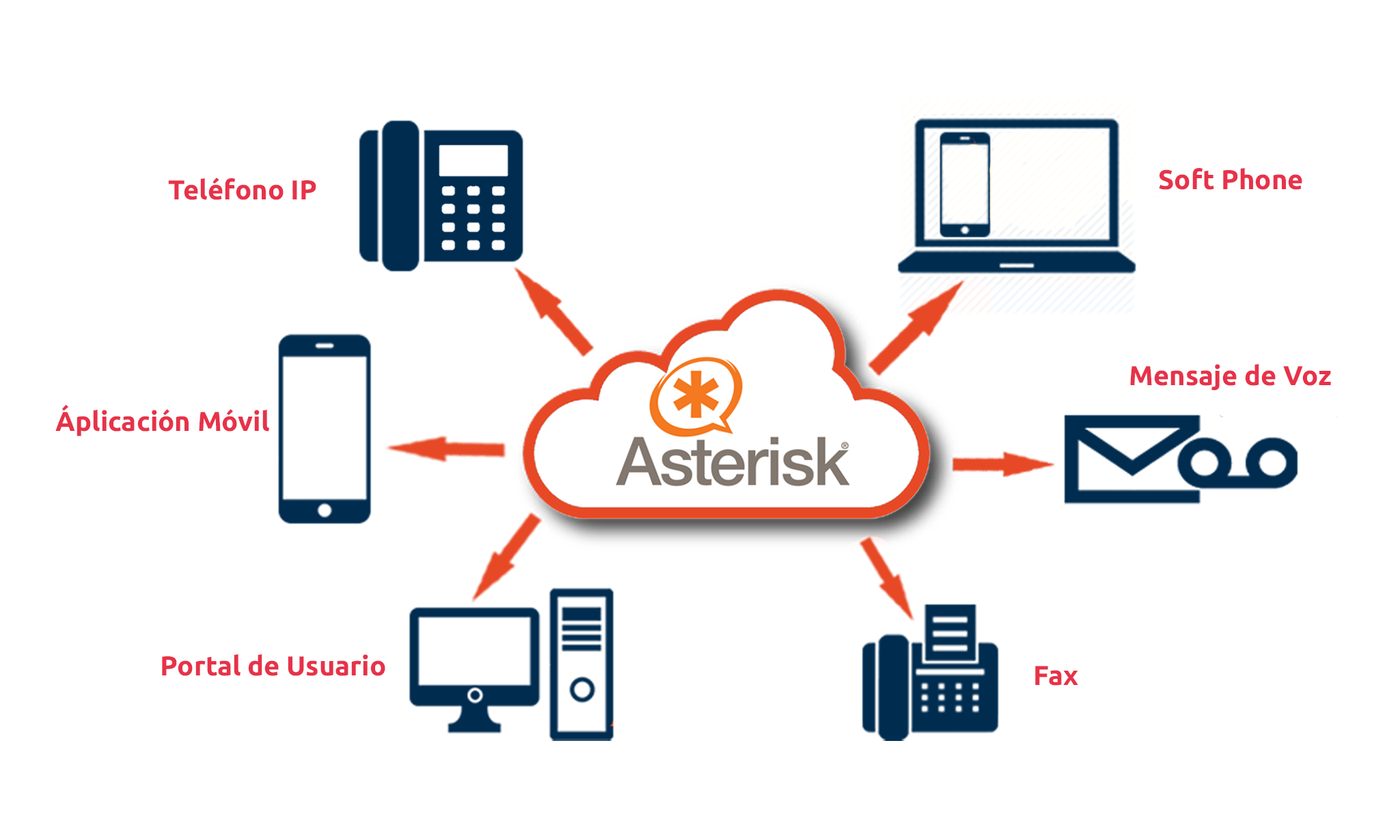
Scalability is a hallmark of enterprise telecommunications : Asterisk can handle anything from a single office with two extensions to organizations with thousands of users spread across international locations. And when managed through a GUI, its adoption by non-specialized teams is much faster.
It also stands out for its cost competitiveness: running on standard hardware, it requires no proprietary appliances or extension licenses. Companies with multiple locations benefit from free internal calls and optimized IP trunks, drastically reducing both fixed fees and per-minute costs.
For mobile and remote work, it allows you to register extensions on mobile phones, laptops, or Wi-Fi phones via the wireless network or VPN. Whether your team is at home or traveling, with a SIP client and the correct credentials, the extension is always operational.
Integration with the IT environment is another winning advantage. Being open-source software, Asterisk connects with CRM systems for call centers , ERP systems, and databases to display information on screen when a call is received, open customer records, automate alerts, or route calls according to business rules. It's even possible to build IVR systems that query a database to validate an ID and provide personalized responses in real time.
Its star features include everything you'd expect from a modern PBX and more:
- IVR or configurable auto-attendant.
- Voicemail with email notifications.
- Conferences voice and multi-user rooms.
- Chronic Disease call queues with distribution strategy and metrics.
- Rules by Time (openings, holidays, after-hours messages).
- Flexible routing of incoming and outgoing calls.
- Scalability of lines and extensions no license tolls.
- Conventional telephones or softphone and IP terminals.
- Reception and routing of fax.
- Integration of fixed, mobile and VoIP telephony.
- Integration with data network and corporate applications.
If we look at tangible benefits for the company, it is common to point to the operator's independence and recurring savings:
- Independence from Telefónica, Ono or other fixed-line operators.
- Reduction of more than 90 % of fixed costs in appropriate scenarios.
- Savings per minute (> 30 % compared to traditional rates) with VoIP.
- Free communications between IP-connected locations.
- Automatic operator and automation by origin, schedule, queues…
- Capture groups, extension monitoring and reports.
- Classic functions: call waiting, detours, 3-way conference, etc.
- Integration with management software for pricing calls.
In practice, projects typically require design, installation, and support services. Specialized partners handle defining the numbering plan, configuring trunks and security, optimizing audio quality, and training the team. Support and maintenance , as well as audits and updates, are also commonly offered.
The sectoral reach is broad: from offices and shops to hotel chains. There are public references in tourism and leisure environments (for example, hotels in the BlueBay or Nakar groups) and in world-class technology companies such as Google, Yahoo, or IBM; there are even deployments in government agencies and armed forces. The common denominator is leveraging an open platform to personalize communication.
Security is key for any PBX exposed to the internet. Distributions like Alpine Linux focus on proactive protection: firewalls, hardening tools, VPNs, and minimal components to reduce the attack surface. Combined with best practices (SIP over TLS, SRTP, control lists, fail2ban), Asterisk offers a solid balance between functionality and cybersecurity.
In addition to "pure" Asterisk, there are distributions and solutions that package it for easier deployment. Bicom's PBXware offers an intuitive interface and ready-to-use modules—IVR, music on hold, global voice networks—with reduced deployment times . The Asterisk world has also seen projects like Trixbox (on CentOS, designed for 2 to 250 employees), and "all-in-one" integrations like Elastix , which combined FreePBX, MySQL, vTiger, instant messaging, and fax via Hylafax.
Asterisk Project Versions, Modules, and Ecosystem
Asterisk has evolved for over two decades with regular releases. According to available information, the latest stable version is 22.5.1 (July 31, 2025). For historical context, version 15.0.0 beta1 was released as a beta version on August 2, 2017. The project distinguishes between standard branches and LTS (Long Term Support) branches, which is very useful for planning upgrades in production environments.
The versioning scheme uses three numbers separated by periods: the first identifies the branch, the second the version, and the third the revision. Revisions include bug fixes but do not introduce new features. In development versions , the third value is usually 0 and is followed by the suffix "beta" and a revision number.
Among the well-known families are:
- Version 17 Standard (non-LTS standard branch).
- Version 16 LTS (for example, 16.0.0 stable).
- Version 13 LTS (for example, 13.4.0 stable).
- Version 12 (as 12.8.2 stable).
- Version 11 LTS (11.18.0 stable).
- Version 1.8 LTS (1.8.32.3 stable).
- branches 1.6 (1.6.0.28, 1.6.1.25, 1.6.2.20, discontinued).
- Foliage 1.4 LTS (1.4.42 stable; Addons 1.4.13, discontinued).
- branches 1.2 and 1.0 (paralyzed, without maintenance).
The platform is made up of several main packages, each with its own role:
- Asterisk: core and base files of the project.
- DAHDI: Hardware support and card drivers (formerly Zaptel).
- addons: optional plugins (integrated into the package starting from 1.8.x).
- Libpri: Support for PRI digital connections (optional).
- Sounds: phrases and idioms in several languages (included in Asterisk).
Regarding modules maintained by Digium, significant milestones include DAHDI Linux 2.5.0.1 , DAHDI Tools 2.5.0.1, and Libpri 1.4.12 (references widely cited in documentation and historical notes). Although newer versions exist today, they serve as a good indicator of the maturity of the DAHDI ecosystem and its role in connectivity with traditional lines.
The project is coordinated using established development tools: version control (historically Subversion ), bug tracking via Asterisk Bug Tracker, and a merit system called Karma to recognize contributions. The community is organized into roles: “administrators” who lead the programming and control of the software; “managers” who can contribute solutions or new features; and “reporters” who document bugs. In addition, there are mailing lists , IRC channels, and online documentation that support the day-to-day development.
In the business sector, the typical model revolves around adding value to open-source software: design, deployment, training, and support for Asterisk-based PBXs. Digium—the company founded by Mark Spencer—marketed specific hardware (FXO/FXS cards, E1/T1, etc.) and proprietary software such as Asterisk Business Edition with additional features and guaranteed commercial support.
The related ecosystem has been very broad. Besides FreePBX, we find projects like Elastix , Destar, Issabel, Trixbox, and AsteriskNOW, which bundle Asterisk with web management tools, databases, and other services. In more specific areas, initiatives like OpenBTS (in open mobile networks) and Callweaver have emerged, drawing on the Asterisk philosophy to explore new areas of IP communication.
This entire journey explains why Asterisk remains a benchmark in unified communications: a free, robust software with an active community, capable of covering everything from basic voice needs to complex omnichannel contact centers , integrating with corporate systems and deploying both locally and in public clouds.