- UTP uses twisted pairs and differential mode to reduce noise and crosstalk.
- The categories (Cat 3 to Cat 8) determine band, speed and applications.
- PoE (802.3af/at/bt) provides power over Ethernet with up to 71 W at the PD.
- Choosing between UTP/FTP/STP and TIA/EIA certification ensures performance.
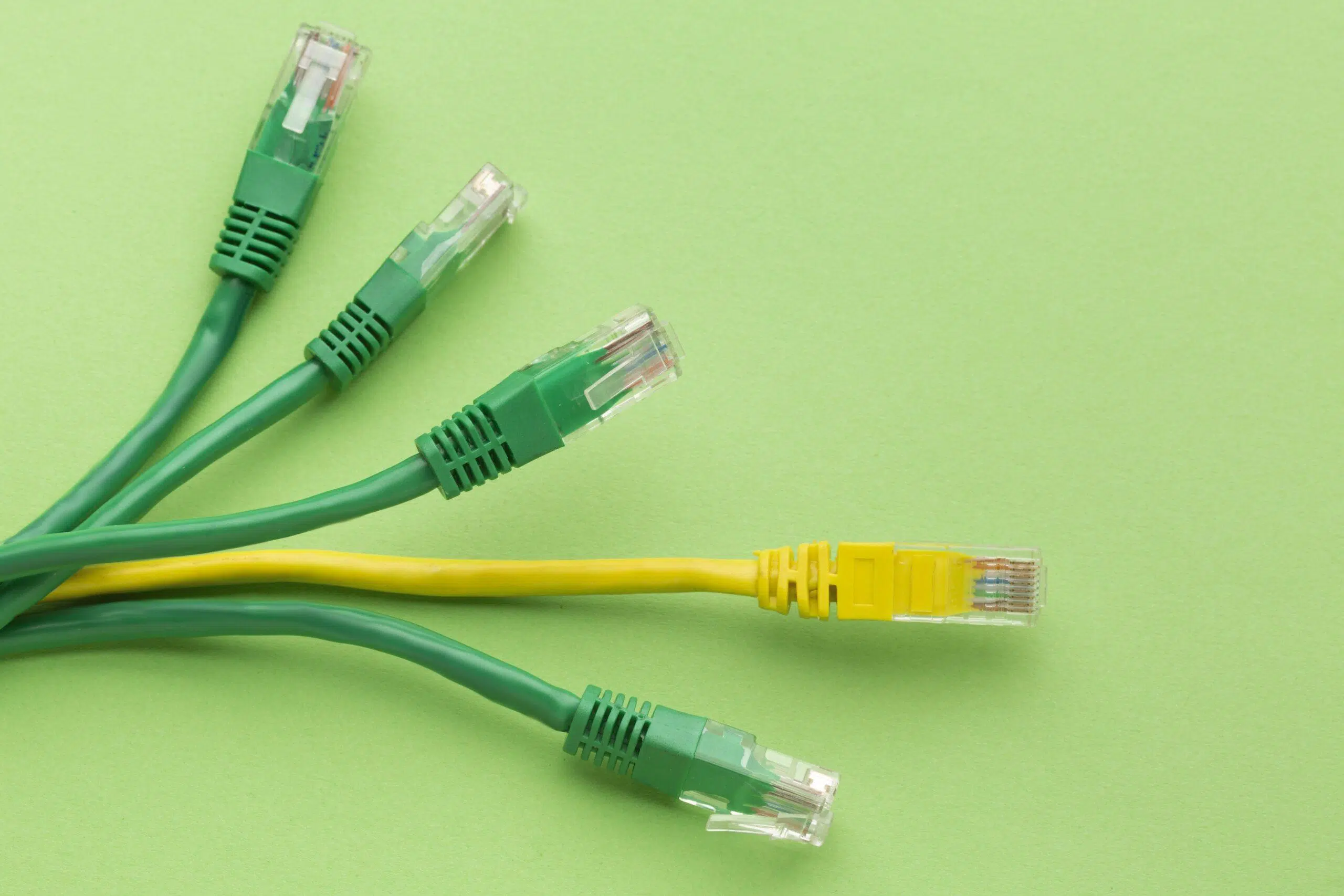
Representative image of structured cabling
Unshielded twisted-pair (UTP) cable remains the undisputed king of local area networks: discreet, affordable, and incredibly effective. Despite the rise of wireless technologies, unshielded twisted-pair copper connections continue to underpin millions of networks in homes, offices, and data centers thanks to their performance, compatibility, and ease of installation.
If you're wondering what makes it so versatile, the answer lies in its design and the standards that support it. Four pairs of twisted copper wires , RJ45 connectors, and a mature standard allow for the reliable transmission of data, voice, video, and even power over Ethernet (PoE). In this guide, we thoroughly review its operation, types, categories, PoE, actual specifications, and how to choose the right one, leaving no detail out.
What is a UTP cable and how does it work?
UTP stands for Unshielded Twisted Pair . It consists of several pairs of copper conductors twisted together and covered with insulation; the entire assembly is then encased in an outer jacket (usually PVC or halogen-free compounds). This twisting reduces the absorption and transmission of interference and allows for more stable transmission.
The key is the use of differential-mode signals on each pair: if one conductor carries A(t) and the other −A(t) , the external noise n(t) couples similarly to both. By subtracting at the receiver, the common-mode noise is canceled and the useful signal is strengthened (common-mode rejection). This property is the reason for its robustness in demanding electrical environments.
Furthermore, since opposite currents flow through each pair, the magnetic fields of both conductors tend to cancel each other out . This symmetry reduces electromagnetic radiation from the cable and mitigates the induction of eddy currents in nearby cables, decreasing crosstalk between pairs.
UTP cables typically have four pairs (8 wires), identified by color codes . Although the twisting reduces much of the noise, since there is no overall shielding, in environments with strong EMI/RFI, it may be advisable to switch to shielded variants (STP, FTP, or S/FTP) for greater immunity.
A bit of history: from the telegraph to LANs
Twisted pair wiring became popular at the end of the 19th century as a solution to interference problems on telephone and telegraph lines . With the electrification of cities and the arrival of streetcars, the induced noise made it impractical to continue using open-to-ground wires. The solution was to adopt balanced circuits and, later, techniques such as the periodic transposition of conductors.
In the 1880s, telephone companies migrated to balanced circuits to reduce attenuation and interference . Transposition (the exchange of positions at certain poles) ensured that both wires received similar disturbances on alternate sections, averaging the noise. By the early 20th century, much of the US network was already using twisted pair or open lines with transposition.
The invention of twisted pair cable is attributed to Alexander Graham Bell (1881). The concept of balancing and twisting remains today in millions of kilometers of cable deployed by telephone operators, especially in rural overhead lines and voice and data access networks.
Twisted pair types: UTP, STP, FTP, and S/FTP
Depending on the shielding, we distinguish several families. UTP (unshielded) is the most common due to cost and ease of installation; its typical characteristic impedance is 100 Ω. In noisy environments, other variants come into play:
- STP (Shielded Twisted Pair): each pair surrounded by a shield, higher immunity and cost; typical impedance 150 Ω.
- FTP (Foiled Twisted Pair): Overall aluminum shield covering the pairs; widely used outdoors and in environments with moderate EMI; typical impedance 120 Ω.
- S / FTP: overall shielding plus individual shielding per pair (double protection against EMI/RFI).
The choice between UTP and shielded variants depends on the electromagnetic environment. Without high-frequency noise , UTP is usually sufficient and more economical; in the presence of motors, power lines, or intense radio frequency, shielding provides the necessary robustness.
Cable categories and applications
The EIA/TIA and ISO/IEC standards divide twisted-pair cabling into categories based on performance. These categories define bandwidth, applications, and limits on parameters such as crosstalk, attenuation, and return loss. Below is a summary with typical applications and key notes:
| Category | Theoretical maximum speed | Band (MHz) | Applications | Comments |
|---|---|---|---|---|
| Cat 1 | <1 | Telephony and modem old broadband | Not described by EIA/TIA. Not suitable for modern systems. | |
| Cat 2 | 4 | Older terminals (e.g., IBM 3270) | Not described by EIA/TIA. Obsolete. | |
| Cat 3 | 10 Mbps | 16 (Class C) | 10BASE-T, 100BASE-T4; telephony | EIA/TIA-568 Standard; does not exceed 16 Mbit/s of data. |
| Cat 4 | 20 Mbps | 20 | Token Ring at 16 Mbit/s | Little used today. |
| Cat 5 | 100 Mbps | 100 (Class D) | 10/100 / 1000BASE-T | Common in Ethernet legacy between network equipment. |
| Cat 5th | 1000 Mbps | 100 (Class D) | 100BASE-TX and 1000BASE-T | Improvement of Cat 5, now replaced by Cat 6/6A. |
| Cat 6 | 1000 Mbps | 250 (Class E) | 1000BASE T | Widespread in current facilities. |
| Cat 6A | 10.000 Mbps | Up to 500 | 10GBASE-T | Tested at 500 MHz; typical range up to 100 m. |
| Cat 7 | 10.000 Mbps | 600 (Class F) | Telephone, cable TV, 1000BASE-T on the same cable | Armored under ISO/IEC 11801; not recognized by EIA/TIA. |
| Cat 7A | 10.000 Mbps | 1000 (Class F) | Telephony, Cable TV, 1000BASE-T | 4-pair S/FTP; not recognized by EIA/TIA. |
| Cat 8 | 40.000 Mbps | 2000 | 40GBASE-T or 1000BASE-T multi-service | 4-peer S/FTP; defined by ANSI/TIA-568-C.2-1 and ISO/IEC 11801-1:2017. |
| Cat 9 | 25.000 | EU standard in development | 8-pair S/FTP with Mylar and polyamide. | |
| Cat 10 | 75.000 | Standard under development (GERA, IEEE) | 8-pair S/FTP with Mylar and polyamide; cita required. |
Beyond categories, actual performance depends on distance, bandwidth, and installation quality. For LAN links up to 100 m , speeds range from 10 Mbps to 10 Gbps, with attenuation and crosstalk increasing with frequency.
Cat 6 Today: Why It's Still a Safe Bet
Category 6 combines availability, price, and performance. Supporting up to 250 MHz and 1 Gbps (Gigabit Ethernet), it is backward compatible with Cat 5/5e and Cat 3. Many brands offer AWG 23 (also between 22–24 AWG) compliant with ANSI/TIA/EIA-568-B.2-1, typically supplied in 305 m spools, and in some cases, 500 and 1000 m.
For outdoor use, versions with a black polyethylene (PE) cover are available, resistant to UV rays, heat, and humidity, with or without reinforcement (straps) depending on the environment. These options are useful in CCTV and perimeter deployments where weather resistance is required.
Within the installation ecosystem, there is a wide range of accessories: communication racks, patch panels, RJ45 jacks , pre-terminated patch cords, organizers, and more. Integrating quality components simplifies system deployment and certification.
Reputable manufacturers also highlight practical details in Cat 6: cross-shaped padding to improve separation between pairs, a tear-off wire to easily open the cover, and impedance control at 100 Ω, key to keeping crosstalk at bay.
Essential features of UTP in practice
Standard UTP cable consists of four twisted copper pairs and an unshielded outer jacket. The typical impedance is 100 Ω , suitable for Ethernet and a wide range of devices. Each conductor is insulated, and the entire assembly is usually protected with PVC or LSZH (low smoke zero halogen) compounds.
Among its main advantages: it is flexible and easy to pull in conduits, offers high compatibility with RJ45 connectors and equipment , is economical compared to alternatives and allows high transfer rates with low latency at floor distances (up to 100 m).
Modern manufacturing processes carefully consider parameters such as attenuation and crosstalk. Improved materials and geometries allow for stricter values, with controlled return loss and better ACR margin, resulting in stable links at higher frequencies.
Regarding reach, for horizontal cabling it is recommended not to exceed 100 meters (including patch cords). In trunk lines or environments with interference, FTP/STP or even fiber optic cable should be considered, depending on the situation.
In real-world applications, UTP is used for voice, data, and video , from home networks to offices and data centers (in higher categories). For noisy environments or stricter regulations, shielded versions may be more suitable.
PoE: data and power over the same cable
Power over Ethernet (PoE) allows the transmission of power and data over the same UTP cable, eliminating the need for local power supplies in many devices. Current standards include IEEE 802.3af (PoE), 802.3at (PoE+), and 802.3bt (PoE++/4PPoE) , with four power levels (Types 1 through 4).
The elements that differentiate the PoE types are: maximum power supplyable by the PSE (switch or injector), power available to the PD (powered device) and number of pairs used for power (2 or 4 pairs).
| Standard | Type | Denomination | Max PSE power | Power for PD | Used pairs |
|---|---|---|---|---|---|
| IEEE 802.3af | Type 1 | PoE | 15.4 W | 12.95 W | 2 |
| IEEE 802.3at | Type 2 | PoE + | 30 W | 25.5 W | 2 |
| IEEE 802.3bt | Type 3 | PoE++ / 4PPoE | 60 W | 51 W | 4 |
| Type 4 | 90–100W | 71 W | 4 |
Recommended uses: Type 1 (IP phones, basic cameras, low-demand Wi-Fi APs and sensors); Type 2 (dual-band APs, PTZ cameras, video phones, alarms); Type 3 (Wi-Fi 6/6E APs, heated PTZ cameras, video conferencing); Type 4 (touchscreens, desktops, high-performance network equipment).
Advantages of PoE in installations: less electrical wiring , rapid deployment, greater location flexibility, centralized power management and cost reduction, all with safe voltages to minimize risks.
Real example: Cat 6 U/UTP LSZH Dca cable and its figures
A Category 6 residential/professional cable with a halogen-free jacket (LSZH/LSFH) offers a good balance between safety and performance. Typical features include : 4 pairs of solid copper AWG 23, separator crosshead, rip cord, 100 Ω impedance, resistance per conductor < 9,38 Ω/100 m, bandwidth up to 250 MHz (and up to 400 MHz in some models), and speeds up to 1 Gbps.
Summary data sheet of the reference model (DK6000): U/UTP, Euroclass Dca s2 d2 a1 , transmission band 400 MHz, conductor diameter 0,55 mm, polyethylene insulation, sheath diameter 6,2 mm (thickness 0,5 mm), working voltage 300 V, operating temperature −25…70 °C, nominal propagation speed 72% and Spark Test 3000 Vac.
| Córdoba | DK6000 | |
|---|---|---|
| Type | U / UTP | |
| Euroclass | Dca s2 d2 a1 | |
| Category | Cat 6 | |
| Bandwidth | Up to 400 MHz | |
| Speed | 1 Gbps | |
| Conductor | Solid copper, 0,55 mm, AWG 23 | |
| conductor insulation | Polyethylene (Ø ≈ 0,99 mm) | |
| Filling | Crosshead (crucifix) + tearing thread | |
| Cover | LSFH, Ø ≈ 6,2 mm, thickness 0,5 mm | |
| Impedance | Ω | 100 |
| Conductor resistance | Ω/100 m | <9,38 |
| Nominal speed | % | 72 |
| working voltage | V | 300 |
| Temperature | ° C | −25 … 70 |
Performance curves (typical values and limits) at different frequencies allow for precise link sizing. Attenuation increases with frequency , while NEXT/PSNEXT and ACR decrease, as expected for copper.
| Frequencies |
|
||||||||||||||
|---|---|---|---|---|---|---|---|---|---|---|---|---|---|---|---|
| Attenuation (max.) dB/100 m |
|
||||||||||||||
| Attenuation (typ.) dB/100 m |
|
||||||||||||||
| NEXT (min.) dB/100 m |
|
||||||||||||||
| NEXT (typ.) dB/100 m |
|
||||||||||||||
| PSNEXT (min.) dB/100 m |
|
||||||||||||||
| PSNEXT (typ.) dB/100 m |
|
||||||||||||||
| ACR‑N (min.) dB/100 m |
|
||||||||||||||
| ACR‑N (typ.) dB/100 m |
|
||||||||||||||
| PS ACR‑N (min.) dB/100 m |
|
||||||||||||||
| PS ACR‑N (typ.) dB/100 m |
|
||||||||||||||
| ACR‑F (min.) dB/100 m |
|
||||||||||||||
| ACR‑F (typ.) dB/100 m |
|
||||||||||||||
| PS ACR‑F (min.) dB/100 m |
|
||||||||||||||
| PS ACR‑F (typ.) dB/100 m |
|
||||||||||||||
| Return loss (min.) dB |
|
||||||||||||||
| Return loss (typ.) dB |
|
Regarding regulatory compliance, quality Cat 6 cables meet TIA/EIA-568B.2-1 . Many include extended bandwidth compatibility (up to 400 MHz in certain models) and mechanical features to facilitate installation.
RJ45 connector compatibility in Cat 6 (Televés example)
Reliable connectivity requires using compatible connectors and cables . For reference, the following table summarizes the mechanical/functional compatibility between various RJ45 connector types (female and male) and associated tools/accessories. Legend: OK (compatible), OK* (compatible but better options exist), X (incompatible).
| Reference | 219602 | 219701 | 219910 | 212201 | 2123 | 212302 | 212305 | 212310 | 212101 | 219302 | 219312 | 219322 | |
|---|---|---|---|---|---|---|---|---|---|---|---|---|---|
| Connectors Female |
209901/209907 | OK | OK | OK | OK | OK | OK | OK | OK | X | X | X | X |
| 209905 | OK | OK | OK | OK | OK | OK | OK | OK | X | X | X | X | |
| 209921/209925 | OK | OK | OK | OK | OK | OK | OK | OK | X | X | OK | X | |
| 209926 | OK | OK | OK | OK | OK | OK | OK | OK | X | X | OK | X | |
| 209903 | OK* | OK* | OK* | OK* | OK* | OK* | OK* | OK* | OK | X | X | X | |
| 209923 | OK* | OK* | OK* | OK* | OK* | OK* | OK* | OK* | OK | OK | OK* | OK | |
| 209929/209501 | OK* | OK* | OK* | OK* | OK* | OK* | OK* | OK* | OK | OK | OK* | OK | |
| Connectors Macho |
209902 | OK | OK | OK | OK | OK | OK | OK | OK | X | X | X | X |
| 209961/209962 | OK | OK | OK | OK | OK | OK | OK | OK | X | X | X | X | |
| 209904 | OK* | OK* | OK* | OK* | OK* | OK* | OK* | OK* | OK | X | X | X | |
| 209906 | OK | OK | OK | OK | OK | OK | OK | OK | X | X | X | X | |
| 209965/209966 | OK | OK | OK | OK | OK | OK | OK | OK | X | X | X | X | |
| 209922 | OK* | OK* | OK* | OK* | OK* | OK* | OK* | OK* | X | X | OK | X | |
| 209924 | OK* | OK* | OK* | OK* | OK* | OK* | OK* | OK* | OK* | OK | OK* | OK | |
Remember that choosing the right connector + cable + tool avoids certification rejections and rework in the field, especially starting with Cat 6/6A, where tolerances are tighter.
Wiring configurations: straight through and crossover
The RJ45 connector termination can follow two configurations depending on the use. To connect different devices (e.g., PC to switch), a straight-through cable is used. For identical devices (e.g., PC to PC without a switch), the standard configuration is a crossover cable, reversing the transmit and receive pairs.
Today many devices support Auto MDI/MDI-X , automatically detecting the type; even so, it is good practice to respect the standard T568A/T568B schemes and document the cabling to avoid problems.
TIA/EIA‑568‑B.2 Certification: What is measured and why
To be considered "certified," an installation must be verified against parameters defined by the standard, using specific instruments. Typical items include:
- Wiring map: continuity, wire order and pinout according to standard.
- Long Jump: measured on all pairs according to propagation delay and NVP.
- Insertion loss (attenuation): signal drop along the link.
- NEXT (Near‑End Crosstalk): Crosstalk from one pair to another at the near end, in pairs and in band.
- PSNEXT: combined effect of all close pairs on a given one.
- FEXT/ELFEXT: far-end crosstalk, referenced to the attenuated signal (24 possible combinations).
- PSELFEXT: combined sum of FEXT of several pairs with respect to one.
- Return loss (Return Loss): energy reflected by maladaptations.
- Delay Skew: delay difference between pairs (inter-thread synchronization).
The tests must be passed at all network ports . The process can be laborious in large installations, but it ensures that the cabling meets the requirements for the target category.
Advantages and limitations of twisted pair
Key strengths of twisted pair in LAN: high density of ports per segment , ease of performance analysis and troubleshooting, pre-installation capability, and ease of field termination.
Among its drawbacks: at high speeds the risk of errors increases if the installation is not controlled , bandwidth is limited compared to fiber, immunity to noise and crosstalk is lower than in shielded or coaxial cables, active equipment can be expensive and the typical distance is limited to 100 m per segment.
How to choose the right UTP cable
The first filter is the need for speed and bandwidth. If the environment requires 10GBASE-T, Cat 6A with 500 MHz is the minimum reasonable requirement; for Gigabit speeds in offices and homes, Cat 6 is more than sufficient. Also, consider medium-term growth.
The intended use and equipment dictate the requirements: PTZ IP cameras with high-power PoE, Wi-Fi 6/6E access points, or videoconferencing may justify higher categories and shielding. Conversely, simple home networks will work well with Cat 6 UTP.
The environment dictates: if there is electromagnetic noise (motors, elevators, power lines) or long parallel conduits, consider FTP/STP/S/FTP. Outdoors, look for a UV-resistant black PE sheath and, if applicable, armor.
Also consider regulations and safety: Euroclasses for reaction to fire (e.g., Dca s2 d2 a1) and LSZH sheaths for public spaces or evacuation routes. Ensure the cable complies with TIA/EIA and ISO/IEC standards according to its category.
Finally, check connector compatibility, availability of reels (305/500/1000 m) and accessories (racks, panels, patch cords, sockets), as well as PoE support if you are going to power devices through the cable itself.
Variants and related concepts
There are less common but interesting variants: loaded twisted pair adds inductance (Pupin coils) to reduce distortion at certain frequencies, bonded twisted pair improves mechanical robustness while maintaining electrical specifications, and braided ribbon cable combines ribbon format with braided sections.
In everyday practice, related terms such as RJ-45 , 25-pair color codes, and electromagnetic compatibility (EMC/CEM) concepts will appear, applied to design and installation to prevent coupling with the environment and between systems.
All of the above paints a clear picture: by choosing the right category, shielding, and components, UTP cable continues to offer a robust, economical, and scalable solution for voice, data, and video, with options like PoE that simplify powering devices and certification tools that ensure the performance required for each project.