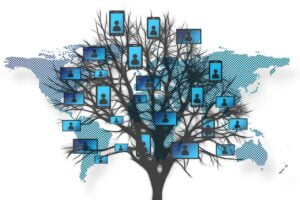
- A computer network connects devices to share resources and transfer data between them, using cables or wireless connections.
- Key components: devices (PCs, servers, routers), transmission media, protocols, and IP addresses that enable identification and reliable communication.
- Main types: LAN for small areas, WAN for longer distances, wireless networks for mobility, and the Internet as a global example.
- Uses: sharing files and peripherals, Internet access, collaborative communication, centralized storage, backups, and remote access for teleworking.

In today's digital age, computer networks play a fundamental role in our lives. From everyday internet use to the interconnection of systems in businesses, computer networks have become an essential part of our technological infrastructure. In this article, we'll explore in detail what a computer network is and what it's used for. We'll learn about its fundamentals, the different types of networks that exist, and how they are used in various fields. Let's get started!
What is a computer network?
A computer network is a set of interconnected devices that communicate with each other to share resources and enable data transfer. These networks can be local or span larger distances, such as wide area networks (WANs) and even global networks like the Internet. Computer networks are based on the fundamental principle of communication between devices via cables, radio waves, or wireless connections.
The basic components of a computer network
A computer network consists of several key components that work together to achieve efficient and reliable communication. These components include:
- Devices: Network devices such as computers, servers, routers, switches and wireless access points are the fundamental building blocks of a computer network. Each device has its specific function in the network and contributes to the transmission and reception of data.
- Transmission media: The transmission medium refers to the physical wires, such as copper wires, optical fiber or wireless signals, which allow the flow of information between devices on the network.
- Network protocols: Protocols are sets of rules and standards that govern how devices on the network communicate with each other. These protocols ensure that data is transmitted efficiently and without errors.
- IP addresses: Every device connected to a computer network has a unique IP address that identifies it on the network. IP addresses allow data to be sent and delivered correctly to the destination devices.
The different types of computer networks
There are different types of computer networks, each tailored to specific needs. Here are some examples:
- Local Area Networks (LAN): Local area networks are networks that span a limited geographic area, such as an office, home, or college campus. These networks are typically managed internally and allow nearby devices to connect to share resources and data.
- Wide Area Networks (WAN): Wide area networks are used to connect devices in larger geographic areas, such as cities or countries. WANs use telecommunications infrastructure, such as telephone lines, optical fiber or satellite connections, to allow communication between devices in distant locations.
- Wireless Networks: Wireless networks use technologies such as Wi-Fi to allow devices to be connected without the need for physical cables. These networks are especially useful in environments where mobility is important, such as homes, offices, and public spaces.
- Wide Area Networks (WANs): These networks span large geographic areas, even globally, and are used to interconnect multiple local area networks and enable large-scale communication. The best example of a WAN is the Internet, which connects networks around the world.
What is a computer network used for?
Computer networks have a wide variety of applications and are used in numerous fields and situations. Here are some common uses of computer networks:
1. Share resources and data
One of the main reasons for using a computer network is to share resources and data between devices. This includes sharing files, printers, scanners, and other peripheral devices . A local area network (LAN) allows multiple users to access these resources simultaneously, improving efficiency and collaboration in work environments.
2. Internet access
Most computer networks are connected to the Internet, allowing users to access a wide range of online services and resources. Accessing the Internet through a computer network provides users with the ability to browse the web, send email, use online applications, shop online, and much more.
3. Communication and collaboration
Computer networks facilitate communication and collaboration between users. Communication tools such as email, video conferencing, and instant messaging applications allow people to connect and communicate in real time, regardless of their geographic location. This is especially beneficial for companies with branch offices or distributed work teams.
4. Data storage and backup
Computer networks are also used for data storage and backup. Network servers allow organizations to store large amounts of information centrally, making data management and secure access easier. In addition, regular network data backups ensure that information is protected from loss and can be recovered in the event of system failures.
5. Remote access and mobility
With a computer network, it is possible to access network resources and data remotely. This allows users to connect to the network from external locations, such as their homes or while traveling, and access the same services and resources that would be available in the office. Mobility and remote access are especially relevant in today's context, where flexible working and teleworking are increasingly common.
Frequently asked questions about what is a computer network
Here are some frequently asked questions about computer networks:
1. What are the benefits of using a computer network?
Using a computer network offers numerous benefits , such as sharing resources and data, internet access, improved communication and collaboration, efficient data storage and backup, and the possibility of remote access and mobility.
2. What are the different types of computer networks?
There are different types of computer networks, including local area networks (LANs), wide area networks (WANs), wireless networks, and wide area networks (WANs).
3. How is a computer network established?
Establishing a computer network involves selecting the appropriate devices, configuring network parameters, choosing the appropriate transmission medium, and implementing the necessary network protocols.
4. What security measures should be taken on a computer network?
It is important to implement security measures on a computer network to protect data and ensure network integrity. These measures can include firewalls, data encryption, user authentication, and regular security software updates.
5. What is the future of computer networks?
The future of computer networks lies in their evolution toward faster , more secure, and more reliable networks. With the development of technologies such as the Internet of Things (IoT), artificial intelligence (AI), and cloud computing, computer networks will continue to play a fundamental role in our digital society.
Conclusion
Computer networks are an integral part of our daily lives. From internet access to communication and collaboration, these networks allow us to make the most of digital technology. In this article, we have explored what a computer network is and what it is used for. We have learned about the fundamental components of a network, the different types of networks that exist, and how they are applied in various contexts. As technology advances, computer networks will continue to evolve and play a vital role in our connected society.