- The documentary “The Thinking Game” shows from the inside how DeepMind went from mastering games like Go to developing AlphaFold, with a direct impact on biology and medicine.
- The film reveals the multidisciplinary work and long research cycles, highlighting the role of AI as a tool that extends human capabilities, not as a substitute.
- The figure of Demis Hassabis and the commitment to long-term ethical research clash with the short-term culture of Silicon Valley and raise parallels with the Manhattan Project.
- Released on YouTube, the documentary has become a global phenomenon, offering human and scientific context in the midst of the global race for artificial intelligence.
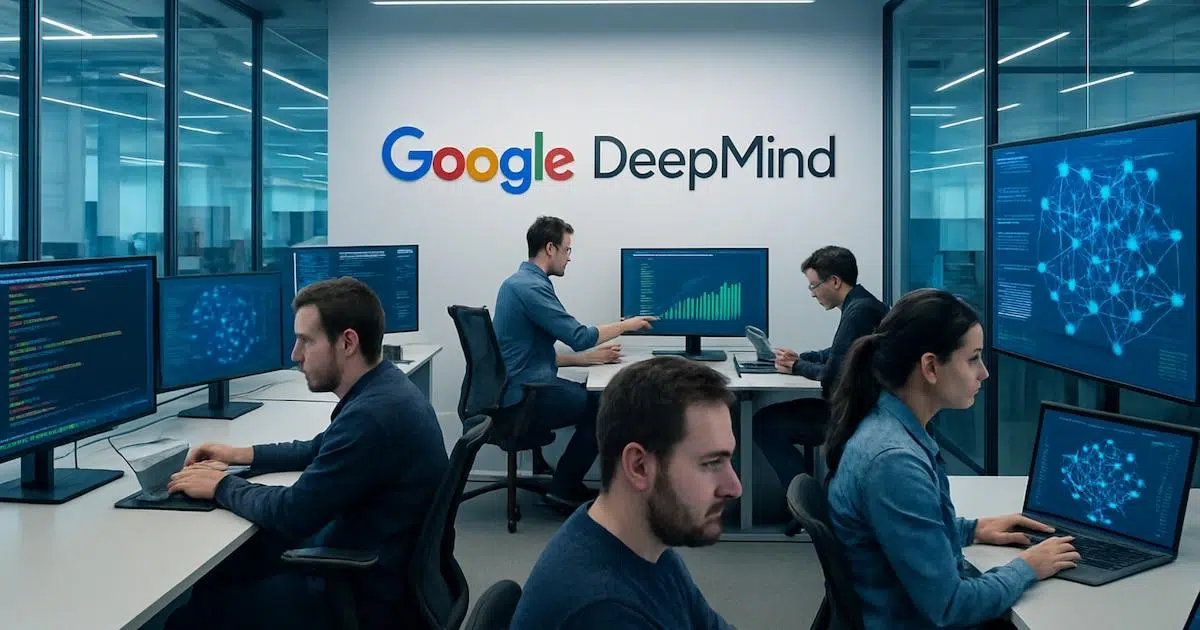
When we talk about advanced artificial intelligence, we tend to focus only on the superficial: spectacular models, tools we already use daily, and constant announcements of new "magical" features. However, behind all of that lies a less visible world, made up of hypotheses, experiments, and research decisions that rarely see the light of day, and it is these that truly define the limits of AI's potential.
The documentary “The Thinking Game” by Google DeepMind delves right into these inner workings. It doesn't stop at the final result, but rather opens a window into the daily process within one of the most influential AI labs on the planet : how the teams are organized, what doubts they have, what risks they take, and how they go from an experiment on screen to a breakthrough that impacts science, business, and ultimately, society.
From board games to major scientific challenges
The feature film follows Demis Hassabis and the DeepMind team for several years , from their independent days in London to their integration into Google. Along the way, it revisits iconic milestones like AlphaGo, AlphaZero, and AlphaFold , which function almost as chapters in a single story: how a group of researchers goes from mastering complex games to tackling open problems in biology and science.
Shortly after came AlphaZero , an even more radical evolution. Instead of learning from human games, the system learned from scratch, using only the rules of the game and playing itself millions of times. In a matter of hours, it was able to master Go and chess, surpassing established engines and demonstrating that AI could discover creative strategies on its own without relying on centuries of accumulated human experience.
The documentary uses these playful achievements as a starting point to showcase a much more ambitious shift: the move from AI applied to well-defined games to its use in high-impact scientific challenges . This is where AlphaFold comes in , the system that forever changed the field of structural biology by predicting with great accuracy the three-dimensional structure of proteins from their amino acid sequence.
With AlphaFold, DeepMind made the leap from technological entertainment to science with tangible consequences . The film highlights how the ability to predict the "folding" of almost all known proteins has accelerated research in medicine, biology, and drug design , to the point that this breakthrough was ultimately recognized with the Nobel Prize in Chemistry for the researchers involved in the project.
How to build advanced AI from the inside out
One of the greatest strengths of "The Thinking Game" is that it doesn't just present results, but delves into the day-to-day life of the lab. Thanks to director Greg Kohs's almost complete access over more than six years, the film shows meeting rooms, whiteboards covered in equations, technical discussions, and also moments of doubt and frustration—something rarely seen in tech narratives.
What appears on screen shatters the idea of an instant "eureka." AI is presented as a cumulative and patient discipline , based on continuous cycles of testing, validation, and correction. Progress doesn't come from a single enlightened genius, but from diverse teams that constantly iterate , discarding approaches, refining models, and subjecting each improvement to rigorous evaluation.
The documentary emphasizes that real progress rests on a delicate balance between scientific intuition and mathematical formalization . Many experiments begin as tentative ideas, drawing on researchers' experience with games, neuroscience, or simulations. But nothing is considered valid until it undergoes a rigorous battery of tests and internal reviews , a stark contrast to the "quick hacking" image often associated with startup culture.
Through footage recorded both during work hours and in more informal settings, it becomes clear that cutting-edge AI projects are not built on strokes of luck, but rather on years of sustained work, meticulous refinements, and multidisciplinary collaboration . This perspective dismantles the myth of sudden breakthroughs and helps to contextualize what is currently being reported as AI “miracles.”
Along these lines, the film highlights a key idea: understanding how AI develops internally is essential to knowing what it can truly do and where its limits still lie. Without this perspective, the risk is projecting unrealistic expectations, fueled by both blind enthusiasm and exaggerated fear.
Demis Hassabis and the mixing of disciplines as an engine of innovation
The central figure of the documentary is Demis Hassabis, co-founder and CEO of DeepMind . The film travels back to his childhood, even unearthing BBC footage from 1986 where, at just nine years old, he spoke of chess as "a good game for thinking." That phrase would eventually give the film its title and serves as a narrative thread to show how his obsession with intelligence has crystallized into increasingly ambitious AI projects.
Hassabis emerges as a hybrid figure: a chess prodigy, a video game enthusiast, a neuroscience researcher, and a computer expert . The documentary presents this combination as more than just a biographical curiosity; it exemplifies the kind of blending of expertise that has propelled modern AI toward increasingly complex problems.
DeepMind is a team of mathematicians, physicists, biologists, engineers, reinforcement learning experts, and simulation specialists. The film shows that key breakthroughs don't emerge from isolated silos , but rather from ecosystems where diverse perspectives coexist . Solving protein folding, for example, wasn't just a matter of a better algorithm, but of understanding the underlying biology in detail and translating it into a computational language.
This multidisciplinary culture is also reflected in the way research is designed: teams that combine expertise in games with in-depth knowledge of biology, or specialists in statistical physics working alongside software engineers. The result is a more robust approach to challenges that cannot be addressed within a single theoretical framework.
The documentary uses this story to send a clear message to companies and organizations: if you want to apply AI to real business or science problems, it's not enough to hire "a couple of data scientists"; you need to build diverse teams and give them space to collaborate , even when that clashes with the speed and short-term culture typical of some startups.
AI as a tool that empowers humans, not as a replacement.
A recurring theme in the film is the role AI should play in relation to humans. AlphaFold is presented as an example of AI that expands the scope of researchers , allowing them to explore hypotheses and models that would otherwise take decades. However, the film emphasizes that the system does not replace expert judgment or scientific context.
In several scenes, biologists and chemists are seen working with AlphaFold's predictions, interpreting models, comparing them with experimental data, and deciding which lines of research are worth pursuing . AI functions here as an engine for acceleration and exploration, but not as an absolute authority. It is emphasized that human judgment remains essential to validate, prioritize, and translate these results into real clinical or therapeutic advances.
This approach aligns with a frequently repeated idea in the business world: AI is an enabler, not an end in itself . Its impact depends on how well it integrates with existing processes, team knowledge, and the organization's strategic objectives. A poorly aligned solution, however sophisticated, falls short and fails to deliver the promised value.
The documentary puts this view simply: AI is valuable when combined with the experience and judgment of people who know the field. In other words, applicable to any sector, technology only makes sense if it's integrated into decision-making and real workflows , rather than remaining an isolated experiment in a technical department.
As a fundamental message, it is emphasized that the strongest contribution of AI comes when it is used to improve productivity, expand capabilities and open up new questions , and not as a promise to indiscriminately replace professionals or processes that bring nuance and responsibility.
The documentary project: unprecedented access to DeepMind
Another of the strengths of “The Thinking Game” is its own history as an audiovisual project. The initiative arose from a question Hassabis posed to Greg Kohs almost a decade ago: “If you could document something on the scale of the Manhattan Project, how would you do it?” That comparison, with all its ethical and scientific implications, explains the ambition of what DeepMind aimed to achieve with AlphaFold.
Google and DeepMind granted Kohs a level of access rarely seen in the tech industry . For more than six years—between 2018 and 2024—the director was able to move virtually unrestricted around the London offices, attend internal meetings, conduct impromptu interviews, and even film in areas normally off-limits to outside cameras.
The film not only captures presentations and formal milestones, but also spontaneous conversations, late-night commutes, and long workdays in which the protagonists reveal their doubts, tensions, and moments of euphoria. Some of the most powerful material comes precisely from these informal sessions, far removed from the typical staging of large companies.
It's striking that Kohs doesn't come from a scientific background. His career was forged at NFL Films , where he learned to narrate the human drama behind the sport. That experience is evident in his storytelling style: instead of focusing solely on data and graphics, the documentary opts for an accessible, emotional, and relatable narrative that anyone can follow, even without in-depth technical knowledge.
The production boasted a well-established team: Greg Kohs directing, Gary Krieg producing, Tom Dore and Jonathan Fildes as executive producers, Steve Sander editing, and Dan Deacon composing the original soundtrack . This continuity with the previous documentary on AlphaGo helps maintain a recognizable style and lends narrative coherence to DeepMind's evolution from gaming to science.
Ethics, funding, and the tension with Silicon Valley culture
Beyond the technical advancements, the documentary focuses on the less glamorous but fundamental aspects of any major scientific project: money, governance, and accountability . It explains how DeepMind secured its initial financial backing, including investment from Peter Thiel, and how this shaped internal debates about the company's future.
One of the most revealing moments comes when the pressure to relocate the company to California is recounted, following the classic tech startup model. Hassabis vehemently refused, arguing that the pace and culture of “build, break, and start over every year” was incompatible with a deep, long-term research challenge like artificial general intelligence.
This stance illustrates a clash of visions: on the one hand, the logic of accelerated growth and rapid iteration typical of Silicon Valley; on the other, the need for stable frameworks, ethical reflection, and very long-term commitments when working with technologies that have the potential to completely reshape society. The documentary suggests that something of the magnitude of AGI cannot be approached with the same mindset used to launch an app and discard it after a few months.
In parallel, the ethical implications of developing such powerful systems are addressed. The recurring comparison with the Manhattan Project is not accidental: it raises concerns about preventing the AI race from repeating past mistakes, where the obsession with being first overshadowed the debate on risks and responsible use.
The film also mentions Google's subsequent acquisition of DeepMind and the ensuing debates surrounding governance, safeguards, and transparency obligations. While some critics view the documentary as biased towards its funding company, its widespread reception indicates that it has at least succeeded in bringing issues such as oversight, security, and the social impact of advanced AI to the forefront of public discourse.
A story that comes at the height of the global AI boom
The timing of the release of “The Thinking Game” was no coincidence. The film arrived on YouTube at the end of 2025, just as Google was once again at the forefront of the global race for artificial intelligence, and it did so with a resounding impact: hundreds of millions of views in a short time , placing it among the most-watched content on the platform.
In that context, the documentary functions as more than just a piece of corporate marketing. It offers a contextualized look at how the technologies shaping the digital economy and contemporary science are built . As Alphabet watched its market value skyrocket to historic figures—reaching a capitalization of several trillion dollars driven by AI—the film provided the missing human story behind those numbers.
One of the film's highlights is the decision to publicly release AlphaFold's predictions and make them available to the global scientific community. This openness accelerated research in medicine, biology, and pharmacology in hundreds of laboratories, reinforcing the idea that major advances in AI can—and perhaps should—be shared to maximize their positive impact.
At the same time, the documentary points out that this commitment to openness comes with dilemmas: how to balance the economic return of such a valuable technology with the need for science to advance for everyone; or how to prevent unequal access to these tools from deepening existing gaps between countries and organizations.
The public's reception shows a growing interest in understanding not only what AI does, but also who builds it, under what values, and with what controls . This combination of human drama, cutting-edge science, and ethical questions explains why many leading media outlets have identified the film as a key piece for understanding the current state of artificial intelligence.
Overall, “The Thinking Game” paints a picture in which AI has ceased to be a laboratory experiment and has become a structural factor in science, business, and politics . By following DeepMind for years, the documentary helps us see that behind every spectacular announcement lie lengthy processes, tough debates, and decisions that will define the boundary between AI that generates sustainable value aligned with the social interest and AI that is guided solely by market inertia and competition at any cost.