- Fiber optic cable converts light into the most efficient medium for data transmission on the Internet.
- Its structure allows it to transport large amounts of information at unimaginable speeds.
- It transforms industries from telecommunications to medicine, facilitating significant advances.
- It promises a bright future with innovations like submarine networks and plastic fiber optics for homes.

Fiber optic cable: The invisible highway that revolutionizes the Internet
The silent revolution: How fiber optic cable is transforming our digital connection
In 2024, we live in a hyper-connected world where information travels at dizzying speeds. Behind this reality lies a silent hero: the fiber optic cable. This technological marvel, as thin as a human hair, is redefining the limits of what is possible in the Internet and telecommunications.
Have you ever wondered how it's possible to make a high-definition video call with someone on the other side of the planet with virtually no lag? The answer lies in those tiny strands of glass that make up fiber optics . In this article, we'll unravel the secrets of this revolutionary technology and discover why it has become the backbone of our digital age.
From the depths of the oceans to the most remote corners of the planet, fiber optic cable weaves an invisible network that sustains our insatiable thirst for data. Prepare for a fascinating journey through the world of 21st century connectivity, where light becomes the fastest and most efficient messenger that humanity has ever known.
Fiber optic cable: The heart of modern connectivity
Fiber optic cable has become the cornerstone of our communications infrastructure. This engineering marvel, no thicker than a pencil, holds the key to transmitting massive amounts of information at unimaginable speeds. But what makes this cable so special?
The internal structure: Exploring the components of fiber optic cable
To understand the magic of fiber optic cable, we need to dive into its anatomy. At the heart of every cable is the core, a filament of ultra-pure glass or plastic with a diameter that can be as thin as 8 microns. This core is surrounded by a light-reflecting coating, keeping light signals confined within.
Surrounding this core structure are protective layers that include a plastic coating, reinforcing fibers (often Kevlar), and an outer jacket. This robust construction allows fiber optic cables to withstand extreme conditions, from the depths of the ocean to the most hectic urban environments.
Telmex's fiber optic network , for example, uses this advanced structure to provide high-speed connections to millions of homes and businesses in Mexico, demonstrating how this technology has become essential in modern telecommunications infrastructure.
Operating principles: The magic of light in action
The operation of fiber optic cable is based on a fascinating physical principle: total internal reflection. When a pulse of laser light is sent through the fiber core, it bounces off the walls of the cladding, remaining confined and traveling along the cable with minimal losses.
This technique allows information, encoded in pulses of light, to travel at speeds approaching 300,000 kilometers per second – the speed of light! Furthermore, by using different wavelengths (colors) of light, it is possible to transmit multiple signals simultaneously over a single fiber, a technique known as wavelength division multiplexing (WDM).
The efficiency of this system is astounding. A single fiber optic cable can carry the equivalent of millions of phone calls or thousands of high-definition television channels simultaneously. This capacity has made fiber optic internet the preferred choice for high-speed networks worldwide.
Revolutionary advantages of optical fiber in the digital age
The mass adoption of fiber optic cable is no coincidence. Its advantages over previous technologies are so significant that they have driven a true revolution in the way we connect and communicate.
Speed is perhaps the most obvious and attractive advantage of fiber optics. With the ability to transmit data at speeds exceeding 100 Gbps in commercial connections (and much more in specialized applications), fiber optics has rendered traditional copper technologies obsolete.
This blazing speed translates into transformative user experiences. Imagine downloading a 4K movie in seconds, participating in latency-free video conferences, or playing online games with instant responsiveness. Telmex's fiber optic network , along with those of other providers, has made these experiences an everyday reality for millions of users.
Massive Capacity: Carrying the Data Deluge of the 21st Century
In addition to speed, the capacity of fiber optics is equally impressive. A single fiber optic cable can carry terabits of data per second, a capacity that completely eclipses previous technologies. This feature is crucial in an era of exponentially growing data consumption. Learn about the different applications of fiber optics.
The rise of 4K and 8K video streaming, virtual reality, the Internet of Things (IoT) and cloud storage are generating unprecedented amounts of data. Fiber not only handles this deluge of information with ease, but is also prepared for future demands, offering a clear path for capacity expansion as our data needs continue to grow.
Global Impact: How Fiber Optics Is Redefining Industries
The impact of fiber optics goes far beyond simply improving our Internet browsing experience. This technology is transforming entire industries and redefining what is possible in fields as diverse as telecommunications, medicine and scientific research.
Telecommunications transformed: From landline to 8K streaming
The telecommunications industry has perhaps been the most profoundly affected by the fiber optic revolution. We've gone from the slow dial-up connections of the 90s to today's fiber optic networks that enable 8K video streaming and immersive virtual reality experiences.
Fiber optic internet has enabled the rise of services like Netflix, YouTube, and Zoom, which are now an integral part of our daily lives. Furthermore, it has laid the groundwork for the deployment of 5G networks and, in the future, 6G, which promise ultra-fast and ubiquitous connectivity.
A concrete example is how Telmex's fiber optic network has transformed the telecommunications landscape in Mexico. By providing high-speed connections to millions of homes and businesses, it has boosted the country's digital economy and opened new opportunities for innovation and business growth.
Remote Medicine: Remote Surgeries and Instant Diagnoses
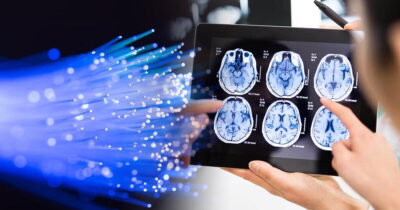
In the medical field, fiber optics are making possible what once seemed like science fiction. Telemedicine, powered by high-speed, low-latency fiber optic connections, allows doctors to perform diagnoses and even surgeries remotely.
Imagine a scenario where an expert surgeon in New York can operate on a patient in Tokyo using surgical robots controlled via a fibre optic connection. This is already a reality in some pioneering hospitals. In addition, the ability to transmit high-resolution medical images in real time is improving the accuracy of diagnoses and enabling instant consultations with specialists around the world.
The bright future: Innovations on the horizon for optical fiber
Despite the impressive advances we have already seen, fiber optic technology continues to evolve at a dizzying pace. Researchers and companies are exploring new frontiers that promise to take the capabilities of this technology even further.
Underwater networks: Connecting continents under the ocean
One of the most fascinating applications of optical fiber is the creation of submarine networks that connect continents. These cables, laid on the ocean floor, are the arteries that allow instant global communication.

Projects such as the MAREA cable, which connects Virginia (USA) to Bilbao (Spain), are capable of transmitting up to 160 terabits per second – enough to stream 71 million HD videos simultaneously. These submarine networks not only improve the speed and capacity of international communications, but also increase the resilience of the global Internet by providing redundant paths for data traffic.
The race to plastic optical fiber: The next big leap?
While glass optical fiber currently dominates the market, plastic optical fiber (POF) is emerging as a promising technology for certain applications. POF is more flexible, easier to install, and potentially more economical than its glass counterpart.
While POF cannot currently match the speeds and distances of glass fiber, its ease of use makes it ideal for home and short-range networks. Imagine a future where every device in your home is connected by invisible plastic fiber optic cables, providing ultra-fast data transmission speeds without the complexity of traditional glass fiber installation.

Table of Contents
- 1 Fiber optic cable: The invisible highway that revolutionizes the Internet
- 2 Fiber optic cable: The heart of modern connectivity
- 3 Operating principles: The magic of light in action
- 4 Revolutionary advantages of optical fiber in the digital age
- 4.1 Unprecedented speed: Sailing at the speed of light
- 4.2 Massive Capacity: Carrying the Data Deluge of the 21st Century
- 4.3 Global Impact: How Fiber Optics Is Redefining Industries
- 4.4 Telecommunications transformed: From landline to 8K streaming
- 4.5 Remote Medicine: Remote Surgeries and Instant Diagnoses
- 5 The bright future: Innovations on the horizon for optical fiber
- 6 The race to plastic optical fiber: The next big leap?