- Next-generation GPU with per-core neural accelerators and third-generation ray tracing
- 16-core Neural Engine with 153 GB/s memory bandwidth for local AI
- MacBook Pro 14" with up to 24 hours of battery life and major improvements in AI and graphics
- iPad Pro and Vision Pro gain speed in spatial scenes and advanced connectivity
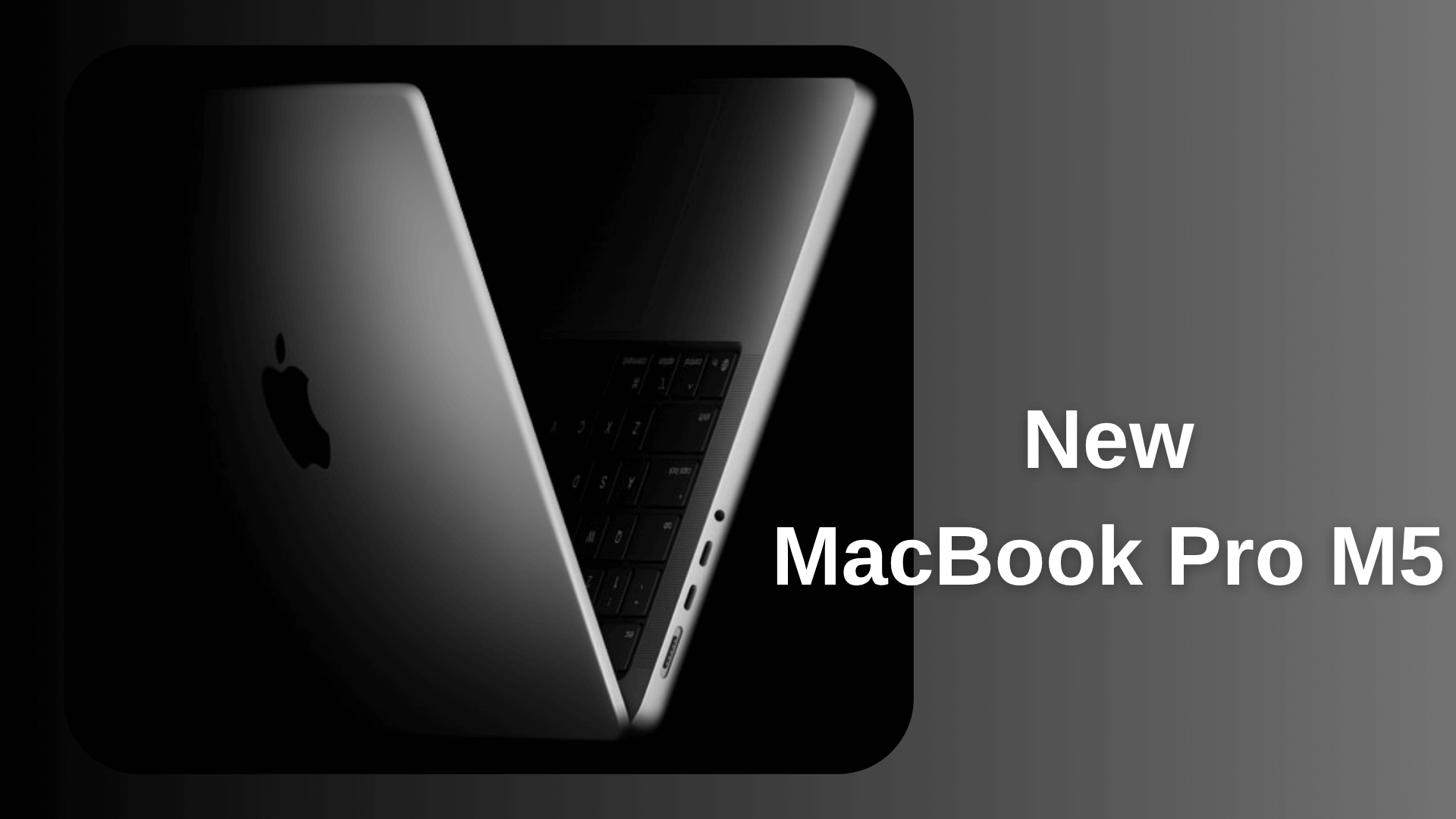
Apple has its new brain ready for Mac, iPad, and Vision Pro: the M5. It arrives with a clear focus on artificial intelligence and a completely redesigned GPU to accelerate local models and modern graphics. This third-generation, 3-nanometer chip redefines the balance between power, efficiency, and AI capabilities , and is already beginning to roll out in various Apple devices.
Beyond the headlines, the M5 brings measurable improvements across the board: CPU, GPU, Neural Engine, memory, and battery life. We're talking about significantly faster AI workloads, a major boost in graphics performance with third-generation ray tracing, and soaring memory bandwidth —all with the efficiency that characterizes Apple Silicon.
What is the Apple M5 and why it marks a turning point?
The M5 is a 3nm (third generation) system-on-a-chip with a CPU of up to 10 cores (up to 6 efficiency cores and up to 4 performance cores) and a new 10-core GPU. The major innovation lies in the GPU, which integrates a dedicated Neural Accelerator in each core to accelerate AI inference based on the GPU itself and raise the performance ceiling.
According to official data, peak AI performance via the GPU can exceed that of the M4 by more than four times, and that of the M1 by six times in specific scenarios. Furthermore, the purely graphical leap is nearly 45% compared to the M4, thanks to improvements in the shading cores, third-generation ray tracing, and redesigned (second-generation) dynamic caching.
In terms of CPU, Apple maintains its philosophy of combining high-performance cores with high-efficiency cores. The company claims up to a 15% increase in multithreaded tasks compared to the M4 , supported not only by higher frequencies and microarchitecture, but also by a wider memory subsystem.
The M5's architecture isn't just hardware: it's deeply aligned with Apple's environments. Apps that already use Core ML, Metal Performance Shaders, or Metal 4 automatically scale their performance , and developers can directly program Neural Accelerators using Metal 4's Tensor APIs, even from Objective-C.
AI at the core: GPU accelerators and 16-core Neural Engine
The M5 focuses on on-device, private AI that doesn't require the cloud. The GPU incorporates a neural accelerator per core, which significantly increases the execution speed of broadcast models and large local language models in tools like Draw Things, LM Studio, or web platforms such as webAI.
The Neural Engine retains the 16 cores but raises the bar in performance and efficiency. It helps accelerate Apple Intelligence and improve experiences like image generation and contextual transcription in system apps , and also powers advanced workflows in Vision Pro, such as converting 2D images into spatial scenes more quickly.
In numbers, Apple details different scenarios. In the new 14-inch MacBook Pro with M5, AI workloads achieve up to 3,5 times more performance compared to the model with M4 , a figure that coexists with the "more than 4 times" ceiling cited for the GPU in maximum AI tests.
Third-generation graphics, gaming, and ray tracing
The M5's graphical power isn't limited to AI. The new GPU integrates improvements to the shading cores, third-generation ray tracing that accelerates apps that take advantage of it by up to 45%, and second-generation dynamic caching that optimizes resource usage.
The practical result? Smoother gameplay, faster rendering of complex scenes, and more realistic graphics in 3D apps. Furthermore, in Vision Pro, the M5 allows for rendering 10% more pixels on the micro-OLED display and increases the refresh rate to 120 Hz, reducing motion blur and improving sharpness.
Faster CPU, efficiency and real autonomy
The M5's 10-core CPU boasts "the world's fastest core," according to Apple, and is accompanied by a finely tuned efficiency package. In multithreaded workloads, improvements over the M4 reach up to 15–20% depending on the scenario , with a particularly significant impact on code compilation, multitasking, and creative processes.
Applied to the product, the 14-inch MacBook Pro with M5 benefits from this efficiency with up to 24 hours of battery life. It maintains its performance even when running on battery power , and also offers fast charging up to 50% in about 30 minutes with compatible 96W or higher chargers.
Faster unified memory: 153 GB/s and larger AI models
The bandwidth of the unified memory increases by almost 30% compared to M4, reaching 153 GB/s. This increase is key for running larger AI models locally and for heavy 3D scenes , as well as providing smoother performance for the CPU, GPU, and Neural Engine.
The M5 supports configurations of up to 32 GB of unified memory in its base version, enough for parallel creative suites (Photoshop, Final Cut Pro) and for running more demanding local machine learning models. In Vision Pro, this power translates into richer spatial scenes and more responsive execution of its vision and graphics capabilities.
Software and APIs: Transparent acceleration and granular control
Applications using Core ML, MPS, or Metal 4 receive an immediate boost without any coding changes. Those needing to push the limits can go directly to Metal 4's Tensor APIs to program Neural Accelerators and precisely control how workloads are distributed between GPUs, accelerators, and the Neural Engine, using improved IDEs for programming.
On the Apple Intelligence front, the M5 improves response times and the quality of on-device models, with multilingual support in beta for languages such as Spanish, German, French, English, Italian, Japanese, Korean, and Brazilian Portuguese. There are also advantages for developers with Foundation Models integrated into the ecosystem , which take advantage of unified memory and the Neural Engine.
Devices that are launching the M5 and those that could receive it
Initially, the M5 will debut across three platforms: the 14-inch MacBook Pro, the iPad Pro, and the Apple Vision Pro . All share the ambition to enhance on-device AI, accelerate product development, and maintain the energy efficiency for which Apple Silicon is renowned.
Looking at the calendar and previous cycles, the rest of the ecosystem is expected to be updated gradually. Various sources point to the MacBook Air, iMac, and Mac mini throughout 2026 , and an iPad Air later on. As always, the exact timing will depend on Apple's roadmap and demand.
14-inch MacBook Pro with M5: Faster, more autonomous
The new 14-inch MacBook Pro with M5 combines performance, battery life, and a stunning display. It boasts up to 24 hours of battery life , and the next-generation SSD storage accelerates tasks like importing RAW files or exporting large video files compared to the previous generation.
Comparative figures provided by the brand cite notable improvements: Topaz AI Video up to 7,7× compared to M1 and 1,8× compared to M4 ; 3D rendering in Blender up to 6,8× compared to M1 and 1,7× compared to M4; and frames per second in games up to 3,2× compared to M1 and 1,6× compared to M4.
The device features a 14-inch Liquid Retina XDR display with optional nano-textured glass to reduce glare, a 12MP camera with Center Stage, a six-speaker system with spatial audio, and extensive connectivity (Thunderbolt, HDMI, SDXC, audio, and MagSafe 3). It comes with macOS Tahoe, which boasts a new design, quick actions in Spotlight, and new Apple Intelligence features such as Real-Time Translation and smarter shortcuts.
Available in space black and silver, it starts at €1.829. It's available for pre-order now and will be on sale from October 22nd through official channels and authorized retailers, with storage configurations up to 4TB.
iPad Pro with M5: Thin, powerful, and ready for future connectivity
The iPad Pro with M5 comes in 11-inch and 13-inch models, featuring a thinner and lighter chassis and an Ultra Retina XDR display with tandem OLED panels, a peak brightness of 1.600 nits, and improved color accuracy. In AI, its performance can be up to 3,5 times faster than the M4 model under certain workloads, taking advantage of the GPU with accelerators and the updated Neural Engine.
In terms of connectivity, reports highlight the addition of the N1 wireless chip with Wi-Fi 7 and Bluetooth 6, as well as a C1X modem in cellular versions, offering up to a 50% increase in mobile speed compared to the previous generation. iPadOS 26 adds an improved windowed multitasking environment and a redesigned interface with a "Liquid Glass" effect , and the Preview app allows for PDF editing with Apple Pencil Pro.
In Spain, prices start at €1.099 for the 11-inch model and €1.449 for the 13-inch model, with Wi-Fi and Wi-Fi + cellular variants available. A nano-textured finish is available, and space black and silver colors are offered depending on the configuration.
Apple Vision Pro with M5: Sharper, faster spatial scenes
The arrival of the M5 in Vision Pro enhances the creation and playback of immersive content. Features that convert 2D images into spatial scenes gain speed and efficiency , while rendering with 10% more pixels and a 120Hz refresh rate improve clarity and fluidity, and reduce motion blur.
M5 Pro, M5 Max, and M5 Ultra? What to expect from the family
As with previous generations, more powerful variants of the M5 are anticipated for the next product cycle. There's talk of the M5 Pro and M5 Max in new-generation professional laptops , and a possible M5 Ultra for high-performance desktops (Mac Studio, Mac Pro), although its placement will depend on Apple's timeline and strategy.
The release windows are subject to change, but looking at the history of the M3 and M4, it wouldn't be surprising to see the M5 Pro/Max months after the base M5 . There are also rumors that the OLED MacBook Pro could be the first to receive them, and that devices like the Mac mini, iMac, or Mac Studio could receive the M5 sometime in 2026.
Other industry reports mention advanced 3D printed circuit board (SoIC) packaging for the most powerful M5 processors and the separation of CPU and GPU in the higher-performance versions to improve thermal management and graphics production efficiency. There has even been talk of Thunderbolt 5 compatibility in future compact desktop machines , although, as always, we'll have to wait for official confirmation.
Performance compared to previous generations and Intel
Those upgrading from Intel-based or M1 processors will see a significant leap forward. Regarding Intel, Apple's internal testing cites up to 86x faster AI, 30x faster ray tracing, and 5,5x faster CPU performance . Upgrading from M1 can result in up to 6x faster AI, 6,8x faster ray tracing, and up to twice the CPU speed.
The key isn't just peak performance, but consistency. The M5's sustained performance holds its own even away from the power outlet , something not all PC laptops can guarantee, allowing for extended work and gaming sessions without significant thermal throttling.
Sustainability: 2030 goals and recycled materials
Apple is maintaining its Apple 2030 plan for carbon neutrality by the end of the decade, reducing emissions in materials, electricity, and transportation. The 14-inch MacBook Pro with M5 chip includes 45% recycled materials by weight (100% recycled aluminum in the enclosure, 100% recycled rare earth elements in the magnets, and 100% recycled cobalt in the battery), and 55% of the electricity in the production chain comes from renewable sources.
The packaging is made from 100% recyclable fiber, and strict energy efficiency and chemical safety standards are followed. Programs like Apple Trade In help extend the product lifecycle and reduce waste by offering discounts when you trade in a qualifying old device.
Prices, reservations and availability
The 14-inch MacBook Pro with M5 starts at €1.829 (€1.699 with education discount) and is available for pre-order now, with delivery scheduled for October 22. It comes in space black and silver, with flexible storage and memory configurations within the limits of the chip itself.
The iPad Pro with M5 starts at €1.099 (11-inch) and €1.449 (13-inch), with Wi-Fi and Wi-Fi + Cellular variants. Availability and options may vary by region, language, and system requirements , particularly regarding Apple Intelligence features in beta.
With the M5, Apple raises the bar where it matters most: local AI, modern graphics, and real-world product efficiency. Whether it's accelerating broadcast models, rendering complex 3D scenes, or stretching battery life to a full day, this chip solidifies Apple Silicon's advantage and paves the way for an M5 Pro/Max (and perhaps Ultra) family that, if predictions hold true, will further expand performance and capabilities in the next cycle.
