- Data centers face explosive growth in electricity demand and increased grid risks, making more reliable backup power than traditional diesel critical.
- BESS systems combine instant backup, cost reduction through peak shaving, and a much simpler integration of renewable energy.
- The transition from lead-acid to lithium-ion and new chemistries improves TCO, energy density and the lifespan of backup systems.
- With advanced software, the BESS transforms the data center into an active resource for the network, capable of generating revenue and facilitating permits and expansions.
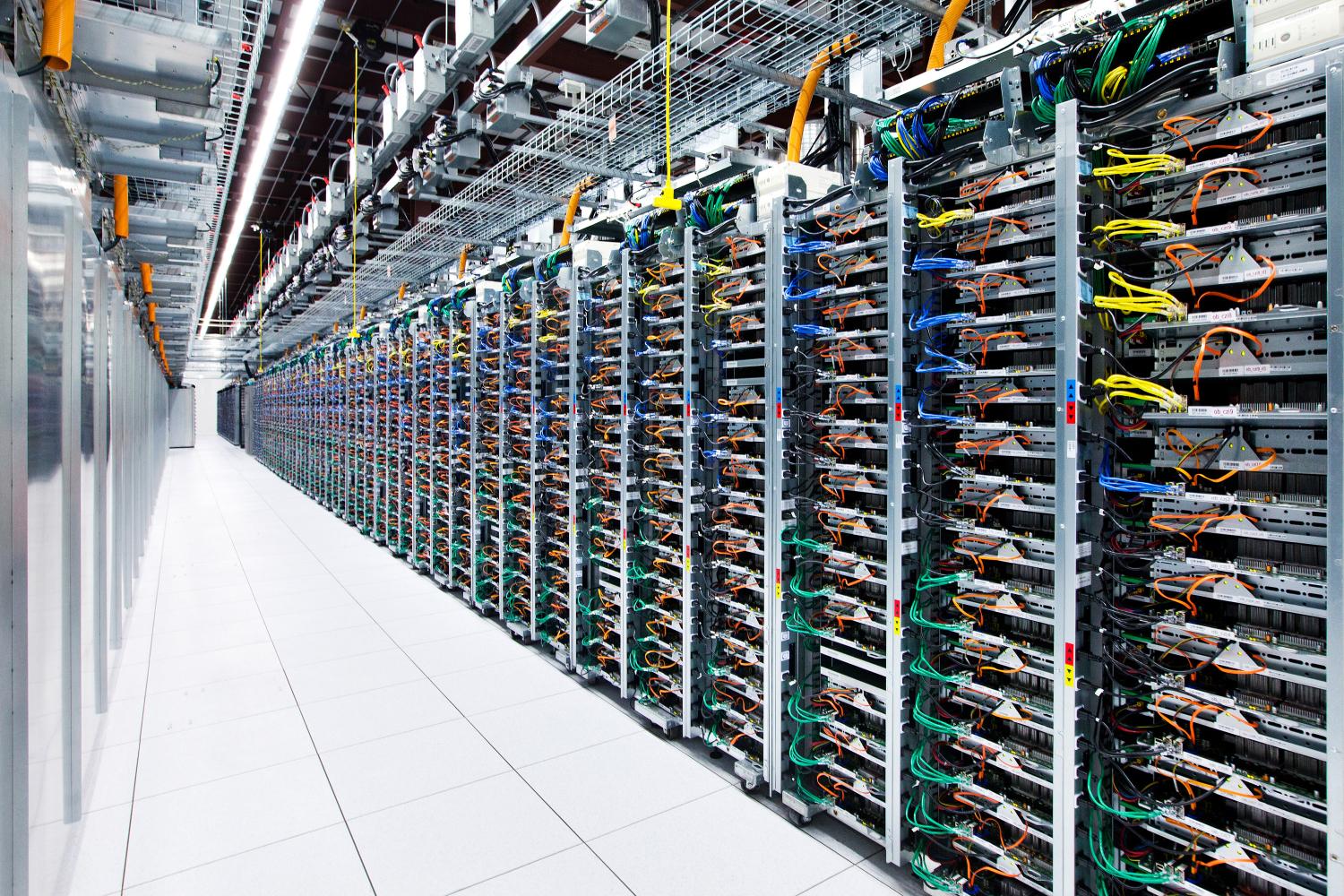
Imagining a data center that continues operating even if the grid goes down , aggressively cutting its electricity bill and simultaneously reducing its carbon footprint, is no longer science fiction. All of this is possible thanks to battery energy storage systems (BESS), which have gone from being an experiment to becoming a key component in the electrical architecture of modern data centers.
The context couldn't be more challenging : data centers already consume around 2% of global electricity, and projections indicate that this figure could double by 2030, driven by cloud computing, AI , and 24/7 digital services. At the same time, power grids are aging, overloaded, and vulnerable to extreme weather events, while companies are pursuing increasingly aggressive decarbonization targets. Amidst this complex situation, batteries have become a crucial ally for ensuring availability, reducing costs, and improving sustainability.
The growing energy problem in data centers
The number and size of data centers has skyrocketed globally . In the United States alone, there were more than 5.400 data centers at the beginning of 2025, more than ten times the number of any other country. The U.S. Department of Energy estimates that data centers could account for up to 12% of national electricity demand around 2028, compared to just 1% a decade ago.
In global figures, the energy consumption of data centers is heading towards around 945 TWh in 2030, more than double that of 2023. There are regions where the concentration of facilities is so high that the networks are already showing capacity problems, delays in interconnections and bottlenecks to connect new renewable generation or new data center campuses.
The fragility of the grid is no longer a theoretical scenario . In 2024, a transmission line failure in the United States abruptly disconnected approximately 1.500 MW of data center load, roughly equivalent to a major power plant going offline. Furthermore, in 2020, the average American user experienced about 8 hours of outages per year, with extreme cases reaching between 30 and 60 hours of cumulative interruptions.
For a data center operator, even a few seconds without power is catastrophic . Studies by the Uptime Institute place the cost of downtime at between $100.000 and $500.000 per hour in enterprise facilities, not including reputational damage or contractual penalties. The equation is clear: increased reliance on electricity, greater grid risk, and a potentially devastating financial impact with each incident.
Until now, the classic solution was a UPS + diesel generator combo . Generator banks (engine-alternator) have served as backup power for decades, but they come with significant problems: high emissions of CO₂, NOx, and particulate matter, noise, fuel logistics, intensive maintenance, and typical start-up times of 5 to 15 seconds that necessitate oversizing the UPS. Furthermore, they are usually idle, except during testing and emergencies, making them an expensive and underutilized asset.
Regulatory and social pressure is putting pressure on diesel . Giants like Microsoft and Google have announced plans to phase out diesel generators as backup power: Microsoft has set a 2030 target to eliminate its reliance on diesel, and Google has already tested batteries on a large scale to replace generators in data centers across Europe. The industry's message is quite clear: a cleaner, quieter, more flexible, and smarter alternative is needed.
What is a BESS and how is it integrated into a data center?
A Battery Energy Storage System (BESS) is essentially a large, intelligently managed battery bank capable of storing electricity and releasing it when needed. In a data center, it integrates with the electrical infrastructure (UPS, switchboards, transformers, and, if applicable, generators) to act as an ultra-fast response power reserve.
The key difference compared to a generator is speed . While a diesel generator needs several seconds to start and synchronize, a BESS can come online in milliseconds. Current inverters and lithium-ion batteries allow switching times typically under 50 ms, fast enough that IT teams won't even notice. In practice, the BESS functions as a high-capacity, long-running UPS.
But the BESS isn't just for blackouts . Its true potential emerges when used as an active energy management tool: it can charge during off-peak hours or with surplus renewable energy, discharge during peak prices, flatten the demand curve, provide ancillary services to the grid (frequency regulation, voltage support), and participate in demand response programs. It ceases to be a "standalone insurance policy" and becomes an asset that works every day.
The economic factor has changed dramatically in recent years . The cost of lithium-ion batteries has fallen by around 20% between 2020 and 2024, and mass production of batteries has accelerated. Installed BESS capacity in markets like California and Texas has gone from virtually zero in 2018 to more than 22 GW combined in 2024. The focus has shifted from simply installing large MW capacities to correctly sizing energy in MWh, that is, the actual backup duration.
For a data center, this translates into modular systems designed to sustain power for hours , not just the typical 5-10 minutes of a traditional UPS. Today, it's common to see configurations that provide between 60 and 120 minutes of runtime at full load, and projects with 4-8 hour runtimes are already being deployed, especially in environments with high renewable energy penetration or weak grids.
Main advantages of BESS in data centers
The BESS offers a very clear triple value proposition : radical improvement in uptime, reduction in energy costs, and a significant leap forward in sustainability. Let's break it down.
Uninterrupted power and extreme resilience
The absolute priority for any operator is high availability and uptime , and this is where batteries have a significant advantage. By responding in milliseconds, BESS (Battery Energy Storage System) covers voltage drops, micro-outages, and complete power failures without servers losing power. Google, for example, has demonstrated at its data center in St. Ghislain, Belgium, that a 2,5 MWh battery can keep the facility operational during a real power outage, preventing losses of millions of dollars.
In Sweden, Microsoft has deployed a 16 MWh, 24 MW BESS system in a data center, replacing a large bank of diesel generators. This system provides approximately 80 minutes of autonomy at full load, more than enough for most events on the local network, and can also assist the network itself in black-boot scenarios or during restoration after a massive failure.
From an intrinsic reliability standpoint, the battery also comes out on top . Lithium-ion systems have few moving parts, constant monitoring, and self-diagnostic capabilities. A well-designed BESS can offer availability rates exceeding 99,9%, while diesel generators have significant start-up failure rates. There's less chance of it "not starting when you need it most."
There are other practical advantages that are noticeable in day-to-day operation : less maintenance (no oil changes or fuel management), improved wave quality (harmonic filtering, mitigation of sags and swells), the possibility of creating microgrids with local renewable generation and the ability to withstand prolonged blackouts by combining BESS with other sources such as fuel cells or clean gas turbines.
In extreme scenarios, the BESS + alternative generation combination allows the generator to operate for far fewer hours, only to recharge batteries when the outage lasts longer than expected, greatly reducing noise, emissions and logistical risks linked to diesel supply.
Reduction of energy costs and optimization of OPEX
Beyond security of supply, BESS is a powerful tool for lowering electricity bills . Data centers pay not only for kWh consumed, but also for the peak demand (kW) reached in each billing period. These peaks, even if infrequent, can represent between 30% and 70% of the total cost.
Using peak shaving and load shifting strategies, the BESS acts as a buffer between the grid and the IT load . It loads during off-peak hours, when energy is cheaper (at night, on weekends, or during periods of high wind power generation), and unloads during peak hours to reduce the demand placed on the grid. The NREL has estimated that, with an aggressive strategy, a data center can save up to 30% on annual energy costs.
In practice, this translates to millions of euros per year in hyperscale installations . Cases have been documented on the US West Coast where a battery system used for peak management has reduced energy costs by around 15%, in addition to protecting the installation from spiked spot prices during grid emergencies.
These savings are in addition to the potential revenue from participating in network services markets . Some electricity system operators pay large consumers who are able to reduce their demand or inject energy during critical times. A data center with BESS can offer frequency regulation, fast backup capacity, or demand response and charge for it, without the end customer noticing a thing.
The total cost of ownership (TCO) equation improves even further with tax incentives and subsidies . In the United States, the Inflation Reduction Act includes a 30% investment tax credit for stand-alone energy storage systems, which has catalyzed battery projects in data centers of large technology companies. This can be supplemented by regional aid programs linked to resilience, energy efficiency, or renewable energy integration.
Sustainability, renewable energy and regulatory pressure
The BESS is a fundamental component for a data center to truly be "green" . On the one hand, it directly reduces emissions by displacing the use of diesel generators in testing and emergencies and facilitates the battery recycling process ; on the other hand, it allows maximizing the self-consumption of renewable energy, both on-site (rooftop photovoltaics, for example) and contracted through PPAs.
By storing surplus solar or wind energy when production is high and demand is low , BESS allows systems to continue operating on clean energy when the sun isn't shining or the wind is low. Apple, for example, has shown that by combining batteries with photovoltaics, it can operate its Nevada data center with around 80% solar power, even though the plant only generates electricity during the day.
Meta and other operators have quantified reductions of tens or hundreds of thousands of tons of CO₂ annually by switching from traditional grid + diesel schemes to models supported by renewables and large-capacity BESS (Built-in Energy Service Systems). Furthermore, the local impact of engine noise and pollution is eliminated, which is critical in urban locations or near residential areas.
From a regulatory standpoint, battery storage helps meet increasingly stringent directives and regulations . The European Union is aiming for emissions cuts of between 40% and 55% by 2030 and is already focusing on the efficiency of data centers. Cities like Amsterdam and Singapore have even considered moratoriums on new data centers due to energy consumption and emissions; presenting projects with BESS and high renewable energy integration can make all the difference when it comes to obtaining permits.
In summary, BESS is a simultaneous lever for resilience, savings and decarbonization , something very powerful in a sector under the microscope of customers, regulators and investors in matters of ESG.
Batteries used in data centers: lead-acid vs lithium-ion and beyond
Historically, the lead-acid (VRLA) battery has been the queen of UPS systems due to its low initial cost and well-established performance after decades of use. However, the transition to lithium-ion batteries in data centers is now a reality and is completely changing how power backup systems are designed.
Lithium-ion (Li-ion) batteries use lithium compounds in their electrodes and are grouped into cells, modules, and complete systems. They offer high energy density, deliver stable power even as the state of charge decreases, and withstand many more cycles than lead-acid batteries. Technologies such as LFP (lithium iron phosphate), NMC (nickel-manganese-cobalt), and specific configurations like NMC/LTO are becoming increasingly prevalent in demanding industrial applications.
Compared to lead-acid batteries, lithium-ion batteries offer several clear advantages : higher energy density (more capacity in less space), a much longer lifespan (typically 10-15 years compared to 3-5 years for many VRLA batteries), high charge/discharge efficiency, and reduced maintenance. In some cases, a Li-ion system can achieve 2.500 cycles compared to 1.500 for a good lead-acid battery bank, drastically reducing replacements over the installation's lifetime.
Furthermore, lithium batteries can operate at higher temperatures , up to 55°C, which in a data center translates into lower climate control requirements for the battery room, greater location flexibility, and savings in cooling CAPEX/OPEX. They also occupy less space and weigh significantly less, a crucial factor in buildings with structural limitations.
All of this translates into a much lower total cost of ownership (TCO), even though the initial outlay is higher. Industry analyses indicate TCO reductions of 30-50% over 10 years when replacing VRLA batteries with Li-ion batteries in UPS and BESS systems, thanks to the combination of reduced maintenance, fewer replacements, greater efficiency, and associated energy savings.
The market, however, is not limited to lead-acid and lithium-ion batteries. Commercial solutions with sodium-ion and nickel-zinc batteries are beginning to appear, promising advantages in cost, safety, and sustainability (by reducing the use of cobalt or nickel, for example). Manufacturers like Natron Energy are investing heavily in sodium-ion production plants geared, among other things, toward data center applications.
Meanwhile, technologies like nickel-zinc are gaining ground in greener UPS solutions, as illustrated by recent agreements between UPS suppliers and manufacturers of these types of batteries. Although their adoption is still a minority compared to lithium-ion, the trend points to a more diverse technological mix in the next decade.
From UPS + diesel to active BESS: new architecture standard
The first stage of the revolution has been the direct replacement of VRLA with Li-ion batteries in UPS systems , maintaining the same topology (classic UPS with internal batteries or dedicated rack batteries), but with a much more robust storage technology. This step alone already improves reliability and lowers the TCO.
The second phase, already underway, is to move from “passive UPS” to “active BESS” . Here the concept changes: instead of having a battery only designed to last a few minutes until the generator starts, a medium or high capacity storage system (tens of MWh) is designed with grid-forming inverters that can act as a UPS and a temporary “power plant” at the same time.
In this new architecture, a single medium/high-capacity BESS can replace the UPS + generator combination in many scenarios, offering millisecond response, voltage/frequency support, and several hours of runtime. Where extremely long runtimes are required, it can be combined with alternative generation, but the battery takes center stage.
This change greatly simplifies the data center's electrical infrastructure : fewer mechanical equipment, fewer points of failure, less space occupied by fuel tanks and auxiliary systems, and a shorter, more efficient power chain (better PUE). Furthermore, being a fully electronic system, the monitoring and control capabilities are much more granular.
An interesting consequence of this model is the changing role of the data center in relation to the grid . It ceases to be a problematic load that demands high power at specific points and becomes a flexible resource capable of helping to stabilize the electrical system. This improves the operator's negotiating position regarding connection permits and capacity expansions, something especially critical in areas where the grid is already operating at its limit.
The key role of software and intelligent BESS management
A battery storage and energy storage system (BESS) without a good control brain is like a Ferrari with flat tires . The key lies in asset performance management (APM) software and battery management systems (BMS), which decide when to charge, when to discharge, how to protect cell lifespan, and how to interact with the grid and the rest of the data center infrastructure.
Modern platforms, many of them supported by AI and advanced analytics , monitor battery status in real time (temperatures, voltages, currents, SOH, SOC), anticipate degradations, recommend optimal operations based on energy prices and risk scenarios, and automate participation in network service markets.
APM's specialized SaaS solutions for energy assets, such as those offered by some industry providers , allow data center operators to maximize their BESS investment: they extend battery life, reduce unexpected failures, optimize the charge/discharge cycle, and align energy strategy with business and sustainability goals.
In this context, the BESS ceases to be just hardware and becomes a programmable energy platform , capable of executing complex strategies for savings, resilience and complementary income with a high degree of automation.
In a scenario where the electricity consumption of data centers is multiplying, the grid is strained, and the pressure to reduce emissions is increasing , battery energy storage systems are consolidating themselves as the backbone of the new energy architecture: they guarantee continuity of service, lower the electricity bill, facilitate the massive use of renewables, and turn the data center into an active player within the electrical system, instead of a simple passive consumer.
