- Manufacturers primarily use AI in services, maintenance, remote support, and customer service, although gaps still exist in its adoption across the entire operation.
- The main technologies applied are machine learning, artificial vision, generative AI, NLP and cobots, with a direct impact on efficiency, quality and costs.
- AI drives new models of servitization, sustainability and supply chain resilience, making service a key factor in competitiveness.
- Success depends on reliable data, talent development, and organizational adaptation to scale AI beyond pilots and isolated projects.
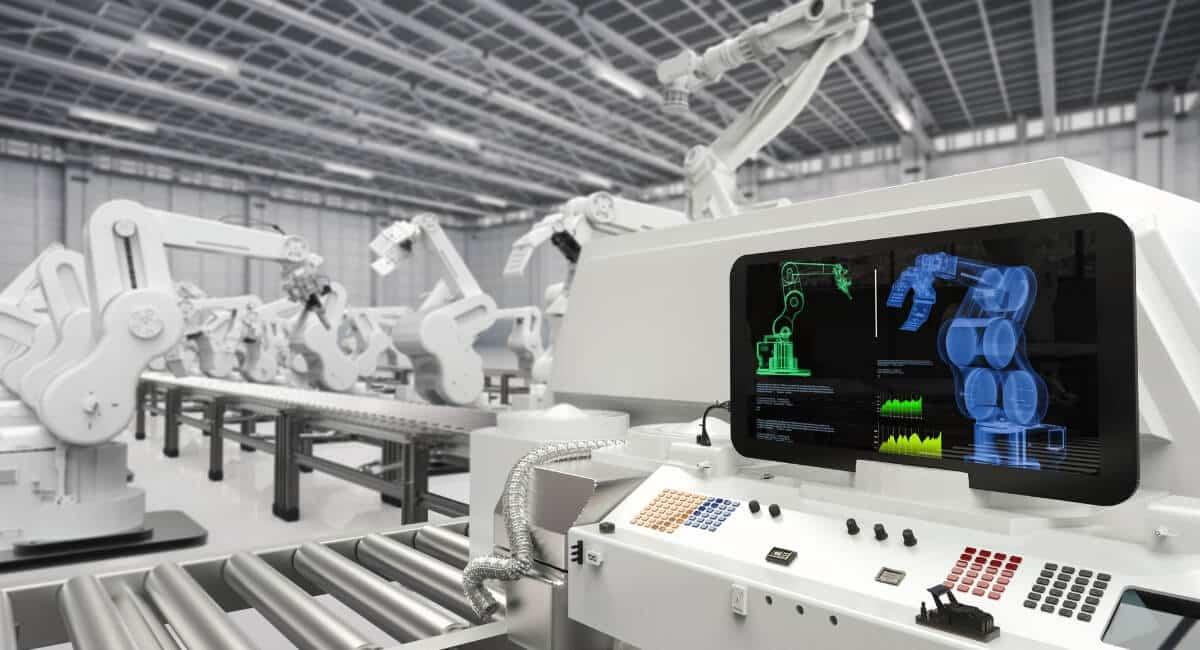
Artificial intelligence applied to the manufacturing industry has gone from being a laboratory experiment to becoming the silent engine that is reshaping how products are manufactured, how customers are served, and how new business models are generated. In just a few years, manufacturers have discovered that AI is not only useful for automation, but also for making better decisions, anticipating failures, and opening the door to more advanced, data-driven services.
The data makes it clear: most manufacturers already use artificial intelligence in service delivery , especially in maintenance, remote support, quality control, and customer service. However, a significant portion of AI's potential remains untapped at the plant, supply chain, and talent management levels. The sector is in the midst of a transition toward smart factories, servitization models, and more sustainable operations, but there are still significant gaps that will need to be addressed in the coming years.
Servitization and new service models in the industry

In today's industrial environment, services have become a strategic driver of growth for manufacturers. Recent reports compiled with industry executives show that nearly four out of ten companies now consider servitization—that is, selling results and associated services, not just products—a key lever for increasing long-term profits.
This shift in focus is based on the fact that industrial AI and sustainability are redefining how companies compete , operate, and create value. Companies that prioritize data-driven services, results-based contracts, and tiered support offerings are finding new sources of recurring revenue and stronger customer relationships.
Industry studies indicate that 63% of manufacturers prioritize the cloud and emerging technologies such as AI, IoT, and augmented reality to drive their future growth. However, a clear gap persists between vision and execution: most recognize the importance of these enablers, but not all have managed to integrate them consistently across all their operations.
In the specific area of services, the data is striking: around 96% of manufacturers already use AI in service delivery , but almost three-quarters of them have not extended its use to the rest of the organization. AI is used extensively in support, maintenance, and customer service, while areas such as advanced planning, product design, and talent management are still lagging behind.
Industry executives agree that new AI-based service models are already impacting operations , from how field interventions are planned to remote asset monitoring. Some managers speak of a "turning point": service has ceased to be a support department and has become the first line of competitive advantage.
Industrial AI: from pilot tests to mass deployment

The reality is that many manufacturers have already experimented with AI projects on the factory floor , although a significant portion remains in the pilot phase or with limited deployments. A substantial number of companies report having tested AI in some part of their operations, but still encounter significant obstacles when it comes to scaling up.
Key challenges to the full adoption of industrial AI include data quality governance, cybersecurity , privacy compliance, and integration with legacy systems. If data is fragmented or unreliable, training robust models that deliver real-time value becomes extremely difficult.
AI, especially machine learning applied to sensor and equipment data , allows for the identification of failure patterns, process inefficiencies, and opportunities for improvement that are otherwise unnoticed. However, many factories still rely on outdated infrastructure, poorly standardized architectures, and equipment not designed for connectivity.
Experts insist that overcoming these barriers is key to truly harnessing the potential of AI in optimizing operations and making predictive decisions . Initiatives such as implementing industrial data platforms, modernizing MES/SCADA systems, and using the cloud as a technological backbone are gaining traction in transformation roadmaps.
At the same time, the rise of generative AI and advanced language models opens up new possibilities in the factory environment: intelligent technical assistants, automatic generation of documentation, analysis of maintenance records, incident summaries, and conversational support for operators and customers.
Main AI technologies applied to manufacturing
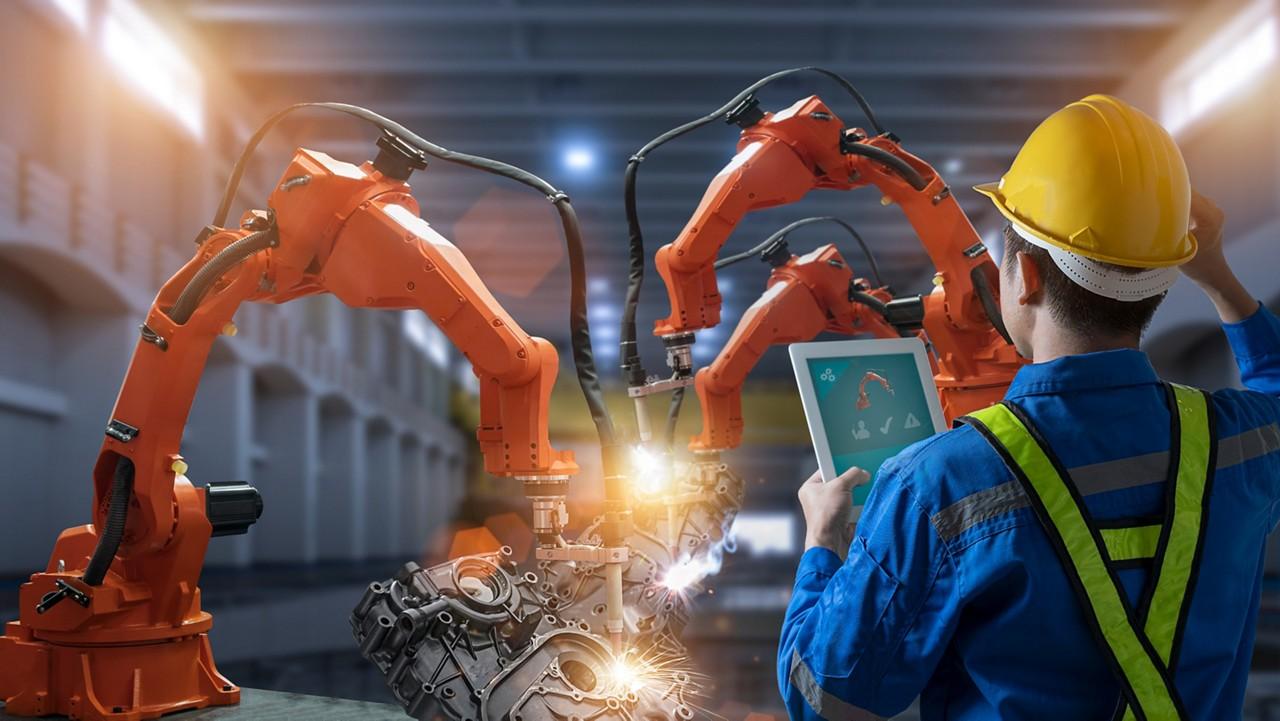
The term "artificial intelligence in industry" encompasses a wide range of technologies that combine to transform production . It is not a single tool, but rather a set of capabilities that support one another.
The foundation is usually machine learning , which analyzes large volumes of data from sensors, production lines, and corporate systems. These algorithms identify patterns, detect anomalies, and allow for the construction of predictive models for maintenance, demand, quality, and energy consumption.
Another essential component is machine vision , which uses high-resolution cameras and deep neural networks to inspect products in real time. This combination can locate surface defects, structural damage, misalignments, or dimensional errors with far greater accuracy and speed than manual inspection, reducing waste and returns.
Natural language processing (NLP) is used to power virtual assistants , chatbots, advanced knowledge base search systems, and text analysis. In industrial settings, it enables operators, technicians, and customers to access critical information through conversational interfaces, eliminating the need to navigate through lengthy manuals.
Generative AI adds a creative layer: it generates text, images, designs, code, and even digital prototypes from engineering requirements or business parameters. In product design and process improvement, it allows for the exploration of thousands of optimized configurations in a very short time, reducing material consumption, component weight, and manufacturing lead times.
Finally, collaboration between people and robots is being redefined thanks to AI. Collaborative robots (cobots) are no longer isolated machines in closed cells, but rather coworkers capable of sharing space with operators to handle repetitive, heavy, or dangerous tasks, while human teams focus on higher value-added work.
Concrete benefits of AI in production and services
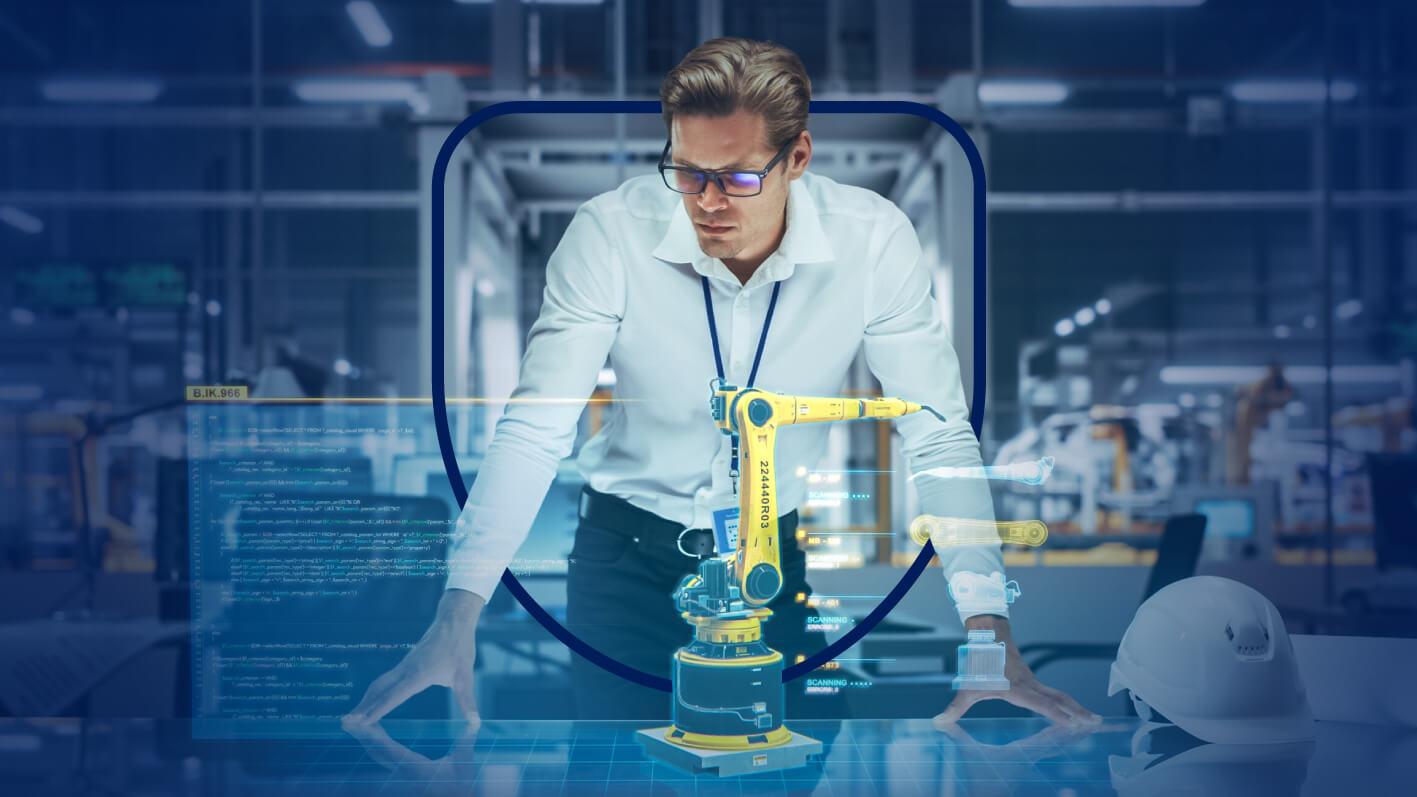
Industrial companies that have embraced AI haven't done so because it's trendy, but because they've seen tangible improvements in efficiency, quality, and costs . Various analyses agree that adopting artificial intelligence can increase manufacturing sector revenues by several percentage points and generate trillions of dollars in profits over the coming decades.
One of the most visible impacts is increased productivity and operational efficiency . AI automates routine tasks, coordinates processes between machines and systems, and reduces human error. This translates into shorter production cycles, better asset utilization, and the ability to respond quickly to changes in demand.
AI-powered quality control dramatically reduces the number of defective products reaching the market. Machine vision systems monitor each part, generate real-time alerts, and allow for action before a problem escalates into a long series of recurring failures.
Artificial intelligence also improves data-driven decision-making . Models analyze historical and real-time information to anticipate demand peaks, optimize inventory, adjust production planning, and select the most efficient transportation routes and schedules.
In terms of costs, companies highlight the savings derived from predictive maintenance and supply chain optimization . Anticipating failures in critical machinery reduces unplanned downtime and extends equipment lifespan, while tighter planning minimizes capital tied up in inventory and storage costs.
All of this reinforces the competitive advantage of manufacturers who decisively adopt AI. The ability to launch products before the competition, offer advanced services, personalize offerings, and guarantee consistently high quality translates into a larger market share and greater customer loyalty.
Key AI use cases in manufacturing and service delivery
When analyzing in detail how manufacturers use artificial intelligence, common use cases emerge across companies of different sizes, sectors, and countries. Many of these are located precisely at the boundary between production and services.
Predictive maintenance is perhaps the best-known example. Sensors, cameras, and vision systems constantly monitor the condition of machinery. Algorithms detect abnormal vibrations, temperature deviations, or unusual consumption patterns, and provide warnings before a breakdown occurs. This allows for scheduled shutdowns at optimal times, reducing downtime by up to a third and significantly increasing the lifespan of the machines.
Digital twin technology takes another step forward by creating virtual replicas of production lines, assets, and warehouses. Using these digital models, AI simulates different scenarios, identifies bottlenecks, tests alternative configurations, and helps make decisions with less risk. In practice, it's like having a virtual laboratory where you can test changes before implementing them in the physical world.
Generative design applied to engineering and product development allows companies to automatically generate, evaluate, and refine multiple versions of a component or structure. The result is lighter, stronger, and cheaper-to-produce parts, with shorter innovation cycles and a more competitive time-to-market.
In quality control, the combination of machine vision and deep learning makes it possible to inspect each product with a level of detail impossible for the human eye without slowing down manufacturing. This approach is especially useful in sectors such as automotive, consumer electronics, food, and pharmaceuticals, where tolerances are tight and regulatory requirements are stringent.
Collaborative robots, or cobots, are used for tasks such as screwing, assembling small parts, handling materials, and performing automated inspections. Thanks to AI, these robots adapt their behavior, detect the presence of people, and can be quickly reprogrammed to take on new tasks when products change.
Supply chain management is another very active area. AI helps predict demand, detect potential logistical disruptions early, analyze supplier reliability, and adjust inventory levels. Some companies have already significantly reduced their storage costs and improved their resilience to disruptions.
On the service delivery side, conversational AI automates interactions with customers and employees : order status updates, answering frequently asked questions, handling complaints, and providing initial technical support. AI platforms enable the creation of chatbots and assistants trained on corporate documentation that respond instantly and escalate only complex cases to human agents.
Smart energy management is also gaining traction in plants and warehouses, where models analyze consumption patterns and recommend or implement adjustments to reduce costs without impacting production. Large technology companies have already demonstrated significant savings by optimizing, for example, data center climate control using AI.
On the administrative side, AI is used to automate repetitive processes such as data entry, invoice management, task assignment, and system updates. In many factories, these workflows are already integrated with customer service and logistics systems, reducing errors and response times.
Customer service, self-service, and intelligent bots at manufacturers
Beyond the factory floor, AI has revolutionized how manufacturers interact with customers, distributors, and after-sales service . In a context of cost pressures and the need to scale support, AI chatbots and self-service portals have become key components.
Intelligent bots allow you to answer simple questions 24/7 , such as order status, estimated delivery dates, or access to product technical documentation. Thanks to machine learning and natural language processing, these assistants can understand queries in natural language and provide helpful answers in seconds.
Customer experience studies show that a high percentage of manufacturers believe that these bots help reduce the volume of interactions reaching human agents and also represent considerable cost savings . Real-world examples demonstrate that, in some high-demand product launches, bots have absorbed a significant portion of the peak in inquiries, preventing support centers from becoming overwhelmed.
Remote problem-solving using AI is another rapidly expanding area. Based on data from connected devices, incident histories, and knowledge bases, systems can provide diagnoses and troubleshooting guides without requiring technicians to travel to the site. This reduces costs, downtime for the customer, and the environmental impact associated with field services.
To make all of this work, manufacturers are investing in self-service portals that are well integrated with their internal systems . These portals allow customers to report issues, attach photos, check the status of their requests, and access relevant documentation. AI handles routing, prioritizing, and, in many cases, resolving issues without human intervention.
Behind the scenes, effective knowledge management supported by AI is essential. Transforming manuals, drawings, technical specifications, and service notes into searchable and easily accessible articles reduces the workload of support teams and shortens wait times. Some manufacturers with very long product lifecycles have seen remarkable improvements by digitizing and centralizing decades of documentation.
Data, talent and organizational adaptation
The adoption of artificial intelligence in manufacturing is not just a matter of technology; it requires quality data, a skilled workforce, and profound organizational changes . Without a reliable information base, any AI project is doomed to deliver poor results.
Therefore, many companies are investing in data capture systems at all stages of the process : quality control through machine vision, monitoring of machinery performance, detailed production recording, traceability at the batch or unit level, and collection of customer feedback through scannable codes.
This data allows for the creation of robust training sets for AI models and, at the same time, facilitates the tracking of problems throughout the supply chain. Linking each product to its manufacturing history, inspections, and user feedback opens up tremendous opportunities to improve quality, redesign processes, and personalize services.
At the same time, the shortage of specialized talent in analytics, AI, and digital operations has become a bottleneck. Virtually all industrial companies acknowledge difficulties in filling certain roles, which is driving initiatives such as in-house academies, e-learning platforms, partnerships with universities, and intensive reskilling programs.
Manufacturers who are moving the fastest are typically those who have understood that continuous training in digital and data skills is no longer optional. Plant operators need to become familiar with advanced interfaces, dashboards, and analytics tools; maintenance technicians must learn to interpret AI-generated predictions and recommendations; and middle managers must incorporate data into their daily decision-making.
Finally, there is a significant cultural component: AI forces a rethinking of processes, roles, and responsibilities . Organizations that successfully integrate these technologies typically opt for small pilot projects with clear objectives, constant impact measurement, and transparent communication about how AI complements, rather than simply replaces, human work.
Sustainability, resilience and sectoral use of AI
Regulatory and social pressure has led to sustainability becoming a strategic priority for almost all manufacturers. Artificial intelligence is being used to drive the circular economy: utilizing refurbished components, optimizing logistics routes, planning maintenance to extend asset lifespan, and reducing plant waste.
A very high percentage of companies already measure the emissions associated with their services , and a significant portion do so in real time, using sensors and AI models to adjust operations. This data allows them to demonstrate compliance with environmental objectives, respond to customer demands, and identify opportunities for improvement.
Meanwhile, supply chain resilience remains a major challenge. Most manufacturers have experienced significant disruptions in recent years, and only a minority feel fully confident in their ability to respond. AI helps improve planning, risk analysis, and scenario simulation, as well as enabling more diversified and localized sourcing strategies.
If we broaden our perspective beyond manufacturing, we see that the use of artificial intelligence across sectors is progressing at uneven rates. Industries such as information technology, professional services, and education are leading the way, while others like traditional agriculture, construction, and certain services are still in the early stages.
In healthcare, AI is already being used in diagnostic imaging, risk analysis, document automation, and clinical assistance . In finance, it's geared towards fraud detection, risk scoring, personalized advice, and process automation. In retail and e-commerce, personalized experiences, sentiment analysis, and dynamic pricing are some of the key use cases.
For the manufacturing industry, this sectoral diversity means there is much to learn from other areas in terms of advanced analytics, customer experience and data exploitation, while developing its own applications related to plant, physical assets and logistics.
Everything suggests that manufacturers who manage to coherently combine artificial intelligence in their operations, services, and value chain —ensuring data quality, training their workforce, and committing to sustainability and resilience—will be the ones setting the pace of industrial competitiveness in the coming years, taking advantage of the fact that most already use AI in service delivery to now extend that same approach to the rest of the organization.
