- Meta Aria Gen 2 are smart glasses focused on research, AI, and augmented reality, improving data capture and interaction with the environment.
- They include four machine vision cameras, a 120 dB HDR sensor, an improved microphone, built-in speakers, and advanced biometric sensors.
- Its professional design incorporates greater autonomy, precise synchronization and Sub-GHz radio technology for multi-user collaboration.
- Meta anticipates Aria Gen 2 availability in late 2025 for professional and research use.
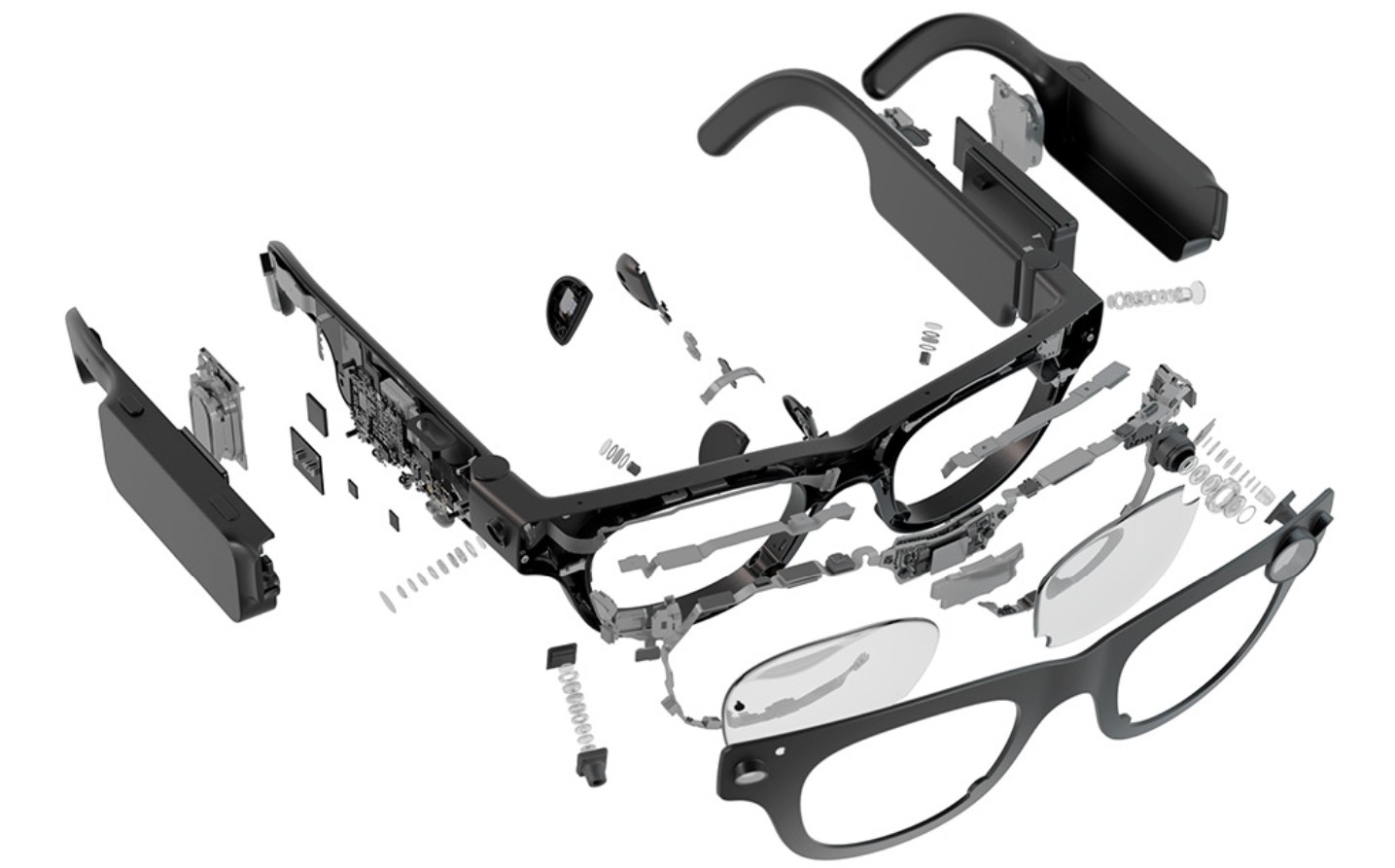
Meta has officially unveiled its new generation of smart glasses, the Aria Gen 2 , an advanced device that promises to revolutionize research and development in artificial intelligence and augmented reality. Primarily aimed at technology professionals, these glasses seek to offer a comprehensive solution for capturing complex data and experimenting in real-world environments , transcending the limitations of traditional laboratories.
In the competitive landscape of augmented and mixed reality technologies, where many initial promises have fallen by the wayside, Meta continues to invest heavily in innovation . The Aria Gen 2 moves away from the consumer product concept, opting instead for a device aimed at researchers, developers, and professionals who require precise and reliable tools in their daily work.
Technical innovations and improvements compared to the previous generation
The Aria Gen 2 design has been completely revamped to maximize comfort and functionality . The glasses include four computer vision cameras, double the number of the previous model , expanding their field of view to approximately 300 degrees. This advancement allows for front, side, and rear 3D reconstructions with significantly greater accuracy thanks to the new 80-degree stereo overlap.
The main camera is equipped with an HDR sensor that reaches 120 dB , facilitating the capture of high-contrast images even in challenging lighting conditions. An ambient light sensor, along with a UV sensor, improves exposure control , automatically adjusting the capture based on whether it detects artificial indoor light or natural outdoor light. Furthermore, the global shutter eliminates pixel blur, increasing image sharpness.
To perform these functions efficiently, Meta has introduced a custom low-power coprocessor , capable of processing computer vision and machine learning algorithms in real time without relying on external connections.
Sensors and biometric capabilities: new horizons for research
Beyond computer vision, the Aria Gen 2 incorporates advanced biometric sensors . One of the new features is the photoplethysmography (PPG) sensor integrated into the nose pad, which allows for precise monitoring of the user's heart rate . This is especially useful in research that requires correlating physical or mental activity with visual perception and the environment . More on perception in interaction.
It also includes a microphone optimized to capture voices even in very noisy environments , along with integrated speakers to facilitate interaction with AI assistants or other real-time response systems.
The sensor suite is completed with global positioning, barometer, magnetometer, and eye-tracking modules, allowing the glasses to know at all times the user's location and exactly what they are observing. Furthermore, they offer six degrees of freedom for spatial tracking, supporting both static and dynamic research.
Portable design and collaborative operation
Meta has paid special attention to the physical design , achieving lightweight ( between 74 and 76 grams ) and foldable glasses that adapt to most faces for comfortable extended use . Battery life has also been improved, with a battery that promises to last through intensive work sessions.
The standout feature is the sub-GHz radio technology , which allows for sub-millisecond precision synchronization of multiple Aria Gen 2 glasses. This advancement is particularly useful in collaborative studies or situations where multiple devices are used in parallel, ensuring that all collected data is perfectly aligned in time. To better understand how communication networks work in devices like these, you can consult the technology concept.
Furthermore, the local storage capacity and the flexibility of its sensors make Aria Gen 2 an ideal platform for complex experiments and advanced testing , both in controlled environments and in the real world.
Applications and availability
Meta's approach with the Aria Gen 2 is clearly professional: they are designed for researchers working in AI, robotics, advanced interfaces, or perception studies . The implemented improvements open up new possibilities for collecting high-fidelity data and analyzing how people interact with technology in different contexts . To learn more about augmented reality applications in research, review augmented reality types.
For now, the glasses are not available to the general public , and the company has confirmed that it will soon open an application process for those interested in the professional or academic fields. They are expected to launch by the end of 2025, although there is still no official price or pre-order date.
With the launch of the Aria Gen 2, Meta sets a new standard in the field of augmented reality applied to research, opting for a multifunctional, reliable device that is perfectly integrated into the routines of experts seeking to go a step further in the study of the environment and the user themselves.