- Apple will integrate a version of Gemini into its private cloud to power the new Siri, while maintaining its own interface and privacy.
- The key release will come with iOS 26.4 in spring 2026, with conversational features and advanced context.
- Limited compatibility to recent iPhones, iPads with M-series, and Macs with Apple Silicon; Spanish confirmed in the language expansion.
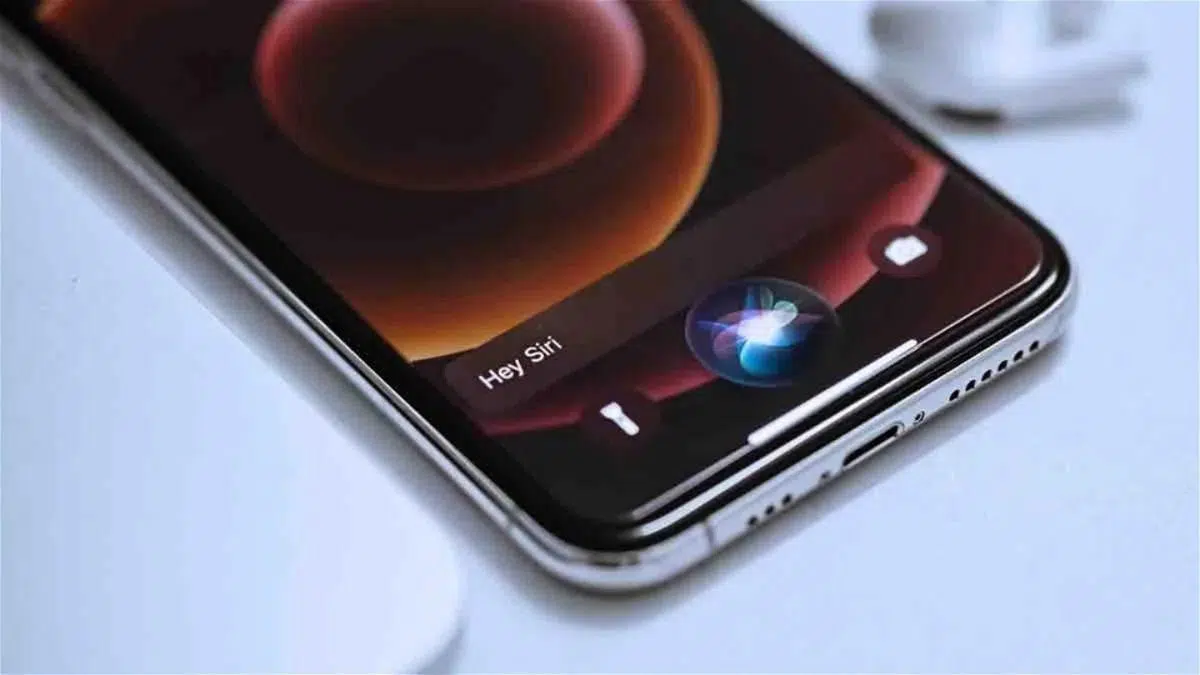
Apple is rewriting the history of its assistant with a move that, not long ago, would have sounded like science fiction: the new Siri will use a customized version of Gemini , Google's flagship language model, but running on Cupertino's private cloud. There will be no third-party logos or visual changes: on the outside, it will still be Siri, but inside, it's powered by a much more capable and conversational engine.
What matters is not just the "what," but the "how" and the "when." According to multiple reports led by Mark Gurman, Siri will make its big leap with iOS 26.4 , expected in March-April 2026, after a 2025 of testing, iterations, and strategic decisions. Apple maintains control over the user experience, privacy, and interface, while Gemini provides the deep understanding of language and context necessary to sustain natural dialogues and execute complex tasks within the ecosystem.
Why Apple relies on Gemini and not other models
During 2025, Apple compared options with two leading candidates: Claude (Anthropic) and Gemini (Google). Internal testing indicated that Claude offered superior technical quality in certain responses and language nuances, but the final agreement went to Google for something more practical: cost and speed of integration.
Apple and Google already had a colossal business relationship regarding the default search engine in Safari , with annual payments in the tens of billions. That relationship, with existing contracts and collaborative infrastructure, facilitated a "quick and viable" agreement to use Gemini at Apple's scale. Furthermore, Tim Cook's company needed to make an impact quickly: being late to generative AI was damaging its image compared to Android, Microsoft, and leading chatbots.
The result is pragmatic: Apple gains Google's linguistic muscle in a "white label" format, and Gemini is adapted to the company's security and privacy requirements. It's not an integration of Google services into iOS , nor a Siri "tuned up with Gmail or Maps"; it's a guest brain operating within Apple's framework.
Architecture and privacy: Apple servers, data under control
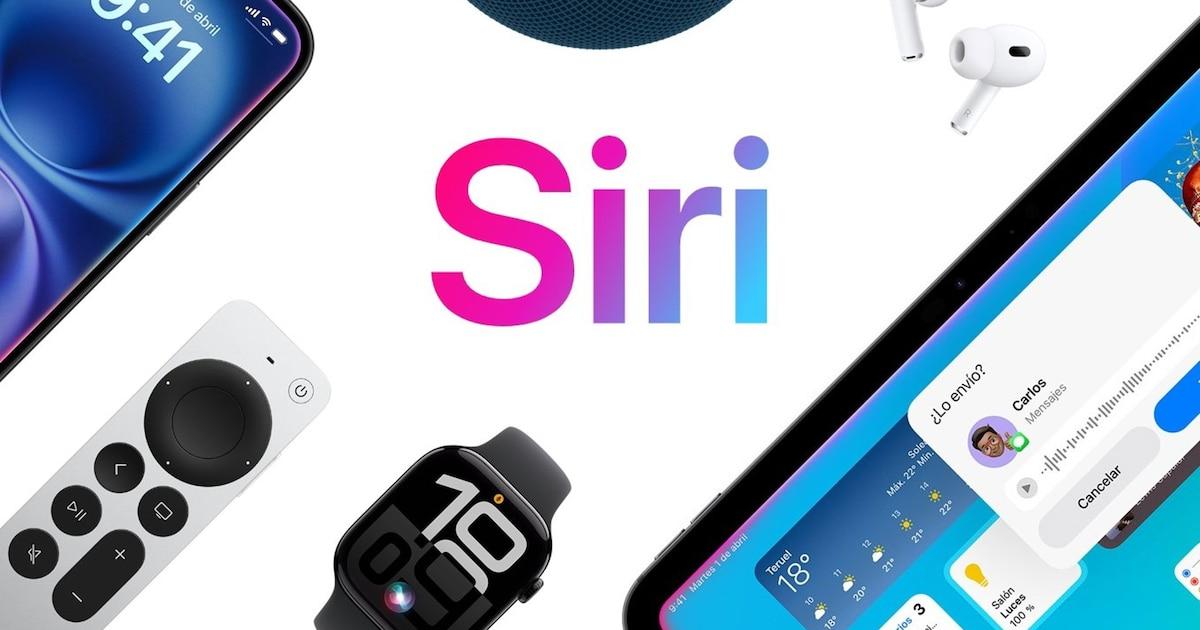
The agreement comes with one non-negotiable condition: Gemini runs on Apple's private cloud servers . This means that your Siri queries don't "fly" to Google's data centers. Apple retains custody, auditing, and operational control, consistent with its privacy promise.
The technical approach is hybrid: the device handles sensitive and local information (for example, personal data processed with local models ) and delegates language and reasoning tasks requiring more context and processing power to the larger model. This approach aligns with the official narrative: “Siri learns your needs, but doesn’t know who you are.” In practical terms, the audio of requests doesn’t leave the device without consent , relying on the Neural Engine to protect the initial processing.
Internally, the new Siri is organized into modules: a query planner capable of breaking down complex requests into steps; a knowledge retrieval system for general questions; and a summarizer that condenses information from multiple sources. Gemini primarily powers reasoning and language understanding, while the Apple layer orchestrates secure execution within the ecosystem.
With this architecture, the assistant abandons the "I'll show you web results" type response as a wildcard and starts producing contextualized explanations , weaving together what it knows about your device with general knowledge, always within the privacy limits set by Cupertino.
What it will be able to do: real-world examples and a leap in quality
The most striking change is that Siri finally maintains the thread of the conversation . You can chain requests together (“turn off the living room lights… and the kitchen lights too”) without having to re-explain everything; the assistant preserves context between turns and understands pronouns, time references, and modifications to what has already been requested.
It also understands complex requests like “find Carlos’s email about last week’s project and reply that it’s finished.” The current iteration of Siri rarely attempts anything like this; the next version, with planning and tracking capabilities , will be able to do it within Mail and other compatible apps.
Another notable leap is multimodal communication: you'll be able to seamlessly switch between voice and text . While typing to Siri was already an option, the assistant's text-based response will be richer, more natural, and more useful, aligning with what we expect from modern chatbots.
As it moves throughout the system, the new Siri "pays attention" to what's happening in apps (privately and without uploading unnecessary data) to help you with specific things. A classic example? If a friend texted you that they're arriving for lunch on Saturday at 13:00 PM, and a few days later you ask, "What time are they arriving?", the assistant will be able to remind you even if you haven't added it to your calendar. This contextual understanding will extend to Photos, Files, Mail, and very specific searches, like "Find me the photos where I'm wearing a red jacket in New York."
Apple also plans to offer AI-enhanced web search , with more direct answers when you ask for general information. However, the collaboration with Google doesn't mean that competing apps will become the default on iOS: Gmail, Maps, and Photos won't replace Apple's own apps; Siri will remain "made in Apple" inside and out.
Dates, phases and roadmap
The rollout has been gradual. We first saw the new interface and conversational memory in iOS 18.1 (initially in US English), followed by expansion to more English-speaking countries and the gateway to ChatGPT in iOS 18.2. With iOS 18.4, Apple Intelligence began speaking Spanish and other languages, although without the "deep" Siri.
The major milestone is set for iOS 26.4, with a release window in March-April 2026. That's when the advanced conversational version , powered by Gemini, will debut, aiming to move beyond the command-based assistant model. It's also speculated that, in parallel, Apple will revive its plan to bring Apple Intelligence to new markets like China, subject to regulatory approval.
Tim Cook has hinted that the company is "progressing well" and that the new Siri will arrive early next year , while Gurman has revised the forecast to March. The company prefers to avoid explicit press releases about the agreement with Google: it will be a quiet pact , recognizable by capabilities, not logos.
Following that launch, more details on the AI strategy for iOS 27 and beyond are expected at WWDC 2026. The public roadmap will remain cautious , but the goal is crystal clear: to transform Siri into a fully integrated conversational assistant at the heart of iOS, iPadOS, and macOS.
Compatible devices and confirmed languages
Compatibility will be selective. On iPhone, you'll need one of the latest models with iOS 26; not all older devices are compatible . The same applies to iPad and Mac: Apple Silicon is compatible, Intel is not. Here are the leaked lists:
- iPhone: iPhone 15 Pro, 15 Pro Max, 16, 16 Plus, 16 Pro, 16 Pro Max, 16e, 17, 17 Pro, 17 Pro Max and iPhone Air.
- iPad: iPad mini (7th gen, 2024); iPad Air with M1/M2/M3; iPad Pro with M1/M2/M4/M5.
- Mac (macOS 26+): iMac with M1/M3/M4; MacBook Air with M1/M2/M3/M4; MacBook Pro with M1, M1 Pro, M1 Max, M2, M2 Pro, M2 Max, M3, M3 Pro, M3 Max, M4, M4 Pro, M4 Max, or M5; Mac mini with M1, M2, M2 Pro, M4 or M4 Pro; Mac Studio with M1 Max/M1 Ultra/M2 Max/M2 Ultra/M4 Max/M3 Ultra; Mac Pro with M2 Ultra.
In terms of languages, the first wave was English (US, UK, Australia, Canada, New Zealand, and South Africa), and German, Chinese, Italian, and Spanish have already been confirmed for future additions. The integration of Apple Intelligence in Spanish began with iOS 18.4, and the full Siri is expected to launch simultaneously worldwide in its major release in 2026.
For Spanish-speaking countries, the availability of the Apple Intelligence core paved the way, but the new Siri with advanced reasoning will arrive when Apple activates the Gemini-powered version on private servers, maintaining the same privacy criteria.
Relationship with ChatGPT and other AIs: when each one intervenes
Apple has made it clear that the new Siri is based on its own technology, with Gemini support when linguistic power is needed in the private cloud. Even so, the assistant can request assistance from ChatGPT for queries where its own model or Gemini isn't the best option. This "bridge" uses GPT-4 and notifies the user before sending anything, accepting OpenAI's terms and conditions.
In practice, if you exceed the free limits, access may be temporarily downgraded to GPT-3.5; it is restored after 24 hours , as happens in the ChatGPT app or website. This access was first launched in English with iOS 18.2, and its Spanish integration was aligned with Apple Intelligence in 18.4.
It's important to distinguish between these two: Gemini operates "within Apple" (on Cupertino servers, with no data passing through to Google), while ChatGPT is an external service explicitly used. They are distinct layers for different needs, designed to allow the user to choose and be informed at every step.
Internally, not everyone is applauding. Some employees are worried about the perception that Siri is "Google's ." Externally, Apple is protecting the brand: neither the interface, nor the apps, nor the name will change. What will change is that the assistant will finally have the brain it needed to live up to expectations.
Strategic implications and competitive context
Apple's shift acknowledges a reality: the competition hit earlier and harder . OpenAI with ChatGPT, Google with Gemini, and Microsoft with its integration into Windows and Office have set the pace. Samsung, with Galaxy AI, already uses Gemini for generative functions. Apple, for its part, focused on on-device learning and privacy as its guiding principles; valuable, yes, but insufficient for an assistant that urgently needed conversational intelligence.
This urgency explains the shortcut: extending the economic alliance with Google from the search engine to AI. This move avoids starting from scratch with Anthropic and reduces contractual friction. There are risks , however : a perception of dependency, inflated expectations, and a phased rollout that could frustrate those without the latest devices.
On the other hand, Apple maintains its "privacy first" narrative, controls the front end, and reserves the right to switch algorithms as needed. If all goes well, Siri will regain ground against ChatGPT and Alexa and become a truly useful agent integrated into iOS. There's even talk of a new smart home device with a screen, like a " HomePod with display ," designed to showcase these new conversational capabilities.
Credibility, of course, is built on actions, not promises. After years of "this time it's happening," the 2026 window will be the ultimate test to confirm that Siri is evolving from a command-line assistant to a conversational companion.
How to activate it and how much it costs
When it arrives, you shouldn't have to jump through hoops: check Settings > Apple Intelligence & Siri on your compatible devices to make sure the features are enabled. Currently, some options are still in beta and on a waiting list, but Apple will gradually roll them out as it stabilizes its servers and models.
In terms of cost, there are no surprises: the new Siri will be free as a system service, associated with iOS, iPadOS, and macOS. There have been rumors of a paid Apple Intelligence service, but the company has not confirmed it. The key will be having compatible hardware and updated software to take full advantage of the new assistant.
Apple has opted for a pragmatic alliance to make Siri smarter, faster, and more useful without sacrificing its core identity. Gemini will provide the linguistic spark on Apple servers , ChatGPT will be there as a backup when needed, and the experience will remain firmly rooted in iOS. If the 2026 timeline holds and the promises materialize into tangible features, the iPhone will once again feel like the hub of truly useful personal intelligence… and this time, with privacy as its guiding principle.

Table of Contents
- 1 Why Apple relies on Gemini and not other models
- 2 Architecture and privacy: Apple servers, data under control
- 3 What it will be able to do: real-world examples and a leap in quality
- 4 Dates, phases and roadmap
- 5 Compatible devices and confirmed languages
- 6 Relationship with ChatGPT and other AIs: when each one intervenes
- 7 Strategic implications and competitive context
- 8 How to activate it and how much it costs