- GPON and EPON are variants of passive optical networks (PON) that share fiber among many users through OLT, ONU/ONT and a passive ODN.
- EPON focuses on simplicity and low cost with an effective 1 Gbps symmetrical speed, while GPON offers more bandwidth, higher split ratios, and advanced QoS.
- EPON is best suited for price-sensitive residential and SME deployments, while GPON is better suited for carrier environments or large customers with strict multi-service and management requirements.
- The evolution towards 10G EPON and 10G GPON, and future 25G/40G/100G PON, ensures that these technologies will remain key in FTTH and FTTB.
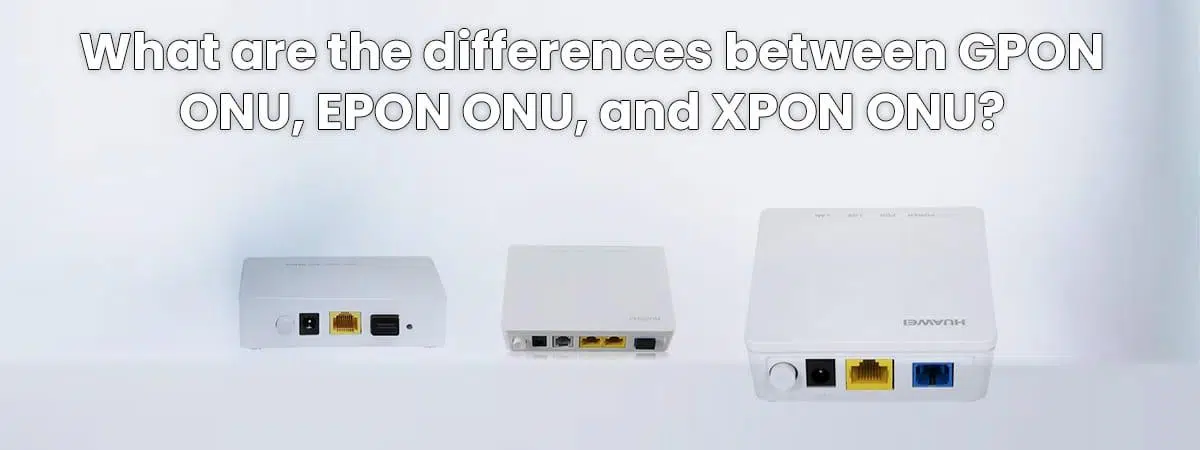
If you're looking at fiber-to-the-home or fiber-to-the-business options , you've probably come across two acronyms that are repeated time and again: GPON and EPON. At first glance, they seem almost the same, but there are significant differences in speed, services, costs, and network complexity that you should be aware of before making deployment or purchasing decisions.
In the following lines, we'll clearly explain what PON is, how the different variants (APON, BPON, EPON, GPON) have evolved, the real differences between GPON and EPON in terms of speed, capacity, QoS, OAM, and price , and when it's more advantageous to choose one technology over the other. The goal is for you to finish this article with a clear understanding of which one best suits your needs: operator, large enterprise, SME, or residential environment.
What is a PON network and why is it so important in FTTH?
When we talk about PON, we are referring to a Passive Optical Network . It is a fiber-based access architecture in which, between the Optical Line Terminal (OLT) located at the central office and the Optical Network Units (ONU or ONT) located at the home or business, there is no intermediate active equipment: only fibers and passive components.
This optical distribution network, known as an ODN (Optical Distribution Network) , consists of fiber optic cables, optical distribution frames (ODFs), optical splitters, connectors, and enclosures or cabinets. These passive components form a point-to-multipoint (P2MP) topology that allows a single OLT to serve dozens or even hundreds of ONTs/ONUs sharing the same fiber optic cable.
Compared to solutions like P2P (point-to-point) or switches in FTTC scenarios, PON networks reduce power consumption , outdoor space requirements, the number of fibers needed, and the failure rate , since passive components are virtually infallible and require no external power supply. This is why they have become the key technology for mass deployment of FTTB/FTTH.
The key strength of PON is that, thanks to the combination of optical splitters and multiplexing, bandwidth can be shared among many users while keeping the ODN investment manageable. The real cost difference between GPON and EPON, as we will see, stems primarily from the OLT/ONU electronics and optical modules, not from the cabling or splitters.

Evolution of PON technology: from APON and BPON to EPON and GPON
The PON family didn't begin with GPON or EPON. Before them, there were other standards that paved the way and help explain why EPON and GPON coexist in broadband access deployments today.
What is APON?
In the late 90s, the ITU defined APON as a PON system that used ATM (Asynchronous Transfer Mode) for packet transmission. At that time, ATM was the basis of many backbone and access networks, so it made perfect sense to take advantage of its statistical multiplexing and quality of service management.
APON combined ATM multiplexing with passive optical splitters and OLTs to achieve an access solution that cost between 20% and 40% less than traditional circuit-switched PDH/SDH systems. It was the first major step toward the idea of "shared fiber" to the user.
What is BPON?
With the unstoppable advance of Ethernet, APON fell behind. This led to the emergence of BPON (Broadband PON), which is essentially an evolution of the APON standard geared towards broadband . Initially known as APON, the name change to BPON aimed to emphasize its focus on higher-capacity services.
BPON is still based on ATM, but offers speeds of approximately 155 Mbps upstream and 622 Mbps downstream , in addition to incorporating dynamic bandwidth allocation and improved protection mechanisms. This allows services such as Ethernet access, video transport, and high-speed leased lines to be delivered over the same PON infrastructure.
What is EPON?
The next leap forward came from the IEEE with EPON (Ethernet Passive Optical Network). The goal was to achieve a passive optical network that leveraged end-to-end Ethernet , simplifying the protocol stack and reducing costs compared to BPON.
EPON is standardized under IEEE 802.3 and uses PON technology at the physical layer, while at the data link layer it relies directly on Ethernet frames. The nominal speed is 1,25 Gbps upstream and downstream, using 8b/10b encoding, resulting in a usable speed of approximately 1 Gbps symmetrical.
EPON uses WDM (wavelength division multiplexing) to achieve bidirectional transmission over a single fiber : one wavelength for downstream and another for upstream. Shared upstream access is achieved using TDMA (time division multiple access), where the OLT schedules the transmission time allocated to each ONU.
The great appeal of EPON is that it combines low cost, simplicity of architecture and full compatibility with Ethernet , which has made it very popular in residential environments, cable operators, WISPs and SMEs, especially in Asia and much of Europe.
What is GPON
In parallel, the ITU developed GPON (Gigabit-capable Passive Optical Network), defined in the ITU-T G.984.x series of recommendations . The goal was to go beyond BPON and EPON in terms of capacity, versatility, and carrier service level.
GPON is designed to natively support triple-play services: data, voice, and video , offering greater bandwidth and better management tools and quality of service than EPON. It supports various combinations of upstream and downstream speeds, reaching up to 2,488 Gbps downstream and 1,25 Gbps upstream in its most common mode.
Although GPON offers more advanced performance, this power comes at a cost: the technology is more complex to implement, and the hardware is typically more expensive than in EPON. Even so, for carrier scenarios, access backbone networks, or customers with stringent QoS and security requirements, GPON has become the preferred choice.
Key differences between GPON and EPON
Both GPON and EPON are variants within the larger PON family, but they address somewhat different needs. The following details the points where the difference between the two technologies is most noticeable : data speed, optical split ratio, architecture, QoS, OAM, and cost.
Speeds and bandwidth: GPON vs EPON
EPON offers a fixed data rate of 1,25 Gbps upstream and downstream . Due to 8b/10b encoding, the usable bandwidth is around 1 Gbps symmetrical. This is more than enough for most current residential and small business connections.
GPON, on the other hand, supports several speed profiles. It can operate at 622 Mbps in both directions, 1,25 Gbps symmetrical, or 2,488 Gbps downstream and 1,25 Gbps upstream . This flexibility allows the optical module type and service profile to be tailored to the specific deployment needs, optimizing the cost/performance ratio.
Offering double (or more) the downstream bandwidth of EPON, GPON provides considerable headroom for 4K/8K video services, IPTV, high-volume VoIP, or demanding enterprise connections . This asymmetry is particularly advantageous in scenarios where download traffic far exceeds upload traffic.
If your priority is to have a network prepared for very high data consumption services in the coming years, the balance tips towards GPON as the more convenient option , although EPON remains more than valid for most residential cases.
Optical division ratio and number of users
The split ratio indicates how many ONTs/ONUs a single OLT port can serve. For example, a 1:32 ratio means that one OLT can feed up to 32 ONTs through passive optical splitters in the ODN.
In EPON, the standard typically works with a ratio of 1:16 to 1:32 , although technically it is possible to reach 1:64 or even 1:128. The control protocol can manage more ONUs, but the real limitation comes from the performance of the optical modules and the fiber's power budget.
GPON natively supports 1:32, 1:64, and even 1:128 ratios in certain systems. This allows a single OLT card to serve a larger number of end users, resulting in savings of ports and chassis in the central office.
However, a high split ratio implies greater attenuation: when the insertion loss in the ODN is around 15–18 dB, significantly increasing the split ratio will reduce the maximum transmission distance . As a reference, a 1:16 split typically achieves about 20 km, while a 1:32 split reduces the distance to about 10 km, in both GPON and EPON.
In practice, many operators prefer not to always aim for the maximum possible ratio and instead seek a balance between the number of users, distance, and the cost of the optic cable . From a purely theoretical standpoint, GPON has more room for high ratios, but the economic advantage only becomes apparent in large-scale deployments.
Network architecture and protocol layers
EPON stands out for its relatively simple architecture . Data (voice, video, and general IP traffic) is encapsulated directly in Ethernet frames and sent over the PON. In other words, it works as a natural extension of any Ethernet network, with fewer encapsulation layers.
GPON, on the other hand, introduces a somewhat more complex structure, with several logical layers. Ethernet and TDM frames are first encapsulated in GEM (GPON Encapsulation Method) frames . In turn, legacy ATM cells and GEM frames are encapsulated in the GTC (GPON Transmission Convergence) frame, which is what is ultimately transported over the PON.
This more elaborate architecture allows GPON to better manage carrier-level multi-service environments , where legacy ATM services, TDM traffic, IP data, IPTV, and others coexist. However, it also entails greater complexity in network implementation, configuration, and diagnostics.
Quality of service (QoS) and multiservice capabilities
One of the major areas where GPON differs from EPON is in how it manages quality of service. GPON incorporates advanced QoS mechanisms by default to guarantee low latency, priority, and minimum throughput for different types of traffic (voice, real-time video, data, etc.).
In EPON, the underlying Ethernet standard doesn't define QoS capabilities specifically for PON access, so quality of service is typically achieved through extensive use of VLANs, 802.1p priorities, and policies on edge equipment . This is a valid solution, but it involves more engineering work and, in many cases, higher configuration and management costs.
If your scenario demands that you absolutely guarantee the quality of sensitive services such as high-volume VoIP, professional video streaming, or dedicated lines , GPON offers much more robust out-of-the-box support. In applications where QoS is less critical, EPON more than adequately meets the requirements without needing such sophistication.
Management, operation and maintenance (OAM) and safety
The OAM component is where GPON's carrier-grade approach is most evident. The standard defines several distinct management channels, such as link-layer OAM, PLOAM (physical-layer OAM), and OMCI (ONT Management and Control Interface) . Each handles specific tasks, from status signaling and fault detection to ONT provisioning and remote control.
Thanks to this separation of control and management planes, operators can implement granular encryption, error monitoring, performance monitoring, fault detection, and automatic service provisioning on ONTs/ONUs, with a very fine level of detail.
EPON, on the other hand, relies on simpler OAM mechanisms: far-end fault indication (FEF), loopback functions, basic link monitoring, and little else. This is sufficient for many deployments, but it doesn't offer the level of granular control and security that GPON provides in large-carrier environments.
In terms of security, both systems support encryption, although with some differences: EPON allows encryption of both upstream and downstream traffic, while GPON typically encrypts only the downstream traffic and supplements this with other control mechanisms to protect it. In practice, when properly configured, both can be considered secure for broadband access scenarios.
Implementation costs: GPON vs EPON
To understand the cost of a GPON or EPON deployment, it's necessary to clearly separate three components: ODN, OLT, and ONU/ONT . The ODN component (fibers, splitters, boxes, connectors, ODF) is very similar in both technologies for the same number of users and distances, so the cost doesn't show significant differences.
The biggest difference lies in the active components. In the case of EPON, the chipsets of the OLT and ONT are usually based on ASICs specifically designed for the Ethernet MAC layer , which are simpler and more economical. EPON optical modules are also typically cheaper.
In GPON, many manufacturers have traditionally used FPGAs and more complex hardware, which increases the cost of the electronics. In the market, a GPON OLT can cost around 1,5–2 times more than an equivalent EPON OLT, and a GPON ONT can be 1,2–1,5 times more expensive than an EPON ONT.
However, the cost per subscriber must also be considered. Since GPON allows for higher split ratios and more bandwidth per user, it's possible to reduce the total number of OLT ports required and optimize power consumption and headend space. In very dense deployments, this can make GPON more cost-effective per user than EPON in the long run , even though the individual equipment is more expensive.
As a general rule, EPON is perceived as a more economical and simpler option for price-sensitive residential and SME customers, while GPON is a better fit when there are many users, advanced needs, and a sufficient budget for a more robust solution.
Use cases and areas where GPON and EPON dominate
Beyond theoretical values, in the real world each technology has found its niche. EPON has expanded strongly in markets like Asia and Europe , especially among cable operators, mid-sized ISPs, and residential deployments where cost and compatibility with existing Ethernet networks are paramount.
GPON, on the other hand, has been very well received in the United States and by large telecommunications operators that need carrier-grade access solutions, ready to integrate not only FTTH, but also FTTB, advanced corporate services and last-mile backbone networks.
In FTTx applications, EPON is frequently seen in residential and small business FTTP/FTTH, while GPON is used in both massive FTTH and corporate access and mobile base station backhaul, thanks to its greater capacity and management tools.
Currently, both technologies coexist and compete while also complementing each other. EPON continues to win due to price and simplicity, while GPON prevails when high densities, demanding triple play, and stringent QoS and OAM requirements are needed.
Advantages and disadvantages of EPON and GPON
In summary, the strengths and limitations of each technology can be clearly listed, which is extremely helpful when making a design or purchase decision.
EPON's strengths
EPON offers a very simple network architecture , based directly on Ethernet, which facilitates integration with the rest of the operator's or company's infrastructure. It does not require additional encapsulation layers for most typical IP services.
EPON components (OLTs, ONUs, optical modules) are typically less expensive than their GPON equivalents because they use simpler ASICs and less demanding optics. This makes them a preferred choice for many budget-conscious deployments.
EPON supports both upstream and downstream encryption , allowing end-to-end traffic to be protected relatively easily in scenarios where security is an important requirement, but without reaching the sophistication of GPON's OMCI management.
Strengths of GPON
The main selling point of GPON is its higher bandwidth, especially downstream , with profiles reaching up to 2,488 Gbps. This provides enormous headroom for future data consumption needs and high-quality video services.
GPON was designed from the ground up for multi-service environments, so it efficiently supports triple play (voice, data, video) . The combination of GEM, GTC, and QoS mechanisms makes it an ideal platform for operators who want to consolidate many services over a single access network.
The ability to work with high split ratios, such as 1:64 or 1:128, allows large GPON deployments to achieve greater coverage for end users with fewer OLT ports , significantly reducing the number of chassis, cards and energy consumption at the central office.
Transmission efficiency, combined with its advanced QoS, OAM and security capabilities, makes GPON a very cost-effective solution in the medium and long term for high-level users or large operators , despite a higher initial investment.
Limitations of each technology
Despite its advantages, EPON has limitations in quality of service, advanced OAM management, and carrier-grade security features . Some of these shortcomings can be addressed through complex network design and configurations, but this adds to operating costs.
GPON, on the other hand, has as its major weakness the greater technological complexity and cost of its components . GPON optical modules and chipsets, especially in earlier generations, have been significantly more expensive than those in EPON, which may hinder its adoption in price-sensitive projects.
The evolution towards 10G EPON, 10G GPON and beyond
The capacity demands of users and service providers continue to grow, so it was only a matter of time before faster versions of these technologies arrived. Today, 10G EPON and 10G GPON deployments (often referred to as XG-PON or XGS-PON) are already in place , taking available bandwidth to a new level.
These 10 Gbps variants are increasingly being used in FTTB (fiber to the building) and in enterprise access , where very high speeds are needed shared among a considerable number of users or services, maintaining the passive network philosophy.
Looking further ahead, standardization forums and the industry are already working on 25G, 40G, and even 100G PON solutions over fiber, with greater ranges and capacity for more users per OLT port. Although still in less widespread stages, they are paving the way for the next generation of optical access.
What's interesting is that, despite these new speeds, the underlying concept remains the same: passive optical network, point-to-multipoint topology, and efficient bandwidth sharing . EPON and GPON, in their various versions, will continue to be the backbone of fiber access for many years to come.
Considering all these elements, it becomes clearer why EPON and GPON are not mutually exclusive technologies, but rather complementary pieces within the PON ecosystem. While EPON stands out for its simplicity, cost-effectiveness, and seamless integration with Ethernet in residential and SMB environments , GPON is positioned as the ideal choice for operators and large customers who require greater bandwidth, advanced QoS tools, powerful OAM, and high-level multiservice capabilities. The choice between one or the other depends not only on the technology itself, but also on the business model, fiber budget, number of end users, and the desired level of management and security.

Table of Contents
- 1 What is a PON network and why is it so important in FTTH?
- 2 Evolution of PON technology: from APON and BPON to EPON and GPON
- 3 Key differences between GPON and EPON
- 4 Use cases and areas where GPON and EPON dominate
- 5 Advantages and disadvantages of EPON and GPON
- 6 The evolution towards 10G EPON, 10G GPON and beyond