- ARM architecture is a low-power RISC design used in everything from microcontrollers to complete computers.
- Its success is based on a simple instruction set, third-party licensing, and energy efficiency far superior to x86.
- ARM is present in mobile phones, tablets, Chromebooks, Macs with Apple Silicon, and multiple operating systems such as Android, iOS, Windows, and Linux.
- RISC-V emerges as an open alternative to ARM, but it is still far behind in manufacturer support and software ecosystem.
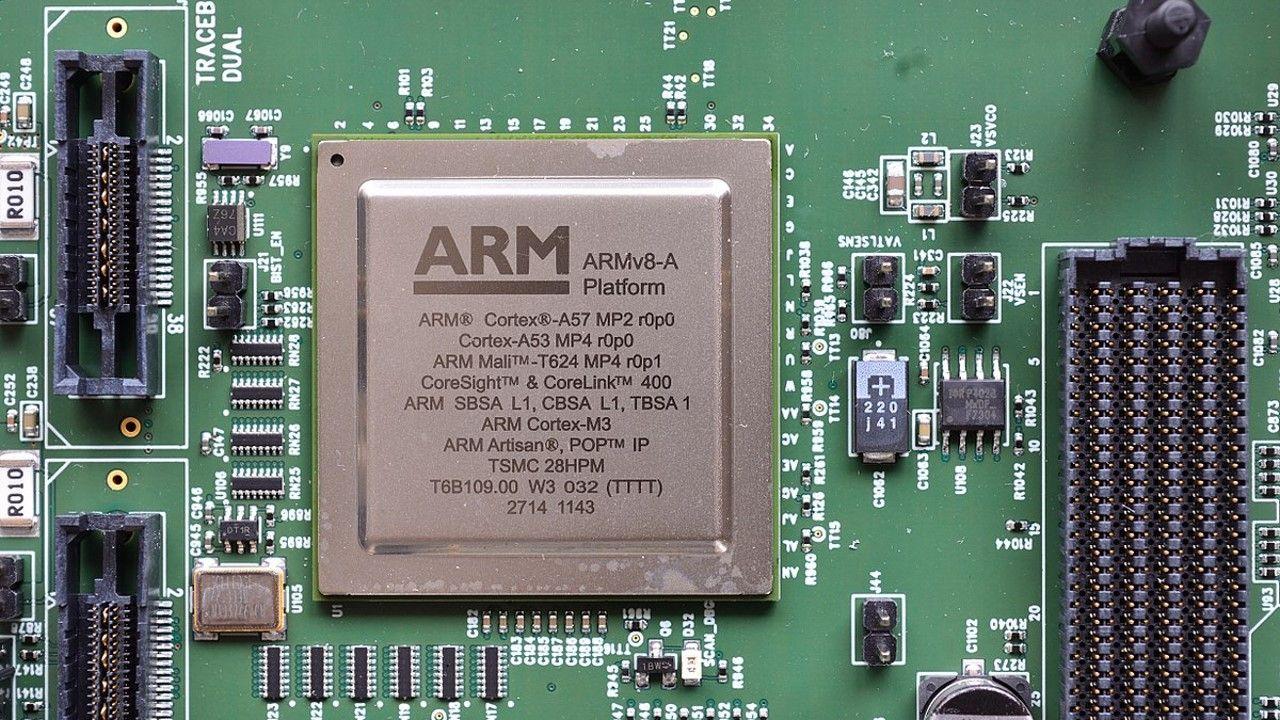
ARM architecture has evolved from powering simple gadgets to powering laptops, desktops, and servers . If you've ever used an Android phone, an iPhone, a Raspberry Pi, or a recent Mac, you've already worked with processors based on this design, even if you weren't aware of it.
In the following lines, we'll take a detailed look at what ARM architecture in computers actually is, how it works, its origins, and why it's changing the landscape compared to Intel and AMD's x86 architecture . We'll also discuss its relationship with RISC-V, its role in Windows, macOS, and Linux, and why major manufacturers have embraced this type of CPU.
What is ARM architecture and what is it based on?
When we talk about ARM we are referring to a RISC (Reduced Instruction Set Computing) instruction set architecture , designed for low-power but increasingly powerful processors, used from tiny microcontrollers to personal computers and data centers.
Unlike CISC architectures such as x86/x86-64 (see the differences between Intel and AMD processors ), ARM relies on a simpler, more compact, and highly efficient instruction set . This allows for processors with fewer transistors, less internal complexity, and significantly lower power consumption—a key factor in ultralight mobile devices and laptops.
An important point is that ARM Holdings (now Arm Ltd.) does not manufacture processors . The company designs the architecture and cores, and then licenses that technology to third parties (Apple, Qualcomm, Samsung, etc.), who integrate it into their own SoCs by adding custom GPUs, memory controllers, modems, and other components.
In practice, this means that there are hundreds of ARM processor variants with quite different behaviors and performances , although they all share the same instruction set base, which allows for the development of compatible operating systems and applications.
A brief history of ARM: from Acorn to market dominance

The story of ARM begins in 1983, when Acorn Computers decided to develop a new processor based on their experience with the MOS 6502 , the chip used in many of their personal computers at the time. The project was led by Sophie Wilson and Steve Furber.
Their goal was to create an advanced but internally very simple processor, without microcode and with a clear RISC philosophy . In 1985 they completed the design of the first prototype, the ARM1, and in 1986 the ARM2 arrived, the first commercial version used in computers such as the Acorn Archimedes.
The ARM2 had a 32-bit data bus, a 26-bit address space, and 16 32-bit general-purpose registers . One of these registers was used as a program counter (PC), with some bits used for status flags. Technically, it was extremely simple: around 30.000 transistors and no cache memory.
This simplicity resulted in ridiculously low energy consumption for the time and performance superior to that of an Intel 286. Its successor, the ARM3, added a small 4 KB unified cache that significantly improved repetitive memory access.
In the late 80s, Apple began collaborating with Acorn on new versions of the ARM core . To avoid concerns from other manufacturers, the independent company Advanced RISC Machines (ARM) was created in 1990, tasked with designing and licensing future generations of processors.
This stage saw the emergence of the ARM6, introduced in 1991, used by Apple in the Newton (ARM 610) and by Acorn in the RiscPC. The core remained surprisingly simple: just 35.000 transistors , allowing it to be integrated with various peripherals and form custom systems.
ARM's massive leap into the consumer market came with the ARM7TDMI, which is found in millions of mobile phones, handheld consoles, and embedded systems . Simultaneously, Digital (DEC) licensed the design and created the StrongARM, capable of operating at 233 MHz while consuming around 1 W, a milestone in efficiency.
Over time, this technology passed into the hands of Intel, which integrated it into its Intel i960 family and XScale solutions, while other giants such as Freescale, IBM, Texas Instruments, Nintendo, Philips, Samsung, STMicroelectronics or Atmel also licensed the ARM architecture.
Today, roughly three-quarters of the world's 32-bit processors incorporate ARM cores . This represents a massive presence: hard drives, routers, toys, cars, televisions, mobile phones, tablets, laptops, and increasingly, personal computers and servers.
Main ARM processor families
Over the decades, ARM has released different families and versions of architecture (ARMv1, v2, v3, etc.), each with improvements in performance, memory capacities, caches, floating-point support, and extra features.
The first generations, such as ARM1, ARM2, and ARM3 (ARMv1 and ARMv2) , focused on providing a very simple 32-bit CPU for computers like the BBC Micro with an ARM coprocessor, the Acorn Archimedes, or the RiscPC. These chips lacked a full MMU (in some cases using an external MEMC) and had little to no cache.
With the ARM6 (ARMv3) family , the leap to full 32-bit addressing is made, and cores such as ARM600 or ARM610 are incorporated, some with integrated cache and specific buses for floating-point coprocessors.
Later came ARM7 and ARM7TDMI (ARMv3 and ARMv4T) , with support for the 16-bit Thumb instruction set, a 3-stage pipeline, and variants with cache, MMU, or MPU. These cores are the basis for popular products such as the Game Boy Advance, Nintendo DS, Apple iPod, and embedded systems from NXP, Atmel, and Psion.
In parallel, the StrongARM (ARMv4) family appears , the result of a collaboration with DEC, which focuses on achieving high MIPS per watt for PDAs and small computers (Apple Newton 2×00, iPAQ, Zaurus, etc.), with relatively large L1 caches for the time and a complete MMU.
Later, the ARM9, ARM9E, and ARM10E series (ARMv4T and ARMv5) introduced deeper pipelines, improvements to DSP instructions, broader Thumb support, Jazelle capabilities for executing Java bytecode in hardware, and larger, configurable caches. These cores are used in mobile phones, digital cameras, network devices, handheld consoles, and countless other system-on-a-chips (SoCs).
An important branch is XScale (ARMv5TE) , acquired by Intel, designed for application processors and network processors with high frequencies, generous L1/L2 caches and, in some cases, RAID accelerators or very specific functions for I/O.
ARM11 (ARMv6) introduced a pipeline of up to 9 stages, SIMD support, Thumb-2, Jazelle DBX, DSP improvements, and security technologies such as TrustZone. These kernels have been used in well-known devices such as the first iPhone, early-generation iPod touch, some Nokia Nseries phones, game consoles, and the first Raspberry Pi.
The great modern revolution arrived with the Cortex family , especially in the ARMv7-A and later application profiles. Cores like the Cortex-A5, Cortex-A8, Cortex-A9, and their multi-core variants (MPCore) became the de facto standard in smartphones, tablets, smart TVs, and lightweight laptops.
These cores incorporate superscalar execution, deep pipelines, NEON (SIMD), VFP for floating-point operations, advanced Thumb-2, and TrustZone . They are found in SoCs such as those in the Texas Instruments OMAP series, Samsung Exynos, Nvidia Tegra, Qualcomm Snapdragon, and Apple A4/A8 and successors.
In the embedded and microcontroller field, the Cortex-R (real-time profile) and Cortex-M (microcontroller profile) families stand out , with variants such as Cortex-R4, Cortex-M0, M1, M3 and M4, designed for critical systems, industrial control, automotive and consumer electronics where response time predictability and efficiency are paramount.
ARM Instruction Set: RISC, Conditionals, and Thumb Modes
The ARM instruction set was designed from the ground up as pure RISC: simple, fixed-size instructions that, in many cases, can be executed in one clock cycle . The key is for the compiler to generate efficient sequences with a few highly atomic instructions.
A very particular feature is that, in classic 32-bit modes, each instruction includes a condition code in its highest 4 bits . This allows virtually any instruction to be conditional (executing only if certain flags are met), reducing the need for jumps and preventing pipeline bubbles in small blocks of code with frequent conditions.
Furthermore, ARM allows combining arithmetic/logical operations with register shifts and rotations in a single instruction . For example, something equivalent in C to “a += (j << 2);” can be expressed as a single ARM instruction that adds a shifted value to the register, saving instructions and memory accesses.
Another advantage is that the address set supports pre- and post-increment modes, relative addressing, and other flexible addressing methods , which are uncommon in other architectures also considered RISC. All of this contributes to reducing the total number of instructions and improving performance per cycle.
The classic architecture defines 16 programmer-visible registers of 32 bits (R0-R15) . In principle they are symmetric, although R15 is used as a program counter (PC), R14 usually acts as a link register (return address of subroutines or exceptions) and R13 is used as a stack pointer.
ARM has two main execution modes: ARM mode (32-bit instructions) and Thumb mode (16-bit instructions) . ARM mode offers more power (a more complete instruction set) but generates larger code; Thumb mode halves the size of each instruction, improving code density and, in many cases, performance on systems with narrower memory buses.
Thumb is essentially a subset of the most frequently used instructions in the ARM game . The first processor to incorporate it was the ARM7TDMI, and since then virtually all subsequent families (ARM9, XScale, Cortex, etc.) include support for Thumb or its evolution, Thumb-2.
In addition, there's Jazelle DBX, a technology that allows Java bytecode to run directly on hardware in certain cores (those whose name includes a "J", such as ARM926EJ-S). This functionality aimed to accelerate Java virtual machines on devices with limited resources.
Key advantages of ARM architecture
ARM's popularity is no accident: it stems from a combination of energy efficiency, design flexibility, cost, and performance sufficient for most uses.
On the one hand, being a RISC architecture with a relatively small instruction set and no heavy microcode, ARM cores can be manufactured with far fewer transistors than an equivalent x86 design . Fewer transistors mean lower power consumption, less heat, and smaller, cheaper chips.
This allows ARM processors to offer very decent performance with minimal power consumption , something critical in mobile phones, tablets, ultralight laptops, IoT devices, and embedded systems powered by batteries or with thermal limitations.
The licensing model also works in its favor: ARM sells the intellectual property of its cores to all kinds of manufacturers , who can customize them, merge them with other blocks (GPU, modem, AI accelerators) and create SoCs fully adapted to their products.
This creates a huge ecosystem of manufacturers, with continuous improvements in performance and efficiency , and a very wide range of offerings for almost any niche: from ultra-cheap microcontrollers to 64-bit CPUs for servers.
In summary, ARM offers low power consumption, affordable cost, good code density, mature tools, and more than acceptable performance that continues to improve . It doesn't always reach the raw performance levels of x86 in high-end gaming desktops, but it doesn't need to in most scenarios.
32-bit and 64-bit ARM: recent evolution
The first ARM designs were 32-bit, and for decades they dominated the embedded and mobile device market . However, starting in 2011, Arm introduced architectures with native 64-bit support (ARMv8 and later), opening the door to much heavier workloads.
The move to 64-bit architecture in ARM hasn't come at the expense of RISC efficiency; rather, it's been achieved thanks to the more sophisticated design of the modern instruction set . This facilitates much larger memory addresses and extended-precision arithmetic operations, something already essential in high-end mobile devices and, of course, in computers and servers.
The reduced complexity compared to x86 remains an advantage: even in their 64-bit versions, ARM processors maintain fewer transistors for the same task , resulting in lower manufacturing costs and lower power consumption.
In the realm of personal computers, this has materialized in processors such as Apple Silicon (M1, M2, M3…) and Qualcomm's new Snapdragon X Elite , which combine high-performance cores with high-efficiency cores and integrated graphics capable of rivaling many x86 laptops in general tasks.
Use of ARM in computers, laptops and other devices
Traditionally, ARM processors were reserved for smartphones, tablets, smart TVs, routers, portable consoles, and gadgets where low power consumption was key and full desktop power was not needed.
But that's changing fast. On the one hand, devices like the Raspberry Pi have shown that an ARM system can function perfectly as a desktop microcomputer or mini PC for office tasks with a suitable operating system (usually Linux) for office work, browsing, and light programming.
We've also seen more powerful ARM-based products like the NVIDIA Tegra X1 , used by Nvidia in its Shield TV and, above all, by Nintendo in the Switch, where the balance between graphics performance and power consumption is crucial.
In the realm of advanced tablets, Apple, with its A-series (and later M-series) chips, has shown that a well-designed ARM SoC can deliver spectacular performance in creative applications, office work, and heavy multitasking, without requiring aggressive fans.
Microsoft, for its part, integrates ARM processors into devices such as Surface Pro X and other variants of the Surface family , betting on lightweight, silent devices with integrated LTE connectivity that can compete with traditional laptops for mobile work.
Meanwhile, Google is heavily promoting ARM in its Chromebook ecosystem . Chrome OS, based on Chromium and Android, is a great fit for this architecture, offering affordable, lightweight laptops with excellent battery life. Many Chromebook manufacturers are opting for ARM SoCs precisely to maximize battery life and reduce costs.
ARM and operating systems: Windows, macOS, Linux, and others
Although many people associate ARM only with mobile devices, most major operating systems already have mature support for this architecture , both in embedded variants and in desktop and server environments.
In the mobile arena, Android and iOS have run almost exclusively on ARM processors for years , taking advantage of their efficiency benefits. Apple, with its transition to Apple Silicon, has also extended this philosophy to its desktop and laptop computers, abandoning Intel x86 processors.
On Macs with ARM processors, Apple offers Rosetta 2, a translation system that allows applications compiled for Intel to run with surprisingly good performance. This has greatly facilitated the transition, to the point that today almost all relevant applications have a native ARM version.
Within the Microsoft ecosystem, Windows has explored various approaches to ARM . Windows CE and Windows Embedded Compact supported ARMv5, v6, and v7 in the embedded world for years. Later came Windows 8 RT for ARM tablets like the first Surface, with modest results due to software limitations.
Windows 10 and Windows 11 take this a step further, offering ARM versions with x86 application emulation . In Windows 11, emulation and performance have improved considerably, although compatibility issues still exist with some classic desktop software.
Meanwhile, Linux and UNIX-like systems have embraced ARM quite enthusiastically . Distributions such as Debian, Ubuntu, Arch Linux, Kali, Manjaro, Gentoo, and Oracle Linux offer official images for various ARM SoCs, including Raspberry Pi and other boards.
On the BSD side, FreeBSD, NetBSD, and OpenBSD all support multiple ARM platforms , and historical systems like RISC iX ran on Acorn machines based on ARM2/ARM3. Additionally, Solaris and other UNIX variants have also had implementations for this architecture.
In the realm of real-time and embedded operating systems, ARM is present in Android (in the case of embedded devices), Windows CE/Embedded, .NET Micro Framework, ChibiOS/RT, FreeRTOS, eCos, Integrity, Nucleus, QNX, RTEMS, ThreadX, VxWorks, uTasker, MQX, and many more . The list is enormous because virtually every modern RTOS offers support for at least one ARM profile.
Intel, ARM, and the inspiration behind big.LITTLE architecture
Classic desktop and laptop processors, especially those from Intel and AMD, have for years used CISC x86/x86-64 architectures with larger and more complex cores , powered by powerful power supplies and dedicated cooling systems.
In contrast, ARM designs for mobile phones and embedded SoCs have long opted for heterogeneous architectures of the big.LITTLE type , combining powerful cores and efficient cores within the same chip to adapt consumption according to the workload.
This idea has directly inspired Intel's new generation of hybrid Core processors, which combine high-performance cores (P-cores) with high-efficiency cores (E-cores) in a single package. Although they don't use ARM, they do replicate the approach introduced by ARM to improve overall efficiency and performance.
As for direct competition, until recently ARM was relegated to very specific desktop projects or the Apple ecosystem . However, with the Snapdragon X Elite and other similar projects, Qualcomm and other manufacturers aim to challenge x86 in mainstream laptops.
The biggest obstacle for ARM in the mainstream PC remains software compatibility and, in the case of gaming, the reliance on GPUs and drivers optimized for x86 . As long as AMD and Intel maintain their dominance in dedicated graphics cards and high-performance CPUs, the gaming world will remain heavily tied to x86.
ARM vs RISC-V: Two different RISC architectures
In recent years, RISC-V, another RISC architecture that competes directly with ARM on many fronts , has gained significant visibility . Like ARM, RISC-V is geared towards low-power devices, but it differs in one key aspect: it is an open and license-free ISA.
While using x86-64 or ARM involves paying royalties to Intel, AMD, or Arm Ltd. , any company or individual can design, manufacture, and sell RISC-V processors without paying instruction set rights. This makes RISC-V particularly attractive to countries and manufacturers seeking technological independence and cost reduction.
Currently, in terms of pure capabilities, both ARM and RISC-V have 64-bit extensions and support for complete operating systems . ARM is already well-established in Android, iOS, macOS, and Linux, while RISC-V is beginning to gain official support in Android (Google is promoting it as a top-tier architecture) and in Linux distributions like Ubuntu and Fedora.
In terms of manufacturer support, ARM continues to hold an overwhelming advantage . Almost all smartphones, tablets, and smart devices available today use ARM, while most current RISC-V chips are still geared towards development, microcontrollers, and very specific products.
However, RISC-V clearly wins in terms of price and design freedom . With no licensing costs, it's easier to create ultra-cheap or highly customized products, which explains the interest of countries like China and Russia in adopting this architecture for their own projects.
If we had to choose a "winner" right now, ARM would still be superior in ecosystem, available software, and maturity . RISC-V, however, is a very promising competitor for the future, especially in the areas of low-cost devices, IoT, routers, entry-level PCs, and budget smartphones.

Looking at the big picture, ARM architecture has established itself as one of the cornerstones of modern computing : it powers everything from the mobile phones we use every day to ultralight laptops, Chromebooks, Macs with Apple Silicon, and a vast array of embedded devices. Its RISC philosophy, the combination of energy efficiency and more than enough performance, its licensing model, and broad operating system support explain why it dominates so many segments, even as newer offerings like RISC-V begin to emerge as an open alternative in the CPU world.