- Figure 03 combines Helix (VLA), camera hands and high-fidelity touch for home and industrial tasks.
- Home-safe design: washable foam and textiles, enhanced audio, and inductive wireless charging.
- Mass production: fewer parts, molding, and injection; factory with a goal of 100.000 units in four years.
- 5G mmWave connectivity (up to 10 Gbps) for fleets that share data and learn faster.
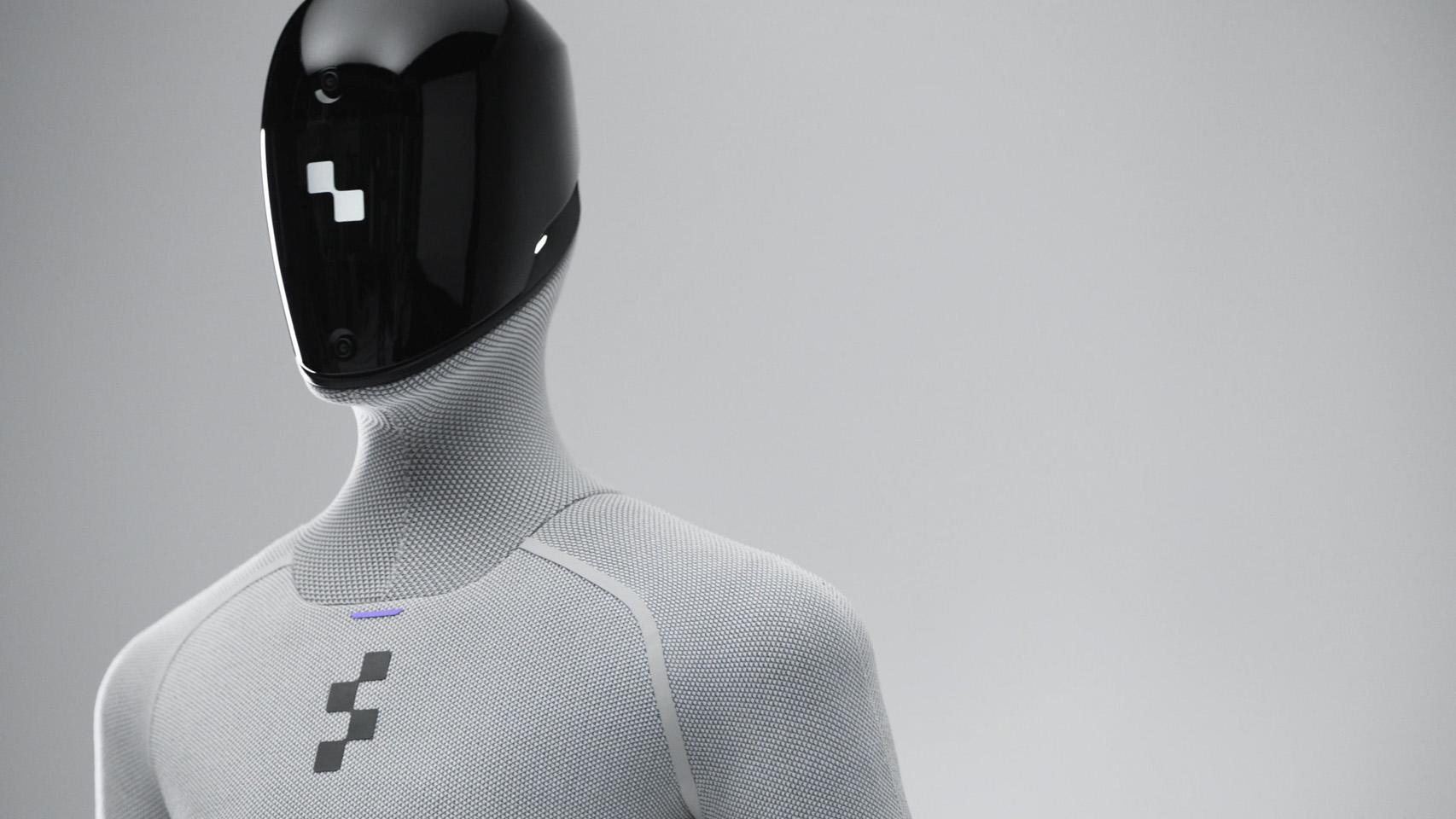
If you're wondering exactly what Figure 03 is , it's the latest humanoid from Figure AI, designed to live alongside people, learn from them, and handle real-world tasks at home and at work. Amidst a wave of advancements, where robots are already demonstrating feats ranging from practicing martial arts to running marathons or grocery shopping, this model arrives with a clear promise: to combine an AI brain with a body optimized for everyday environments, while keeping industry in mind.
The project isn't starting from scratch: Figure has been refining its proposal for some time following the previous deployment of its Figure 02 platforms in factories like BMW , and now it's doubling down with a design ready for large-scale production. The ambition is enormous: a versatile humanoid, capable of learning directly from human observation and performing tasks autonomously, supported by its own AI called Helix and by lighter, softer-to-the-touch, and safer hardware for home use.
What is Figure 03 and why is everyone talking about it?
Figure 03 is the third generation of humanoid robots from the Californian company Figure AI, and its biggest leap forward goes beyond mechanical muscle: the key lies in Helix, a Vision-Language-Action (VLA) AI model capable of reasoning about what it sees, interpreting voice commands, and translating that understanding into useful movements in real time. It doesn't come pre-programmed with rigid lists of instructions, but can learn new skills by observing people, reducing preparation time for complex tasks.
The company itself clearly defines its objective: a "truly versatile" robot, ready to perform tasks similar to those we humans do and, above all, capable of learning directly from human experience . For this reason, both visual and tactile perception have been enhanced, and the manual control system has been completely redesigned. All of this culminates in a humanoid robot designed to navigate narrow corridors, manipulate a variety of objects, and operate safely among furniture, pets, or children.
In this context, it's no surprise that Figure 03 has garnered headlines: TIME magazine has recognized it as the best invention of 2025 for its potential to transform daily life. This is further bolstered by top-tier financial backing (from companies like Nvidia, Microsoft, OpenAI, and Jeff Bezos) and a multi-billion dollar valuation that places Figure AI among the most valuable startups in the sector, with a valuation of $39.000 billion in its latest public offering.
To give you some context, the O03 competes in the elite of humanoid robots, alongside contenders like Tesla's Optimus Prime or the Unitree G1 . In practice, it shares with them the goal of becoming a general-purpose robot , but its approach is particularly domestic: soft materials, textile coverings, fine manipulation of fragile objects, and an autonomy that allows it to perform several tasks seamlessly.
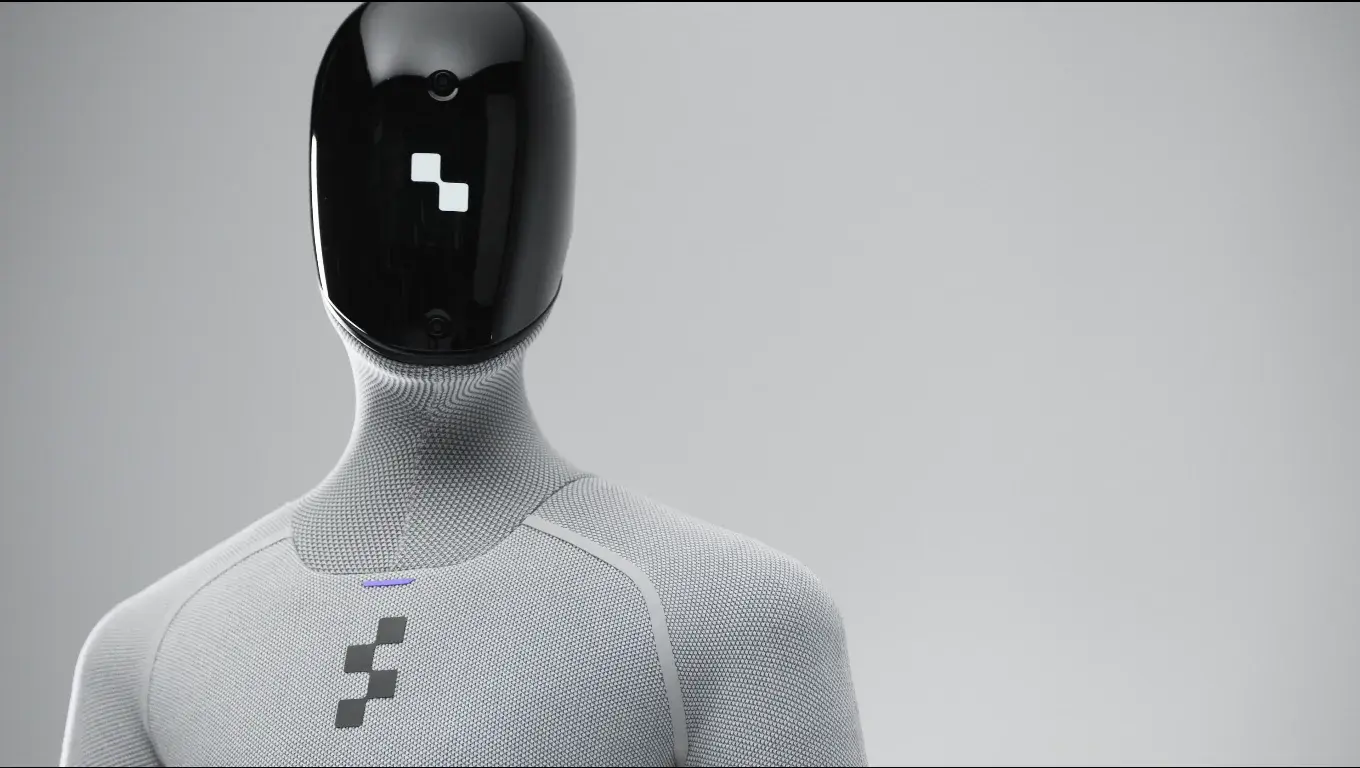
Design thought to live at home
The exterior of the Figure 03 has been redesigned to make interaction at home natural and safe: it uses multi-density foam and soft textile covers to minimize pressure points and eliminate sharp edges. These "soft" pieces not only cushion accidental bumps; they are also washable and removable without tools, making daily maintenance easy.
This softer approach has another important effect: the robot is lighter. According to Figure, the mass has been reduced by at least 9% compared to the previous generation , and the volume has been compacted, allowing it to maneuver more easily in small rooms. The stated weight is around 61 kg, compared to 70 kg for the previous model, which, combined with its speed of up to 1,2 m/s, helps it move smoothly through hallways, kitchens, and laundry rooms.
Furthermore, the 03 can be customized. The brand has provided options for interchangeable covers and protective cases , including cut-resistant materials for more demanding applications. This modular design opens the door to aesthetic (fleet uniforms, for example) and functional customizations without altering the internal hardware.
Voice interaction has also been significantly improved. A larger speaker with four times the power has been integrated , along with a relocated microphone for enhanced clarity and robustness in voice recognition. The real-time voice-to-voice conversion system sounds more natural, making interaction with the robot less robotic and more like a conversation.
Completing the domestic section is a key detail: the power system. Figure 03 supports wireless inductive charging thanks to coils in the soles; it can automatically dock itself to a charging point when needed and resume work once the battery is recharged. This automatic cycle reduces wear and tear and eliminates unsightly cables in living rooms or kitchens.
Helix: the brain that unites vision, language and action
To train this behavior, Figure AI engineers used virtual reality headset sessions that recorded human movements , generating baseline data that Helix could use to learn new tasks. The stated goal is to minimize demonstration time: with just a few hours of video, the system should be able to reproduce and generalize to variations of the same task.
It's important to note that Helix doesn't live in an ivory tower: its architecture is intimately connected to the O03's hardware. From the highly sensitive touch sensors to the state-of-the-art vision system, the entire "body" is designed to give the AI a denser and more stable perception of its surroundings, essential for reliability in real homes.
Thanks to this combination, Figure 03 doesn't just execute predefined sequences; it can identify when a grip is secure or when an object is about to slip, readjusting force and posture in milliseconds. In practical terms, this allows for handling cups, plates, or deformable bags with a higher success rate in crowded and changing environments.
Vision and manipulation: palm cameras and high-fidelity touch
The visual redesign is one of the most striking improvements. The system architecture doubles the frame rate , reduces latency to a quarter, and expands the field of view by 60% per camera compared to the previous model. This strengthens high-frequency visuomotor control, key for precise movements during object manipulation and navigation in complex spaces.
A new feature is that each hand integrates a camera in the palm . This "second look" provides redundant visual feedback when the head cannot "see" what is happening, for example, when placing the hand in the dishwasher to load a dish. The result is continuous and stable grip control, even with partial occlusion of the main cameras.
In parallel, hands have evolved in terms of ergonomics and sensors. The fingertips increase the contact surface , resulting in a more stable grip on objects of irregular shapes and sizes. Each finger incorporates a proprietary touch sensor, designed for high fidelity and durability, capable of detecting forces as subtle as 3 grams of pressure (yes, enough to feel the weight of a paperclip).
The integration of vision and touch is what allows Helix to "feel" the difference between a firm grip and the beginning of a slippage. This timely distinction prevents falls, protects fragile parts, and enables maneuvers such as opening cabinets, fitting lids, or handling bags without tearing them—something historically difficult for general-purpose robots.
Performance, autonomy and energy security
In terms of work pace, Figure 03 combines speed and precision. Its actuators can operate at speeds up to twice as fast as those of the previous generation, with improved torque density. This reduces the time spent on pick-and-place tasks and allows the humanoid to react nimbly to changes in the environment without sacrificing accuracy.
The battery is integrated into the torso and designed with multiple layers of protection. Figure has disclosed a battery pack with capacities up to 2,3 kWh , enough to provide approximately five hours of use at full load, and has highlighted its compliance with standards such as UN38.3 for transport and safety. This approach prioritizes abuse tolerance and fault mitigation, essential for a robot that will work in close proximity to people.
The charging process is particularly convenient at home: the robot docks with a 2 kW inductive charging base using coils in its soles, eliminating dangling cables and manual connections. When it needs power, it pauses its task and charges; once it reaches the set threshold, it resumes its work. This ensures almost uninterrupted operation throughout the day.
In terms of movement, the 03 travels at speeds of up to 1,2 m/s, enough to quickly cover large rooms and hallways without compromising safety. The balance between speed, stability, and awareness helps it navigate intelligently , avoiding obstacles in crowded environments such as a kitchen during a family meal.
High-speed connectivity and learning fleets
Figure 03 is designed to work in connected fleets. It integrates high-bandwidth data download options, including mmWave 5G with peak speeds of up to 10 Gbps . This allows terabytes of information to be transferred between robots and the platform in a matter of minutes, useful for synchronizing learned behavior, updating models, or consolidating task logs.
The practical result is that if a fleet of humanoids serves different households or work lines, their collective knowledge can be consolidated quickly. Helix can benefit from aggregated data to improve behavior and reduce errors, accelerating the system's learning curve without intensive manual intervention.
Real-life applications: from dishwashers to folding clothes
One of the most interesting aspects is its repertoire of household tasks. In recent demonstrations, Figure 03 has loaded the dishwasher, done the washing machine and dryer, and folded clothes . To date, there is still room for improvement in finer tasks such as making T-shirts perfectly wrinkle-free, and it hasn't been seen hanging laundry or ironing; however, the progress in just a few cycles is significant and demonstrates Helix's potential to learn with practice.
Beyond laundry, the humanoid has demonstrated agility in tidying living rooms, carrying dirty dishes, and organizing everyday objects. On the industrial front, improvements in actuators and hands allow for the manipulation of small metal parts, bags, and fragile objects with greater accuracy—crucial in logistics, warehouses, and assembly lines where variability is commonplace.
This dual approach reinforces Figure's thesis: the same robot that helps you in the kitchen can wear a uniform and move into a commercial environment to sort inventory. The key lies in the generalist capabilities supported by Helix and in a hardware design built to withstand daily wear and tear.
Large-scale production: fewer parts, more robots
The Figure 03 marks a milestone for the company not only because of its AI, but also because it is Figure's first humanoid designed "from scratch" for mass production. The mechanical and electrical engineering teams have reduced the number of parts, assembly steps, and non-essential components , prioritizing processes using tools such as die casting, injection molding, and stamping.
This redesign involves a significant initial investment in tooling, but the benefits are clear: each Figure 03 unit costs much less to manufacture , and profitability improves as volume increases. To sustain this pace, the company has spent a year building a global supply chain with partners capable of maintaining a steady flow of parts and materials.
The company's new factory in California, known as BotQ, is already operational with an initial capacity of about 12.000 units per year . The public goal is ambitious: to reach 100.000 humanoids in four years, with an accelerated production program that aims to manufacture thousands or even millions of subcomponent parts as the processes mature.
This scaling strategy is not trivial in humanoid robotics. It involves abandoning the laboratory prototyping approach and embracing a product mindset with supply chain, quality control, and ease of assembly as priorities. If successful, it will lower barriers to entry (including the final price) and bring humanoids closer to real homes and businesses.
Comparison in context: Optimus, Unitree G1 and the new O03
The market is saturated with promises, and it's helpful to compare the Figure 03 to other contenders. Like Tesla's Optimus Prime or the Unitree G1, this humanoid robot focuses on AI-based autonomy; however, its emphasis on soft materials, fine manipulation via palm-mounted cameras, and an observational learning ecosystem make it a particularly comfortable candidate for living at home.
In terms of pure physical capabilities, it shares the goal of moving with ease, lifting and carrying objects, and performing long sequences of tasks without fatigue. Where the 03 aims to differentiate itself is in the combination of a home-friendly design with a production platform conceived from the ground up for scalability—a key element for the humanoid to move from the prototype stage to the living room.
Project status, pricing, and roadmap
Let's be clear: Figure 03 isn't yet ready for mass deployment in homes. The company acknowledges that its immediate focus is on commercial pilot programs with select partners , while continuing to improve Helix and refine the hardware; its roadmap aims for the robot to be capable of performing most household chores without human supervision by 2026, although that goal will depend on technical and production advancements.
Regarding the price, the brand has not provided official figures. However, it has emphasized that, thanks to the design for mass production and the reduction in parts, the unit cost is already significantly lower than in previous generations and will continue to improve with increased volume. This will be a key factor in its adoption, both in homes and businesses.
Audio, interaction and user experience
Natural communication matters. The audio system has been upgraded with a more powerful speaker and a repositioned microphone to avoid interference and better capture the user's voice. Real-time voice-to-voice conversion helps prevent the interaction from sounding robotic, and tests show a clear improvement when giving instructions while the robot performs movements that could generate background noise.
Taken together, these improvements make it easier for users to ask the Figure 03 to organize the kitchen, tidy the living room, or load the dishwasher without constantly fiddling with apps. The goal is to make the experience feel more like delegating a task than scheduling it.
Safety, materials and maintenance
The choice of textile covers and multi-density foam is not just aesthetic: it aims to mitigate impacts and make contact with people, pets, or furniture less harsh. In a real home, where accidents happen, a body with "soft" surfaces reduces risks and inspires confidence.
On the energy front, the integrated battery in the torso, with its protective layers and applicable certifications, points to robustness. Inductive charging minimizes mechanical wear, and the fact that the soft parts are washable and removable without tools facilitates regular cleaning. For operating for many hours at a time, these details are just as important as raw power.
Connectivity, data and continuous learning
High-performance wireless download support (with mmWave 5G up to 10 Gbps) has practical implications: rapid Helix updates, synchronization of fleet experiences, and the ability to prepare new, data-driven behaviors. If a robot learns to handle a certain type of packaging today, that skill can be rolled out to all robots in a fleet tomorrow with a simple update.
This "shared intelligence" approach is key to scaling operations. Service robotics doesn't progress solely with better motors or sensors; it needs data cycles that allow models to be refined with real-world examples at high speed and safely.
Recognitions, alliances and context of the sector
TIME magazine's media endorsement of Figure 03 as the best invention is a sign that the industry believes the utilitarian humanoid is closer than ever. This is further bolstered by a constellation of strategic investors (Nvidia, Microsoft, OpenAI, Jeff Bezos) who are supporting Figure AI's roadmap with capital and technology at scale . The alliance with BMW is also significant, as Figure 02 has already been tested on manipulation tasks in industrial environments.
Naturally, the race to create the first truly useful humanoid also faces skeptical voices within the robotics community, who point out how difficult it is to move from the demo stage to everyday use. But the combination of an AI designed to learn from humans, hardware engineered for coexistence , and a mass production plan positions the 03 as a serious contender to break through that barrier and understand its impact on society.
The question "what is Figure 03?" is best answered by seeing it in action: a humanoid robot that picks up, cleans, charges appliances, and folds laundry with increasing ease; that understands natural commands; that recharges itself; that shares what it learns with its "colleagues"; and that, finally, has been designed for mass production . There's still work to be done to refine it and get it into thousands of homes, but the bulk of the groundwork is already in place, from Helix to the supply chain and the assembly plant.
