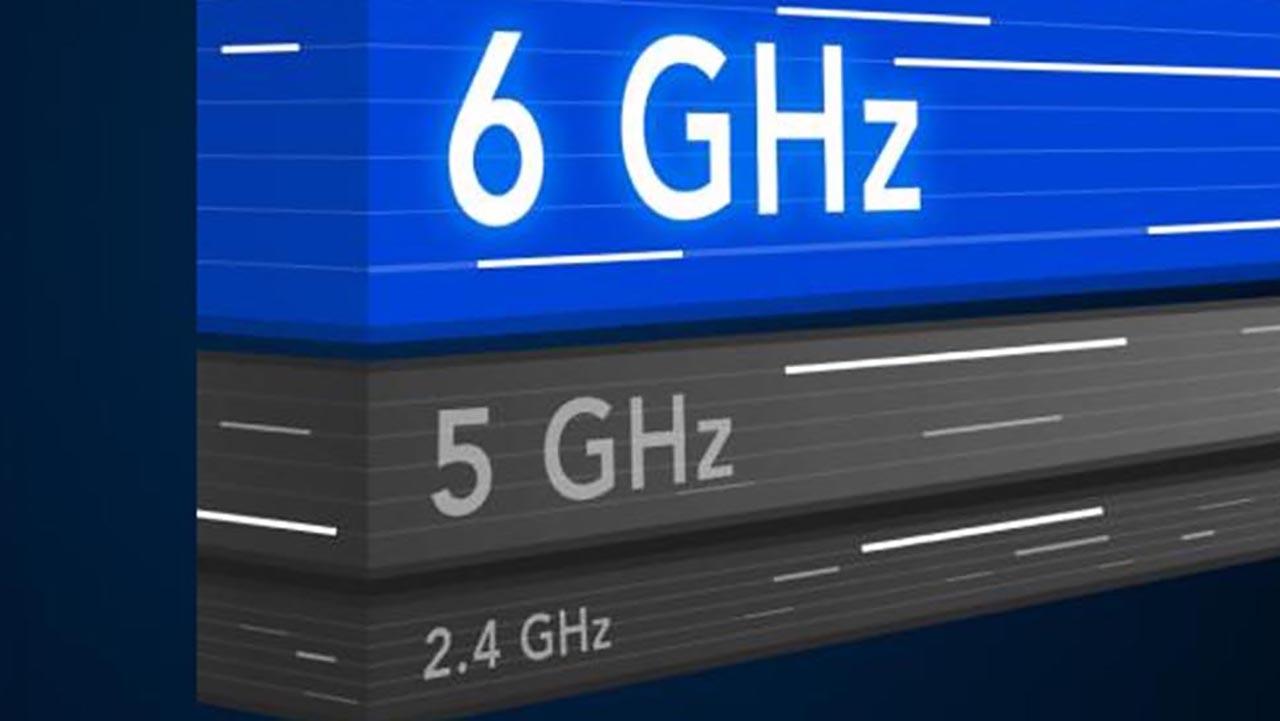
- The 6 GHz band offers higher speeds and less congestion than the 5 GHz band, although it has a shorter range.
- Wi-Fi 6 and 6E optimize the connection using technologies such as OFDMA and MU-MIMO to manage more devices simultaneously.
- The choice between frequencies depends on the use: 2,4 GHz for coverage, 5 GHz for balance, and 6 GHz for maximum performance.
You've probably experienced this: when setting up your new router, you're faced with a bunch of acronyms and frequencies that seem straight out of a science fiction movie. The truth is, the world of wireless connections has evolved tremendously, allowing us to enjoy 4K streaming , play online games without lag, and have our homes full of smart gadgets without the network crashing.
To understand where we are, we need to look at the journey from basic standards to the powerful Wi-Fi 7. The key to all this lies in the frequency bands, which are essentially the "highways" your data travels on; some are very wide and fast, but short, while others reach the end of the hallway even if they are slower. Let's take a closer look at what's up with 6 GHz and how it compares to the already familiar 5 GHz.

The frequency duel: 2,4 GHz, 5 GHz and 6 GHz
If we want to talk about performance, the first thing to understand is that not all waves are created equal. The 2,4 GHz band is the oldest of the bunch; it penetrates walls and floors best, making it ideal for covering the furthest corners of the house, although its speed is quite limited and it's often congested by microwaves or baby monitors.
Then we have 5 GHz, which is the most common standard today. This band is a very decent balance because it offers much higher speeds and has more available channels, meaning there's less data congestion than on the 2,4 GHz band. However, as soon as you get behind a thick wall, the signal starts to weaken.

And this is where the 6 GHz band comes in, introduced with Wi-Fi 6E and enhanced in Wi-Fi 7. This band is incredibly fast, allowing for super-fast data transfers and minimal latency. The problem is that, due to the physics of the waves, it has the lowest penetration capacity; that is, if you move even slightly away from the router, the speed can drop drastically.
Technical differences between Wi-Fi 5 and Wi-Fi 6

For those who don't want to overcomplicate things, the jump from Wi-Fi 5 (802.11ac) to Wi-Fi 6 (802.11ax) isn't just a change of number. The Wi-Fi 6 router has arrived to solve congestion in environments with dozens of connected devices. While Wi-Fi 5 focused more on peak speed, Wi-Fi 6 focuses on the overall efficiency of the network.

- Speed: Wi-Fi 6 can theoretically reach 9,6 Gbps, surpassing the 3,5 Gbps of Wi-Fi 5.
- Traffic management: Thanks to technologies like OFDMA and MU-MIMO, the router can talk to multiple devices at once without making others wait their turn.
- Battery saving: The Target Wake Time (TWT) system allows devices to "sleep" and only wake up when it's time to transmit data, which extends the useful life from your mobile phone's battery or IoT sensors.
- Safety: WPA3 encryption is implemented, which is much more robust against attacks than the older WPA2.
It's crucial to know that to take advantage of this, both the router and the device (like an iPhone 16 or a modern laptop) must be compatible with the AX standard . If you connect an older device to a Wi-Fi 6 router, it will work, but you won't notice any of these magical improvements.
The immediate future: Wi-Fi 7 and coexistence with 5G
If you thought 6 GHz was the end of the road, Wi-Fi 7 (802.11be) is here to change everything. This new generation raises the bar to 46 Gbps and introduces a gem called MLO (Multi-Link Operation), which allows you to combine several frequency bands into a single connection for lightning-fast and ultra-stable internet.
Sometimes the question arises whether 5G will eventually replace Wi-Fi. The short answer is no, they complement each other. 5G reigns supreme outdoors, in smart cities, and in mobile environments, while Wi-Fi 6 and 7 are the undisputed masters indoors , as they are easier to deploy and manage in offices and homes.

In industrial settings, for example, both are used. 5G is great for autonomous cars or drones, but for connecting thousands of IoT sensors within a factory, the flexibility and low cost of Wi-Fi 6 remain the smarter and more cost-effective option.
Having a modern device that supports 6 GHz is a safe bet to avoid becoming obsolete. While it's true the signal doesn't reach as far as 5 GHz, the lack of interference and the ability to handle virtual reality or cloud gaming smoothly make it worthwhile, provided you're close to the access point or using a mesh system to distribute the signal throughout your home.
