- Contactless proximity cards use RFID technology at low (125 kHz) and high frequency (13,56 MHz), with read-only or read/write chips.
- Families such as MIFARE, MIFARE DESfire and the HID ranges enable secure applications in access control, transportation and cashless payments.
- Security is based on unique identifiers, key-protected memory, and encryption, facilitating the addition and removal of cards from the systems.
- Online stores use necessary and personalization cookies to manage sessions, shopping carts and advertising, always subject to the user's consent.
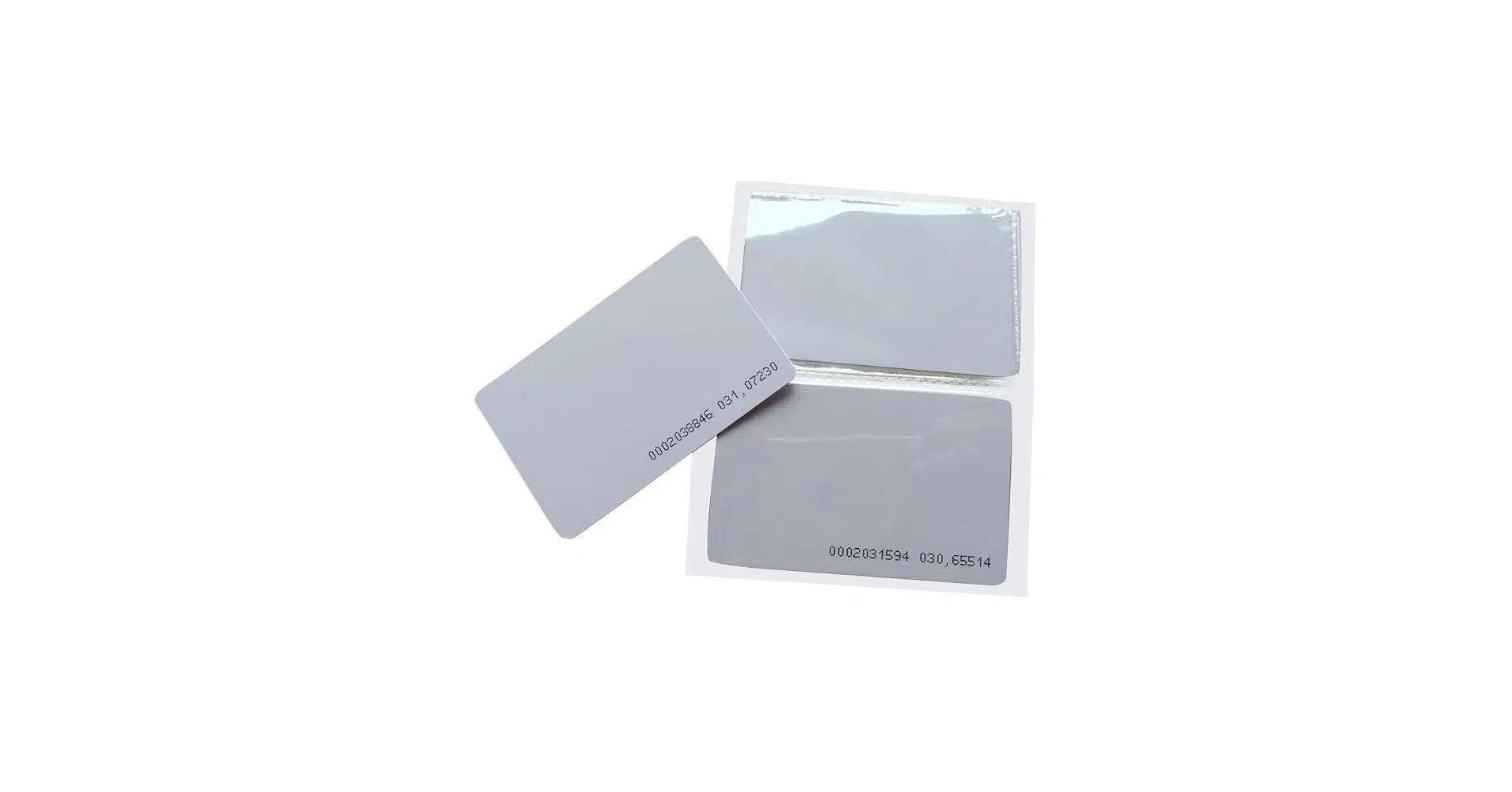
Contactless proximity cards have become a standard in access control, identification, and payments, both in businesses and public settings. They operate using radio frequency technologies (RFID and related technologies) and allow reading without inserting the card into a reader, offering convenience, speed, and a longer lifespan compared to older solutions like magnetic stripes.
In addition to their technical advantages, these cards are integrated into advanced security systems , electronic wallets , public transportation, employee time and attendance systems, and countless other applications. Throughout this article, we will review in detail the different types of proximity cards available, their frequencies, the most common chips, specific ranges such as HID and MIFARE, and, of course, practical aspects such as compatibility with access controls, card issuance and deletion, and the role of cookies and privacy in the online stores where they are purchased.
What is a contactless proximity card and how does it work?
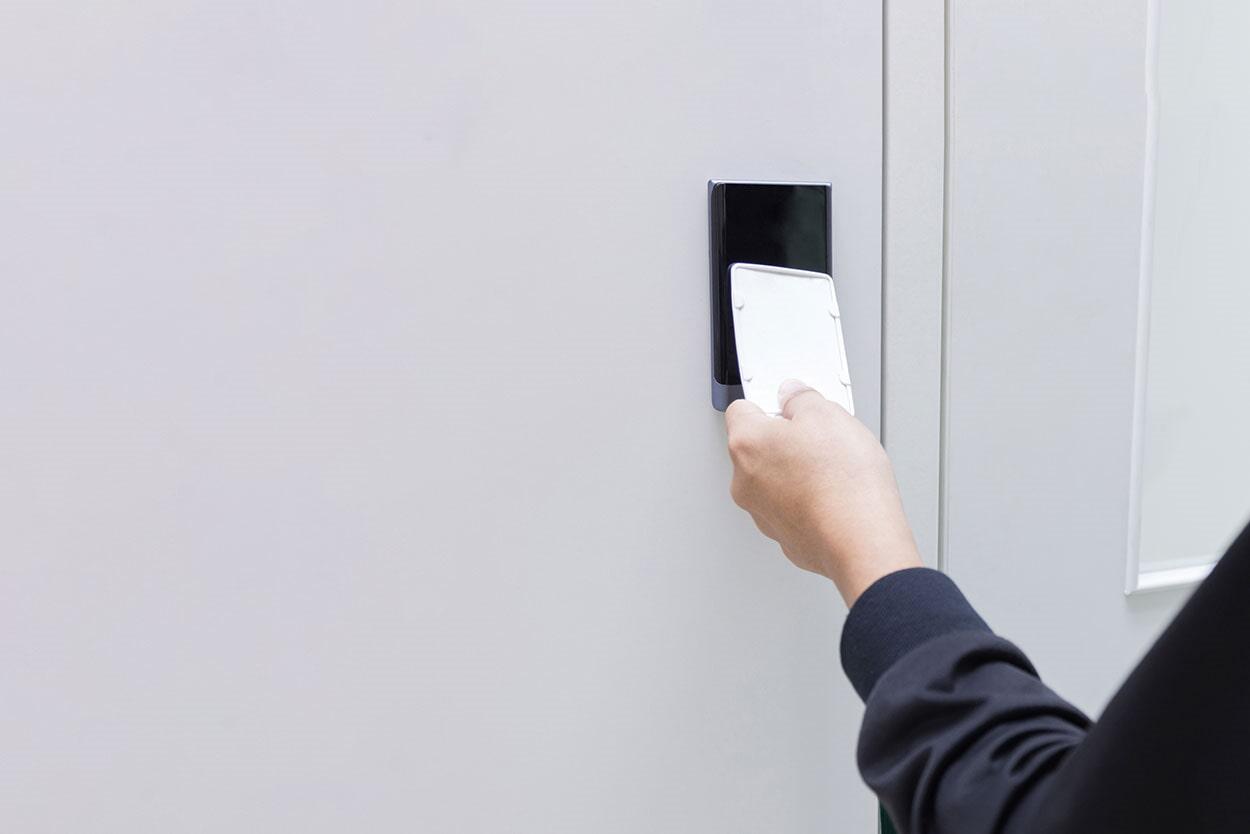
A contactless proximity card is a smart card that incorporates a chip and an antenna, designed to exchange information with a reader via radio frequency, without the need for physical contact. Simply bringing it within a few centimeters (or even slightly more, depending on the system) is enough for the reader to detect it and perform the corresponding operation: opening a door, registering entry, validating a trip, etc.
The system operates using RFID (Radio Frequency Identification) technology or compatible variants. When the card enters the reader's electromagnetic field, the antenna is powered by that field, and the chip responds with its stored information. In many cases, this is a unique identifier, although more advanced cards can store multiple data points, separate memory sectors, and even monetary values for cashless payments.
Unlike older magnetic stripe cards, proximity cards don't suffer wear and tear from friction , don't require insertion, and offer a virtually indefinite lifespan with minimal care. Furthermore, their security is superior, as their information can be encrypted, segmented by sections, and protected by access keys.
Types of proximity cards according to frequency
One of the most important criteria for classifying contactless proximity cards is the frequency at which they operate. The market primarily distinguishes two main families: low-frequency cards (125 kHz) and high-frequency cards (13,56 MHz). Each has its own uses, capabilities, and security levels.
The choice between one or the other depends on needs such as the required level of security , compatibility with existing systems, read range, or the amount of information to be stored. The characteristics of each type and their most common chips are detailed below.
Low frequency proximity cards – 125 kHz
Low-frequency cards operate at 125 kHz and are primarily used in simple access control or identification systems where extensive data storage is not required. They are very popular due to their reliability, low cost, and fast read speed.
Depending on the reader and the environment, the range of these cards can vary from about 2 centimeters to approximately 1 meter . They typically offer modest memory capacities, around 1 KB or even less in some read-only chips, sufficient to manage a unique identifier or basic user data through the control system.
Within this frequency range, there are various chips , with functionalities ranging from read-only to read/write solutions with password-protected memory. Let's look at the most representative and common ones on the market.
TK4100 read-only chip
The TK4100 chip is a classic in low-frequency proximity cards. It is designed for environments where only a unique identifier per card is required, without the need to rewrite the information.
This chip has 64 bits of memory dedicated to storing a unique ID that is not repeated between cards. It is a solution widely used in basic access control, parking, simple time and attendance systems, or systems where the central server associates this identifier with the user's data, but the card itself only acts as an identification "key."
Sokimat Q5 Read/Write Chip
When more flexibility is needed at low frequencies, chips like the Sokimat Q5 come into play , capable of reading and writing and with protected memory. This chip is designed for applications where additional information needs to be stored directly on the card.
The Sokimat Q5 can store up to 264 bits of password-protected memory, allowing specific data to be written to the chip and updated as needed. It is ideal for environments where the card is used not only as an identifier but also to store user-related parameters, permissions, or configurations.
EM4200 and EM4102 chips (read only)
The EM4200 and EM4102 chips are other widely used variants in 125 kHz proximity cards. Like the TK4100, both are designed for read-only scenarios where a unique identifier is stored per card.
With this type of card, security relies on each card having a unique number , associated with the user in the control system. If it is lost or no longer used, simply deactivating it completely invalidates the identifier. It's a simple yet effective way to manage card activation and deactivation without needing to change readers or reconfigure the entire system.
Temic E5551A chip (read and write)
Another interesting low-frequency chip is the Temic E5551A , which combines a 125 kHz frequency with read and write capabilities. It also features 264 bits of memory , allowing data to be stored and updated directly on the card.
This chip is used in applications where greater control over user data is required or where different permissions and parameters can be managed directly from the proximity card, always maintaining the simplicity and range typical of low frequency.
High-frequency proximity cards – 13,56 MHz
High-frequency (HF) cards operate at 13,56 MHz and have become the foundation of many modern access control, public transportation, and electronic wallet solutions. They are notable for their greater storage capacity, communication speed, and advanced security features compared to 125 kHz cards.
Within this group, we find widespread technologies such as MIFARE, MIFARE DESfire , and compatible chips like I-Code SL2 or Fudan. They typically support anti-collision mechanisms to read multiple cards in the same read field and divide memory into sectors and blocks with different keys and permissions.
MIFARE proximity card
The MIFARE card , originally developed by NXP, is probably one of the best-known high-frequency payment cards. It is used extensively in urban transport, corporate access control, employee cards, internal payment systems, and membership cards.
A key feature of MIFARE is that it offers 1 KB of memory structured into 16 sectors , each with four 16-byte blocks. Of these blocks, three can contain user information, while the fourth is used to store keys and permissions. It supports read and write operations, as well as anti-collision mechanisms and a level of security suitable for everyday use.
The memory is organized into sectors protected by two access keys, designated “A” and “B” . These keys are stored in the fourth block of each sector, along with the control bits that define which operations are possible on the other three blocks. Common permissions include read, write, decrement, and increment, which are very useful in wallet or balance management applications.
When the MIFARE card is brought near the reader, an authentication process begins , establishing a secure channel. After validating the relevant keys, the reader can read or modify the data within the permitted sectors. Thanks to this structure, a single MIFARE card can simultaneously serve for transportation, building access, and payment at vending machines, for example.
MIFARE DESfire card
The MIFARE DESfire card , also from NXP Semiconductors, is geared towards environments that require a significantly higher level of security and greater application versatility. Its name itself refers to the use of advanced encryption algorithms (such as DES, 3DES, or AES, depending on the version) to protect stored information.
These cards can handle multiple secure applications on a single device, each with its own access keys, files, and data structures. They are widely used in integrated transportation systems, university ID cards, advanced corporate identification, and high-security payment solutions.
In addition to enhanced security, the DESfire range typically offers greater storage capacity and complex configuration options, making it ideal for projects where different institutions or services share the same card, but each manages its own portion of the memory in an isolated and secure manner.
Other high-frequency cards: I-Code SL2 and Fudan
Within the 13,56 MHz ecosystem there are also other card families , such as I-Code SL2 or Fudan chips, which are used in various applications where reading at a certain distance, anti-collision and data storage are required, but perhaps not all the complexity of MIFARE or DESfire is necessary.
These cards can be very useful in inventories, libraries, traceability , or identification systems where fast and simultaneous reading of multiple media is critical. The final choice always depends on the project requirements and compatibility with existing readers.
HID cards: professional solutions for multiple applications
Beyond frequency and chip, in the market we find specialized brands such as HID , well known in the professional field for offering high security solutions and broad compatibility for physical and logical access control.
HID cards encompass a diverse range, from low-frequency proximity cards to high-security smart cards that can be integrated with computer access systems, electronic wallets, cashless payment systems, and transportation. Each range is geared towards a specific type of implementation, but all share the philosophy of providing robust and manageable identification solutions at scale.
Among HID's most common product lines we can find:
- HID Crescendo Cards: focused on secure logical access, strong authentication in computers and information systems.
- HID Hitag cardsRFID solutions that combine flexibility and reasonable levels of security for a variety of applications.
- HID iCLASS cards e iCLASS SESmart card technologies with advanced encryption features, ideal for corporate and government environments.
- HID Legic Cards e Indala: lines that cover different migration, compatibility and security needs.
- HID UltraCardHigh-quality cards designed for printing and personalization, widely used as physical media in identification systems.
- HID Proximity: low frequency cards for ISOProx II, DuoProx II and ProxCard II systems, widely used in traditional access control installations.
- HID FlexSmart MIFARE DESfire e HID iCLASS SEOS: smart cards that combine HID technology with powerful standards such as DESfire, offering a high level of protection for very demanding environments.
Thanks to this variety, HID cards are ideal for comprehensive access control projects , where the goal is to unify physical access to buildings, login to equipment, internal services, and payments into a single credential.
Compatibility and common uses of proximity cards
One of the most frequently asked questions when buying contactless proximity cards is whether they will be compatible with the existing access control system . In practice, most terminals clearly specify the technology they use: for example, RFID EM 125 kHz, MIFARE 13,56 MHz, HID Proximity, etc.
If you have an EM 125 kHz RFID access control system , you will need cards that use that specific standard. Similarly, if your readers are designed for MIFARE Classic or MIFARE DESfire, you will need to choose cards compatible with those technologies to ensure proper operation.
In time and attendance or attendance control applications, provided the terminal is compatible with the card technology (e.g., EM 125 kHz), the same card can be used both for accessing the facility and for recording working hours. This simplifies management, as the user only needs to carry one credential.
Another important advantage is that, by having a unique, uncopyable code associated with each card, the control system can deactivate a card that has been lost or is no longer associated with an employee, rendering it completely unusable without the need to change locks or additional hardware.
Common sales formats: boxes and packs of cards
In stores specializing in RFID and access control, it is common to find packs of pre-numbered proximity cards , designed for companies or facilities that need a considerable volume of credentials.
For example, boxes of 50 plain proximity cards can be sold , ready to be registered in the system and, if desired, customized by printing. There are also packs of 25 numbered cards that facilitate internal management of registrations and cancellations.
This sales format allows organizations to always have replacement cards available for new hires, replacements due to loss, or expansion of access areas. As generic cards, they are compatible with a wide variety of RFID readers and systems.
Cookies, advertising and privacy in online card stores
When buying contactless proximity cards through an online store, it's common to find cookie notices and privacy policies. These messages inform you that the site uses technologies such as cookies and other identifiers to improve your browsing experience, manage your shopping cart, and display targeted advertising.
Cookies can be classified into several types. On the one hand, there are necessary cookies , without which the website cannot function correctly: they allow the user to remain logged in, remember the contents of their shopping cart, manage the language, the selected currency, or the connection status. Without them, basic processes such as placing an order would be impossible.
On the other hand, there are cookies related to advertising and personalization . Some collect anonymous information about the ads displayed and browsing behavior, while others can link more personal data, provided the user has given their consent, allowing for better adaptation of advertising spaces and product recommendations.
Many websites use e-commerce platform-specific cookies, such as the PrestaShop-# cookie , which stores session information: cookie creation date, browsing language, currency, last visited product category, recently viewed products, cookie policy acceptance, customer identifier, first and last name, login status, encrypted password, email address associated with the account, and shopping cart data. Its duration can reach, for example, up to 480 hours, allowing users to maintain their session and preferences for several days.
It's also common to find cookies specifically for consent preferences , such as a cookie that stores whether optional cookies have been accepted or configured (for example, a cookie called cookiesplus that expires after one year). This allows the website to remember if the user has already interacted with the cookie banner and avoids displaying it repeatedly.
The legal basis for using these technologies is usually user consent . Websites inform users that by continuing to browse, they are considered to have accepted the cookie policy and provide links to learn more or configure preferences. Refusing or withdrawing consent may limit certain functionalities, such as remembering items in your shopping cart, keeping you logged in, or receiving personalized recommendations.
In addition, some online stores send marketing communications and newsletters related to their products, including RFID cards and access control systems. Upon subscribing, you are informed that your personal data will be used to send these communications, often electronically, and you are provided with contact channels (such as a data protection email address) to exercise rights such as access, rectification, erasure, or objection.
In certain cases, if the user has JavaScript or essential cookies disabled, the store may not function correctly , displaying warning messages and, in specific situations, indicating that the online service is temporarily unavailable for some products, inviting users to contact a specialist advisor by phone to place an order.
User experience, security and maintenance of the cards
From the end user's perspective, contactless proximity cards stand out for their convenience. There's no need to insert them into slots or worry about the wear and tear of a magnetic stripe: simply hold them near the reader and wait for validation, which typically takes fractions of a second.
In terms of security, the fact that each card has a unique, non-clonable identifier greatly reduces the risk of easy duplication. More advanced solutions, such as MIFARE DESfire or HID iCLASS SEOS, add robust encryption, mutual authentication, and complex memory structures, significantly increasing the level of protection against attacks.
For the company or entity managing the system, maintenance is relatively simple: it only requires adding and removing cards in the control software as users join or leave, or in case of loss. The physical infrastructure (readers, controllers) can remain unchanged for years, even if the cards are replaced or the printed designs are updated.
These cards are very durable, as they don't suffer the constant wear and tear of mechanical reading like older magnetic stripe cards. Barring impacts, extreme bending, or exposure to harsh conditions, they can function properly for many years, making them particularly cost-effective in the medium and long term.
Contactless proximity cards combine reliability, security and flexibility in an easy-to-use format, capable of adapting to environments as diverse as an office building, a university campus, a transport network or an industrial facility, and are supported by technological ecosystems (cookies, commerce platforms, newsletter services) that facilitate their acquisition and digital management.
