- Development of Instinct MI350 and MI400 accelerators to compete in data centers with higher memory bandwidth.
- Ryzen AI Max PRO launch with integrated NPUs to run complex language models locally.
- Bet on ROCm as an open-source alternative to NVIDIA's CUDA ecosystem dominance.
- Integration of EPYC Venice processors with up to 256 cores to optimize AI server infrastructure.
The race to dominate artificial intelligence has gone from a promise to an all-out hardware war. In this arena, AMD is accelerating its efforts to offer credible alternatives that allow businesses and end users to deploy AI models without skyrocketing costs or infrastructure becoming obsolete within days.
The goal is clear: to move from simple pilot projects to real, scalable production . To achieve this, the company is focusing not only on raw power but also on solving common headaches, such as energy management, data governance, and the ongoing struggle to avoid dependence on a single vendor in the market.

Instinct Accelerators: The Direct Challenge to NVIDIA
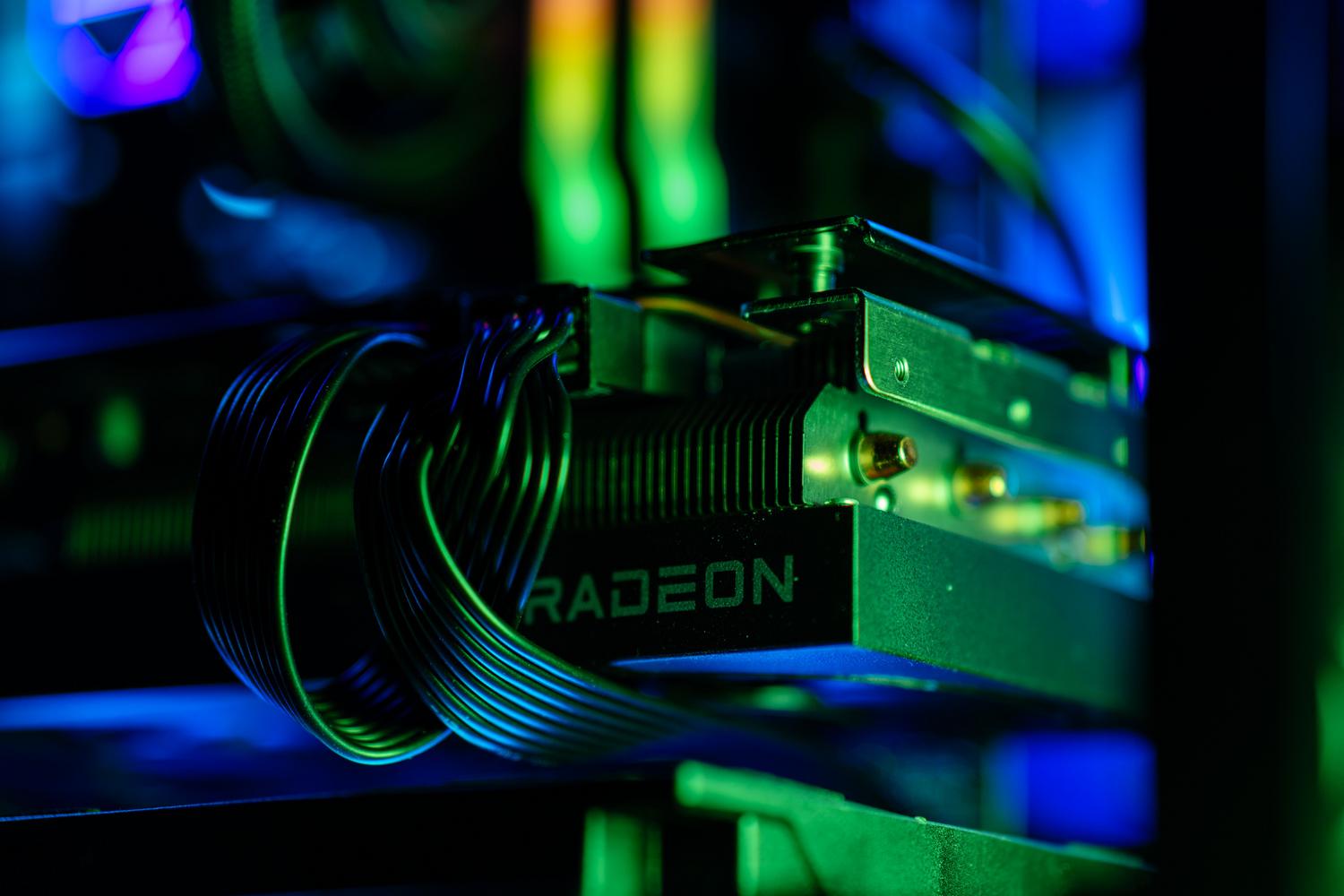
When it comes to data centers, conventional GPUs aren't enough; accelerators are essential. This is where the Instinct MI350 comes in , promising a massive leap forward, being up to 35 times faster in inference tasks than its predecessors. These beasts boast 288 GB of HBM3E memory, allowing them to handle massive workflows with astonishing ease.
But AMD isn't stopping there and already has its sights set on the Instinct MI400 for 2026. These chips are expected to reach 40 PFLOPS in FP4 accuracy and feature up to 432 GB of HBM4 memory. All of this will be integrated into the Helios racks, an architecture designed to compete head-to-head with NVIDIA solutions, offering a truly staggering bandwidth capacity .

In the long term, the roadmap includes the EPYC Verano and the Instinct MI500X, which could leverage TSMC's 1,6nm manufacturing node. The strategy is clear: outperform the competition in memory capacity and transfer speed, which is where the real advantage lies when training massive language models.
The software ecosystem and the CUDA wall
It's not all about powerful hardware. AMD's biggest weakness has historically been software. While NVIDIA dominates with CUDA, the standard everyone uses, AMD has opted for ROCm . Version 7 of this open-source platform aims to close the gap, even becoming more efficient than CUDA in specific scenarios like the DeepSeek R1 model.
Even so, the road ahead is challenging because many developers feel that AMD's software still has bugs that complicate training . The key to future success lies not in adding more cores, but in ensuring a smooth programming experience that isn't a headache for engineers.

AI on desktops and laptops: Ryzen AI and Radeon

For users without a basement data center, AMD has launched the Ryzen AI Max PRO processors . These chips integrate a dedicated NPU that reaches 50 TOPS, allowing tasks like Llama 3.1 70B to run locally and offline—something that seemed like science fiction in a compact device not long ago—making it easier to run AI models on your PC.
In terms of graphics, the Radeon RX 9000 Series, especially the RX 9070 with its 16 GB of VRAM, is an accessible entry point for those who want to do AI inference without spending a fortune. For the most demanding users, the Radeon AI PRO R9700 raises the bar to 32 GB, eliminating any bottlenecks in the device.

Server infrastructure: EPYC Venice

These GPUs rely on server processors. The upcoming EPYC Venice processors , based on Zen 6, promise variants with up to 256 cores. This 70% performance increase over the previous generation is vital to prevent the CPU from becoming a bottleneck for these powerful AI accelerators.
It's interesting to see how the market is starting to react. Figures like Sam Altman of OpenAI have already acknowledged that AMD solutions will be amazing components in their data centers. This shows that, even though NVIDIA has the largest market share, the industry is desperately seeking an alternative that is more efficient and, above all, cheaper to implement.
AMD's strategy combines disruptive hardware in memory and processing power with an aggressive effort to democratize AI software. By integrating dedicated AI engines from laptops to the most complex server racks, the company aims to make AI no longer an expensive luxury but an accessible and efficient tool for any type of professional or business.
