- Autonomous operations evolve automation into systems that observe, decide, and act in a closed loop with minimal human intervention.
- The path to autonomy involves maturity levels that integrate AI, edge, advanced control, and IT/OT collaboration across the enterprise.
- Real-world use cases in manufacturing, finance, healthcare, and logistics demonstrate remarkable improvements in productivity, safety, and sustainability.
- The responsible adoption of these technologies redefines human work and offers a strong competitive advantage to those who anticipate them.
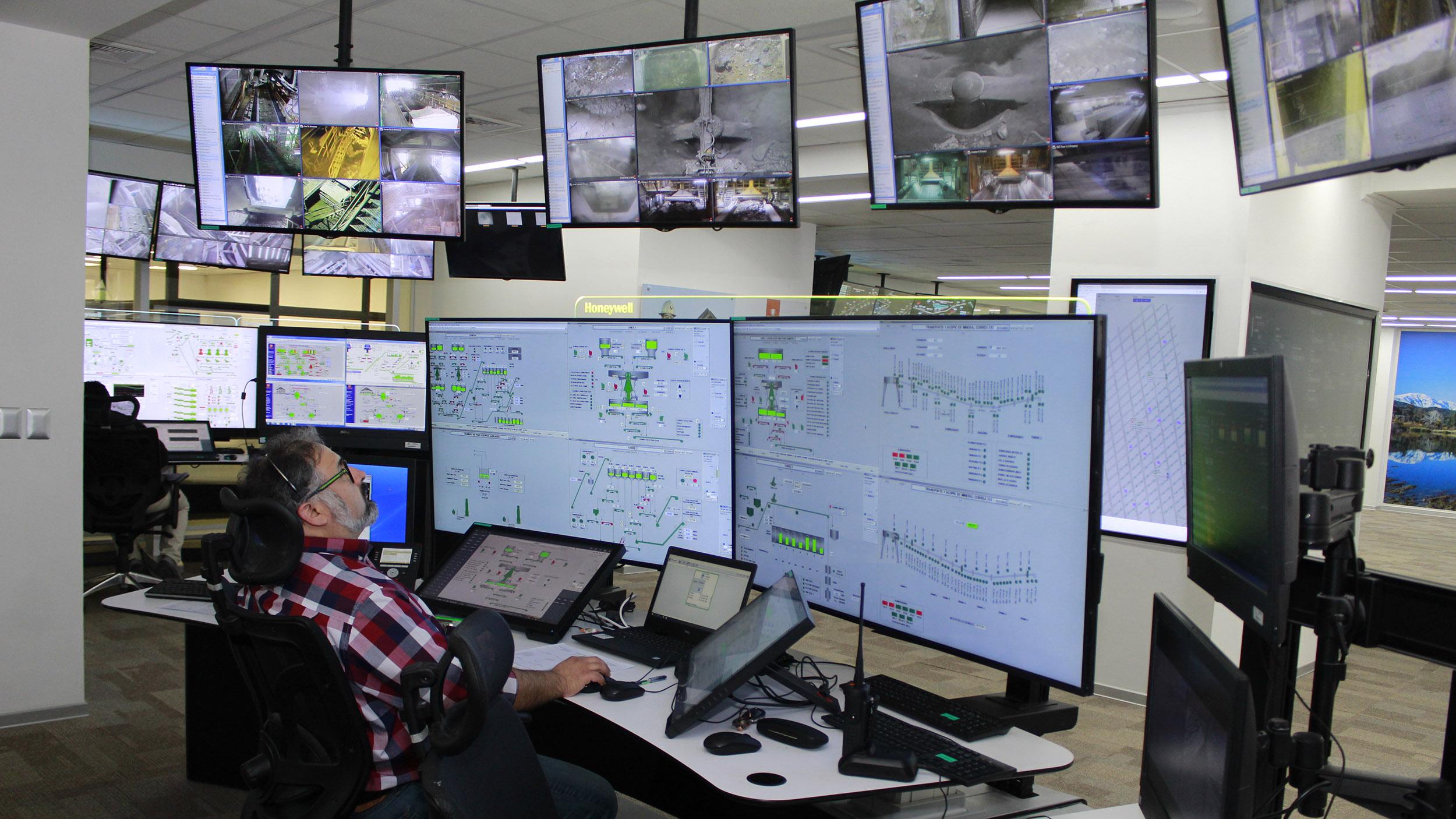
The industry is undergoing a paradigm shift , not just incremental improvement. After decades of traditional automation , we are entering a phase where factories, supply chains, and even services are becoming capable of observing, deciding, and acting on their own, with little to no direct human intervention. This new scenario revolves around what are known as autonomous operations in industry , which go far beyond simply placing robots on a production line.
This leap toward autonomy combines artificial intelligence, real-time data, edge computing and IoT , robotics, advanced sensors, and new organizational models. The goal is no longer just to automate repetitive tasks, but to build resilient, safe, and sustainable industrial environments where systems continuously learn, optimize resources, anticipate failures, and make closed-loop decisions. And, along the way, they redefine the role of people in operations.
From automation to industrial autonomy

For over forty years , process automation has been the driving force behind industrial transformation. From Industry 3.0 to Industry 4.0, the deployment of controllers, sensors, SCADA systems, PLCs , and supervisory software has enabled near-optimal operation, with greater safety, reliability, and efficiency . Increasingly powerful microprocessors and highly specialized applications have helped stabilize processes, reduce downtime, and dramatically increase productivity.
Industry 4.0 introduced massive digitization: IT/OT integration, advanced analytics, industrial IoT, digital twins, cloud, and edge computing. Factories began relying on predictive models and simulations to anticipate deviations, adjust parameters, and optimize the use of energy and raw materials. However, in many cases, they remained rule-based systems, heavily dependent on human oversight. Advanced analytics facilitated this leap toward more informed decision-making.
Industrial autonomy takes things a step further: systems capable of observing their environment, understanding what is happening, deciding, and acting without continuous human intervention. In other words, it's about moving from pre-programmed automated control to autonomous agents that learn from experience, adapt to the context, and intelligently close the control loop.
This transition isn't limited to manufacturing lines. It affects how products are designed, inventories are managed, logistics are organized, distribution networks are operated, maintenance is planned, and even pricing and service levels are determined. We're talking about autonomous businesses in the sense defined by Gartner: organizations partly governed and mostly operated by software agents that learn and deliver intelligent services.
Autonomy versus automation: what really changes
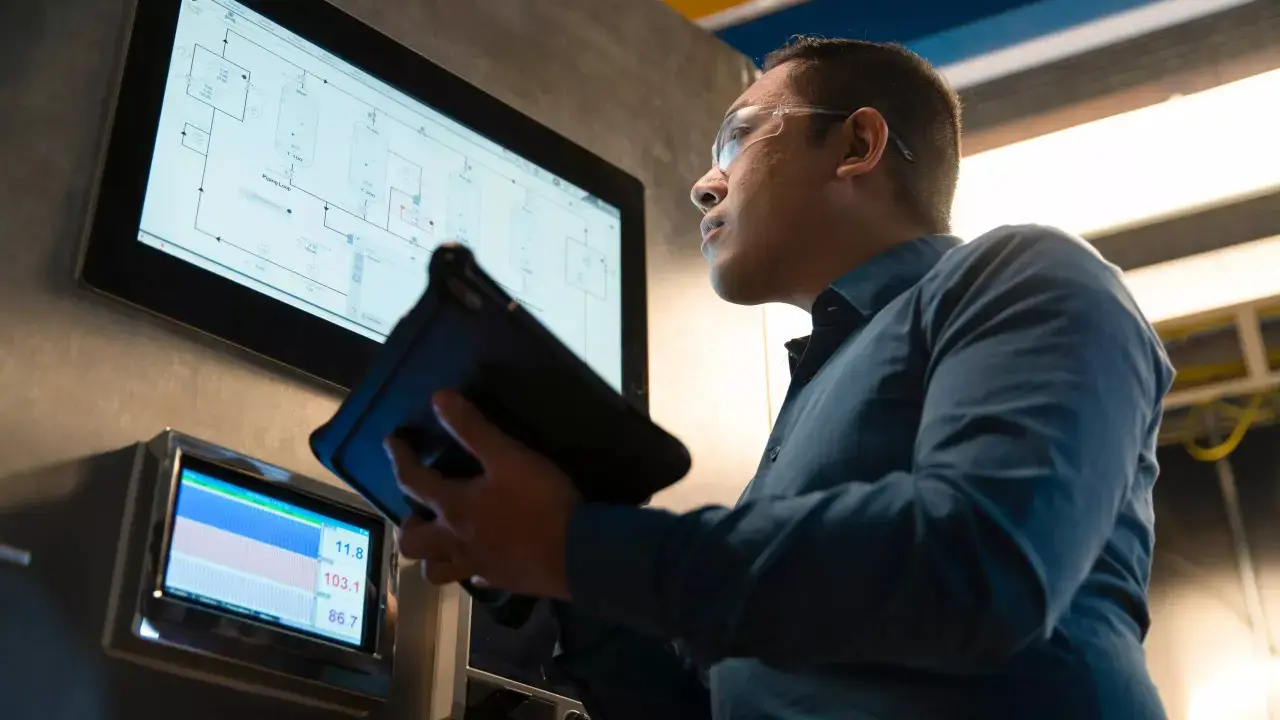
It's important to clearly distinguish between two concepts that are often confused: automation and autonomy . Although both aim for greater efficiency and productivity, they do so with radically different approaches.
In an automated system , the logic is predefined: the equipment executes sequences and rules programmed by engineers. It can be very precise and reliable for repetitive tasks (welding, painting, packaging, sorting on conveyor belts, data entry and processing), but its adaptability is limited . In an unforeseen scenario, it usually requires reprogramming or human intervention.
In an autonomous system , the focus is on decision-making. These systems combine sensors, AI, machine learning models , and optimization algorithms to interpret the context in real time and act accordingly. They are capable of learning from historical and new data, modifying strategies, and adapting to dynamic environments without an operator having to tell them every step.
The key differences lie in control and decision-making: automation follows predefined instructions and requires constant monitoring for adjustments and exceptions; autonomy can resolve unforeseen events , replan, or correct courses of action without direct commands. And yet, both approaches complement each other: many leading solutions combine a robust automated foundation with layers of autonomous intelligence on top.
In practice, autonomy shines in unpredictable environments: warehouses with fluctuating flows, production lines with high product variability, logistics operations with constant disruptions, hospitals, or chemical plants where the context can suddenly alter priorities. In these situations, a system that detects changes and makes autonomous decisions provides far more value than a rigid automation sequence.
Maturity levels: from optimized operations to autonomous operations

Industrial autonomy doesn't happen overnight or with a single project. It's a path to maturity that many companies are already following, often without calling it that. A common framework outlines five stages, from advanced automation to fully autonomous operations.
1. Optimized Operations . At this level, robust controls and operating models well-suited to the plant's realities are consolidated. Instrumentation is improved, processes are stabilized, unnecessary variations are reduced, and best practices are standardized. The priority is achieving stability and repeatability.
2. Intelligent Operations . This is where "digital magic" comes into play: digital twins, advanced analytics, and descriptive and predictive AI. Models are built that can anticipate failures, estimate returns, simulate scenarios, and recommend preventative actions . The focus shifts from reacting to problems to preventing them.
3. Remote Operations . Monitoring and part of the operation are centralized in remote control centers or hubs. This is especially useful for distributed assets (large plants, offshore platforms, distribution networks). Physical travel is reduced, critical expertise is concentrated , and safety is improved by limiting human presence in hazardous environments.
4. Resilient Operations . Architecture is evolving towards distributed, redundant systems with automatic recovery. In the event of critical failures, the system itself is capable of reconfiguring to maintain availability , redistribute the workload, and ensure service continuity. Resilience is no longer based solely on protocols and people, but also on embedded technical capabilities.
5. Autonomous Operations . This is the most advanced stage: plants, networks, and assets operate without continuous human presence. Advanced control, industrial AI, real-time monitoring, and self-learning capabilities are combined to maximize production, quality, and energy efficiency , while minimizing risk to people, assets, and the environment. Human intervention is focused on high-level supervision, continuous improvement, and strategic decision-making.
Alongside these levels of operational autonomy, many vendors describe an "industrial AI maturity pyramid" that ranges from simple data integration to autonomous operations. At the base is visibility (integrated and visualized data); above that, predictive analytics; then prescriptive decision-making; and finally, self-learning systems that adjust the process in real time.
Key capabilities: from observing to acting in a closed loop
Achieving enterprise-level autonomy requires deploying intelligence capabilities throughout the entire cycle: observation, interpretation, decision-making, and execution. Sensors and dashboards are not enough; systems must be able to close the decision-action loop with increasingly less human intervention.
In the observation phase , the focus is on monitoring assets, processes, and environments. This includes advanced sensors, data acquisition systems, OT integration with IT, and visualization tools. A very common example is asset monitoring , where sensor signals, alarms, and work orders are combined to understand the root causes of downtime and performance losses.
As inference advances, analytics and AI models are incorporated to explain why certain phenomena occur and predict what will happen. This is where automated quality control, adaptive manufacturing, and predictive maintenance come into play . AI not only describes but also suggests corrections, estimates the probability of problems, and helps in making proactive decisions.
The next step is the decision layer, where the system not only recommends but also automatically selects the optimal option within defined constraints and policies. In process optimization, for example, model predictive control (MPC) adjusts setpoints in the PLC in real time to maximize performance while meeting safety, quality, and energy limits.
Finally, at the action layer , this intelligence is directly integrated into the control loop. The algorithms not only read data from the plant but also write it back to the PLC, modifying speeds, pressures, or temperatures and continuously re-optimizing the process . This is the decisive step toward truly autonomous operation.
Technological pillars of autonomous operations
Three major pillars support this next-generation operating model: the edge, advanced control, and hyperconnectivity or collaboration.
Industrial edge computing brings computing power and AI as close as possible to the machine and the process. Instead of sending all data to the cloud, it is processed in real time on gateways, controllers, or smart devices, so decisions are made with minimal latency and greater robustness against communication failures.
The control pillar encompasses everything from classic algorithms (well-tuned PID controllers, sequential logic) to advanced strategies such as MPC, adaptive control, and expert systems. The key is for control to move beyond a collection of rigid formulas and become a set of strategies that continuously strive for optimal performance , including quality, safety, and sustainability.
Hyperconnectivity refers to both IT/OT integration and collaboration between teams: engineering, operations, maintenance, data science, and business. A well-designed architecture allows data to flow seamlessly between MES, ERP, WMS, analytics platforms, robots, autonomous vehicles, and field applications, breaking down traditional silos.
On these foundations, an even broader ecosystem is being built: digital twins, collaborative robotics, extended reality for remote support, wearable devices for operators, blockchain for traceability, and what some are already calling the industrial metaverse , where virtual environments, physical assets, and real-time operational data converge.
Use cases for autonomous operations in different sectors
The concept of autonomous operations is not exclusive to the traditional factory. It is being applied in sectors as diverse as financial services, discrete and process manufacturing, healthcare, logistics, agriculture, and pharmaceuticals, with very tangible results.
Financial services: near-instant mortgages . Banks are deploying intelligent agents that consume data from mortgage systems, banking histories, registry information, and customer documentation to analyze risk, verify requirements, and approve or deny transactions almost in real time. The process, which was previously lengthy and highly manual, is now largely automated.
Manufacturing: Production Agent Networks . In production plants, networks of intelligent agents are being created to coordinate the transfer of materials between plants, detailed production planning, and autonomous incident resolution. The result is less inventory, lower logistics costs, improved delivery times , and fewer errors in the value chain.
Healthcare: Autonomous Disinfection and Hospital Logistics . One of the biggest challenges in hospitals is ensuring that operating rooms, chemotherapy suites, and other critical areas are perfectly disinfected. Instead of relying on portable UV units operated by staff, autonomous disinfection robots are being introduced that move through the spaces without risk to workers, resulting in savings of up to 96% over five years. Simultaneously, logistics robots distribute medications and supplies, freeing up time for clinical staff.
Logistics: Preventive fleet maintenance . Logistics companies connect their trucks to analytics platforms that examine maintenance history, operating data, and breakdown patterns. Based on this information, autonomous repair and maintenance plans are generated before failures occur. Unplanned downtime is reduced by up to 90%, and the average lifespan of vehicles is extended by about two and a half years.
These are just a few examples of a rapidly spreading phenomenon. In many cases, initial applications focus on back-office and internal processes, but the potential extends across the entire value chain, from design to the end customer relationship.
Autonomous robots and artificial intelligence in the plant and warehouse
One of the most visible symbols of autonomous operations is the robots that move and work on their own in factories and warehouses. These machines combine autonomous navigation, AI, computer vision, and machine learning to perform complex tasks with little or no direct control.
In warehouses and distribution centers , intelligent picking robots can identify, grasp, and move items of varying shapes and weights with great precision. They utilize cameras, computer vision, and robotic arms to select products, reduce cycle times, and minimize order picking errors , resulting in significant improvements in productivity and service quality.
Inventory management also benefits from autonomous mobile vehicles equipped with scanners and RFID readers. These robots roam the warehouse, scan locations, and update stock levels in real time. This eliminates many manual counts, identifies discrepancies on the fly , and feeds warehouse management systems with reliable, up-to-the-minute data.
On the production line , autonomous inspection robots monitor quality using high-resolution cameras and laser scanners, detecting defects almost imperceptible to the naked eye. Immediate feedback allows for adjustments to process parameters or the removal of defective products from the line before they advance to more costly stages, reducing waste and complaints.
Collaborative robots (cobots) share space with people and handle repetitive or ergonomically demanding tasks, while operators focus on finer assembly, adjustments, or decision-making. Programming them has become simpler, making it easier to reconfigure work cells when the product or production mix changes—a crucial factor in highly variable environments.
Autonomous operations in logistics, last mile and security
Beyond the factory walls , autonomy is also making inroads into transportation, distribution, and infrastructure security. The combination of mobile robots, AI, and connectivity is redefining how goods are moved and how assets are protected.
In the last mile of delivery , autonomous delivery robots are being tested and deployed in urban environments, campuses, and business parks. Thanks to GPS, lidar, cameras, and navigation algorithms, they can avoid obstacles, adapt routes to traffic , and deliver packages safely without a human driver, especially in controlled areas.
In distribution centers and cross-docking platforms , autonomous systems sort packages according to destination, weight, or delivery priority, optimize loading sequences, and help adjust capacity during seasonal peaks. This intelligent automation reduces handling times and makes operations more flexible in the face of sudden changes in demand.
In the field of industrial security , autonomous surveillance robots patrol premises, plants, and critical areas equipped with thermal cameras, night vision, and environmental sensors. Their continuous patrol capability and integration with security systems allow them to detect intrusions or anomalies and activate coordinated responses without relying solely on human patrols.
For high-risk situations (chemical plants, nuclear facilities, disaster zones), specialized robots are used that can operate in toxic environments, with radiation, or in unstable structures. They collect essential data, locate leaks, or assess structural risks, while human teams make decisions remotely with real-time information , reducing exposure to danger.
Economic impact, productivity and sustainability
Macroeconomic data confirms that the focus on AI and autonomy is not a passing fad. Recent studies point to losses of almost 3,9% of annual GDP due to operational safety incidents, while the shift towards electric and green energy will require maximizing energy efficiency in plants and grids by 2050.
Organizations such as the World Economic Forum and leading consulting firms estimate a potential multi-trillion dollar opportunity this decade solely from productivity gains stemming from advanced technologies. Many industry leaders are already seeing the impact: around 66% report revenue increases attributable to AI initiatives , and more than half report significant reductions in operating costs.
Sustainability also benefits . Autonomous operations allow for earlier detection of leaks or emissions, real-time adjustments to consumption, maintenance performed only when truly necessary, and improved traceability to ensure compliance with environmental and quality regulations. This leads to more responsible resource use and a smaller environmental footprint . In many cases, industrial technology is a key enabler of these improvements.
At a social and professional level , far from being a dehumanizing process, well-managed autonomy shifts people from repetitive manual tasks to roles of supervision, analysis, solution design, and leadership. New needs for skilled professionals emerge, and thousands of jobs are created related to AI, data, robotics, and process design , provided that companies invest in training and retraining.
All of this reinforces the idea that autonomous operations are not science fiction, but rather the next logical chapter in industrial digitalization. Organizations that move quickly, responsibly, and with a clear strategy will be much better positioned to compete in productivity, resilience, and sustainability in an increasingly demanding market.
