- Introducing the LGA1851 socket designed specifically for Intel Core Ultra 200 processors.
- Widespread implementation of PCIe Gen 5 for both graphics cards and NVMe storage drives.
- The range is segmented into Z890 models for enthusiasts, B860 for mid-range consumers, and H810 for tight budgets.

If you're into hardware, you know Intel never misses an opportunity to shake things up. This time, they're going all in with the arrival of the 800 series chipsets , which isn't just a facelift, but the foundation upon which the Intel Core Ultra 200 processors are built. These components are key to leveraging the Arrow Lake architecture, marking a turning point in how data is managed between the processor and the rest of the peripherals.
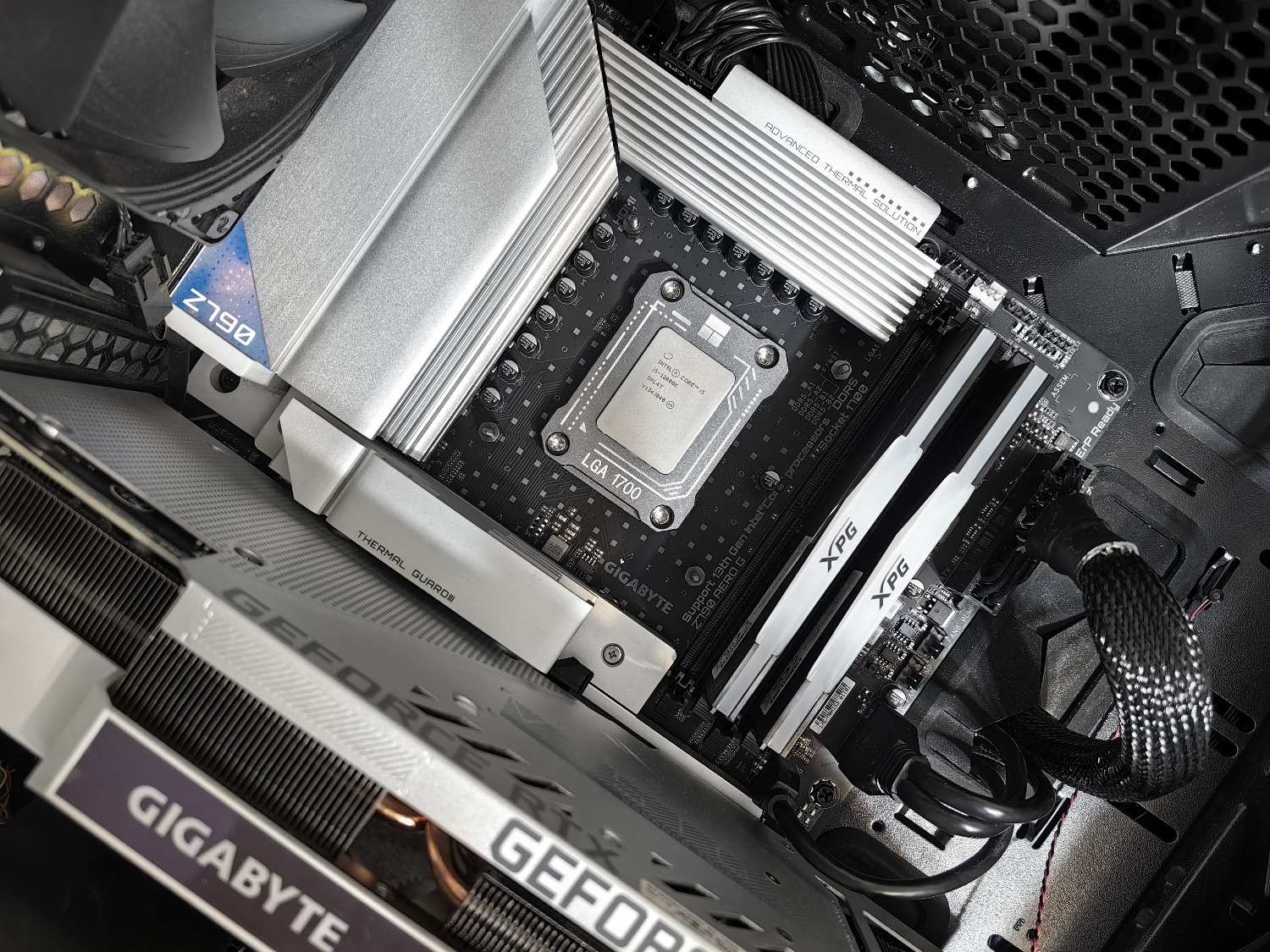
The most striking aspect of this rollout is the switch to the LGA1851 socket , which replaces previous versions and paves the way for much more advanced connectivity. We're no longer just talking about speed, but about an infrastructure designed for artificial intelligence and ultra-fast storage, where the simplified product range aims to ensure that every type of user finds their niche, whether they're an extreme gamer or someone who simply wants their PC to perform lightning-fast office tasks.
Chipset family breakdown
This generation's architecture has been reorganized to cover different usage profiles. At the top is the Z890 chipset , the true flagship. This model is the only one that, initially, will fully support Arrow Lake processors, especially the K versions that allow overclocking. It's the preferred choice for those looking to squeeze every 100Hz out of their system and take advantage of the AI capabilities integrated into the new chips.
For the professional sector and workstations, Intel has released the W880 model . At first glance, it looks like a clone of the Z890, but it has crucial differences: it introduces support for ECC memory and Intel vPRO technology, although in return it sacrifices the ability to overclock the bus and some specific AI functions. It is, essentially, the ultimate work tool where stability is more important than top speed.
If we move down a step to the consumer market, we encounter the B860 chipset . This is where things get interesting, as it acts as the mid-range bridge. Although it has considerable reductions in PCIe lanes and doesn't allow BCLK overclocking, its biggest advantage is its much more competitive price . Being a simpler design, manufacturers can release motherboards with fewer PCB layers, making powerful hardware more affordable for the average user.
Finally, for those seeking the most basic option without sacrificing the latest generation, there's the H810 chipset . It's the most streamlined solution of all, designed for modest systems. Unlike its higher-end siblings, this model forgoes PCIe Gen 5 , sticking to previous standards to minimize costs and fit into tighter budgets.
Connectivity and Technical Specifications
One of the crown jewels of this series is the integration of PCI Express Gen 5. In most models, this technology is available for both the graphics card slot and storage, allowing NVMe SSDs to reach speeds that previously seemed like science fiction. In terms of lanes, the system offers up to 24 PCIe 4.0 lanes from the chipset, which, added to those from the CPU, totals 48 lanes, 20 of which are PCIe 5.0.
As for ports, Intel hasn't skimped. The ecosystem supports up to 10 USB 3.2 ports , configurable at various speeds (20, 10, or 5 Gbps), complemented by up to 14 USB 2.0 ports for basic peripherals. For those still using older hard drives, compatibility with up to 8 SATA 3.0 devices at 6 Gbps is maintained, although it's clear that the future lies in M.2.
- Wireless networks: Native support for WiFi 6E and Bluetooth 5.3.
- System interface: Inclusion of an eSPI interface with 4 available ports.
- Memory support: The W880 stands out for allowing the use of error-correcting memory (ECC).
There's also the Q870 chipset , which technically would be a great option for demanding users who don't want to spend the money on a Z890 motherboard. However, there's a catch: this model is locked down for enterprise use . This means that we're likely to see Q870-based motherboards in regular DIY PC shops, while they'll be reserved for business deployments.
Intel's architecture has evolved from the days of discrete chips and the early Northbridge and Southbridge to this system where control is centralized. While in past decades we had to deal with DMA controllers or programmable timers, today it all boils down to efficient bandwidth management and complete integration with the processor to eliminate bottlenecks.
The 800 series consolidates the move towards an era where PCIe 5.0 connectivity is the norm and the LGA1851 socket paves the way for the Core Ultra 200 series. With a range spanning from the powerful Z890 to the affordable H810, Intel manages to cover the entire spectrum of users, prioritizing energy efficiency and data transfer speed in a platform designed to last for several years.
FAQ
Which processors are compatible with Intel 800 series chipsets?
They are specifically designed for Intel Core Ultra 200 processors based on the Arrow Lake architecture.
What is the main difference between the Z890 and the B860?
The Z890 is the high-end option that allows overclocking and has more PCIe lanes, while the B860 is a budget option with cuts in these features.
What socket do 800 series motherboards use?
They use the new LGA1851 socket, which replaces previous standards to support the new generation of CPUs.
Do all 800 series chipsets have PCIe 5.0?
No, most include it for both GPU and storage, but the low-end H810 model does not have this technology.
Who is the W880 chipset designed for?
It is geared towards professional workstations, as it offers support for ECC memory and Intel vPRO, eliminating the ability to overclock.
Can older SATA drives be connected to these motherboards?
Yes, the chipset maintains compatibility with up to 8 SATA 3.0 devices operating at a speed of 6 Gbps.
What is the Q870 chipset and where can I buy it?
It is a model intended exclusively for the corporate sector, so it is not usually available for the personal assembly or DIY market.
