- The actual capacity of a portable battery is usually 60–70% of the theoretical mAh, and must be balanced with weight and size.
- The number and type of ports, the wattage, and compatibility with fast charging or USB-C PD determine which devices you can charge.
- Extras such as a digital display, integrated cable, wireless charging, or LED flashlight greatly improve the daily user experience.
- When traveling by plane, you must respect the 100 Wh limit and always check the battery specifications and protection systems.
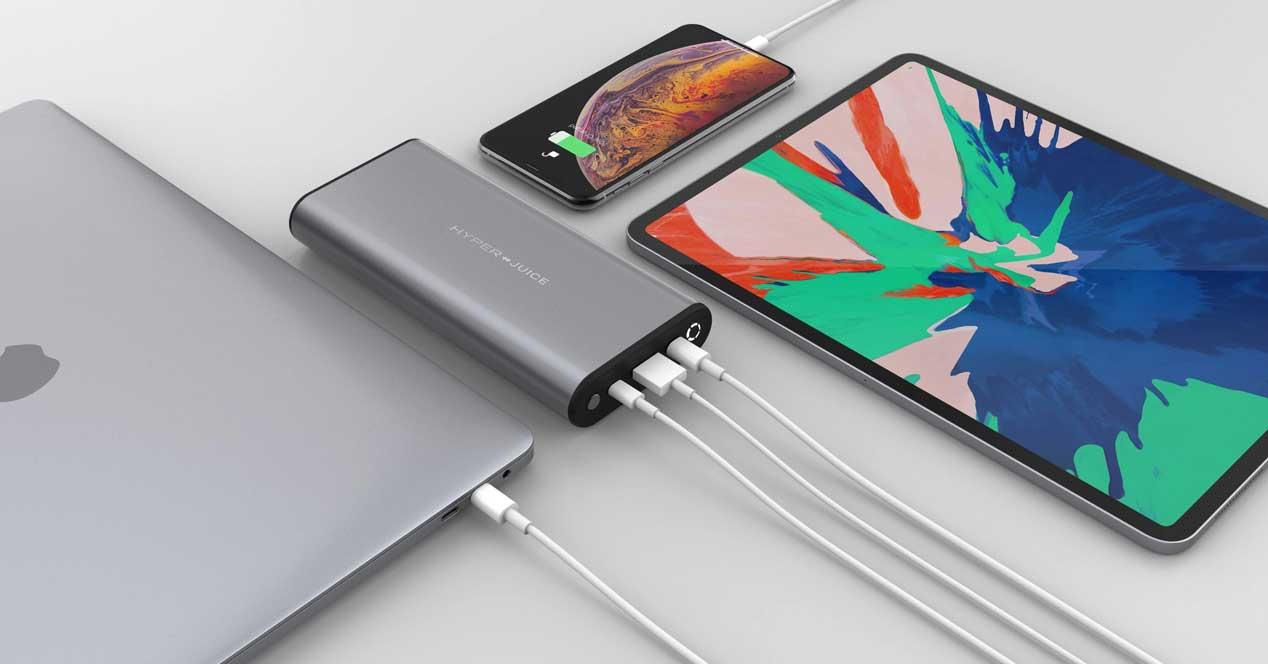
Today we're glued to our phones, tablets, headphones, and increasingly, laptops. When you spend hours away from home, carrying a small portable battery becomes almost essential if you don't want to be searching for outlets like a metal detector. And although manufacturers are gradually improving battery life, the reality is that it's almost never enough.
That's why compact external batteries have become so popular: they allow you to extend the life of your devices for several hours without needing a power outlet , they take up very little space, and many now offer ultra-fast charging and even the option to power a laptop. However, not all of them are the same or serve the same purpose, and it's important to know exactly what you're buying to avoid wasting money.
What exactly is a small portable battery and what is it used for?
A small portable battery, also called a power bank, is a rechargeable energy storage device that you can carry in your purse, backpack, or even your pocket . It is pre-charged using a wall charger, a computer's USB port, or a high-power charger, and then used to recharge mobile phones, tablets, headphones, smartwatches, cameras, Bluetooth speakers, or even some laptops.
Its main advantage is that it gives you extra autonomy when you're away from a power outlet : long trips, workdays away from home, festivals, mountain routes, professional events, photo shoots… In all these scenarios, a good small portable battery can make the difference between continuing to use your mobile phone normally or anxiously checking the battery percentage.
Furthermore, the most advanced models already include fast charging technologies, multiple simultaneous ports, informative screens, and more environmentally friendly materials, such as recycled plastics or bio-based components verified throughout the supply chain , which adds an extra layer of sustainability to the whole.
Capacity of small portable batteries: what mAh really means
The first thing we look at when we see a small portable battery is its capacity, expressed in mAh (milliampere-hours). At first glance, it might seem simple: if your phone has a 3.000 mAh battery and you buy a 6.000 mAh battery, it might seem like you'll be able to charge it twice . But the reality is that it doesn't work that straightforwardly.
The capacity figures provided by manufacturers are theoretical, because in real-world use, the efficiency of the electronics, heat losses, and the aging of the cells themselves all come into play . Just like a smartphone battery, a power bank loses capacity with each charge and discharge cycle, and never delivers 100% of the energy indicated on the label.
As a general guideline, a reasonable estimate is usually used: the effective capacity of a battery is typically between 60% and 70% of its theoretical capacity . In other words, if a model advertises 10.000 mAh, in practice you could expect around 6.000-7.000 mAh of usable capacity, which is what will actually reach your phone after all internal losses.
A clear example of this can be found in high-capacity power banks: in a 25.000 mAh battery, the actual nominal capacity used to calculate what you actually use is significantly lower, settling at around 14.000 mAh effective according to the standard conversion and system efficiency . This difference is normal and should be kept in mind to avoid disappointment.
In practice, this means that a 10.000 mAh battery is usually enough to charge an average smartphone about twice , while a 20.000 mAh battery can easily last you through a whole weekend of intensive use if you only charge your phone and a few other small devices.
Design, size and materials: the balance between portability and capacity
When you're looking for a small portable battery, capacity isn't the only factor: design, weight, and materials significantly impact the user experience . A mini power bank that fits in any pocket is not the same as a brick-shaped battery designed to be carried in a backpack and power multiple devices simultaneously.
Higher-capacity batteries are inevitably bulkier and heavier. A high-capacity, very powerful battery can easily weigh around 600 grams, which is noticeable if you plan to carry it around all day . In contrast, 10.000 mAh models or similar are usually much lighter, making them ideal for small bags or lightweight backpacks.
As for materials, the most common cases are made of durable plastic or metal. The important thing is that they offer some resistance to bumps, drops, and scratches , since these devices are constantly being slipped in and out of pockets and backpacks. It's also appreciated if they aren't too slippery, so you can grip them securely next to your phone while charging.
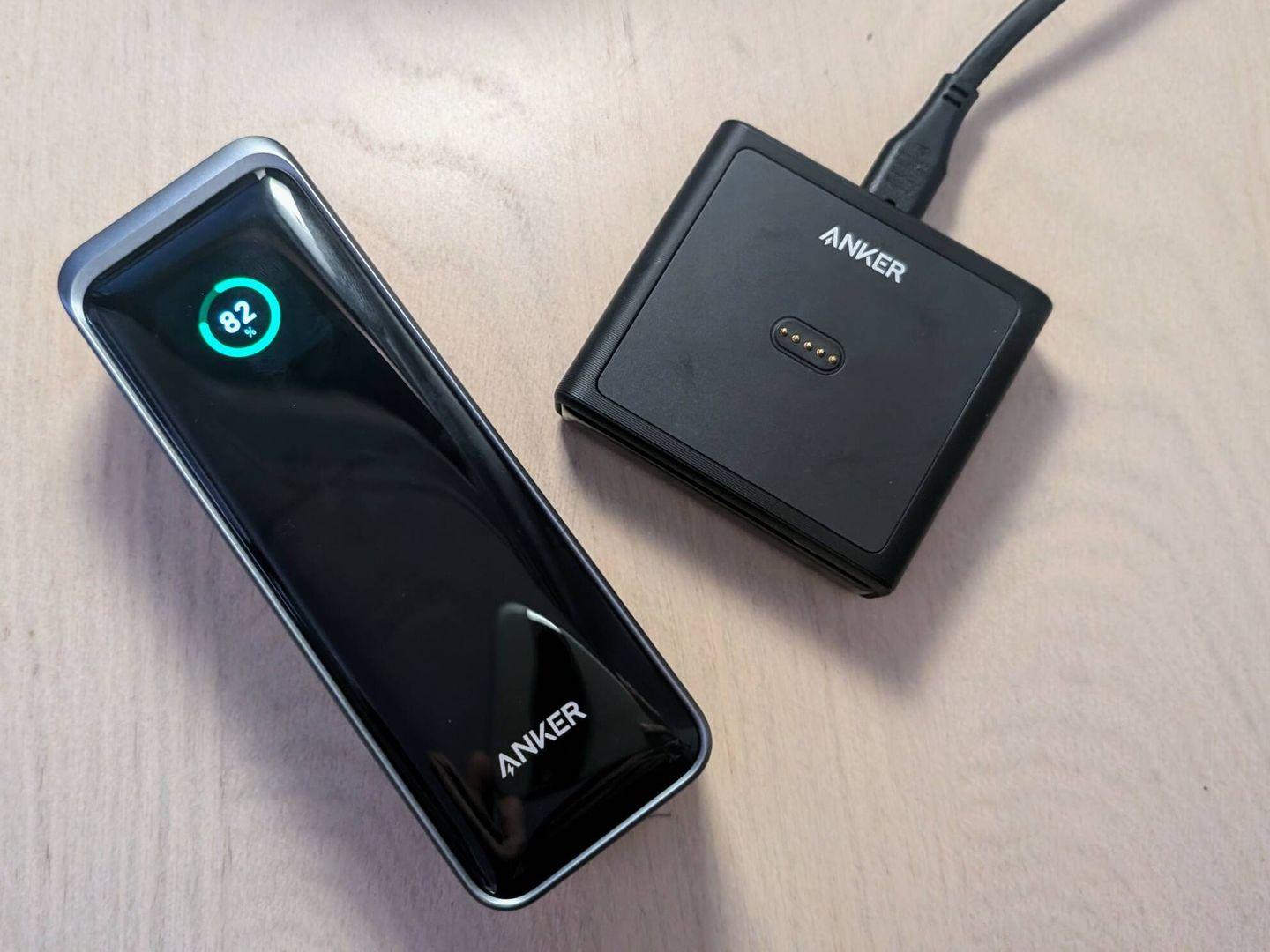
Some models stand out for their sophisticated design, combining aesthetics and functionality: robust casings with rounded corners, transparent sides that reveal the interior with a touch of geek chic , or color screens integrated into the front that display real-time charging information. Beyond the purely visual, these features can greatly facilitate daily use.
You also need to consider the type of use you're going to give it: if you want something ultra-light for everyday use, it's best to go for 5.000-10.000 mAh with a very compact format ; if what you need is an "all-terrain" battery for travel, photo shoots, working on the go or charging a laptop and mobile phone at the same time, it will be worth accepting a little more weight in exchange for much more autonomy.
Charging ports and connectivity: how many, which ones, and what speed
Another key aspect of small portable batteries is connectivity. It doesn't matter if your phone has USB-C or Lightning , because you'll always use a cable that connects to the phone on one end and to a standard port on the battery on the other, usually USB-A or USB-C.
Most power banks recharge via a micro-USB or USB-C port. The cable for charging the power bank itself is usually included in the box , although the plug adapter is almost never included, so you'll have to reuse one from your phone or another device. However, a cable for your phone isn't always included, and it's very rare to find a specific cable for iPhones with a Lightning connector, except for very specific models.
Beyond the connector type, it's worth considering the number of output ports the battery offers: if you usually only charge your phone, one port is enough; if you want to power your phone, headphones, and tablet simultaneously, you'll want several . Many current models feature combinations of USB-A and USB-C, with one of them designed as the high-power, "fast" port.
It's also important to know that not all ports charge at the same speed . It's common for one port to be optimized for fast charging while others offer lower power. Furthermore, when you connect multiple devices simultaneously, the total power is divided among them. Intelligent power management systems typically handle this distribution efficiently, according to the needs of each device.
In the most advanced models, especially the high-capacity ones, USB-C ports are included with support for technologies like Power Delivery (PD) or similar, allowing not only high-speed charging of mobile phones and tablets, but also powering compatible laptops . In these cases, the wattage output becomes a fundamental parameter.
Charging speed: how to tell if a portable battery is fast
Charging speed is another crucial factor when choosing an external battery. If your phone or tablet supports fast charging, it makes perfect sense to opt for a battery that also supports it, so you can take advantage of that benefit and avoid waiting hours for the percentage to increase.
Power output is measured in watts (W) and is related to the voltage (V) and current (A) that each port can deliver. The more watts and amps a port supports, the faster your devices will be able to charge . For example, a port that delivers 18W is already considered fast for many smartphones, while higher power outputs are starting to appear in models designed for tablets and laptops.
When a battery allows multiple devices to be charged simultaneously, it's important to note that the electrical charge isn't distributed evenly . A "main" port with higher power output is typically prioritized, while secondary ports deliver a more modest amount of energy. Intelligent management systems usually handle the efficient distribution of power based on each device's needs.
It's not just the speed at which a portable battery charges your devices that matters, but also how quickly it charges itself. A 20.000 mAh power bank can take about 5-6 hours to fully charge if you use an 18W adapter and a good cable, provided the device itself is compatible with fast charging . If you connect it to a very basic charger, the charging time increases dramatically.
As a reference, you can make an approximate calculation of the charging time: Charging time (hours) ≈ Battery capacity (Ah) ÷ Charging current (A) . Thus, if you have a 20 Ah battery (equivalent to 20.000 mAh) and a charger that supplies 2 A, we would be talking about a theoretical 10 hours, to which you would have to add losses and safety margins, so the actual time is usually somewhat longer.
Highly recommended models of small and large portable batteries
The range of external batteries is enormous, but some models and brands repeatedly appear on recommended lists due to their excellent balance of quality, performance, and price. Below, we review several very interesting options that cater to a wide range of users , from those who want a "mini" battery to those who need a near-professional portable power station.
High-capacity battery with advanced features
Among high-capacity batteries, one option stands out that, due to its set of features, has gained a reputation as an "all-rounder": a 25.000 mAh power bank with support for ultra-fast charging capable of powering up to three devices at once and with enough power even to charge a compatible laptop.
This type of battery combines a meticulously crafted design with a robust body, smooth lines, and rounded corners. In some cases, three of its sides are transparent, revealing the interior with a high-tech aesthetic , and the front features a smart color display where you can view the charge level, output power, and other useful information about the charging process in real time.
Besides its enormous capacity, one of its advantages is that it's suitable for air travel, complying with airline watt-hour limits . Furthermore, it offers excellent value for money. Its only drawback? The weight: at just over 600 grams, it's not exactly the lightest option, but that's the price to pay for such long battery life.
Compact and lightweight power banks for everyday use
If you're looking for truly small portable batteries, there are several very interesting models in the 10.000 mAh range. One of the most popular is a best-selling model from a well-known brand in the world of charging accessories , offering 10.000 mAh of capacity in a very compact and aesthetically pleasing design.
With that capacity, you have more than enough to fully charge a modern smartphone at least once and even have some charge left over. Its small size and light weight make it ideal for carrying with you , and it usually has at least one fast-charging port along with a more standard one, giving you the flexibility to charge your phone and another small device at the same time.
Another well-balanced option in this category is a 10.000 mAh battery from a brand that's also a classic in cables and chargers. This model stands out for its ultra-thin design, intended to be barely noticeable in pockets and cases , while maintaining more than enough capacity for daily use and a typically quite reasonable price.
In this price range, there's also a very popular battery from another brand specializing in mobile accessories. It combines 10.000 mAh capacity with a very lightweight, slim design and the ability to charge multiple devices simultaneously . It's one of the best-selling batteries on major e-commerce platforms thanks to its balance of size, price, and functionality.
20.000 mAh batteries: the middle ground between lightness and autonomy
If you need a bit more capacity but don't want to carry half a kilo in your bag, 20.000 mAh batteries are a fantastic middle ground . A prime example is a model from a very popular brand that offers up to 20.000 mAh capacity with an approximate weight of 340 grams and a very competitive price, often around twenty euros on sale.
With a battery like this, you can charge your phone several times and still have plenty of power left for other devices , while maintaining a reasonable size for travel. It usually includes several ports (typically two USB-A and one USB-C), with good compatibility for various fast-charging protocols and a robust build for heavy use.
Another very strong option in this category is a 20.000 mAh battery with a maximum power output of 45 W from a company specializing in accessories. This model can charge a mobile phone multiple times (for example, up to 3,4 charges for a high-end smartphone) , integrates the cable into the device itself so you don't forget it, and offers up to four charging ports to power several devices simultaneously.
High-end models with smart screens and eye-catching design
For those seeking something more exclusive and not on a particularly tight budget, there are portable batteries that stand out for their design and advanced features. One such example is a high-capacity power bank with extremely fast charging speeds, competing with the most powerful models on the market and providing enough output to charge several demanding devices simultaneously.
This type of battery typically includes a highly visible smart display where you can check the charge level, input and output power, and other parameters . Aesthetically, they are very well-designed models with premium finishes and a striking, high-tech look. They are also usually suitable for air travel and offer outstanding durability.
The big drawback is the price, which is usually about double that of high-capacity models that already offer excellent performance. In return, you get a more refined user experience, a distinctive design, and, in many cases, a longer lifespan thanks to high-quality internal components.
Extras and configurations that make all the difference
Beyond capacity, design, and ports, there are a number of extras that can make a small portable battery much more convenient to use. They aren't essential, but once you try them, you'll miss them in other models.
One interesting extra is the included charging cables. Almost all batteries come with a cable to recharge the battery itself, but not all include a cable for your phone, and even fewer include one specifically for iPhones with a Lightning connector . However, it's becoming increasingly common for the output cable to be integrated into the battery itself, so you always have it with you and don't have to worry about forgetting it.
Another very useful feature is the digital display. Thanks to it, you can see the exact percentage of battery remaining, the charging power for each device, and even estimated charging times in some cases . It's much more precise than the typical four LEDs that only indicate charging levels (25%, 50%, etc.) and allows you to better manage when to recharge the power bank.
Some manufacturers also include a protective case with the battery. It's not essential, but it can be very useful if you're going to carry it in a backpack with other items that could scratch or damage it. A simple case can significantly extend the device's lifespan and cushion it from minor impacts.
Don't forget wireless charging: some models allow you to charge your phone without cables, simply by placing it on the battery's surface . It's an incredibly convenient feature if your phone is compatible with this type of charging, although it does tend to increase the price and, in some cases, wireless charging is slightly slower than wired charging.
Finally, some batteries include a built-in LED flashlight. It might seem like a minor detail, but having an integrated light source is incredibly useful during power outages, camping trips, or emergencies . It's one of those extras that barely increases the device's price and can get you out of more than one tight spot. If you're interested in this type of solution, this USB-C flashlight guide offers options and tips for choosing the right one.
Using portable batteries with laptops, cameras, and other devices
One of the most frequent questions is whether you can charge a laptop with a small or medium-sized portable battery. The answer is: it depends. For your laptop to be charged with a power bank, it must be compatible with USB-C charging via Power Delivery (or a similar protocol) . If it uses a proprietary charger with a classic round connector, it will be more difficult.
Additionally, you'll need to consider the battery's maximum output power. The power bank's wattage (W) rating should be equal to or greater than your laptop's wattage requirements . For example, if your laptop uses a 65W charger, ideally the power bank should be able to deliver at least that much power through its USB-C port to ensure proper charging.
Regarding air travel, international regulations allow portable batteries in hand luggage as long as they meet certain energy limits. Typically, they are limited to a maximum of 100 Wh (watt-hours) per battery without requiring a special permit . This information is indicated on the casing of many models, but if you only have the mAh rating, you can calculate it yourself.
To calculate Wh from mAh, first convert mAh to Ah (dividing by 1.000) and then multiply by the battery's nominal voltage: Wh = V × Ah . For example, a 25.000 mAh (25 Ah) battery at 3,63 V gives approximately 90,8 Wh, which is well within the carry-on baggage limit.
Power banks are also very useful for charging other devices such as cameras, portable game consoles, wireless headphones, or Bluetooth speakers . In all these cases, the important thing is that there is compatibility between the ports and cables (USB, USB-C, etc.) and that the battery can deliver the necessary power. It's always advisable to check the device manufacturer's specifications to avoid problems.
Safety, good habits and battery care
In terms of safety, modern portable batteries incorporate protection systems against overcharging, short circuits, and overheating. Therefore, under normal conditions, it's safe to leave a power bank charging overnight , just as you would with your mobile phone. When the charge reaches 100%, the system automatically cuts off the power supply to prevent damage.
Even so, if you want to maximize battery life, it's advisable to unplug it once it's fully charged and avoid exposing it to extreme temperatures . It's also not a good idea to use it in very hot environments while under heavy load, for example, playing demanding games while charging your phone at the same time.
Regarding using your phone while charging from a power bank, there's no problem doing so for light tasks like messaging, social media, or browsing. However, battery life can be affected if you use it for demanding games or resource-intensive apps while charging , as this generates additional heat and can make the charging process less efficient.
Another common question is what the output figures in amps (A) and watts (W) mean. Amps indicate the current the battery can supply, while watts measure the total power. The relationship between the two is given by the formula Power (W) = Voltage (V) × Current (A) . Higher amperage and wattage mean faster charging, provided the device is compatible with those specifications.
Finally, keep in mind that batteries have a limited lifespan: after hundreds of charge and discharge cycles, they will gradually lose capacity . This is normal and doesn't indicate a problem, but simply chemical aging. Knowing how to recycle them and charge them with good adapters, avoiding impacts and extreme temperatures, and not leaving them discharged for long periods will help them last longer in good condition.
With all of the above in mind, choosing the right small portable battery requires a cool head and some foresight: define how much capacity you actually need, consider the weight you're willing to carry, check the number and type of ports, determine if you need fast charging or laptop charging, and decide which extra features are most useful to you on a daily basis . With this clear roadmap, it's much easier to find the model that fits your budget and how you use your phone, tablet, or laptop away from a power outlet.
