- Preventive and corrective maintenance systems to extend the useful life of 3D printers.
- Ability to manufacture custom spare parts for obsolete industrial machinery.
- Differences and advantages between managing an internal printing service or outsourcing production.
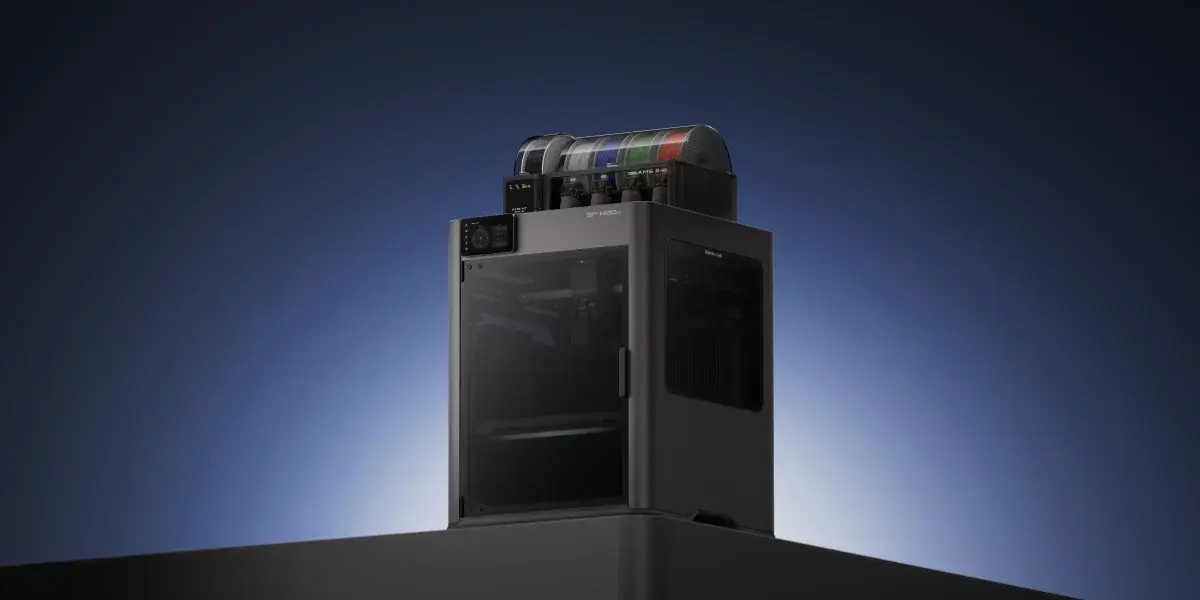
Having a 3D printer at home is a one-way street; once you start making your own solutions, you realize that the ability to create custom parts can save you from spending a fortune on replacements that are no longer even sold. From useful 3D printing ideas and projects like fixing a cabinet handle to designing a specific bracket for an appliance, this technology has become the best ally for those who can't stand seeing something broken and not being able to find the exact part at the hardware store.
However, to prevent this tool from becoming an expensive paperweight, it's crucial to understand that regular maintenance is key . Simply hitting the print button isn't enough; you need to take care of the machine so it doesn't leave you stranded in the middle of a ten-hour project. In this article, we'll break down everything you need to know, from how to keep your home printer running at peak performance to how to apply this power in industrial environments where time is of the essence.

Care and maintenance of your home 3D printer
We often neglect cleaning our printers until a problem arises. Common issues, such as the first layer not sticking or strange noises, are usually not unfathomable mysteries, but rather clear signs that the printer needs some TLC, lubrication, or a thorough cleaning.
To maintain stability, it's vital to focus on three key areas: mechanics, electronics, and hygiene. Establishing a simple routine will prevent dust from clogging the fans or fingerprints from ruining the bed's adhesion. You don't need to set up a laboratory, but organization and using the right tools, such as isopropyl alcohol, Allen wrenches, and soft brushes, are essential.
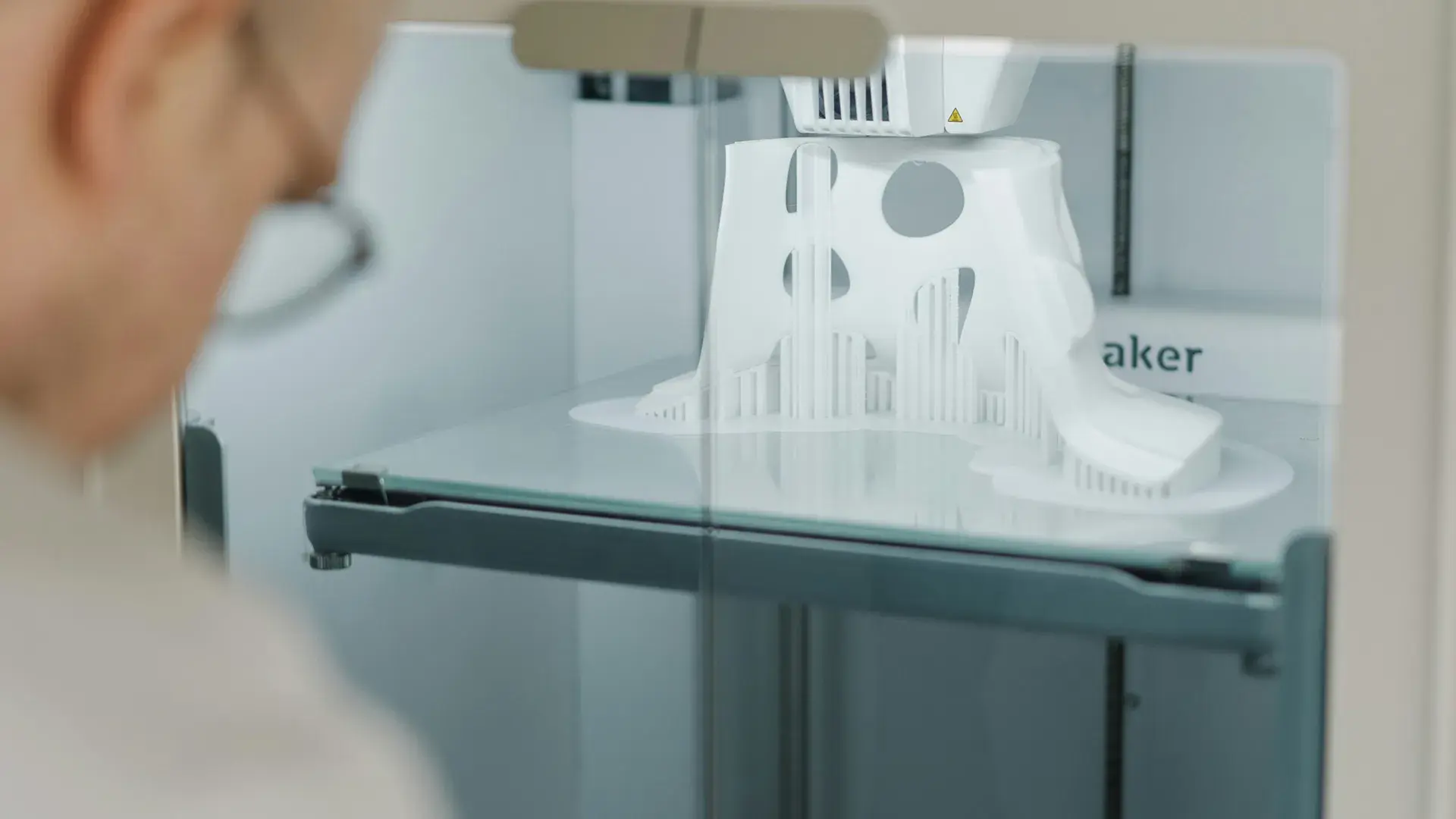
When it comes to cleaning, the build plate is the critical point. Depending on whether you're using PEI, glass, or textured surfaces, the method varies, but warm water with mild soap is usually the best solution when alcohol isn't enough. On the other hand, we shouldn't forget the fans; if the airflow decreases, cooling fails and the build quality plummets.

The heart of the machine: Hotend and nozzle
The hotend is where the magic happens, but also where most jams occur. If you notice skipping during extrusion or unwanted strands appearing between the walls, you likely have internal debris. A very effective technique is cold pulling , which involves removing the filament while it cools to flush out the accumulated dirt.
It's important to know when to replace the nozzle. If you use abrasive filaments, the brass wears down quickly and the walls become undefined; in these cases, hardened steel is the best option , even though it requires slightly increasing the temperature. If the problems persist despite cleaning, the most sensible thing to do is replace the entire hotend to restore operational stability.
Mechanical adjustments and intelligent lubrication
The mechanics of a printer don't usually break down suddenly; they deteriorate gradually. The belts, for example, should be tight but not as taut as guitar strings, since excessive tension damages the bearings . If you notice the typical ghosting effect in the parts, it's time to check the tension and the pulley set screws.
Regarding lubrication, the golden rule is: less is more. It's not about slathering the machine in grease, but rather applying a thin layer to the lead screws and linear guides. Excess lubricant attracts dust and ends up creating a paste that hinders movement instead of facilitating it. For V-slot wheels, the most important thing is cleaning the groove and adjusting the eccentrics.
The role of filament and storage
Sometimes we blame the machine for problems that actually stem from the material. Filament that has absorbed moisture causes popping sounds during extrusion and bubbles on the surface, which compromises the strength of the finished piece. To prevent this, it's essential to store spools in airtight bags with desiccants or use drying boxes.
For those using multicolor systems like AMS, the complexity increases. It's essential to ensure the PTFE tubes show no internal wear and that the rollers rotate smoothly. Even a small speck of filament powder in the loading path can prevent the machine from recognizing the spool or cause a jam.
3D printing applied to industrial maintenance
Moving to the professional sphere, 3D printing is a disruptive tool for preventing production line stoppages. Imagine that a part on an old machine breaks and the manufacturer is no longer in business; instead of waiting weeks for a miracle replacement, the part can be reverse-engineered and ready in a matter of hours using modern industrial technology.
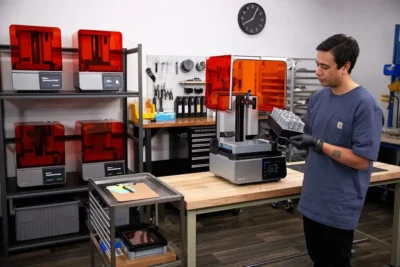
This ability to manufacture obsolete components allows companies to take full control of their repairs. It's not just about copying, but about improving: parts can be redesigned to be more durable or efficient than the original, thus optimizing corrective maintenance processes and reducing inventory costs by digitizing the warehouse.
In-house service vs. outsourcing
For a company, the dilemma is often whether to buy its own machines or hire a supplier. Having an in-house service offers unbeatable response speed and complete confidentiality regarding designs. However, it requires a significant initial investment and staff training in design software and handling technical materials.
- Internal advantages: Total control, immediate customization, and long-term shipping savings.
- External advantages: No investment in machinery, access to specialized experts and greater scalability according to demand.
To implement this successfully, the process begins by assessing which parts fail most frequently and selecting the appropriate technology (such as Ultimaker machines for their reliability). Establishing a clear workflow , from 3D scanning to final part validation, is what distinguishes an experiment from a real industrial solution.
Maintaining a 3D printer, whether for home repairs or to sustain factory production, requires a balance between cleanliness, mechanical adjustments, and material quality. From daily bed checks to planning industrial spare parts maintenance, the goal is always the same: to minimize downtime and maximize the accuracy of every printed layer.