- LEGO SMART Play integrates a smart brick, stickers, and minifigures that react with lights and sounds without the need for screens.
- The SMART Brick maintains the classic 2x4 format, but adds sensors, audio, LEDs, wireless charging and BrickNet connection between bricks.
- The system debuts with three LEGO Star Wars sets that combine traditional building with themed interactive effects.
- LEGO argues that SMART Play expands physical and creative play, although experts warn of the risk of limiting freedom of play.
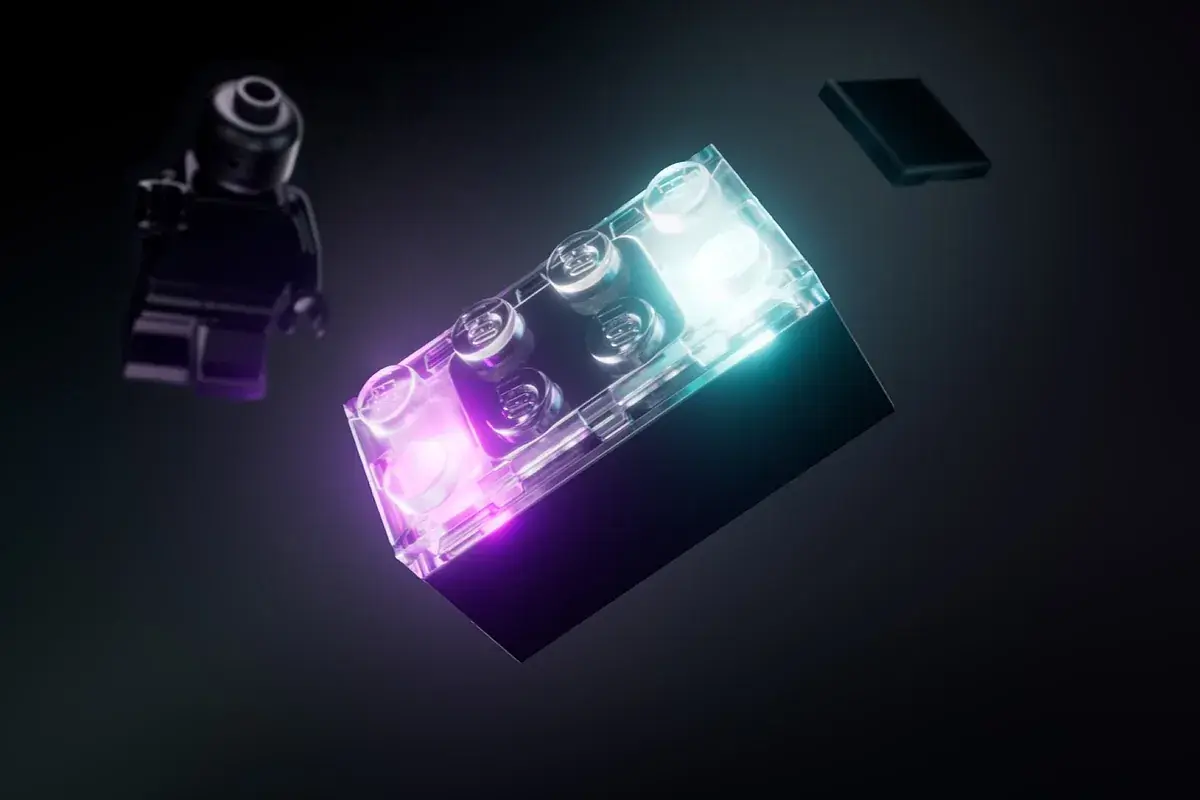
The iconic Danish bricks take a giant leap forward with the arrival of LEGO SMART Play and its new smart pieces . The brand has championed traditional, analog play for decades, but now it has decided to integrate technology directly into the brick itself without losing its essence: no screens, no mandatory apps, and the focus remains entirely on physical building.
This new platform was unveiled in grand style at CES in Las Vegas , the world's largest technology showcase, and promises to be the biggest change to the LEGO system since the introduction of minifigures . Sensors, lights, sound, brick networks that "talk" to each other, and Star Wars sets as the flagship product are just the tip of the iceberg of what this system offers.
What is LEGO SMART Play and why is it so important?
Since Ole Kirk Kristiansen set up his workshop in Billund in 1932 , LEGO has been guided by a very clear idea: to build, dismantle, and recreate without limits, using imagination as its guiding principle. This philosophy of "you command, the brick obeys" is what has made the brand a global icon of creative play.
This tradition of reinventing play without losing its classic feel is precisely what led the LEGO Group to launch LEGO SMART Play, an interactive platform that introduces a smart brick, special stickers, and minifigures with new capabilities. All of this is designed to bring physical creations to life with lights, sounds, and reactive behaviors.
The company doesn't mince words when defining it: it claims that LEGO SMART Play is one of the biggest evolutions of its play system since the minifigures appeared in 1978. It's not a one-off experiment, but a technological foundation with which they intend to build a new chapter within the LEGO ecosystem.
The official unveiling took place at the 2026 Consumer Electronics Show (CES) in Las Vegas, an unusual venue for a traditional toy company. According to LEGO, this move aims to combine creativity, technology, and storytelling to make building worlds and stories even more engaging, all without requiring a screen.
The commercial launch will not arrive at once across the entire catalog, but will begin with a first wave of products in selected markets, where Star Wars will be the license chosen to launch the SMART Play system starting on March 1, 2026.
The heart of the system: the SMART Brick
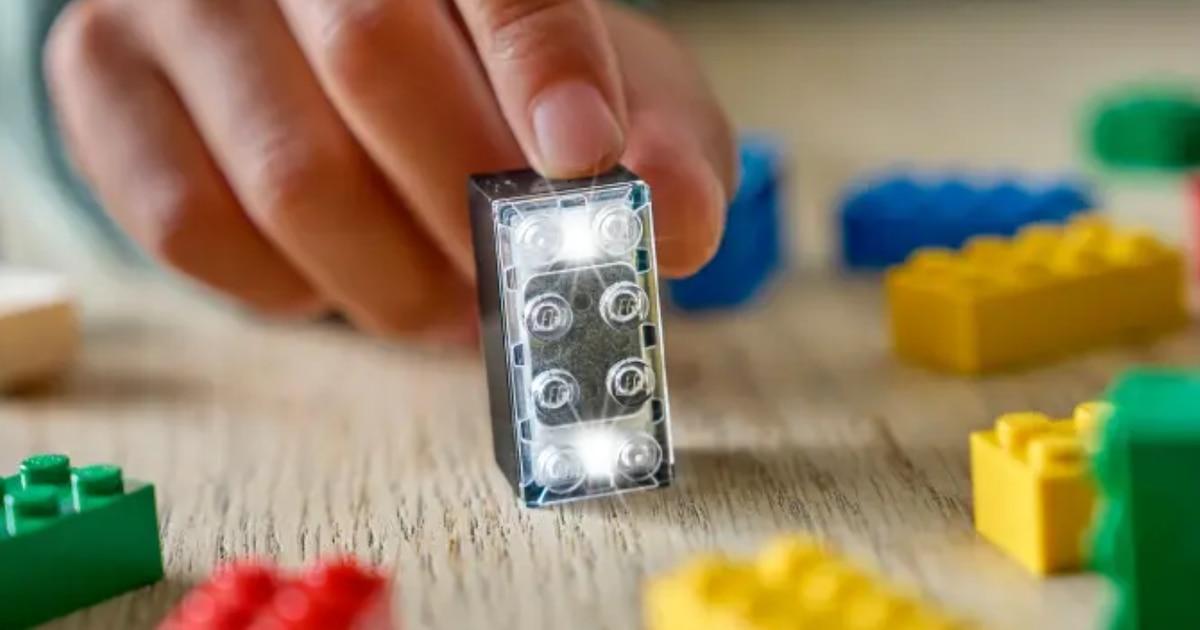
The core of LEGO SMART Play is the SMART Brick, a 2x4 brick the same size as a standard brick , but with a completely different interior. At first glance, it fits together like any other brick, allowing for seamless integration with the rest of the traditional LEGO system.
Hidden inside this brick is a custom-designed chip just a few millimeters in size , smaller even than one of the studs (the top connection points) on a standard brick. This chip integrates a wealth of sensors and components, giving the brick previously unimaginable capabilities.
The SMART Brick incorporates accelerometers to detect movement, light, sound, and color sensors , as well as an LED matrix capable of illuminating and changing color depending on the interaction. Everything is coordinated by a small internal audio synthesizer that manages a miniaturized speaker to emit real-time effects.
In terms of design, LEGO has been very clear: they haven't included screens, cameras, or artificial intelligence features . The brick does have a microphone, but it's used solely as a sensor to register sounds like blows, claps, or knocks, without the ability to record or send audio anywhere. The company emphasizes this point to dispel any concerns about privacy and surveillance.
The technology behind this smart brick is not something improvised. The system includes more than twenty globally patented innovations and was developed by the Creative Play Lab, the LEGO Group's in-house laboratory dedicated to experimenting with new play formats.
A system with three key pieces: brick, labels and minifigures
LEGO SMART Play is structured around three types of elements that work together : the smart brick, smart tags, and minifigures adapted to this new system. These are not isolated accessories, but rather complementary parts of the same play language.
On one hand, the LEGO SMART Brick acts as a brain and response center , registering what is happening around it and reacting with lights, sound effects and changes in behavior depending on how the construction is handled.
We also found LEGO SMART Tags, small 2x2 tiles with unique digital identifiers . When brought close to or placed near the main brick, they indicate what type of element it represents (a spaceship, a scene, a specific object) and trigger specific responses: from engine noises to iconic melodies.
The third component is the LEGO SMART Minifigures, intelligent minifigures designed to interact directly with the system . These figures can unlock their own sounds, moods, and behaviors; for example, a character can complain if it "suffers" an accident within the scene, or react differently depending on how it moves or is positioned in the build.
Everything is designed to ensure the system remains true to one of the brand's core principles: full backward compatibility with the existing catalog . In other words, these bricks, stickers, and figures can be combined with any existing LEGO piece, so the technology is integrated into the familiar building language, rather than creating a separate ecosystem.
Sensors, lights, sound, and screenless physical play
One of the most striking aspects of LEGO SMART Play is how the electronics are completely hidden inside the brick itself , instead of appearing as external modules or bulky boxes as in other previous technology lines from the brand.
The SMART Brick uses its accelerometer to detect movements, turns, falls, and impacts , allowing it to react instantly to how the building is played with. It's not about pressing buttons, but about physically moving the model: shaking a helicopter, launching a spaceship, crashing two vehicles, and so on.
Thanks to its light and color sensors, the brick can analyze its surroundings and the pieces around it . It can, for example, recognize the tone of a piece and reproduce lighting of the same color, achieving quite striking visual effects without the user having to program anything.
Meanwhile, the integrated audio system generates real-time sounds and effects , from roaring engines to lightsabers or explosions, all depending on the situation: whether the model accelerates, tilts, stops abruptly or comes into contact with certain stickers or minifigures.
LEGO insists that, despite all this technological layer, the game remains 100% physical and doesn't revolve around a screen . You don't need a mobile phone, tablet, or console to enjoy the basic functions. The idea is to expand the classic building game with an extra sensory dimension, not replace it with a purely digital experience.
BrickNet: bricks that communicate with each other
Beyond the individual brick, LEGO has developed its own communication system called BrickNet . This Bluetooth-based protocol allows multiple SMART Bricks to form a decentralized network without the need for external hubs, remote controls, or control apps.
When multiple smart bricks are connected via BrickNet, they can recognize their relative position, orientation, and even certain magnetic fields . This gives them a kind of "spatial awareness" that opens the door to collaborative constructions where multiple parts react in a coordinated way.
Thanks to this internal network, it's possible to organize races, challenges, or real-time interactions between different models . For example, vehicles that compete and record their movements, structures that react when another piece enters a certain range, or scenes in which several bricks synchronize lights and sounds.
LEGO emphasizes that all of this is achieved without using screens or cloud services . Communication remains within the play environment, reducing complexity for families and avoiding many of the typical concerns associated with connected toys.
This technical approach reinforces the idea that SMART Play is not simply another “gadget”, but a system designed to evolve and grow with new sets and functions as LEGO rolls it out across different product lines.
Battery and wireless charging designed to last
The SMART Brick integrates an internal rechargeable battery that is powered by a dedicated wireless charger. Simply place the brick on the charging base to recharge it, without opening compartments or changing batteries.
The charging base is designed to power multiple bricks simultaneously , so keeping them ready for play in homes with more than one SMART Play set is no hassle. This is an important detail considering the system is designed to reuse the same brick in countless constructions.
The company claims that the SMART Brick maintains its functionality even after years of inactivity , a clear nod to parents who are wary of electronic toys that become unusable in a short time due to depleted batteries or systems that stop being updated.
With this solution, LEGO is trying to address a common criticism: many toys with electronic components become useless junk when the batteries die or the system becomes obsolete . Here, the approach involves discreet, rechargeable electronics designed to accompany the LEGO system for a long time.
By combining a rugged design, inductive charging, and a low-power approach, the goal is for users not to have to constantly worry about battery life , but to focus on playing and rebuilding without worrying too much about the technical aspects.
Examples of games: from birthday cake to classic duck
During the demonstrations at CES, several practical examples could be seen of how the SMART Brick transforms seemingly simple constructions into interactive experiences with more layers of play.
One of the models on display was a birthday cake that reacted when the candles were blown out . Upon detecting the blowing sound through a microphone-sensor, the brick responded with festive lights and celebratory sounds, all integrated into the cake itself, which was constructed from standard bricks.
A helicopter was also seen that modified its sound and light effects according to movement . If the player made it take off, shake it, or simulate a fall, the SMART Brick reacted with engine noises, changes in the light pattern, and other dynamic effects that depended on the physical gesture.
Another particularly striking scene was that of the classic LEGO duck with the addition of a SMART Brick . By incorporating the smart brick, the figure began to quack and make sounds, demonstrating how an iconic model from the brand could gain its own "voice" with very few structural changes.
In a further demonstration, a character was shown who, upon being "hit" by a car within the scene, played an audio recording expressing anger and discomfort . This type of more emotional response points to scenarios where narrative and small stories gain importance thanks to the sound component.
First LEGO SMART Play Star Wars sets
To launch not Pokémon, but Star Wars as its flagship franchise , LEGO has prepared three "All-In-One" sets that combine classic building with new smart features. They will be available for pre-order starting January 9th in launch markets and can be purchased physically from March 1st, 2026.
Each of these Star Wars sets includes at least one LEGO SMART brick with its charger, a SMART minifigure, and several SMART tags . All elements come ready to use; no additional modules are required to enjoy the basic functions.
One of the main sets is the LEGO Star Wars SMART Play Luke's Red Five X-Wing , made up of 584 pieces and including two SMART minifigures (Luke Skywalker in a pilot suit and Princess Leia), plus R2-D2, Rebel Alliance personnel and an Imperial stormtrooper.
This X-Wing incorporates several buildable scenarios, such as an Imperial turret, a transporter, and a command center , which, when interacting with the smart brick and SMART tags, unlock effects: laser fire, engine lights, repair and resupply sounds, among others.
Another standout set is the LEGO Star Wars SMART Play Darth Vader's TIE Fighter , with 473 pieces. It includes a Darth Vader SMART minifigure, a Rebel Fleet Trooper minifigure, a Rebel outpost, and an Imperial supply station, all designed to integrate with the brick's interactive features.
Duel in the Throne Room and other set details
The third initial release is the LEGO Star Wars SMART Play Duel in the Throne Room with A-Wing , a more complex 962-piece set that recreates the final showdown between Luke Skywalker and Darth Vader in Return of the Jedi.
This set includes three SMART minifigures: Darth Vader, Emperor Palpatine, and Luke Skywalker in his Jedi form . It also features a buildable A-wing fighter with pilot, two Royal Guards, and a SMART-tagged cannon turret to defend the Throne Room.
When playing with this model, the interactions between the smart brick, the stickers, and the minifigures activate sound and light effects that accompany the development of the combat , from the famous Imperial March when Palpatine sits on his throne to the whirring of the lightsabers.
In general, the sets use SMART Tags to trigger themed effects : the characteristic roar of the TIE Fighter's ion engines, the engine sounds of the A-Wing, laser clashes, and all kinds of effects typical of the Star Wars universe.
As for the price, LEGO has confirmed that these sets with smart bricks will be somewhat more expensive than their traditional counterparts . For example, the largest set, Throne Room Duel with A-Wing, will cost around $160 (about €140 before taxes), while the TIE Fighter and X-Wing will be priced lower, around €70 and €100 respectively, according to preliminary information.
How SMART Play fits into LEGO's technological history
LEGO had previously experimented with electronics, sensors, and robotics in lines like Mindstorms, Boost, and some augmented reality sets. However, all of that was usually presented as add-on modules, clearly differentiated from the classic bricks.
The key difference now is that the technology is becoming part of the 2x4 brick itself , the brand's quintessential symbol. This is an important symbolic step, because it touches the heart of the construction system and breaks, in part, with the idea that the brick needed nothing more to become anything.
This decision comes at a time when the digitization of children's play is practically ubiquitous . In contrast to screens and video games, LEGO had maintained a very recognizable haven of physical play; with SMART Play, it attempts to bridge these two worlds without falling into total dependence on external electronic devices.
The proposal doesn't imply that all sets will now include smart pieces. For the moment, the system is being rolled out to a few specific lines , with Star Wars serving as the first test to gauge public response and see how this new way of playing fits in.
Based on that journey, the company will evaluate what place SMART Play will occupy within its catalog in the long term , whether it will be extended to other themes or whether it will remain as a specific range for those looking for a more interactive experience.
Reactions and criticism: threat or impetus to creative play?
The announcement of the SMART Play system has not been met with unanimous approval . Some childhood and play experts have expressed doubts about the impact of introducing sensors and automatic responses into a toy so closely tied to free imagination.
Josh Golin, CEO of the Fairplay group, has pointed out that smart bricks could undermine some of what makes LEGO special by shifting some of the child's initiative toward the toy's pre-programmed design. According to this view, if the brick already tells you what happens when you build something, there's a risk of limiting spontaneous creativity.
Similarly, Professor Andrew Manches of the University of Edinburgh pointed out that the brand's historical value has lain in the freedom to create and recreate stories with simple blocks . Introducing poorly designed technology could restrict how players interact with the building blocks and reduce the interpretive flexibility of the constructions.
In response to these criticisms, LEGO argues that SMART Play doesn't replace classic play, but rather expands it with new layers of interaction . Julia Goldin, Head of Product and Marketing, explained that the company doesn't see the digital world as a threat, but as an opportunity to extend physical play without losing its essence.
To reinforce this message, the company emphasizes several points: absence of mandatory screens, protected privacy by not recording audio, full backward compatibility, and freedom to reuse the smart brick in any construction that the child or adult enthusiast can think of.
With all this in mind, LEGO SMART Play presents itself as an ambitious undertaking to take the classic building system to a new level, where timeless imagination blends with sensors, lights, sound, and interconnected brick networks . It remains to be seen to what extent families will embrace this approach, but what is clear is that the 2x4 brick has never been so close to becoming, quite literally, a tiny brain capable of reacting to everything that happens during play.
