- Launch of the RTX Spark SoC with ARM architecture, combining a 20-core CPU and a powerful Blackwell GPU.
- Native support for Windows 11 with a massive focus on local AI, intelligent agents, and professional content creation.
- Direct competition against Apple Silicon and Qualcomm, enabling extremely thin and efficient laptops.
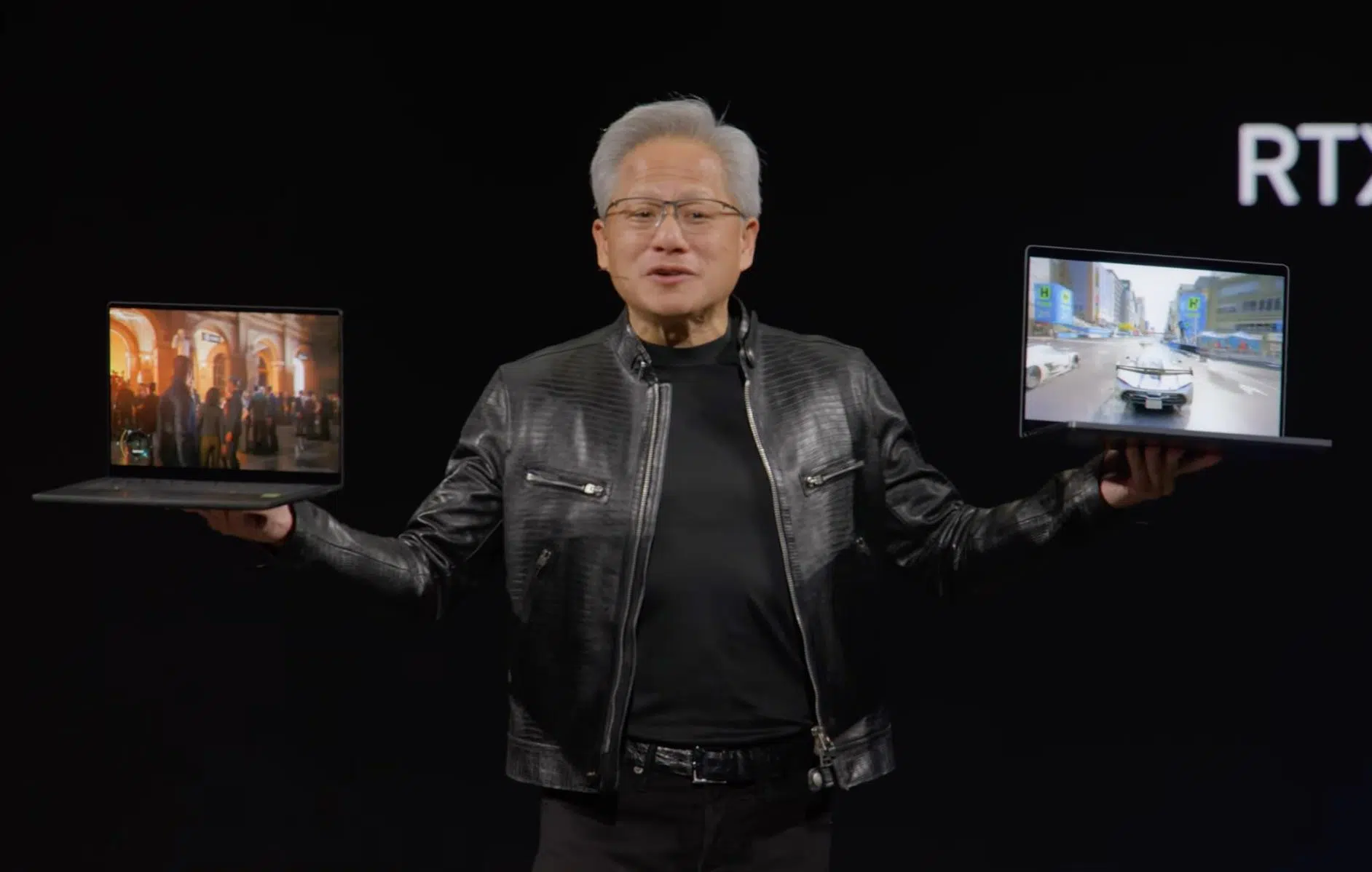
The personal computing landscape has just undergone a complete transformation. At Computex, Nvidia dropped a bombshell with the unveiling of the RTX Spark , an all-in-one chip that aims to dethrone the traditional architecture in personal computers. This isn't just another component; it's an aggressive push into the ARM ecosystem to take AI and graphics performance to the next level in mobile devices.
Although rumors circulated for months that the name would be N1 or N1X, the company has opted for a name that evokes power and brilliance. This petaflop superchip not only breaks with the inertia of Intel and AMD, but also sets its sights on Apple and Qualcomm, aiming to make Windows on ARM cease to be a promise and become the dominant reality in high-end laptops.
Looking under the hood, we find a technological beast. At its heart is a custom 20-core ARM-based CPU , developed in collaboration with MediaTek. According to Nvidia, this processor's performance rivals the best currently available in the ARM PC market, striking the perfect balance between raw power and low power consumption.

But where it truly shines is in the GPU. The RTX Spark integrates a Blackwell architecture with 6.144 CUDA cores and fifth-generation Tensor Cores. To put it simply, the graphics performance is comparable to that of a laptop RTX 5070 , but integrated into the SoC. All of this is powered by Nvidia NVLink-C2C technology , which interconnects the chip's components, manufactured by TSMC using a cutting-edge 3-nanometer process.
Regarding memory, the system can manage up to 128 GB of unified LPDDR5X memory , with a bandwidth reaching 300 GB/s. This is vital because it allows the GPU to access data without bottlenecks, eliminating the need for dedicated memory and enabling much more compact systems.

AI and creativity: The real objective
Nvidia hasn't released this chip just to make games run faster, but to make AI the absolute star. Thanks to its processing power, the RTX Spark is the ideal foundation for running local agents on Windows privately and securely, working closely with Microsoft to integrate these features into tools like OpenClaw and Hermes.
For content creators, this is glorious news. We're talking about the ability to edit video in 12K 4:2:2 resolution and process massive language models with up to 120 trillion parameters. In fact, Adobe is redesigning the core of Photoshop to be a 100% GPU-accelerated application specifically for this hardware.
When it comes to gaming, the promise is ambitious: playing AAA titles at 1440p resolution with over 100 FPS , thanks to ray tracing and the magic of DLSS 4.5. Although native game compatibility on ARM remains a challenge, Microsoft's Prism emulation layer and collaboration with software providers ensure the smoothest possible transition, allowing Windows 11 to be optimized for gaming and gain performance.
The laptop battle: Goodbye to thickness
The physical impact of this chip is striking. Nvidia claims that the RTX Spark allows for the design of laptops just 14 millimeters thick and weighing approximately 1,3 kg. When compared to a 14-inch MacBook Pro, which is slightly thicker and heavier, it's clear that Nvidia aims to win the portability war.
The list of partners is extensive. Brands like ASUS, Dell, HP, Lenovo, and MSI have already confirmed they will launch devices with this SoC. Even Microsoft will bring the technology to its Surface line, notably the Surface Laptop Ultra , a device with a 15-inch MiniLED display and an astonishing 2000 nits of HDR brightness.
Another key point is energy efficiency. Power consumption is drastically lower than any combination of x86 CPU and dedicated GPU. The TDP can range from 80 watts down to as low as 10 watts , resulting in much longer battery life and controlled temperatures without the need for noisy fans.
ARM vs x86: What's really going on?
To understand the context, it's important to know that ARM uses a RISC (Reduced Instruction Set Computing) architecture , while Intel and AMD use CISC. ARM's advantage is that it's inherently more efficient, although much of Apple's success has been due to massive investment in design. With the RTX Spark, Nvidia is trying to close that gap in the Windows ecosystem.
- Performance: While Intel Core Ultra remains king in legacy heavy tasks, ARM dominates in efficiency and thermal control.
- Compatibility: ARM's biggest Achilles' heel has been software, but with emulation and support from giants like Adobe and Blackmagic, the problem is being solved.
- AI: NPUs integrated into ARM offer much faster response times for local inference.
Despite everything, the road ahead is not without its bumps. There are still compatibility issues with kernel-level drivers and some anti-cheat systems in popular games that could pose a problem, although Nvidia is already working with developers to avoid the errors that plagued the first generation of Snapdragon processors.