- Replacing the graphite anode with a silicon-carbon one allows the ion storage capacity to be multiplied by up to ten.
- This technology achieves a disruptive balance between greater autonomy and much thinner and lighter designs in mobile devices.
- The use of carbon nanostructures solves the physical instability of silicon, also optimizing the charging speed.
We've been chained to lithium-ion battery chemistry for almost three decades, a technology that, while revolutionary in its day, has reached a limit that's hard to surpass. Until very recently, if we wanted our smartphone to last longer, there was no alternative but to install a larger battery, which inevitably turned the devices into heavy, clunky bricks that weren't exactly comfortable to carry.
However, the landscape is changing dramatically thanks to the emergence of silicon-carbon. This innovation isn't magic, but pure materials engineering that breaks down the barrier between slim design and energy efficiency, opening the door to a generation of devices that no longer force users to choose between compact aesthetics and long battery life.

What exactly is silicon-carbon technology?
To understand this leap, we need to look at what's happening inside the component. Conventional lithium-ion (Li-ion) or polymer (LiPo) batteries use graphite in the anode, which is the negative electrode. Graphite is stable and inexpensive, but it has a very marked capacity limit. Silicon, on the other hand, is a true supermaterial capable of storing up to ten times more lithium ions per gram than traditional carbon.
The problem is that silicon has a major flaw: when charged and discharged, it expands and contracts violently (up to 300-400%), which could cause the battery to explode or degrade in record time. This is where carbon comes in, acting as a nanostructured matrix or cage that dampens these movements, maintaining a stable structure and taking advantage of carbon's excellent electrical conductivity.
Detailed comparison: Traditional Lithium vs. Silicon-Carbon
Although both technologies share the principle of ion exchange, the technical differences are vast when we analyze the actual performance:
- Anode composition: While Li-ion batteries use pure graphite, newer versions employ a mixture of silicon and carbon or nanocomposites.
- Energy density: Silicon allows for densities of between 300 and 350 Wh/kg, which translates into a increased autonomy of between 20% and 30% maintaining the same physical size.
- Charging speed: Because silicon facilitates the rapid entry and exit of ions, they are admitted ultra-fast charges with less thermal stress.
- Stability and shelf life: Graphite is predictable and durable. Silicon-carbon is still being optimized, although there are already tests that show it maintains more than 80% capacity after 1.000 charge cycles.

Market impact: Mobile phones, tablets and electric mobility
This technology has already made the leap from the lab to the street. Chinese manufacturers like Honor, Xiaomi, and Oppo are leading the way. A clear example is the Honor Magic V3, which manages to fit 5.150 mAh into an incredibly thin body, or the Oppo A6 Max, which boasts 7.000 mAh without being bulky. This demonstrates that it's possible to revive compact forms and 'Air' models , which previously had to sacrifice battery life to achieve a slim profile.
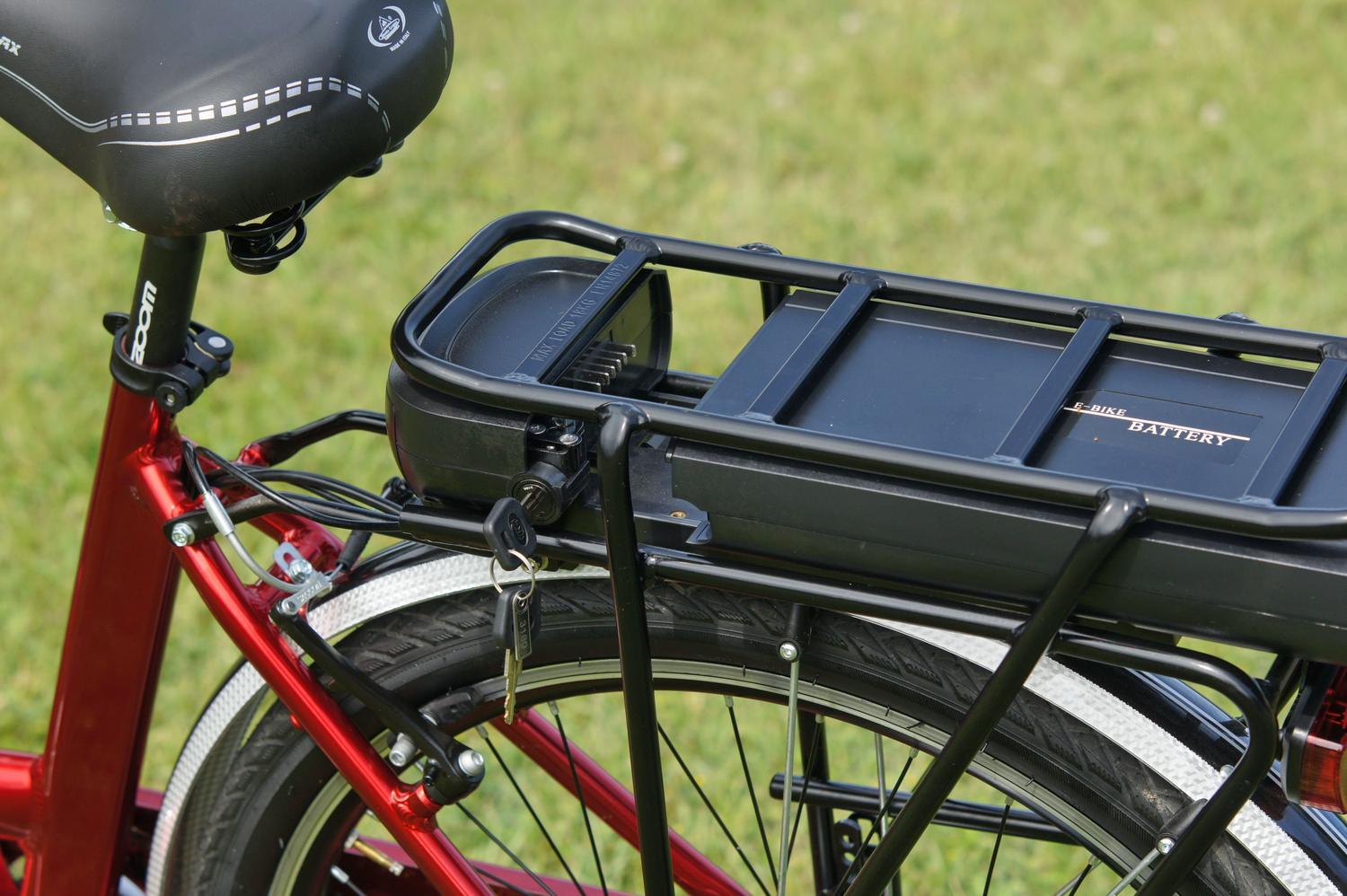
But it's not just about mobile phones. In the sustainable mobility sector, such as electric bicycles and scooters, these batteries reduce the manufacturing footprint by requiring fewer cells for the same power output. Furthermore, silicon is a more abundant and economical material than high-purity graphite, although current manufacturing processes remain complex and expensive.
Key concepts for understanding current energy
To avoid being misled by marketing, it's essential to understand concepts like milliampere-hours (mAh). This value indicates how much energy the battery can deliver in one hour. However, more mAh doesn't always mean more battery life , as processor management and screen efficiency have a significant impact. Regarding charging, we now talk about watts (W), where voltage and amperage act like lanes on a highway through which energy flows.
It's also worth mentioning Qi wireless charging and its evolution to Qi2 with MagSafe , which use electromagnetic induction. In the near future, there's talk of solid-state batteries , which would replace the liquid electrolyte with a solid one, improving safety and heat resistance, although they are still too expensive for mass consumption.

Tips to keep your battery from dying
Regardless of whether your device uses graphite or silicon, there are golden rules to prevent degradation. It's best to limit battery charging to between 20% and 80% , avoiding letting the phone reach 0% or remain constantly at 100%. Extreme heat is the worst enemy of any battery, so avoid leaving your phone in direct sunlight or using non-original chargers.
To extend battery life, closing background apps, lowering the screen brightness, and turning off GPS or Bluetooth when not in use helps considerably. Regarding removable batteries, although the European Union wants to encourage their replacement by 2027, many manufacturers are seeking exemptions for durability reasons , so it's likely we'll continue to see sealed devices.
The transition to silicon-carbon marks a milestone in portable electronics by enabling increased energy capacity without compromising physical space. Despite challenges in durability and production costs, the ability to reduce device thickness while significantly increasing battery life and charging speed makes this technology the strongest contender to replace conventional lithium in the coming years.
