- Digital lighting control systems combine sensors, controllers, and protocols to adapt lighting to presence, natural light, and schedules.
- Protocols such as DALI, DMX, DSI and KNX allow for advanced and flexible management of luminaires, with individual addressing and complex scenes.
- Smart meters measure actual hourly consumption, facilitate remote management, and help optimize power, tariffs, and self-consumption.
- In homes, consoles, pushbuttons, regulators and drivers allow you to create personalized environments and improve energy efficiency.
The way we use lighting at home, in the office, or on the street has completely changed in recent years. Today, thanks to digital lighting control , it's possible to adapt the lighting to any situation, reduce energy consumption, and, incidentally, increase comfort without complicating things. It's no longer just about turning lights on or off, but about managing light as a smart resource.
In this article, you'll learn in detail what lighting control systems are , the different types available (analog and digital), the role of smart meters in energy management, and the solutions available for homes and other spaces. The goal is for you to gain a clear and practical understanding of digital lighting control and learn how to use it to save money and improve comfort.
What is a digital lighting control system?
When we talk about a lighting control system, we are referring to the set of equipment that governs the operation of one or more light fixtures according to certain parameters: presence of people, schedules, amount of natural light, predefined scenes, alarm signals, etc. It is the natural evolution of the classic on/off switch.
With the rise of home automation and the Internet of Things (IoT) , these systems have become the foundation of modern lighting. Each light fixture or group of light fixtures becomes a "smart" element that communicates with sensors, controllers, and, in many cases, with the cloud or mobile applications.
The main advantage is that we can adapt the lighting to each situation : working, watching a movie, briefly passing through a hallway, highlighting a specific area, or maintaining a constant level of illumination regardless of how much sunlight is coming through the window. This improves comfort , but also has a direct impact on energy consumption.
A typical lighting control system consists of a series of interconnected devices that allow you to manage multiple light fixtures from a single interface . This interface can be a touch panel on the wall, a keypad, a mobile app , or a combination of these, depending on the complexity of the project.
Control elements: sensors and conditioning factors
The so-called "control elements" are the devices that decide when and how the lights are switched on, off, or dimmed based on certain parameters. These parameters can be combined with logical rules (and, or, if…then…) to achieve very precise control.
One of the most common criteria is time . Daily or weekly time slots can be defined in which the lights operate at a specific level or turn off automatically. For example, a shop sign could turn on at dusk and turn off at midnight, or an office could reduce its general lighting outside of working hours.
Another key parameter is the presence or absence of people or animals in the area . Using presence detectors, the lights in hallways, stairwells, communal restrooms, or underground garages only activate when someone passes by and turn off after a few seconds or minutes, preventing hours of unnecessary lighting.
The amount of available natural light is also used extensively . Light sensors measure how much light enters from outside and adjust the intensity of the lights to maintain a constant level. This maximizes the use of sunlight and reduces electricity consumption without the user having to do anything.
Finally, control systems can react to alarm signals or special states , such as the activation of a fire or security alarm. In these cases, the lights can be programmed to illuminate at 100% brightness, flash, or adopt a specific configuration to facilitate evacuation or attract attention.
Presence detectors and twilight sensors
Among all the available devices, the most popular by far are presence detectors and twilight sensors , due to their simplicity, low cost and significant impact on savings.
Most presence detectors are based on passive infrared (PIR) sensors , which identify the movement of heat-emitting bodies (people, animals) within their field of view. When they detect a change in temperature associated with movement, they send a signal to turn the light on or keep it on.
There are also detectors based on radar (microwave) technology, which use the Doppler effect . They emit a signal and measure the change in frequency when it reflects off moving objects. They are more sensitive and can detect movement even behind some lightweight materials, making them very useful in long corridors, parking lots, or areas with obstacles.
Furthermore, twilight sensors regulate the lighting according to ambient light . When natural light falls below a preset value, the lights switch on or increase their intensity; if there is sufficient sunlight, they dim or turn off. This allows for a more stable lighting level and makes the most of the daylight.
In outdoor lighting, it's very common to combine a presence detector with a twilight sensor . The twilight sensor only allows the system to operate after dark, while the presence detector only turns on the light when someone passes by. This minimizes energy consumption without compromising safety or convenience.
Analog lighting control systems
Before digital protocols became widespread, lighting control was carried out using analog systems, many of which are still in use today. One of the best-known is Triac control , a dimming method based on phase-cutting the alternating current signal that powers the lights.
In this system, an electronic device clips part of the voltage waveform in each cycle, resulting in a reduction of the power delivered to the lamp and, therefore, its light intensity . This is the operating principle of many traditional wall dimmers used with incandescent and halogen lamps.
Another widely used analog method is 1-10 V dimming . In this case, the light level is controlled by a DC signal: 10 V represents maximum brightness, 1 V usually corresponds to the minimum maintained level, and 0 V generally means the light fixture is off. This system was one of the first professional dimming standards.
In stage and entertainment applications, prior to current digital protocols, more advanced analog control systems such as the AMX192 or D54 were used , allowing the management of multiple lighting channels from a single console. Over time, these protocols have been replaced by more flexible and robust digital alternatives.
Although analog systems function correctly, their bidirectional communication capabilities and flexibility are limited , and this has driven the migration to fully digital solutions that allow feedback, individual addressing, and more complex programming.
Digital lighting control systems: DALI, DMX, DSI, KNX
In the digital realm, one of the most widely used standards is DALI (Digital Addressable Lighting Interface) . It has established itself as a well-balanced intermediate solution in terms of performance, simplicity, and implementation cost, making it ideal for offices, retail spaces, public buildings, and increasingly, high-end residential properties.
DALI operates using a master controller and one or more slave devices (electronic ballasts, LED drivers, input/output modules, etc.). Each device can have its own address, allowing control of up to 64 individual devices, grouping them into different logic sets, or sending global commands (broadcast) that affect them all simultaneously.
The DALI signal is highly resistant to interference, so it can be installed in the same conduit as power cables or even integrated into multi-core cables designed for this purpose. This greatly simplifies wiring and commissioning in medium and large installations.
In environments requiring highly detailed channel-by-channel lighting control, such as theaters, concert halls, or stage architecture, the most widespread protocol is DMX512 . It allows the management of up to 512 channels per universe, which in practice translates into the control of a significant number of devices (often up to 32 complex luminaires, depending on how many channels each uses).
Another digital protocol present in many installations is DSI (Digital Serial Interface) , very similar to DALI in terms of light level control philosophy, but with one important difference: it requires a separate control cable for each device , which complicates its use in large projects and has caused DALI to displace it in most new designs.
KNX deserves special mention , as it's not just a lighting control system, but a complete home automation standard for buildings and homes. With KNX, it's possible to integrate the management of lights, blinds, climate control, ventilation, technical and intrusion alarms, audio, video, and many other functions onto a single bus.
Thanks to KNX and similar systems, you can create global scenes that affect multiple subsystems . For example, a "Home Cinema" scene that lowers blinds, dims lights, turns on the sound system, and adjusts the temperature, all with a single button or from your mobile phone.
When choosing a protocol, it is essential to ensure its compatibility with existing or planned LED luminaires . Incompatibility can lead to flickering, difficulty in regulating intensity, or, in the worst-case scenario, damage to the drivers or the luminaires themselves.
Smart meters and digital control of electricity consumption
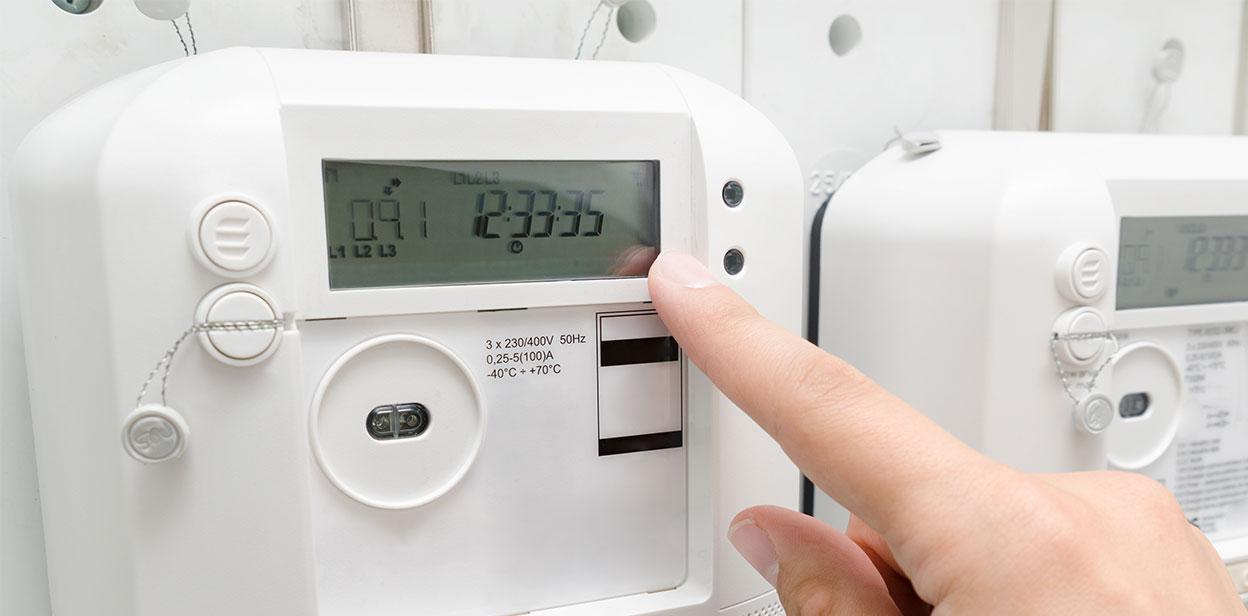
Digital lighting control goes beyond simply managing light fixtures. Smart meters (or remotely managed meters) have revolutionized how electricity consumption is measured and managed in homes and businesses, providing detailed information in near real-time.
A smart meter is a measuring device capable of accurately recording electricity consumption at different times of day and automatically sending that information to the distribution company. This eliminates the need for manual readings and minimizes errors associated with incorrect data transmission or estimates.
For the user, this means being able to check hourly consumption, analyze usage patterns, and adjust habits to take advantage of cheaper rates. In addition, many meters allow you to view other useful data, such as contracted power, instantaneous consumption, and reactive power generated.
With this information, decisions can be made such as reducing the contracted power if it is detected that the maximum is never reached , changing the tariff to better fit the usage schedule, or considering the installation of photovoltaic self-consumption systems to make better use of one's own generation.
Smart meters also facilitate procedures such as new connections, disconnections, service interruptions and reconnections, or changes in power and tariff , which in many cases the distribution company can carry out remotely without sending a technician, saving time and costs.
Why has the digital meter become so prevalent?
In Spain, regulations have mandated the replacement of old analog meters with digital ones since 2019. While some homes may still have an old analog meter, the change has usually already been made or is underway if the meter is rented.
The main reason is that digital meters measure actual consumption much more accurately than electromechanical meters and record energy in kilowatt-hours (kWh) with hourly detail. Analog meters, on the other hand, often relied on estimates or less precise spot readings.
Furthermore, modern meters store the hourly load curve and peak values for each tariff period , helping to optimize contracted power and better understand when and how energy is consumed. This is key in the context of time-of-use tariffs.
Another advantage is that the user doesn't have to send the meter reading to the energy supplier: the distributor accesses the data electronically. This simplifies procedures and prevents errors. And, in many cases, the customer can view all this information in the private area of their company's website.
For those who have self-consumption with solar panels, digital meters allow recording the energy fed into the grid and the energy consumed from the grid , something essential to take advantage of the compensation options for surplus energy offered by current regulations.
Installation, location and management of the digital meter
Regarding installation, it's common for the digital meter to be rented from the distribution company , which is responsible for installing, maintaining, and replacing it when necessary. This option is usually more economical than purchasing the equipment outright.
Regulations require that the meter be located in a place easily accessible from the street or in a meter room , so that authorized personnel can carry out maintenance or checks without needing to enter the home. The rental includes maintenance and replacement for the life of the meter.
One of the advantages of the digital meter is that power changes can be made remotely . Whereas with the old analog meters a technician had to come to change the power control switch, now a simple remote command is enough to adjust that parameter.
Having it rented also frees the user from
In many cases, the digital meter is also able to manage time-of-use tariffs , applying the price corresponding to each period (peak, shoulder and off-peak) based on the energy consumed in each segment, something that was not possible to do accurately with electromechanical meters.
A common question is what the codes on the digital meter display mean and how to interpret the familiar red indicator light that illuminates or flashes. Although there are different models, the underlying logic is generally very similar.
At the top of the screen, codes are usually displayed indicating the energy consumed in each hourly period . For example, it is common to find:
- 1.18.0: total energy consumed, sum of the different periods.
- 1.18.1: peak period consumption reading.
- 1.18.2: reading in plain period.
- 1.18.3: off-peak reading.
By accessing the meter's menu, usually via a single button, you can also check the maximum power demand , that is, what the actual peak power used in a given period was, without triggering the limiter.
This information is very useful for checking if your contracted power is too high. If, for example, you have 5,75 kW contracted and you find that the maximum you use is 4,6 kW, you might want to reduce your contracted power to pay less in fixed charges on your bill without sacrificing comfort.
Regarding the famous red indicator light, it usually shows the instantaneous energy consumption level . If it's not flashing, there's practically no consumption. If it flashes slowly, consumption is low, and if it flashes very quickly, consumption is high and you're approaching your contracted power limit.
The power control switch (ICP) is integrated into the meter itself , acting as a "limiter" when the contracted power is exceeded for a certain period. At that point, the digital circuit breakers trip and the power supply is interrupted until the load is reduced and the supply is restored.
Lighting control systems in homes: consoles, pushbuttons and dimmers
In the domestic sphere, digital light control is mainly achieved through consoles, pushbuttons, electronic regulators and specific drivers that allow for the creation of personalized environments and energy savings without sacrificing design.
Some brands offer consoles like the Touch Light Manager and similar systems, which act as the brain of the home's lighting. Through a simple and intuitive touch interface, the user can select scenes, adjust intensity, change colors (in RGB systems), or program schedules without needing any technical knowledge.
Keypads are another common component. There are models compatible with protocols such as KNX, LON, or DMX, as well as simpler keypads designed for home use, with on/off and dimming functions. Each keypad typically includes its adapter, wiring, and installation manual.
These keypads include versions with several function buttons and options such as Slide Control , which allows you to regulate the intensity with a simple sliding gesture, making the operation much more comfortable and modern than a classic switch.
Electronic dimmers and switches allow you to control light intensity based on the type of light fixture and the control protocol used: DALI, 1-10 V, phase cutoff (Triac), PMV, etc. For residential use, there is a wide range of highly sensitive and precise devices that facilitate smooth, seamless dimming.
Finally, add-ons and drivers are key components for the stable operation of the entire system. These include power supplies, interface modules, protocol gateways, and other accessories necessary to install, expand, or upgrade an existing lighting control system.
It is always advisable to seek specialized technical advice when designing or modifying a lighting control system in the home, especially when integrating several protocols or combining advanced home automation elements.
The shift towards digital lighting control and the deployment of smart meters have completely changed how we interact with energy in our spaces. Thanks to sensors, communication protocols, consoles, and advanced measurement systems, it's now possible to enjoy more comfortable, personalized, and efficient lighting , with greater control over consumption and electricity bills, both at home and in professional settings.
