- The principle of conservation of angular momentum allows rotating objects to keep their axis fixed in space.
- Gyroscopes have evolved from simple mechanical models to high-precision laser and fiber optic sensors.
- Gyroscopic stability is fundamental in modern transportation, from motorcycles and airplanes to space satellites.
You've probably been amazed at some point watching a spinning top spin without falling over, or wondered why a bicycle stays upright while you're riding. It's not magic, even though it seems like it, but an amazing physical phenomenon called the gyroscopic effect . This principle allows certain objects, when rotating at high speed, to become incredibly stable and resist any force that tries to knock them over.
Basically, we're talking about a device that uses rotation to maintain a fixed orientation. Whether it's an educational toy or a space shuttle's navigation system, the key is angular momentum , which is what keeps the axis of rotation locked in space unless something external forces it to move.

What exactly is a gyroscope and how does it work?
Looking at the classic version, we find a heavy rotor spinning at full speed, held in place by rings called gimbals. These rings have bearings where friction is almost zero, which isolates the central rotor from external influences . Thanks to this, the gyroscope maintains the direction of its axis of rotation with astonishing precision.
The science behind all of this is the conservation of angular momentum. This means that the rotor not only maintains its speed, but also its direction in space . That's why, if you try to tilt a rapidly spinning gyroscope, you'll notice that it offers a curious resistance, as if it had a life of its own.
In today's technological world, a gyroscope is seen more as a sensor. It measures the speed of rotation relative to an inertial frame, detecting any changes in orientation . Interestingly, since the Earth itself rotates, a sensor placed on the ground will detect this rotation of about 15 degrees per hour, typically expressing the data in radians or degrees per second.
Advanced technologies: MEMS, Sagnac and Fiber Optics
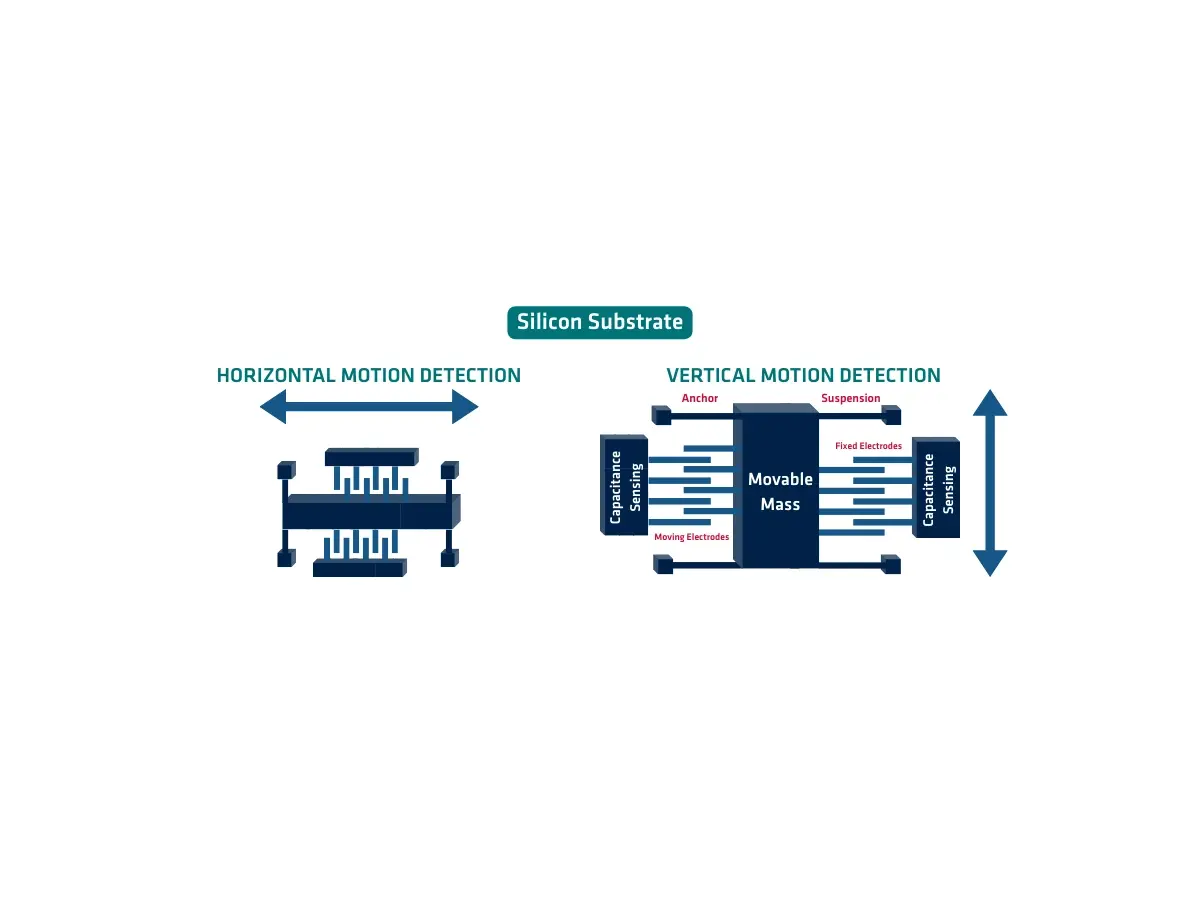
Not all gyroscopes are spinning wheels. Today, there are MEMS sensors, which use the Coriolis effect . Imagine a mass vibrating in one direction; if the sensor rotates, it generates a force that shifts that mass to another axis, allowing us to measure movement with tiny chips found in almost all smartphones and in how modern drones stabilize themselves.
On the other hand, there are fiber optic gyroscopes (FOGs) that are based on the Sagnac effect . These have no moving parts, but rather light traveling in two opposite directions along a loop. If the device rotates, one path becomes longer than the other, creating interference patterns that allow the angular velocity to be calculated with extreme precision , without the need for external references.
The gyroscope in everyday life: Motorcycles and Bicycles
If you ride a motorcycle, the gyroscopic effect is your best friend. The wheels act as natural gyroscopes that help maintain balance. In fact, it's very common for beginners to get a scare when going very slowly, since gyroscopic stability only really starts to be effective at around 30 km/h.
Besides the wheels, the crankshaft's rotation plays a crucial role in a motorcycle . It provides extra stability, allowing the vehicle to continue moving straight even if the rider falls during a race. In curves, the combination of angular momentum and centrifugal force prevents gravity from pulling the rider to the asphalt, although other factors, such as tire grip and road surface temperature, also play a role.
- Aviation: They are vital for attitude indicators, which tell the pilot if the aircraft is level with respect to the horizon, and for autopilot systems that control the heading.
- Maritime Navigation: Gyrocompasses allow you to know the exact direction without depending on the Earth's magnetic field, while stabilizers reduce the rolling of ships so that passengers do not end up seasick.
- Space Exploration: In satellites, Inertial Measurement Units (IMUs) are what allow docking and positioning maneuvers to be performed. millimeter precision.
Curious phenomena: Precession and equilibrium
One thing that leaves many people speechless is precession. When you apply a force to a moving gyroscope, it doesn't tilt in the direction you're pushing, but rather moves perpendicular to the applied force . This is the same reason why a spinning top doesn't fall over immediately when it starts to lose speed, but instead describes circles before collapsing.
For those who want to experiment, there are precision gyroscopes that can be balanced on a fingertip or even a taut string. This ability to challenge our gravitational intuition makes them fantastic educational tools for understanding classical mechanics and, incidentally, very satisfying stress relievers.