- The IBM PC, launched in 1981, democratized access to personal computing, being affordable and portable.
- Led by Don Estridge, the team broke with IBM tradition, using an open architecture.
- The success of the IBM PC set new standards in the industry and fostered innovation in hardware and software.
- His legacy lives on, influencing the evolution of personal technology and the interconnectedness of devices.

In 1981, a bold team of visionaries in Boca Raton, under the wing of IBM, sparked a revolution that would redefine personal computing forever. Their creation, the IBM PC, not only broke down the barriers between large corporations and the everyday user, but also laid the groundwork for the technological future we now take for granted. How did they accomplish this monumental feat, and what made the IBM PC the turning point in the history of computing? Join us on a journey back to discover how the IBM PC was a game-changer.
Introduction. IBM PC History
The year 1981 marked a milestone in the history of technology with the arrival of the IBM PC, a groundbreaking product that changed the face of the computer industry. This event not only signaled the beginning of a new era in computing, but also brought technology from the corporate office to the home. The magic happened in Boca Raton, where a brave and visionary team ventured beyond traditional IBM conventions, collaborating with outside vendors to bring to life a powerful and affordable machine. This bold initiative set a new standard in the industry, which continues to evolve and shape the technological world we know today.
IBM PC: Launched in 1981
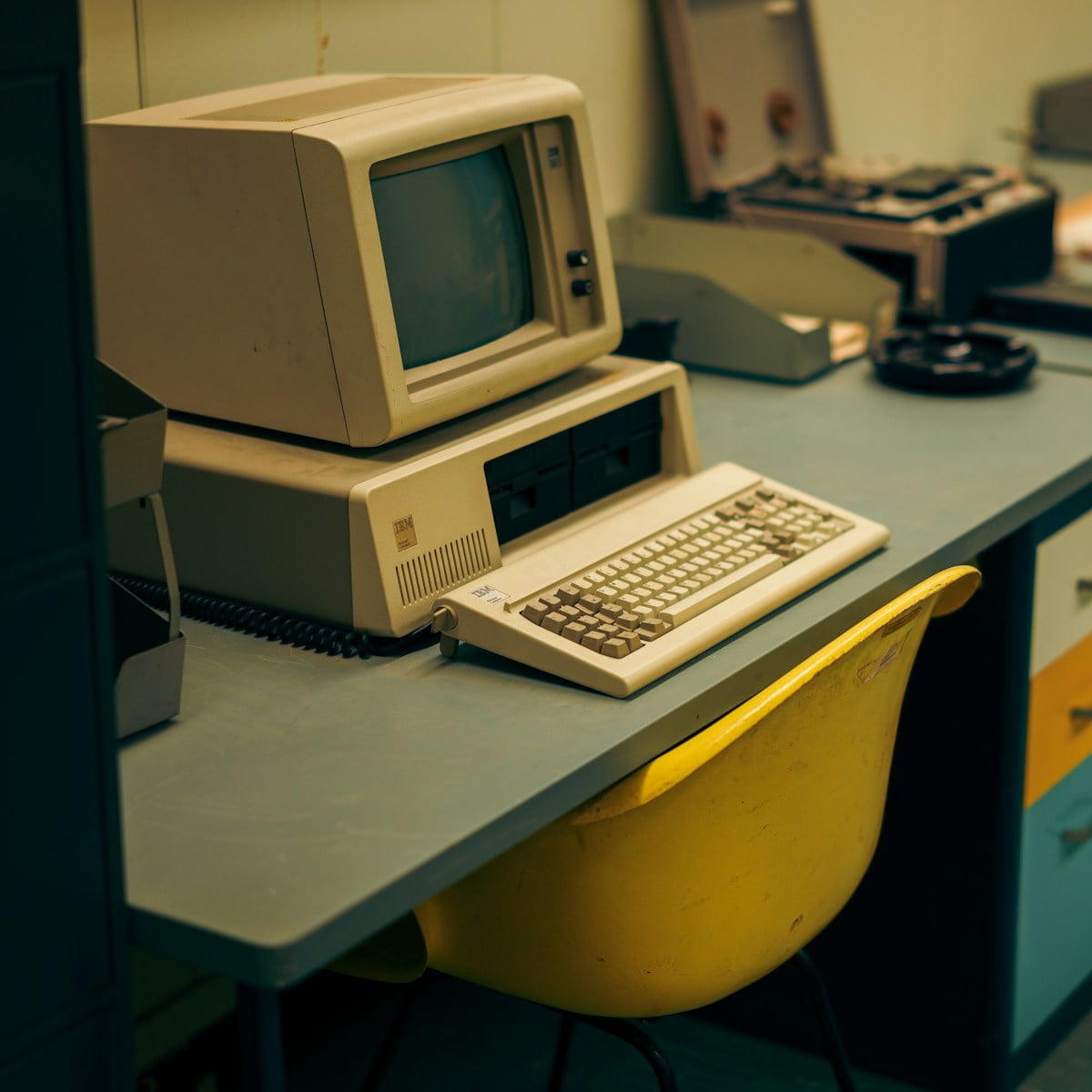
On August 12, 1981, IBM made history by entering the personal computer market with the Model 5150, known as the IBM PC. Although it was a resounding success at its launch, few fully understood its significance.
Before the IBM PC, computers were limited to the offices and labs of large companies. Mainframes cost millions of dollars and required 60 people to maintain, while minicomputers were even more expensive. In contrast, the IBM PC was portable, affordable, and sold for less than most home televisions.
Lowe and his team assembled suppliers and designed the product, taking an open-architecture approach, selecting components from Intel, Microsoft's disk operating system and existing storage drive manufacturers. This allowed the Boca Raton team to quickly design and market the machine.
The IBM PC had an all-steel chassis supporting a monitor, keyboard, and one or two floppy disk drives, connected by serial cable to terminals and printers. It ran on an Intel 8088 microprocessor with DOS, 32K of built-in memory, and the ability to expand with 32K or 64K memory cards, providing ample scope for future expansion and upgrades.
IBM decided to offer the PC through retail channels and partnered with ComputerLand and Sears, Roebuck & Co. Sales exceeded expectations, and production forecasts doubled in the first year.
Directed by Don Estridge
Philip Donald Estridge, known as Don Estridge, led the development of the IBM Personal Computer. He had a profound impact on the industry, beginning with his goal of creating an affordable personal computer, successfully introduced as the IBM PC in 1981.
Estridge's choice of an open architecture, eschewing proprietary designs, allowed customers to add hardware or software products from any source. Estridge and Bill Lowe assembled a team of mavericks who pursued different agendas independent of corporate norms.
Bet on affordability
Two decades earlier, an IBM computer cost up to $9 million and was extremely resource intensive. In contrast, the IBM PC offered massive processing power, affordability and versatility for just $1,565.
Estridge and his team bypassed IBM's bureaucracy by forming a team in Boca Raton, Florida. They sourced components from outside suppliers — a rarity at IBM — and used Intel chips, Microsoft's operating system and other components.
Computer Architecture: Introduction to its Evolution and Design
Industry Impact
The IBM PC transformed the computer industry, enabling personal productivity and setting new hardware and software standards. It introduced interconnected devices, such as the direct connection of a mouse via Ethernet to the host machine.
Although the IBM PC faced challenges, Estridge and his team navigated IBM bureaucracy to meet the one-year deadline. Their choice of third-party components and open architecture set new standards for hardware compatibility.
Establish hardware compatibility standards
IBM adopted third-party hardware and software, including documentation and five expansion slots for flexibility. The IBM PC was fast, reliable, and affordable, and competed with other PCs.
Time magazine called it an unprecedented personal computing revolution, surpassing even television and automobiles.
As the first mass-produced desktop computer, the IBM PC pioneered such advances as the first integrated hard drive (10 MB) and narrower ISA slots. It also encountered the conventional memory limit of 640 KB, which caused computers to slow down or become unstable for the first time.
Technical specifications of the IBM 5150 personal computer
- Intel 8088 microprocessor at 4.77 MHz
- RAM from 16 KB to 640 KB
- Expansion card slots: 5 8-bit ISA slots
- Mechanical keyboard with 83 keys
- Interface for monochrome MDA or CGA color monitor
- Ports: RS-232 serial, parallel, cassette, joystick
- Floppy disk controller for reading 5.25″ floppy disks
- PC-DOS 1.0 operating system and BASIC in ROM
- Cabinet with 63.5 watt power supply
- Weight: 23 kg approximately
- Dimensions: cm x 48 43 cm x 15 cm
- Starting price: US$1,565
Typical applications running on the IBM 5150
- PC-DOS 1.0: The operating system database developed by Microsoft for the IBM PC. It allowed basic functions such as managing files and running programs.
- BASIC: BASIC programming language available in ROM. It allowed writing and executing BASIC codes directly on the PC.
- VisiCalc: Spreadsheet considered the first "killer application" for PC. It allows financial analysis.
- WordStar: Word processor very popular in the 80s. Developed by MicroPro.
- DBase II: Database management system developed by Ashton-Tate. Popular in business.
- lotus 1-2-3: Spreadsheet with graphics, another “killer app” designed by Mitch Kapor.
- Microsoft Flight Simulator 1.0: First flight simulator for PC by Bruce Artwick in 1982.
- AutoCAD: CAD system for technical drawing developed by Autodesk in 1983.
- Turbo pascal: Compiler Borland Turbo Pascal that revolutionized programming.
- MS-DOS Editor: First minimalist text editor included in MS-DOS.
Frequently Asked Questions about the IBM PC
- What made the IBM PC special compared to computers of its time?The IBM PC broke barriers by being portable, affordable, and available at lower prices than many home televisions of the time. It was also notable for its open architecture and adoption of third-party components, which allowed for greater flexibility and expandability. Its modular design made upgrades and repairs easy, making it a very attractive option for both home and business users.
- When was the IBM PC launched?The IBM PC was launched on August 12, 1981, marking IBM's entry into the personal computer market with the Model 5150. This launch represented a turning point in the technology industry, ushering in the era of mass personal computing.
- How did the Boca Raton team deviate from IBM traditions during the development of the PC?Rather than following traditional IBM development processes, the Boca Raton team turned to outside vendors for hardware and software components, a rarity for IBM at the time. This decision allowed for faster development and lower costs, unusual for the company that traditionally developed its own components.
- What role did Don Estridge play in the development of the IBM PC?Don Estridge led the development of the IBM PC and was instrumental in choosing an open architecture, which allowed for greater compatibility and flexibility in hardware and software. His leadership and vision were key to breaking away from IBM's internal norms and adopting a more innovative and collaborative approach.
- How did the IBM PC affect the computer industry?The IBM PC transformed the industry by enabling personal productivity, setting new hardware and software standards, and introducing device interconnectivity. Its success cemented the open architecture model, fostering an ecosystem of compatible software and hardware that drove innovation and growth in the personal computer market.
- What type of hardware and software did IBM adopt for the PC?IBM opted for an open approach, choosing Intel components and Microsoft's disk operating system. It also included expansion slots and detailed documentation for flexibility and compatibility. This strategic choice facilitated the creation of a broad market for peripherals and applications, contributing to the rapid adoption and expansion of the IBM PC.
Conclusion
The IBM PC was not simply a revolutionary product, but the catalyst for an era that transformed computing from a corporate luxury into a household necessity. The bold vision and commitment to affordability by Don Estridge and his team not only democratized technology, but also laid the foundation for the expansive and evolving ecosystem we see in personal technology today. The legacy of the IBM PC resonates in every corner of modern industry, from open architecture to device interconnectivity, reminding us of the power of innovation and collaboration in redefining what is possible.