- ROM is non-volatile storage that retains essential data.
- There are several types of ROM: PROM, EPROM, EEPROM and flash memory.
- It differs from RAM in data persistence, speed, and function.
- It is essential in computers, mobile phones, consoles and household appliances.

ROM (Read-Only Memory) is an essential type of storage in electronic devices and computers, ensuring that equipment has the necessary information to boot up and function correctly. Unlike RAM (Random Access Memory) , which is volatile and allows data to be written and modified, ROM stores information permanently. Over time, it has evolved, and different variants with improved capabilities have been developed, such as PROM , EPROM , and EEPROM . To better understand the context of ROM, it is also helpful to know about RAM and how it works.
Let's explore in detail what ROM memory is, its functions, the different types that exist, and how it differs from RAM. If you've ever wondered how your computer or other devices manage to turn on and run their basic functions without any prior configuration, you'll find all the answers here.
What is ROM memory?
The term ROM stands for "Read-Only Memory." It is a type of non-volatile memory, meaning it retains stored information even when the device is turned off. Its main characteristic is that the data it contains cannot be easily modified, making it ideal for storing fundamental instructions such as a computer's firmware and BIOS .
Since its inception, ROM memory has been used in computers, mobile phones, video game consoles, and other devices where it is crucial to have data that remains unchanged over time. The importance of this memory is also reflected in its classification and characteristics, which can be explored in more detail in the section on computer memory.

ROM Memory Functions
ROM memory performs several essential functions in electronic devices. Some of the most important are:
- Firmware storage: Contains the basic software required to boot the device.
- Ensures stability: Stores instructions that should not be altered by the user to avoid system failures.
- Allows the BIOS to run: In computers, the BIOS contained in the ROM is necessary to initialize the hardware and load the operating system. This process is crucial for the correct operation of the machine, which highlights the importance of understanding how it works.
- Store essential data: Devices such as game consoles and mobile phones use ROMs to store critical settings.
ROM memory types
There are several different variations of ROM memory, each with particular characteristics that offer different levels of flexibility and reprogramming:
- ROM: This is the oldest and most traditional version, with data that cannot be modified once recorded.
- PROM (Programmable Read-Only Memory): It can be programmed only once after manufacturing.
- EPROM (Erasable Programmable Read-Only Memory): It can be erased and reprogrammed using ultraviolet light.
- EEPROM (Electrically Erasable Programmable Read-Only Memory): Allows you to electrically erase and reprogram data, offering greater flexibility.
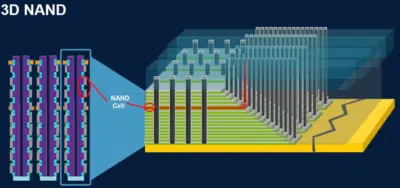
- Flash Memory: Modern variant of EEPROM that allows multiple write and erase cycles very quickly.

Differences between ROM and RAM memory
While ROM and RAM are both part of the storage in electronic devices, they have very different purposes and characteristics:
- Data persistenceROM is non-volatile, meaning it retains data when the device is turned off. RAM, on the other hand, is volatile and loses its content when the system is turned off.
- Modification capacityROM is read-only or has limited reprogrammability, while RAM allows dynamic reading and writing of data.
- Speed: RAM is much faster than ROM as it is used to access data in real time.
- Location and functionROM is located on the motherboard and houses the firmware, while RAM is used by the operating system and running applications.
Importance of ROM memory in modern devices
Today, ROM memory remains an essential component in a large number of electronic devices:
- Computers: They contain the BIOS or UEFI, responsible for booting the system.
- Mobile phones: They store the operating system and device settings.
- Video game consoles: ROM is used to store games and firmware.
- Appliance: Many everyday devices, such as televisions and microwaves, have ROM memory with their internal software.

Although technological advancements have led to more flexible memory technologies like flash memory, ROM continues to play a fundamental role in computing and electronics. Its secure storage capacity and stability ensure that devices function correctly from the moment they are powered on, without requiring any additional configuration.